

Most people rarely think about their belly button.
It is simply there — a small part of the body that we usually notice only when cleaning, changing clothes, or perhaps looking in the mirror. Unlike a headache, stomachache, or sore throat, a strange smell coming from the belly button is not something most people casually discuss.
Yet doctors say there is a good reason not to completely ignore it.
In many cases, an unpleasant belly button odor is caused by something surprisingly ordinary: sweat, dead skin cells, body oils, clothing fibers, dirt or bacteria becoming trapped in the small folds of skin.
But sometimes, a persistent smell can appear alongside other symptoms that deserve attention.
The important distinction is that a smell by itself usually does not mean something serious is happening. However, if the odor continues even after careful cleaning — particularly when it is accompanied by irritation, pain, redness or discharge — it may be worth speaking with a healthcare professional.
So why does the belly button sometimes smell, and what is the right way to clean it?
Why Does Your Belly Button Smell?

Your belly button is essentially a small fold or indentation in the skin.
Depending on its shape and depth, it can trap material that would otherwise be removed naturally during bathing. Cleveland Clinic notes that lint, body hair, sweat, skin oils and dead skin cells can all accumulate inside the navel. Over time, these materials can contribute to an unpleasant odor.
This is particularly easy to understand if you have a deeper “innie” belly button.
Because the area can be relatively dark and moist, it may not dry as quickly as the surrounding skin. Warmth and moisture can also create an environment where microorganisms naturally found on the skin can multiply.
Hot weather and exercise can make this more noticeable because sweating increases moisture around the area.
Tight clothing may also contribute by reducing airflow and causing additional heat and friction.
In other words, sometimes the explanation is much less mysterious than people imagine.
There may simply be a small collection of sweat, skin cells and clothing fibers that has been sitting inside a part of the body that is easy to overlook.
When Bacteria and Yeast Become a Problem

The skin naturally contains bacteria and other microorganisms. Their presence does not automatically mean there is an infection.
Problems can develop when the environment allows certain organisms to grow excessively.
One possibility is a yeast infection involving Candida. Cleveland Clinic explains that Candida can thrive in warm, damp environments, including the belly button. A yeast infection may cause a red, itchy rash and can sometimes involve swelling, burning or discharge.
The appearance of the skin can therefore be more informative than the smell itself.
For example, if you notice that the belly button has become unusually red or irritated, or if there is persistent itching, swelling or discharge, it may be time to have the area examined.
This is why doctors generally recommend looking at the whole picture rather than trying to identify a condition based only on odor.
A Belly Button Stone Can Also Cause Odor
There is another possibility that many people have never heard of: an omphalolith, sometimes called a belly button stone.
Despite the unusual name, it is essentially a hardened accumulation of material inside the navel.
Cleveland Clinic explains that belly button stones can develop when substances such as dead skin cells, oils and other debris accumulate and harden over time.
They are generally not dangerous on their own.
However, a hardened collection can make the area more difficult to clean and may contribute to irritation or odor.
This is one reason why gently cleaning the belly button as part of normal personal hygiene can be helpful.
The key word is gently.
Trying to aggressively scrape out material can irritate or damage the delicate skin.
How to Clean Your Belly Button Properly
Cleaning your belly button does not require complicated products.
In fact, Cleveland Clinic recommends a surprisingly simple approach: mild soap, water and gentle cleaning.
During a shower or bath, gently wash the belly button using your fingertip, a soft washcloth or another gentle method.
If you have an “innie,” make sure you carefully clean inside the indentation rather than washing only the surrounding skin.
However, there is no need to scrub aggressively.
The skin inside the navel can be sensitive, and excessive friction may cause irritation. Harsh products or heavily fragranced products are also unnecessary.
After washing, rinse away any soap residue.
Then comes another important step that is easy to overlook:
Dry the belly button.
Moisture left inside a deep belly button can contribute to the warm, damp environment that microorganisms prefer.
A clean, dry belly button is therefore a simple goal for everyday hygiene.
What About Cotton Swabs?
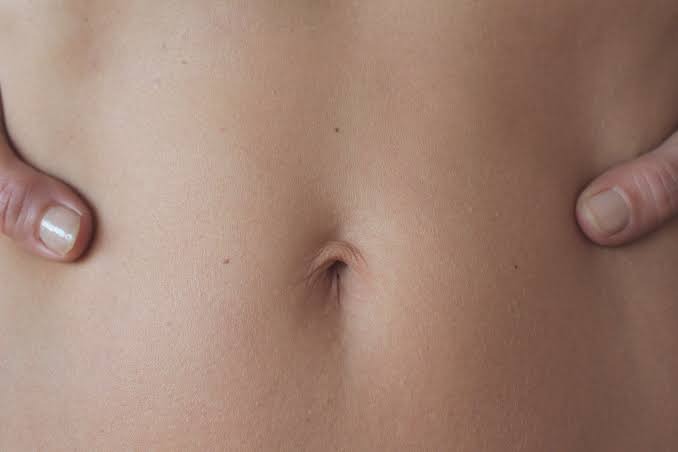
A cotton swab can sometimes be useful for reaching the folds of a deeper belly button, but it should be used gently.
Cleveland Clinic recommends using soapy water and a cotton swab or the corner of a washcloth to carefully remove debris from an “innie,” followed by drying the area with a clean cotton swab or the corner of a dry towel.
The important thing is not to force anything deeper than is comfortable.
If something appears firmly stuck, painful to remove, or associated with bleeding or discharge, it is better not to keep digging at it.
A healthcare professional can determine whether the material is simply debris or something that requires treatment.
When a Belly Button Smell Should Get Your Attention
An occasional unpleasant smell that disappears after washing is usually not a reason to panic.
But there are certain changes that deserve more attention.
According to Cleveland Clinic, you should consider speaking with a healthcare professional if the smell continues for several days despite improved hygiene, or if other symptoms such as itching, pain, crusting, bleeding or oozing develop.
Other signs worth paying attention to include:
- Persistent redness around the belly button
- Swelling
- Increasing tenderness or pain
- Skin that feels unusually warm
- Persistent fluid or discharge
- Bleeding without an obvious explanation
- A smell that does not improve after cleaning
- Symptoms that are getting progressively worse
These signs do not automatically mean that you have a serious condition.
They simply indicate that there may be something more than ordinary buildup going on.
Persistent Discharge Can Have Other Causes
In less common situations, ongoing moisture or discharge around the belly button can be related to an anatomical issue known as a urachal remnant.
The urachus is a structure that connects the bladder and belly button during fetal development. It normally closes before birth and becomes a fibrous structure. In some people, a portion remains.
Most people with a urachal remnant may never know they have one.
But certain types can cause symptoms, including persistent moisture, abdominal discomfort or recurrent urinary problems.
Because these conditions are uncommon, a persistent belly button odor should not automatically be interpreted as evidence of a urachal abnormality.
Instead, it is one of several possibilities that a healthcare professional can consider when ordinary hygiene does not explain ongoing symptoms.
Don’t Ignore Signs of an Infection
A belly button infection is not the most common explanation for an unpleasant smell, but it can happen.
The combination of odor with increasing redness, warmth, swelling, pain or discharge is more concerning than odor alone.
Cleveland Clinic specifically advises seeking medical attention when belly button symptoms include persistent pain or discharge, particularly when the cause is unclear.
The same principle applies if symptoms are worsening rather than improving.
And if you develop significant illness alongside a suspected skin infection — such as fever or feeling markedly unwell — prompt medical evaluation is appropriate.
The goal isn’t to become alarmed by every unusual smell.
It is simply to recognize when several symptoms are appearing together.
Your Belly Button Deserves a Place in Your Hygiene Routine
The belly button may be easy to forget, but it is still part of your skin.
Just as people routinely wash areas such as their hands, neck, behind their ears and between their toes, the navel also benefits from regular attention.
You don’t need special treatments or expensive products.
For most people, gentle washing with mild soap and water, followed by thorough drying, is enough.
Cleveland Clinic also notes that there is no harm in cleaning the belly button regularly as long as you avoid harsh products and excessive scrubbing.
That simple habit can help reduce the accumulation of sweat, oils, dead skin cells and other debris.
And perhaps most importantly, it gives you an opportunity to notice changes.
If your belly button suddenly looks different, becomes painful, develops persistent discharge or continues to smell despite proper cleaning, that is when it makes sense to seek professional advice.
The Bottom Line

A smelly belly button can sound embarrassing, but there is really nothing unusual about it.
In many cases, the explanation is simple: debris, sweat, oils, dead skin cells and bacteria have accumulated in an area that is easy to overlook.
A deeper belly button can make this more likely, while heat, exercise and moisture may contribute.
A gentle wash with mild, fragrance-free soap and water, followed by careful drying, is usually all that is needed for everyday care.
But persistent odor is worth paying attention to when it comes with other changes.
Redness, swelling, pain, warmth, crusting, bleeding or ongoing discharge can indicate irritation or infection and should not simply be ignored.
Rarely, persistent discharge can have a different underlying explanation, such as a urachal abnormality.
The important thing is not to assume the worst.
Instead, pay attention to your body, keep the area clean and dry, and seek medical advice when symptoms persist or become more concerning.
Sometimes, a strange smell really is just a reminder that one tiny part of your daily hygiene routine has been overlooked.
And sometimes, noticing that small change is exactly what prompts you to take better care of your health.
