
Raquel Welch’s 1972 Dick Cavett Interview Reveals Her Wit, Work Ethic and Legacy
Raquel Welch is remembered as one of Hollywood’s most recognizable stars, but her career was far more expansive than the glamorous image often associated with her name. A 1972 appearance on The Dick Cavett Show offers an especially valuable glimpse of Welch as a thoughtful, funny and hard-working performer during an important period in her career.
A Different View of Raquel Welch
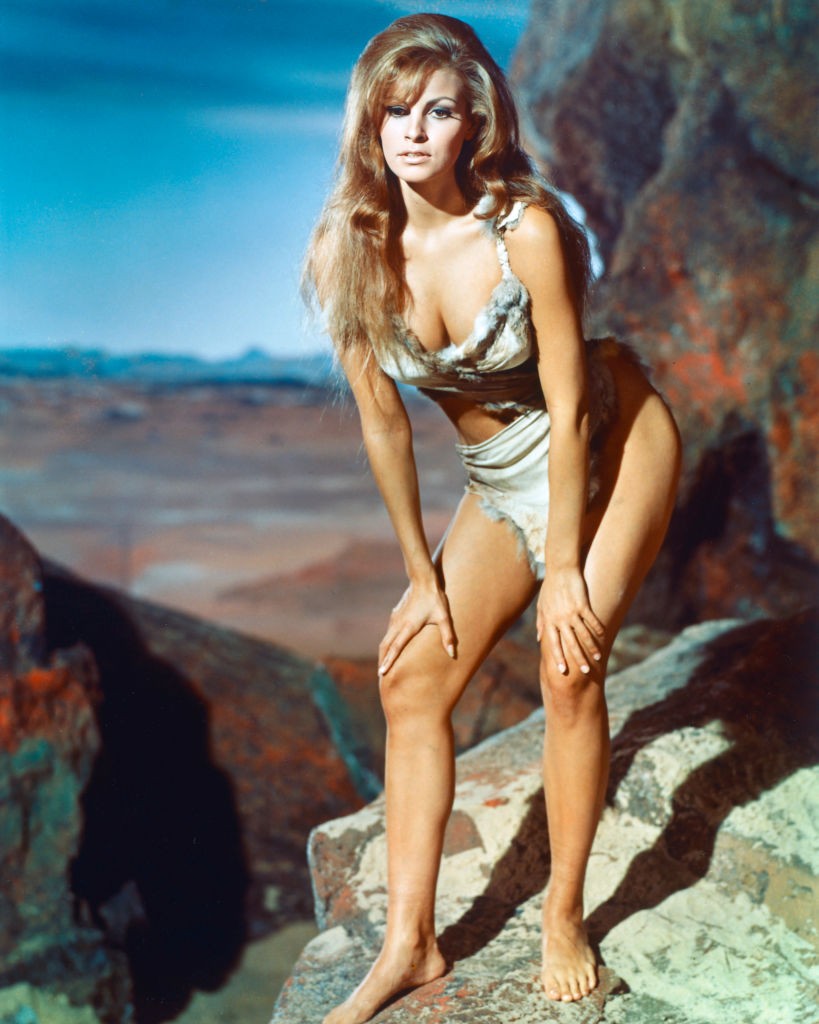
For many audiences, Raquel Welch became a defining screen presence of the 1960s and 1970s. Her role in the 1966 adventure film One Million Years B.C., and especially its famous promotional imagery, turned her into an international celebrity. Yet Welch regularly faced the challenge of being discussed more for her appearance than for her performances, professional discipline or ambitions as an actress.
Her conversation with Dick Cavett provides a more rounded portrait. Sitting down with one of American television’s best-known interviewers, Welch speaks with confidence and a dry sense of humor about the demands of filmmaking, the expectations of the press and the gap between a public persona and private reality. The interview remains compelling because it allows viewers to hear her in her own words rather than simply view her through the lens of publicity photographs and movie posters.
Cavett’s interview style was particularly suited to that kind of exchange. Across the long run of The Dick Cavett Show, he was known for inviting artists, authors, filmmakers, politicians and performers into conversations that could be relaxed, informed and unpredictable. His guests included major figures from film and culture, and he often allowed them enough time to move beyond short promotional answers.
Promoting Kansas City Bomber in 1972
Welch’s appearance came as she promoted Kansas City Bomber, a 1972 drama directed by Jerrold Freedman. In the film, Welch plays K.C. Carr, a roller derby competitor whose athletic career, public visibility and personal relationships are under pressure. The story used the popular world of roller derby as a setting for a character-driven drama about ambition, independence and the costs of public success.
The role was significant because it gave Welch an opportunity to play a character defined by competitiveness and determination, not simply glamour. Roller derby was a high-profile spectator sport in the United States during that era, and the production sought to bring a degree of authenticity to the skating sequences. Welch had to train for the physical requirements of the role, including skating on a banked track used by experienced derby athletes.
During the Cavett interview, Welch discussed learning to skate for the film and described the risks involved in preparing for its demanding scenes. She said that she broke her wrist while practicing, an injury that delayed production. Her account underscored the amount of preparation required for a role that many viewers may have assumed was achieved through camera work alone.
That experience also reflects a wider reality of film production before the extensive digital tools now available. Performers often trained intensively for sports-based roles, and practical stunts or physically demanding scenes could carry real risks. Welch’s willingness to speak about the injury without dramatizing it helped convey her practical approach to work.

Raquel Welch’s Humor About Fame and Public Expectations
One of the most memorable parts of the interview involves Welch’s response to the public expectations attached to her celebrity. She recalled a press event with sportswriters during the promotion of Kansas City Bomber. Some reporters, she explained, seemed surprised that she did not physically resemble the larger-than-life image they had formed from photographs and film screens.
Welch responded with a joke about disappointing people when she entered a room and did not arrive with the exaggerated impact they expected. The remark was funny, but it also revealed an intelligent awareness of the machinery of stardom. Her image had become so widely circulated that some people encountered the real person with assumptions shaped by publicity, camera angles and popular culture.
At approximately 5 feet 5 inches tall, Welch did not necessarily match the oversized impression created by cinema screens and magazine layouts. Cavett noted that people who saw her in person could simply see an attractive woman rather than immediately recognize a globally famous star. Their exchange captured the strange distance between a celebrity’s screen identity and everyday presence.
Rather than treating the subject defensively, Welch used humor to address it. This ability to acknowledge public attention while maintaining a sense of perspective was a recurring feature of her interviews. It helped explain why many viewers later found the Cavett appearance so engaging: she came across as alert, approachable and fully aware of the industry in which she worked.
Fashion, Red-Carpet Style and Rewearing Iconic Looks
Welch was also a prominent fashion figure. Her public appearances frequently attracted attention because she understood the visual language of Hollywood premieres, award ceremonies and magazine photography. At the same time, the idea that stars should never repeat an outfit was not as fixed in the early 1970s as it later became in celebrity culture.
Viewers with an eye for fashion have noted that the blue gown Welch wore for her conversation with Cavett had also been seen at the Academy Awards earlier that year. Rewearing an elegant garment was practical as well as stylish, and it illustrates how memorable clothing can gain meaning through repeated public appearances.
Welch’s red-carpet wardrobe was part of a professional image carefully shaped for a star of her era. In private, however, she was often described as preferring more relaxed clothing, including trousers, sweaters and other comfortable pieces. That contrast between formal public glamour and casual off-camera style was not unusual, but it reinforced the larger point that a famous image represents only one part of a person’s life.

Why Her Speaking Voice and Presence Still Resonate
Modern viewers who discover the Cavett interview often comment on Welch’s speaking voice and conversational style. She had a measured delivery, clear diction and a warm, slightly husky tone that suited her understated humor. These qualities are easy to overlook when a performer has been reduced to a single public label, but they are central to the appeal of archival interviews.
Her poise in the conversation did not mean that she was detached. Instead, Welch appeared engaged with Cavett’s questions and willing to make herself the subject of a joke. She spoke about professional pressures in a way that felt candid without becoming overly revealing. That balance was part of her skill as a public figure.
The interview also offers context for the way women in entertainment navigated media expectations during the period. Hollywood in the early 1970s could offer major opportunities to female stars while still framing their careers through appearance, desirability and marketability. Welch’s success did not remove those pressures, but her choices showed an effort to pursue roles with greater substance and range.

From Middle-Class Roots to International Stardom
Raquel Welch was born Jo-Raquel Tejada in Chicago, Illinois, on September 5, 1940. She grew up in California and later studied at San Diego State College. Before her breakthrough in film, she worked in local television and took on smaller entertainment jobs while pursuing acting opportunities.
Her background mattered to the image she projected in interviews. Welch often described herself as grounded and pragmatic, even as she expressed ambition for the kind of career she wanted. She became famous in an era when film studios and magazines could rapidly transform performers into international symbols, but she retained a recognizable sense of independence in public conversation.
After One Million Years B.C., Welch appeared in a broad range of projects, including Fantastic Voyage, Bedazzled, Myra Breckinridge, The Three Musketeers and Mother, Jugs & Speed. Her performance in The Three Musketeers earned her a Golden Globe Award for Best Motion Picture Actress in a Musical or Comedy. The award was an important recognition of her comic work and demonstrated that her career extended well beyond the promotional image for which she was often best known.
Welch also worked in television, stage productions and business ventures. In later decades, she became associated with fitness and beauty projects, including exercise videos that reflected the growing public interest in home fitness. Her longevity in entertainment showed both adaptability and persistence in an industry that often placed narrow limits on women’s careers as they aged.
Raquel Welch’s Death and Lasting Cultural Influence
Raquel Welch died on February 15, 2023, at the age of 82. Her manager said she died after a brief illness. Tributes from fellow performers, entertainment journalists and fans around the world reflected on her decades-long influence in film, television and popular culture.
News coverage following her death frequently returned to the familiar description of Welch as a sex symbol. However, many obituaries also emphasized the limitations of that label. It could describe part of her public impact, but it did not fully account for her comic timing, professional resilience, willingness to train for physically challenging roles or ability to remain culturally relevant across generations.
Her legacy is also connected to changing ideas about celebrity. Welch achieved fame before social media, when studio publicity, television appearances and print magazines were especially powerful in shaping public perception. Today, archival interviews such as her conversation with Dick Cavett give audiences a chance to revisit that period with more nuance. They reveal a performer who understood the image attached to her name but was never defined by it alone.
For viewers returning to the 1972 interview, the most enduring impression may be Welch’s intelligence and ease. She was prepared, self-aware and funny while speaking about the difficult work behind a highly visible role. The conversation remains a useful reminder that enduring screen icons are often more complex than the images through which they first become famous.
Sources
Disclaimer: This content is intended for entertainment purposes only and is not based on real events.
