
How Sleeping on Your Right Side May Affect Acid Reflux at Night
Sleep position is a personal habit for most people. Some fall asleep on their back, others prefer their stomach, and many naturally settle on one side without giving it much thought. While comfort is important, body position can sometimes affect certain nighttime symptoms, especially acid reflux. For people who experience heartburn, sour taste in the mouth, coughing at night, or discomfort after lying down, the side they sleep on may be one practical factor worth considering.
Research and clinical guidance suggest that sleeping on the left side may reduce nighttime reflux for some people, while sleeping on the right side may allow reflux episodes to occur more easily or last longer. This does not mean that right-side sleeping is harmful for everyone, nor does it mean that changing sides can diagnose or cure a digestive condition. Instead, it reflects the way anatomy, gravity, and stomach contents can interact when a person is lying down.
Understanding this relationship can help people make informed, low-risk adjustments to their bedtime routine. It can also help distinguish between occasional indigestion and symptoms that should be discussed with a qualified healthcare professional.
What Is Acid Reflux?
Acid reflux occurs when stomach contents move backward into the esophagus, the tube that carries food from the mouth to the stomach. The stomach is designed to contain acid, which helps break down food. The esophagus has a more sensitive lining, so repeated exposure to stomach acid can cause uncomfortable symptoms.
A ring-like muscle at the lower end of the esophagus, called the lower esophageal sphincter, normally acts as a barrier between the esophagus and the stomach. It opens to allow food and drink to enter the stomach and then closes again. Reflux can occur when this muscle relaxes at the wrong time, does not close effectively, or faces increased pressure from the stomach.
Common symptoms of reflux include burning discomfort in the chest or throat, a sour or bitter taste, regurgitation of food or liquid, burping, bloating, nausea, and throat irritation. Some people notice symptoms mainly after large meals or certain foods. Others find that symptoms become more noticeable at night, particularly when they lie down soon after eating.
When reflux symptoms occur frequently or lead to complications, a clinician may diagnose gastroesophageal reflux disease, commonly known as GERD. Occasional reflux is common and does not necessarily mean a person has GERD. However, persistent symptoms deserve medical attention because treatment can improve comfort, sleep, and quality of life.
Why Sleeping Position Can Influence Nighttime Reflux
The digestive system is not arranged symmetrically in the body. The stomach sits mainly on the left side of the upper abdomen, and its shape and connection to the esophagus matter when a person lies down. Gravity no longer helps keep stomach contents lower in the stomach as effectively when someone is horizontal, which is one reason reflux can be more troublesome at bedtime.
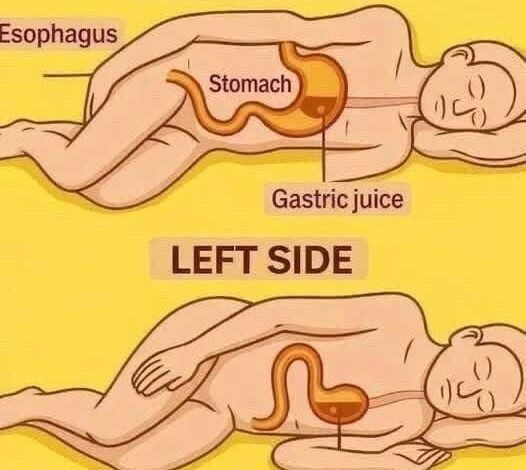
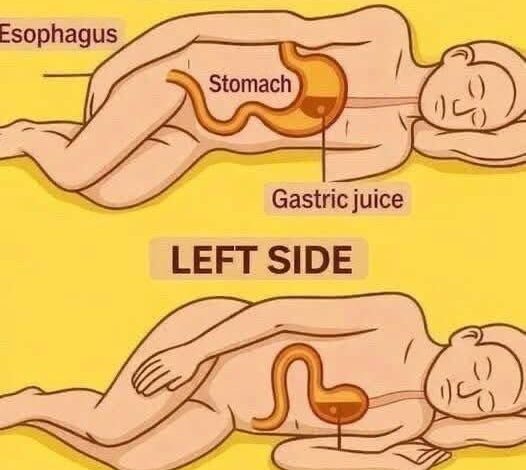
When a person lies on the right side, the position of the stomach may place its contents closer to the junction between the stomach and esophagus. In people who are prone to reflux, this may make it easier for acidic contents to move upward. Studies examining body position and reflux have found that right-side sleeping can be associated with longer acid-clearance time in the esophagus and more prolonged nighttime reflux in some individuals.
By comparison, lying on the left side may help position the stomach so that acid is less likely to reach the lower esophagus. This is not a guarantee against symptoms, but it may reduce exposure in people with nighttime reflux. A 2023 systematic review and meta-analysis published in the American Journal of Gastroenterology concluded that left lateral sleeping was associated with reduced nocturnal reflux compared with right-side and back sleeping.
The explanation is largely anatomical. On the left side, the stomach and its contents may remain lower than the point where the esophagus joins the stomach. On the right side, stomach contents can be positioned in a way that may increase contact near that opening. Small differences in posture can therefore affect symptoms, particularly after an evening meal.
Right-Side Sleeping Does Not Automatically Cause Digestive Disease
It is important to keep the evidence in perspective. Sleeping on the right side does not cause reflux disease in every person, and it is not inherently unsafe. Many people sleep comfortably on their right side without heartburn, sleep disruption, or digestive problems. Reflux is influenced by several factors, including individual anatomy, body weight, meal timing, medication use, pregnancy, smoking, alcohol intake, and certain foods or beverages.
A familiar sleeping position should not be viewed as a medical diagnosis. If someone experiences no reflux symptoms, there may be no reason to force a change simply because one position is associated with more reflux in research studies. Sleep quality depends on comfort, pain levels, breathing, personal preference, and other health considerations.
Similarly, changing to the left side cannot confirm that reflux is the cause of poor sleep. Insomnia, stress, sleep apnea, chronic pain, restless legs syndrome, environmental noise, caffeine, and many other issues can interfere with sleep. A helpful change in position can be useful information, but it is not a substitute for a proper medical assessment when symptoms are frequent or concerning.
Who May Benefit From Trying Left-Side Sleeping?
People who regularly experience heartburn or regurgitation after lying down may find it reasonable to try sleeping on the left side. This simple adjustment is most relevant for those who recognize a consistent pattern: symptoms that worsen after dinner, when reclining, or during the night.
Left-side sleeping may also be worth considering for people who wake with throat irritation, nighttime coughing, an acidic taste, or chest burning that improves after sitting upright. These symptoms can have several possible causes, so it is important not to assume reflux is responsible. Still, keeping track of symptoms and sleep position can help identify useful patterns to discuss with a healthcare professional.
Pregnant people may also receive advice to sleep on their side, particularly later in pregnancy. The American College of Obstetricians and Gynecologists notes that side sleeping can be more comfortable during pregnancy, and left-side positioning is often recommended because it may support circulation. Pregnant people with significant reflux should speak with their maternity care provider about safe symptom-management options.
Practical Ways to Reduce Reflux at Bedtime
Sleep position is only one part of managing nighttime reflux. Several evidence-based lifestyle measures may help reduce symptoms, especially when used together. The most useful approach varies from person to person.
Avoid Lying Down Immediately After Meals
Allowing time between dinner and bedtime can reduce the likelihood of reflux. Many clinical organizations recommend waiting about two to three hours after eating before lying down. This gives the stomach time to begin emptying and may limit the amount of food and fluid available to move upward when a person reclines.
Consider Smaller Evening Meals
Large meals can increase pressure within the stomach and may trigger symptoms in susceptible people. Choosing a smaller dinner, eating more slowly, and avoiding overeating may be helpful. This does not require restrictive eating for everyone; it is about recognizing whether meal size appears connected to symptoms.
Identify Personal Food and Drink Triggers
Not every person reacts to the same foods. However, some people report more reflux after alcohol, coffee, chocolate, peppermint, high-fat meals, spicy foods, tomato-based foods, or citrus products. Rather than eliminating many foods without a clear reason, it can be more useful to keep a brief symptom diary. Note what was eaten, when symptoms occurred, and whether symptoms were worse after lying down.
Raise the Head of the Bed if Needed
For people with persistent nighttime symptoms, elevating the head of the bed may be more helpful than adding extra pillows. Clinical guidance often suggests raising the head end of the bed by approximately 6 to 8 inches using risers or a wedge designed for this purpose. Stacking ordinary pillows can bend the body at the waist and may be uncomfortable or less effective for some people.
Review Medications With a Clinician
Some medications can worsen reflux in certain individuals. These may include particular pain relievers, sedatives, some blood pressure medicines, and other treatments. People should not stop prescribed medication on their own. Instead, they should ask a doctor or pharmacist whether a medicine could be contributing to symptoms and whether alternatives are appropriate.
How to Try a Different Sleep Position Comfortably
Changing a long-established sleep habit can take time. People who prefer their right side do not need to expect immediate success when trying the left side. A supportive pillow between the knees can help keep the hips aligned and reduce pressure on the lower back. Hugging a body pillow may also make side sleeping feel more stable and comfortable.
A pillow that supports the head and neck without pushing the head too far upward or downward can improve overall comfort. The goal is not to create a perfect posture but to find a position that supports restful sleep while reducing symptoms where possible.
People with shoulder pain, arthritis, recent injury, or other musculoskeletal concerns may need individualized advice. In those situations, choosing a side solely for reflux relief may not be practical. A clinician, physical therapist, or sleep specialist can help balance digestive comfort with joint and spine health.
When to Seek Medical Advice for Reflux Symptoms
Occasional heartburn is common, but frequent or worsening symptoms should not be ignored. The Mayo Clinic and other medical organizations advise seeking medical guidance when heartburn occurs repeatedly, when over-the-counter treatments are needed often, or when symptoms interfere with daily life or sleep.
Prompt medical evaluation is particularly important for difficulty swallowing, persistent vomiting, unexplained weight loss, signs of gastrointestinal bleeding such as black stools, ongoing chest pain, or symptoms that are new and severe. Chest discomfort can have causes unrelated to reflux, including heart conditions. Anyone with severe chest pain, shortness of breath, fainting, sweating, or pain spreading to the jaw, arm, or back should seek emergency medical help.
A healthcare professional can assess symptoms, review possible contributing factors, and recommend appropriate treatment. This may include lifestyle changes, short-term medication, further testing, or referral to a specialist when needed.
The Bottom Line on Left-Side and Right-Side Sleeping
For people who experience nighttime acid reflux, sleeping on the left side may be a simple adjustment that helps reduce discomfort. The potential benefit comes from the body’s anatomy and the effect of gravity on stomach contents. In contrast, right-side sleeping may make reflux more likely or prolong acid exposure in some people who are already susceptible.
However, no single sleeping position works the same way for everyone. Right-side sleeping does not automatically create illness, and a switch to left-side sleeping is not a replacement for medical care. The most useful approach is to observe personal patterns, make reasonable bedtime adjustments, and seek professional advice when symptoms are persistent, disruptive, or concerning.
Small changes can sometimes make nighttime more comfortable. For someone with reflux, giving the body time to digest before bed, elevating the upper body when appropriate, and experimenting with left-side sleeping may be practical steps toward better rest.
Sources
- Mayo Clinic: GERD symptoms and causes
- National Institute of Diabetes and Digestive and Kidney Diseases: Acid reflux and GERD in adults
- U.S. National Library of Medicine PubMed: Research on sleep position and nocturnal gastroesophageal reflux
- American College of Gastroenterology: Acid reflux information for patients
- American College of Obstetricians and Gynecologists: Sleep positioning during pregnancy
Disclaimer: This content is intended for entertainment purposes only and is not based on real events.