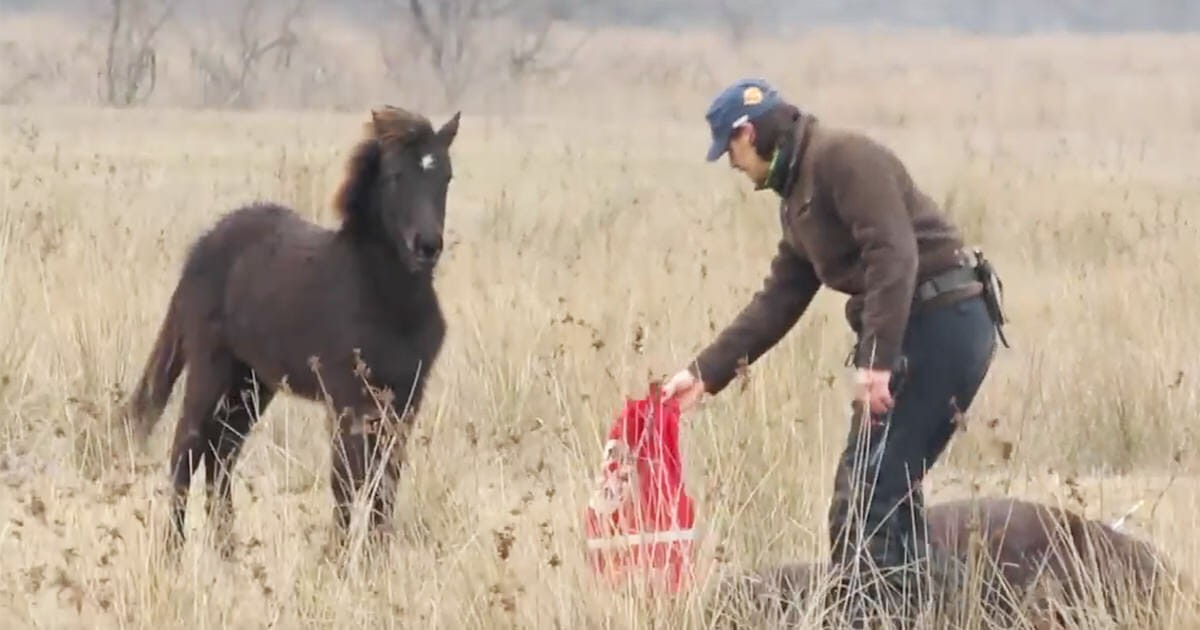

Veterinarian Frees Chained Horse in Romania’s Danube Delta

Horses are highly mobile animals whose health and welfare depend on their ability to walk, graze, rest, and interact with their environment. In Romania’s Danube Delta, a rescue documented by animal welfare organization FOUR PAWS drew attention to the consequences of restraining horses with heavy chains. The footage shows veterinarian Ovidiu Roșu assisting a horse whose movement had been severely restricted by a chain around its leg.
The rescue was widely shared because it offered a clear example of veterinary intervention in a difficult field situation. It also raised wider questions about how free-roaming and semi-feral horses should be managed in areas where animals, farms, protected landscapes, and local communities share the same space.
Animal welfare specialists generally agree that methods used to control horses must minimize pain, injury, fear, and long-term physical harm. Restraints that limit natural movement can create significant risks, especially when they are poorly fitted, left in place for long periods, or used without regular monitoring.
Horse Welfare Concerns in the Danube Delta
The Danube Delta is one of Europe’s most important wetland regions. Located in eastern Romania, where the Danube River reaches the Black Sea, it includes lakes, marshes, reed beds, forests, and grasslands. The area is internationally recognized for its biodiversity and is protected as a UNESCO World Heritage site and Ramsar wetland.
Horses have long been present in and around the delta. Some animals are owned and used in rural communities, while others live with limited human handling or move freely across open land. Their presence can be linked to local agricultural traditions, grazing practices, and the complicated history of animal ownership in the region.
Managing horses in open landscapes can be challenging. Owners may worry that animals will enter roads, gardens, crops, or private property. However, animal welfare groups and veterinary professionals have repeatedly emphasized that attempts to prevent movement should not expose animals to unnecessary suffering. Humane management requires appropriate fencing, identification, regular care, veterinary supervision, and, where needed, responsible population-control programs.
Chains or other restrictive devices can interfere with a horse’s ability to move normally. A horse that cannot take a full stride may struggle to reach food and water, avoid hazards, or maintain balance on uneven terrain. Restriction may also contribute to abrasions, swelling, lameness, infections, and stress-related behavior. The risks increase if metal restraints rub against the skin or are not removed as the animal grows.

Veterinarian Ovidiu Roșu Responds to a Horse in Distress
According to the rescue video released by FOUR PAWS, veterinarian Ovidiu Roșu encountered a horse in the Danube Delta with a thick chain restricting one of its legs. The footage indicates that the restraint had limited the horse’s movement and had caused visible irritation around the affected area.
Roșu is known for his work with FOUR PAWS on animal welfare cases in Romania, including interventions involving horses and other animals in vulnerable conditions. Field rescues of large animals require careful planning because horses can be frightened, powerful, and difficult to handle when they are in pain or unfamiliar with people.
A veterinarian approaching an injured or restrained horse must consider both the animal’s safety and the safety of the rescue team. Sudden movements, noise, or direct pressure can cause a frightened horse to panic. For that reason, experienced responders commonly use calm body language, patient handling, and equipment suited to the specific situation.
The goal is not simply to remove a restraint as quickly as possible. A proper intervention also involves assessing the animal’s condition, reducing stress, checking for wounds, and determining whether further treatment is needed. In some cases, veterinary teams may need to clean injuries, administer medication, monitor mobility, or arrange follow-up care after the immediate danger has passed.
The Rescue Process

In the FOUR PAWS footage, Roșu works patiently to guide the horse into a position where the chain can be safely removed. The operation requires restraint, concentration, and a careful understanding of equine behavior. Although the horse appears uneasy, the veterinarian avoids rushing the process.
Large-animal rescues often depend on building enough trust for an animal to remain still. Horses are prey animals by nature, which means they can react strongly to perceived danger. A person trying to help must therefore avoid actions that could increase fear or cause the horse to bolt while still entangled.

Once the horse is positioned safely, Roșu uses tools to remove the chain. The moment is significant because it demonstrates why trained veterinary assistance matters. Cutting or loosening a restraint without considering the horse’s balance, wound condition, or likely reaction could create additional danger.
The rescue also illustrates a basic principle of animal welfare: physical freedom is closely connected to health. Horses need to move regularly to support circulation, muscle condition, hoof health, digestion, and normal behavior. While every animal-management situation is different, any method that severely restricts movement should be evaluated with animal welfare as the central concern.
Why Restrictive Chains Can Harm Horses
The use of chains to restrict an animal’s movement is sometimes referred to as hobbling or tethering, although methods and severity vary widely. Not all forms of temporary restraint are identical, and horses may be handled with ropes or equipment for short periods under supervised conditions. However, prolonged or injurious restriction is a serious welfare concern.
Veterinary guidance on equine welfare stresses the need for appropriate housing, freedom of movement, access to water and feed, protection from injury, and prompt treatment when illness or wounds occur. A restraint that becomes tight, abrasive, or difficult to remove can compromise several of these needs at once.
Potential effects include skin damage caused by friction, swelling around the lower leg, pain while walking, altered gait, and increased risk of falls. An animal that moves abnormally may also place extra strain on other limbs. If wounds are left untreated, they can become contaminated or infected.
There are behavioral consequences as well. Horses normally spend much of the day walking, grazing, and responding to their surroundings. Severe restriction can prevent these natural activities and may increase anxiety. The internationally recognized “Five Freedoms” framework, which has informed animal welfare policy and practice for decades, includes freedom from discomfort, pain, injury, disease, fear, and distress, as well as the ability to express normal behavior.
Animal welfare advocates say that practical solutions are available. Secure fencing, supervised grazing, better owner education, animal identification, and veterinary outreach can help reduce conflict while protecting horses from preventable harm. In areas with free-roaming animal populations, cooperation among local authorities, veterinarians, animal welfare groups, land managers, and residents is especially important.
A Moment of Release

After the chain is removed, the horse in the video begins to move more freely. While it is not possible to know precisely what an animal is feeling from a brief recording, the change in movement is a visible reminder of how significant physical restriction can be. The horse appears cautious at first, then takes steps without the chain limiting its stride.
The footage also shows the horse standing close to Roșu after the rescue. Viewers may interpret this as a striking interaction between animal and rescuer, but animal behavior should be described carefully. A horse may remain nearby for many reasons, including curiosity, fatigue, reduced fear, familiarity with human presence, or simply its position within the environment. What can be said with confidence is that the intervention removed a harmful obstacle to normal movement.
The video’s emotional impact has helped bring public attention to the value of compassionate, evidence-based animal care. Rescue stories often resonate because they show an immediate improvement in an animal’s circumstances. Yet the broader lesson is that prevention is just as important as emergency response. Ideally, no horse should need to be rescued from an avoidable restraint in the first place.
Responsible Solutions for Horse Management
Horse welfare is not only an issue for veterinarians and charities. It is also shaped by public policy, local infrastructure, economic conditions, and access to animal-care services. Rural communities may face genuine difficulties related to land boundaries, grazing space, veterinary costs, and unplanned breeding. Effective solutions should recognize these realities while maintaining clear standards for humane treatment.
Education can play a major role. Owners and handlers need reliable information about safe containment, nutrition, hoof care, parasite control, vaccinations, and signs that an animal requires medical attention. Local veterinary services and animal welfare organizations can support communities by offering practical training and encouraging early intervention before a problem becomes severe.
Identification and registration can also make a difference. Knowing who is responsible for an animal helps authorities and welfare organizations address neglect, abandonment, or unsafe management practices. Where populations of free-roaming horses create environmental or safety concerns, non-harmful strategies should be considered with guidance from veterinarians, ecologists, and local stakeholders.
The Danube Delta’s ecological importance makes this balance particularly relevant. Conservation efforts must account for wildlife, habitats, tourism, agriculture, and the needs of communities who live in or near protected areas. Humane animal management is compatible with conservation when decisions are based on sound science, local knowledge, and long-term planning.
What the Rescue Means for Animal Welfare Awareness
The rescue of the chained horse is a reminder that animal welfare problems can occur in places that are otherwise celebrated for natural beauty and biodiversity. It also demonstrates the role that trained professionals can play when animals are found in distress.
For members of the public, the most constructive response to a suspected animal welfare problem is usually to contact local veterinary authorities, police, animal control services, or a reputable animal welfare organization. People should avoid attempting a risky rescue alone, particularly when a large animal is injured, frightened, trapped, or near traffic or water.
Documenting concerns responsibly, providing a precise location, and reporting visible injuries can help qualified responders assess the situation. Public attention can encourage accountability, but lasting improvement depends on practical prevention, consistent enforcement of animal welfare laws, and support for responsible owners.
In this case, the work of Ovidiu Roșu and the FOUR PAWS team provided the horse with immediate relief while drawing attention to a wider issue. The images are simple but powerful: a horse with its movement restricted, a veterinarian working patiently, and an animal able to walk away without the chain. That outcome reinforces a principle shared by veterinary professionals and animal welfare organizations worldwide: animals should be handled with care, protected from avoidable injury, and given conditions that support their natural needs.

Sources
Disclaimer: This content is intended for entertainment purposes only and is not based on real events.