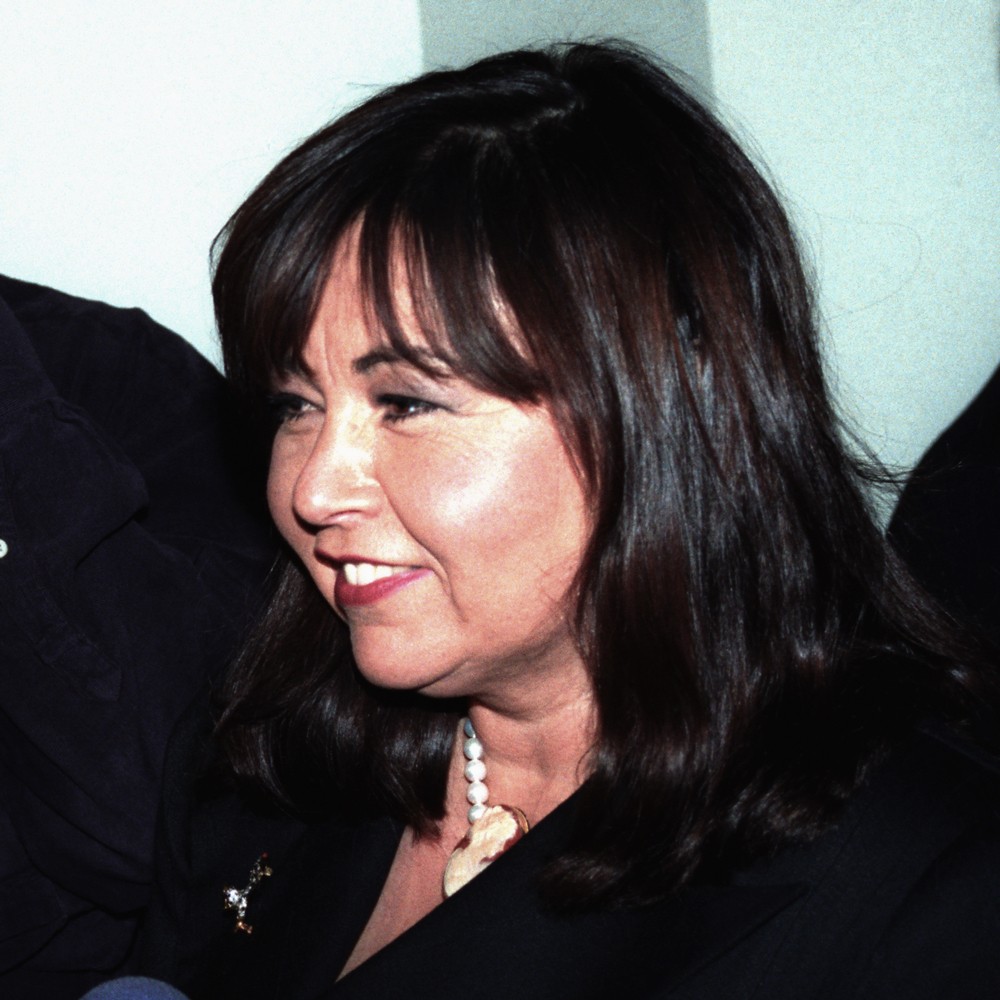

Roseanne: Former Writer Stan Zimmerman Reveals Behind-the-Scenes Stories About Roseanne Barr and the Show’s Most Controversial Moments
The television sitcom Roseanne remains one of the most recognizable American comedy series of the late 20th century. First broadcast in 1988, the show became widely known for its realistic portrayal of working-class family life, financial pressures, relationships, and the everyday challenges faced by ordinary Americans. Its humor, memorable characters, and willingness to address subjects that were rarely explored in traditional sitcoms helped establish its place in television history.
Although audiences primarily remember the series for its comedy and family-centered storylines, the production also experienced difficult creative relationships and disagreements behind the scenes. One person who witnessed some of those experiences firsthand was television writer Stan Zimmerman, who worked on the show’s sixth season.
In an interview with Newsner, Zimmerman discussed his experiences working alongside Roseanne Barr, recalled unusual moments involving the writing staff, and explained how the production approached one of its most talked-about episodes. His recollections offer an interesting perspective on the creative environment behind a successful television program and the challenges of producing comedy that addressed controversial social issues.

Stan Zimmerman Recalls His Time Working on Roseanne
Stan Zimmerman has worked in television and entertainment for years, contributing to several well-known productions. His experience as a staff writer on the sixth season of Roseanne gave him an opportunity to observe the show’s creative process from inside the writers’ room.
During his interview, Zimmerman described an unusual gathering involving Barr, her then-husband Tom Arnold, and the show’s 21 writers. According to his recollection, the writers were instructed to wear T-shirts displaying different numbers.
At first, Zimmerman did not understand the reason for the numbered shirts. He assumed that he could select a number connected to his birthday, October 13, and tried to obtain that particular shirt. As he approached, however, he began to realize that the numbers had a different purpose.
Zimmerman recalled that Barr could theoretically point to a writer by their number and announce that the person was fired. He interpreted the exercise as a prank, although he acknowledged that it also carried an uncomfortable or intimidating element.
The incident illustrates how the working environment could sometimes be unconventional. Television writers are responsible for developing storylines, constructing dialogue, and shaping characters, but their work also depends on communication and trust between the creative team and the people overseeing production.
What Was It Like Working With Roseanne Barr?
Zimmerman described the relationship between Barr and the writing staff as complicated. According to him, the writers did not always feel that their contributions received direct acknowledgment from the show’s leading figures.
He recalled occasionally wondering whether a more personal approach might improve the atmosphere. Zimmerman joked that perhaps Barr simply needed a hug and that showing her more warmth could help establish trust.
His fellow writers, however, reportedly discouraged him from approaching her in that way. Their reactions suggested that they considered it important to maintain professional boundaries around the show’s star.
Despite these experiences, Zimmerman did not describe the creative relationship as entirely negative. He remembered an occasion when Barr directly questioned the writing staff about a particular scene. When she asked who had written the material, the writers initially hesitated before Zimmerman eventually acknowledged their contribution.
He recalled feeling nervous while responding. However, Barr’s reaction was unexpectedly positive: she indicated that she found the material funny.
For Zimmerman, the exchange demonstrated that the writing team could earn her appreciation through its work, even if direct communication was not always straightforward. The story also highlights an important aspect of collaborative television production: successful scripts often depend on contributions from people whose work takes place largely outside the public spotlight.
Zimmerman’s Perspective on Barr’s Personal Challenges
In the interview, Zimmerman also discussed his interest in understanding Barr as a person rather than viewing her exclusively through the lens of her public image.
He said that he had read books about her before joining the production because he wanted to understand her background and experiences. He also referred to published discussions of her mental health and the personal challenges she had spoken about publicly.
It is important to distinguish Zimmerman’s personal observations from a clinical assessment. His interview represents one former colleague’s recollections, not an independent medical evaluation or a definitive explanation of Barr’s behavior.
Zimmerman expressed concern about what he perceived as changes in her public communication over the years. He described her more recent public statements as increasingly angry and said he found some of her comments difficult to understand.
His remarks reflect the complicated relationship that can develop between people who have worked together professionally and later become concerned about one another’s public conduct. They also demonstrate why discussions about mental health should avoid reducing an individual’s behavior to a diagnosis or relying on speculation.
The Controversial 1994 Episode Featuring a Same-Sex Kiss
One of the most significant experiences Zimmerman recalled involved the sixth-season episode commonly associated with the title Don’t Ask, Don’t Tell. The storyline featured Roseanne meeting a woman named Sharon at a lesbian bar. Sharon was played by guest star Mariel Hemingway, and the episode included a same-sex kiss between the two characters.
At the time, the storyline represented a notable moment for mainstream American television. In the early 1990s, LGBTQ+ representation in popular sitcoms was considerably more limited than it would become in subsequent decades. Television networks were also navigating concerns about advertiser reactions, audience expectations, and the potential commercial consequences of controversial programming.
Zimmerman recalled that ABC initially objected to the proposed storyline. According to his account, the network expressed concern about the subject matter and whether the episode would be suitable for broadcast.
He said Barr strongly supported the storyline and threatened to buy back the episode so that it could potentially be shown elsewhere, including on HBO. Ultimately, the episode was broadcast on ABC.
Its reception became part of a broader conversation about how television could portray LGBTQ+ characters and relationships. Zimmerman remembered the successful response as evidence that audiences could engage with material that television executives had initially considered commercially risky.
The episode is particularly interesting when viewed within the wider history of American television. During the 1990s, entertainment programs increasingly began exploring questions of identity, relationships, discrimination, and social acceptance. Although progress was uneven, individual episodes sometimes helped expand the range of stories that mainstream television considered appropriate to tell.

The Scene Zimmerman Would Have Changed
Although Zimmerman was pleased that the episode reached television audiences, he also recalled a creative disagreement about how the kiss was presented on screen.
In the finished scene, Roseanne’s character appeared to wipe her arm across her mouth after being kissed by Sharon. Zimmerman explained that this reaction was not part of the original script. According to him, Barr added the gesture spontaneously during the taping.
Zimmerman felt that the reaction weakened the intended emotional message. He believed Roseanne’s character should have appeared surprised and uncertain about what had happened rather than seemingly expressing disgust toward the experience.
He said he raised his concerns with the producer, explaining that he did not think the gesture was funny or appropriate for the moment. However, he also acknowledged that he was not the show’s showrunner and therefore did not have final authority over the scene.
His recollection provides an example of how television writing can change during production. A scene may begin with a carefully developed intention, but performances, improvisation, editing, and production decisions can influence its final meaning.
For writers, this can be challenging. Their responsibility is to communicate their creative opinions while recognizing that television is a collaborative medium in which several people have decision-making authority. Zimmerman described learning to express his views and then accept that the final production might differ from his original intentions.
Roseanne Barr’s 2018 Controversy and the Cancellation of the Revival
Zimmerman’s reflections also addressed the public controversy surrounding Barr in 2018, when her comments about Valerie Jarrett, a former senior adviser to President Barack Obama, prompted widespread criticism.
On May 29, 2018, Barr published a racially offensive tweet about Jarrett. The post drew immediate condemnation from political commentators, entertainment professionals, and members of the public. Barr subsequently apologized, but the controversy had already created serious consequences for the television production.
ABC Entertainment president Channing Dungey announced that the network was canceling the Roseanne revival. In explaining the decision, Dungey said Barr’s statement was inconsistent with the network’s values.
The announcement attracted considerable attention because the revived sitcom had been a major ratings success. The decision also affected the cast and production staff, many of whom had contributed to the show’s return.
Former co-star Sara Gilbert, who played Darlene Conner and also served as a producer, publicly expressed concern about the impact of the controversy. Former cast members and other entertainment professionals also responded to the cancellation.
The situation demonstrated how the actions of a prominent television personality can affect an entire production. It also raised broader questions about accountability, workplace responsibility, public communication, and the relationship between entertainment companies and the people who represent their programs.
In his interview, Zimmerman said he had hoped the incident might lead to a meaningful discussion about racism. He believed that public attention could have created an opportunity to address the issue more constructively. However, he felt that this opportunity was not realized.
His comments reflect a distinction between discussing controversial subjects and making statements that reinforce harmful stereotypes. Television and public entertainment can create opportunities for social discussion, but meaningful conversations require responsibility, accuracy, and respect for the people affected.
Zimmerman Expresses Disappointment Over Barr’s Recent Public Statements
Beyond the 2018 incident, Zimmerman discussed his concerns about Barr’s more recent public presence. He said he found it difficult to watch her become increasingly associated with conspiracy theories and statements that he considered extreme.
His comments were personal rather than an attempt to provide a comprehensive account of Barr’s political views. They reflected the disappointment of someone who had once worked with her and had hoped to see a different direction in her public life.
Nevertheless, Zimmerman expressed a degree of optimism. He said he continued to hope that Barr might eventually change her approach and become more open to constructive conversations.
The contrast between the two figures’ perspectives also illustrates a broader challenge in the entertainment industry. Professional relationships can continue to shape how former colleagues understand public controversies long after a production has ended. At the same time, personal affection or past professional collaboration does not prevent people from criticizing conduct they consider harmful.
Why Roseanne Remains Important in Television History
To understand why Zimmerman’s memories continue to attract interest, it is useful to consider the original series’ broader cultural significance.
Roseanne premiered on ABC on October 18, 1988. Created around the experiences of the Conner family, the sitcom offered a different perspective from many traditional family comedies. Rather than presenting an idealized household, it focused on financial pressures, employment difficulties, parenting disagreements, marriage, and the practical realities of working-class life.
Set in the fictional Illinois community of Lanford, the series featured Roseanne Conner, her husband Dan, and their children. The characters’ everyday experiences provided a foundation for humor while also allowing the program to explore subjects that resonated with many American households.
According to the historical account published by HISTORY, the sitcom became a ratings success and ran for nine seasons during its original broadcast period. Its realistic approach helped distinguish it from other family-oriented television programs of the era.
The show’s willingness to address social issues was another important part of its legacy. The 1994 episode featuring Sharon and Roseanne’s kiss became an example of how mainstream television could introduce LGBTQ+ themes into an established sitcom.
Today, television audiences have access to a wider range of stories involving identity, family structures, and relationships. However, the development of representation has been gradual, and earlier productions sometimes faced substantial institutional resistance when exploring unfamiliar subjects.
For that reason, the history of Roseanne involves more than its ratings or comedic performances. It also provides insight into changing audience expectations, network decision-making, and the evolving relationship between entertainment and social issues.
Stan Zimmerman’s Work Beyond Roseanne
Zimmerman’s career extends beyond his time working on Roseanne. He has contributed to several television productions and has developed a reputation for writing character-driven comedy and stories centered on women and relationships.
He also documented some of his professional experiences in his book, The Girls: From Golden to Gilmore. The publication explores his experiences working with prominent women in television, including performers associated with The Golden Girls and Gilmore Girls, as well as other influential entertainment figures.
The book offers readers a look at the people, creative environments, and professional experiences that have shaped his career. For television enthusiasts, these behind-the-scenes accounts provide additional context about how popular productions are developed and how writers collaborate with performers.
Zimmerman has also been involved in theater. One of his projects is Right Before I Go, a play inspired by the loss of a close friend to suicide. The production approaches a difficult subject through storytelling and encourages conversations about emotional struggles, connection, and the importance of supporting others.
The play represents a different side of Zimmerman’s creative work. While sitcom writing often depends on humor and entertaining dialogue, theater can provide an opportunity to explore deeply personal experiences and subjects that require sensitivity and reflection.
The Lasting Legacy of Roseanne and Its Behind-the-Scenes Stories
Stan Zimmerman’s recollections provide an additional perspective on a television series that continues to generate discussion decades after its original premiere. His stories range from unusual experiences with the writers’ room to disagreements over individual scenes and the production of an episode that became part of television history.
His account also highlights the complicated relationship between creative freedom and network expectations. The 1994 episode featuring Mariel Hemingway demonstrated that television could address subjects that executives initially considered risky. Its eventual broadcast became an important moment in the discussion of LGBTQ+ representation in American entertainment.
At the same time, the events surrounding Barr’s public statements in 2018 demonstrated the importance of accountability in the entertainment industry. A successful television program can have a substantial cultural impact, but its reputation and future are also influenced by the actions of the people associated with it.
For longtime viewers, the original Roseanne remains memorable for its distinctive humor, relatable family situations, and willingness to challenge conventional sitcom storytelling. Zimmerman’s interview adds another dimension to that history by revealing some of the experiences that audiences rarely see.
His perspective is ultimately that of a former colleague reflecting on a complicated professional experience. While his memories cannot represent every person’s experience on the production, they provide an engaging account of the creative decisions, personal interactions, and cultural debates surrounding one of television’s best-known sitcoms.
For fans interested in television history, these stories offer a reminder that the programs appearing on screen are the result of extensive collaboration, creative disagreements, and decisions that can have an impact far beyond a single episode.
Sources
- HISTORY – Roseanne Debuts: The History of the Television Sitcom
- PBS News – ABC Cancels Roseanne Following Barr’s Controversial Comment
- ABC News – Roseanne Barr and the 2018 Television Controversy
- Los Angeles Times – Roseanne’s Kiss: And Now the Aftermath
- NTT InterCommunication Center – Roseanne Kiss: Television and Representation
- Newsner – Stan Zimmerman’s Behind-the-Scenes Memories of Roseanne
- Theatrical Rights Worldwide – Right Before I Go
Disclaimer: This content is intended for entertainment purposes only and is not based on real events.