
**Little House on the Prairie: Behind-the-Scenes Mistakes
Little House on the Prairie remains one of television’s most recognizable family dramas. First broadcast in 1974, the beloved series introduced generations of viewers to the Ingalls family and their experiences in the small Minnesota community of Walnut Grove. Inspired by the books of Laura Ingalls Wilder, the program became known for its stories about family relationships, friendship, personal responsibility, and perseverance.
Although the series presented an appealing picture of 19th-century frontier life, watching it today reveals plenty of production quirks, historical inconsistencies, and continuity mistakes. Some are minor details that most viewers would never notice during an ordinary episode. Others are memorable enough to have become favorite subjects among longtime fans.
From Laura Ingalls’ unusually complicated pregnancy timeline to Nellie Oleson’s unmistakable hairstyle, these details offer an entertaining look at how the production brought its fictional prairie community to life. They also demonstrate the challenges of creating a historical television drama while balancing storytelling, production schedules, costumes, and practical filming requirements.
Here are some of the most interesting mistakes, behind-the-scenes stories, and unanswered questions associated with Little House on the Prairie.
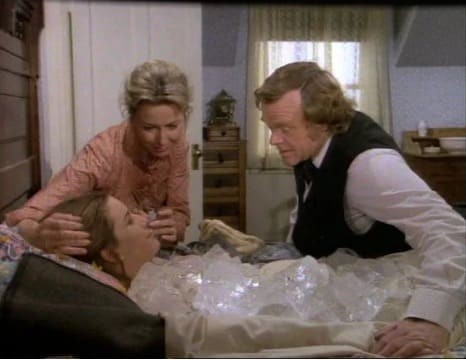
One of the most noticeable continuity issues involves Laura Ingalls’ pregnancy. Her pregnancy storyline begins during the seventh season, particularly in the episode “I Do, Again,” which originally aired in March 1981. Laura announces that she is expecting a child, establishing an important new chapter in her relationship with Almanzo Wilder.
However, viewers following the storyline closely may notice that the passage of time does not always appear consistent. Laura’s pregnancy continues across multiple episodes and into the following season, creating moments when the fictional calendar seems difficult to reconcile with the normal nine-month pregnancy period.
The discrepancy becomes easier to understand when considering how television storytelling works. Episodes are written and filmed according to production schedules rather than a perfectly continuous calendar. Individual stories may take place days, weeks, or months apart, while the actual broadcast schedule follows a different timeline.
The series also occasionally used time jumps to move characters through major life events. Consequently, the chronology of Laura’s pregnancy can appear confusing when episodesriginally broadcast.
Nevertheless, this small continuity issue has become an interesting detail for fans who enjoy examining the show’s timeline.
**Nellie Oleson’s Iconic Curls Were a Wig**
Nellie Oleson is one of the most recognizable characters in Little House on the Prairie. Played by Alison Arngrim, the wealthy shopkeeper’s daughter became famous for her demanding personality, competitive attitude, and frequent disagreements with Laura.
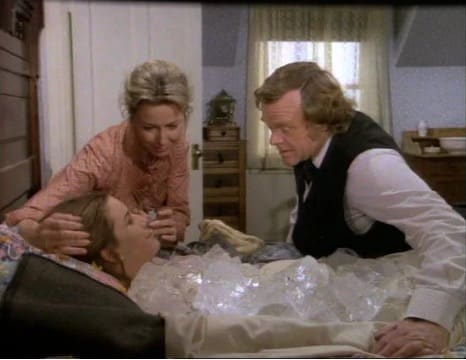
Her appearance was equally memorable. Nellie’s carefully arranged blonde ringlets became an essential part of the character’s visual identity. However, maintaining that hairstyle required considerably more effort than viewers might imagine.
During the show’s early episodes, Arngrim wore her natural hair, which the hairstyling team curled to achieve Nellie’s distinctive appearance. The process was time-consuming, and the curls did not always remain in place throughout filming.
Eventually, the production team introduced a specially prepared wig. This made it easier to maintain a consistent appearance between scenes and reduced the amount of daily styling required. The wig itself presented another challenge because it needed to remain securely attached during movement and physical scenes.
Arngrim’s hairstyle became so closely associated with Nellie that it remains one of the most recognizable costume and beauty details from the entire series.
This behind-the-scenes detail also illustrates the importance of continuity in television production. When a character appears across numerous episodes, maintaining a consistent hairstyle can be just as important as keeping costumes and other visual elements recognizable.
**Colonel Sanders Travels Through Time**
One of the most amusing historical references appears in the eighth-season episode “Wave of the Future.” The storyline involves Nellie’s restaurant and the possibility of transforming its business model into a larger fried-chicken operation.
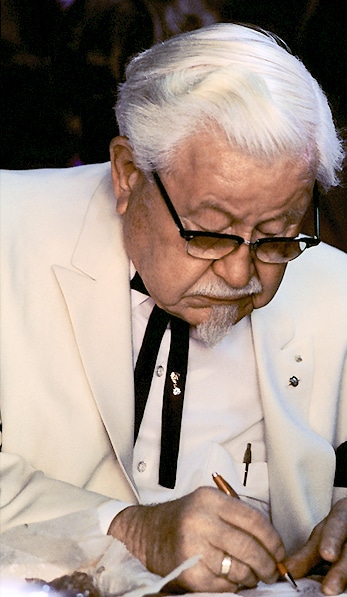
During the episode, a character resembling Colonel Harland Sanders approaches Harriet Oleson with a business proposition. For modern audiences, the reference is immediately recognizable because Sanders later became famous as the public face of Kentucky Fried Chicken, now widely known as KFC.
There is just one historical problem: the fictional events of Little House on the Prairie take place primarily during the late 19th century, while Sanders was born in 1890. His restaurant and franchising activities belong to a much later period.
KFC’s modern history developed during the 20th century, with the company’s franchising expansion beginning in the 1950s. Therefore, a character modeled after Sanders appearing in the prairie setting is an obvious chronological mismatch.
However, it is more accurate to view this moment as a deliberate comedic reference rather than an accidental production mistake. The scene appears designed to give contemporary viewers a recognizable joke about the future of restaurant franchising.
It is a particularly entertaining example of how historical dramas sometimes temporarily abandon strict historical realism to introduce humor that their original audiences would understand.
**The Mystery of Missing Coats**
Cold-weather scenes are another source of amusement for attentive viewers. In the television movie “Bless All the Dear Children,” the story takes characters to Minneapolis during the Christmas season. The setting suggests freezing winter conditions, yet some outdoor scenes show characters wearing relatively light clothing.
For viewers familiar with Minnesota winters, the wardrobe choices can seem surprising. December temperatures in Minneapolis are typically cold enough to require substantial winter clothing, particularly when people spend extended periods outdoors.
The explanation may be connected to the practical challenges of television production. Historical dramas frequently recreate winter conditions in locations and environments that do not naturally match the weather depicted in the story. Wardrobe, artificial snow, camera angles, and carefully scheduled filming all help establish the appearance of a particular season.
However, it is important not to assume that every exterior scene was filmed in the same location or under identical weather conditions. The series used several production facilities and outdoor locations throughout its run.
The contrast between the fictional Minnesota winter and the conditions experienced by actors during filming remains a reminder that television audiences see a carefully constructed version of reality.

**Caroline’s 20th-Century Bra**
Historical costume accuracy is one of the biggest challenges facing any period television production. Little House on the Prairie generally made a strong effort to reproduce the clothing and everyday appearance associated with 19th-century American communities. Nevertheless, some wardrobe details appear more consistent with modern fashion than with the historical setting.
One frequently discussed example involves Caroline Ingalls’ undergarments. Observant viewers have pointed out moments when her clothing appears to reveal a modern-style bra.
The history of the modern brassiere helps explain why this detail attracts attention. Mary Phelps Jacob received a United States patent for an early modern bra design in 1914, decades after the period represented by most of the series.
Women in the 1870s and 1880s used different forms of supportive undergarments, including corsets and other foundation garments. These items were constructed differently from the modern bras familiar to contemporary audiences.
Hairstyles provide another example of the difference between historical appearance and television styling. Some female characters have elaborate curls and carefully arranged hairstyles that look closer to modern entertainment fashion than everyday frontier grooming.
Male hairstyles and facial hair also deserve attention. Although the show frequently presents clean-shaven men, facial hair was common among American men during the late 19th century.
These inconsistencies do not necessarily indicate careless production. Television costumes must accommodate actors, lighting, movement, and the visual preferences of the intended audience. Historical authenticity is important, but practical considerations often influence the final appearance.
**A Dummy’s Big Moment**
Television production has always relied on practical effects and stunt performers to create convincing action scenes. Before modern digital effects became widely available, filmmakers frequently used physical props, stunt doubles, and carefully coordinated camera angles.
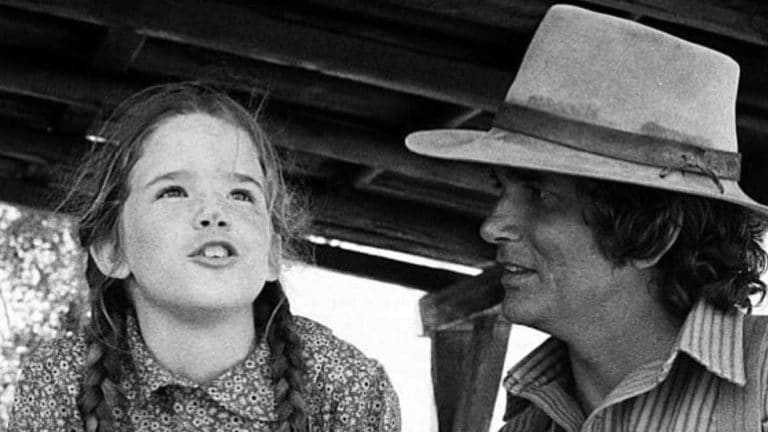
One memorable example can be found in the fifth-season episode “The Odyssey.” The storyline includes a dramatic train sequence involving Albert Ingalls and Laura’s efforts to save him.
Viewers examining the scene closely may notice that the figure used during part of the action appears different from the actor Matthew Labyorteaux. The likely explanation is the use of a dummy or stunt substitute to create the necessary visual effect safely.
Such techniques were common in television and film production. Actors cannot always perform every movement required by a scene, particularly when it involves vehicles, falls, or complicated physical action. A stunt performer or specially prepared prop can provide a safer alternative.
Occasionally, however, the transition between the substitute and the actor becomes noticeable. Differences in movement, body position, or camera framing can make the effect unintentionally amusing.
For modern audiences, these moments offer an interesting glimpse into the practical filmmaking techniques used during the show’s original production era.
**Pranks Galore: Michael Landon’s Frogs**
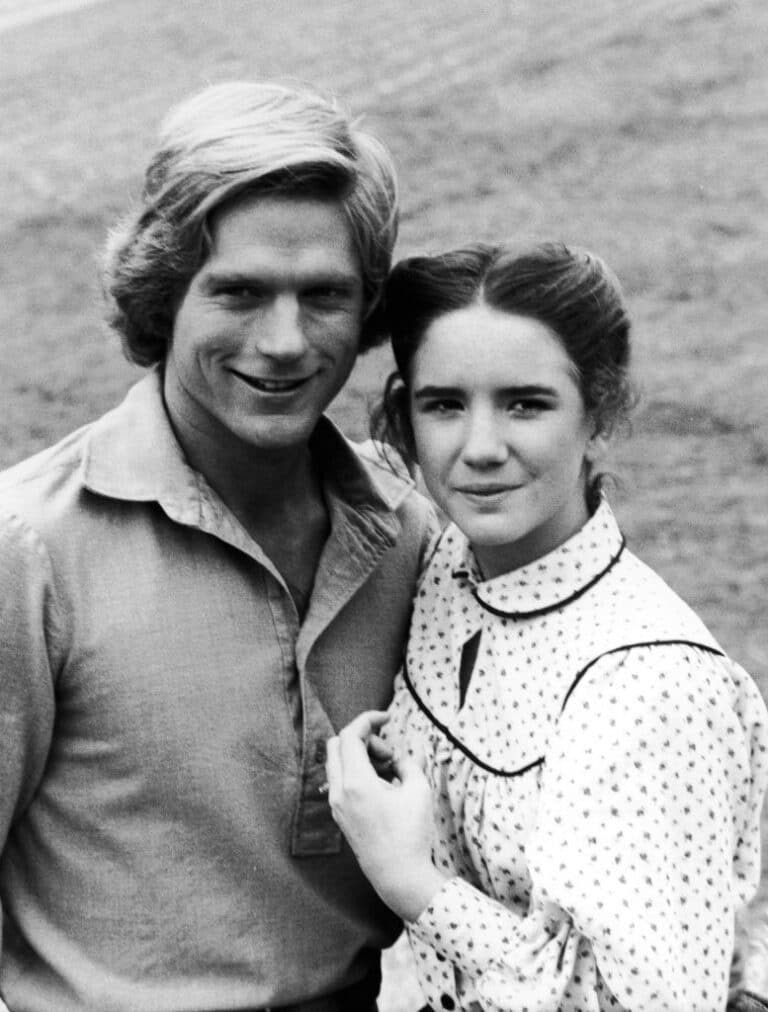
Michael Landon played Charles Ingalls and also served as an important creative force behind Little House on the Prairie. As an actor, director, writer, and producer, he had considerable influence over the show’s production and working environment.
Behind the scenes, Landon was also remembered for his playful personality. Former cast members have shared stories about his sense of humor and his efforts to make long filming days more entertaining.
One particularly unusual story concerns his reported frog pranks. Rachel Greenbush, who played Carrie Ingalls alongside her twin sister Sidney, has been associated with accounts of Landon surprising people on set with frogs.
According to the story, Landon would catch frogs during breaks and use them to surprise unsuspecting cast or crew members. The unexpected appearance of the small animals reportedly created plenty of startled reactions.
Although this anecdote is unusual, it reflects the informal relationships that sometimes developed among cast members during long-running television productions.
Working on a series for several years involves more than memorizing scripts and performing scenes. Actors and production staff spend significant amounts of time together, creating opportunities for friendships, shared experiences, and practical jokes.
Stories like these offer a different perspective on Landon, contrasting the serious and compassionate Charles Ingalls audiences saw on television with the more mischievous personality described by colleagues.
**Melissa Gilbert’s Rift with Michael Landon**
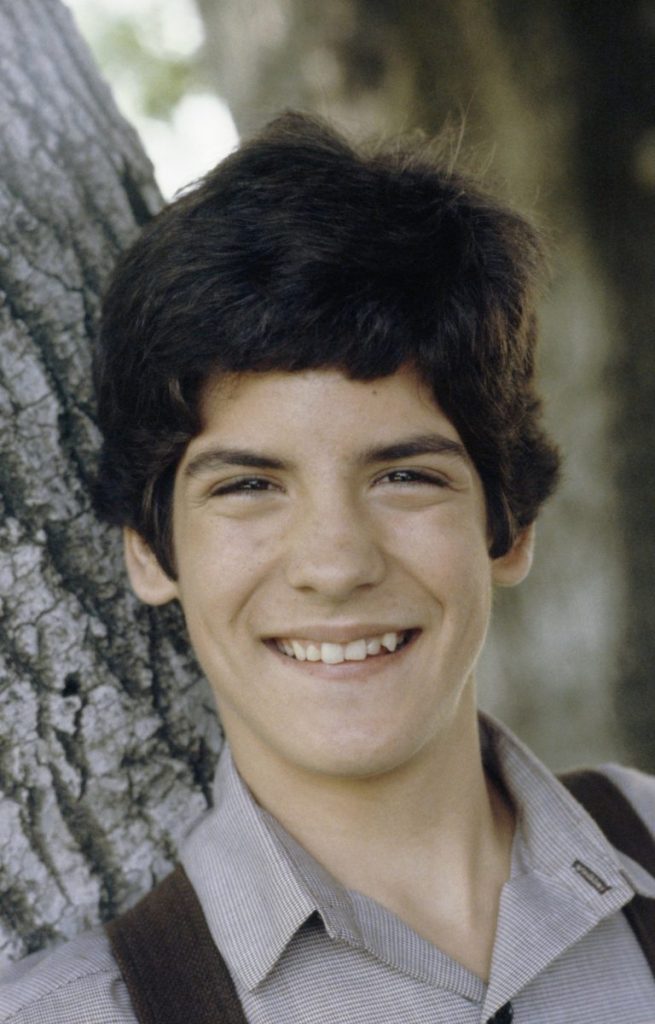
Despite the show’s emphasis on family unity, the relationships among cast members were not always free from complications. Melissa Gilbert, who portrayed Laura Ingalls, has spoken publicly about her close relationship with Michael Landon and the disappointment she experienced when she learned about changes in his personal life.
During the production of Little House on the Prairie, Landon developed a relationship with Cindy Clerico, who worked in the show’s makeup department. The relationship eventually became public and contributed to the breakdown of his marriage.
For Gilbert, the situation was particularly difficult because she had viewed Landon as an important father figure. Their professional relationship had developed over many years, beginning when she was a child actor.
In her memoir, Prairie Tale, Gilbert discussed her memories of Landon and the emotional impact of discovering the relationship. Her account illustrates how personal developments involving a trusted adult can affect someone who has spent much of childhood working alongside that person.
The situation also demonstrates the difference between a fictional family and the real relationships behind a television production. Although viewers may associate actors with the warmth and stability of their characters, performers have private lives and personal challenges of their own.
Gilbert’s reflections have helped audiences understand the more complicated human relationships that existed behind the show’s familiar family atmosphere.
**Albert’s Mysterious Fate**
Albert Ingalls, played by Matthew Labyorteaux, became an important character after joining the Ingalls family. His storyline explored adoption, personal growth, family relationships, and the difficulties of adjusting to a new home.
One of his most emotional appearances came in the 1983 television movie Little House: Look Back to Yesterday. In the story, Albert experiences serious health problems, including nosebleeds and exhaustion. Medical examinations eventually reveal that he has leukemia.
The diagnosis creates an emotional storyline as Albert begins confronting the possibility that his future may be limited. Despite his illness, he wants to spend his remaining time in Walnut Grove with the people who have become his family.
However, the character’s ultimate fate has remained a subject of discussion among fans. The television movie strongly suggests that Albert may not survive, but it does not show an explicit death scene.
There is also a complication involving the regular series. An earlier narrative suggests that Albert eventually returns to Walnut Grove as a doctor many years later. This creates an apparent contradiction between the two storylines.
As a result, viewers have developed different interpretations of what happened to him. The absence of a definitive on-screen resolution has allowed the question to remain part of the show’s continuing fan discussions.
Albert’s story remains memorable because it combines the series’ central themes of family, hope, and perseverance with one of its most emotionally challenging narratives.
**Katherine MacGregor’s Pilgrimage**
Katherine MacGregor became famous for portraying Harriet Oleson, one of the most memorable supporting characters in Little House on the Prairie. Her performance brought humor and conflict to Walnut Grove, making Harriet an essential part of the show’s identity.
Despite the character’s often demanding personality, MacGregor herself was quite different from the fictional Harriet. She was interested in spirituality and maintained a connection to Hindu religious traditions.
MacGregor was notably absent from the 1984 television movie The Last Farewell, which brought the series’ story to a conclusion.
Accounts of her absence have frequently connected it to a pilgrimage to India. Reports from entertainment publications and biographical sources describe her religious journey as the reason she could not participate in the production.
There have also been alternative accounts suggesting that professional disagreements may have influenced her decision not to return. However, these explanations should not be treated as established facts without stronger supporting evidence.
What is clear is that MacGregor’s portrayal of Harriet left a lasting impression. Her character became an important part of the series’ humor and storytelling, demonstrating how a talented supporting actor can help define an entire television production.
**The Traveling Quilt**
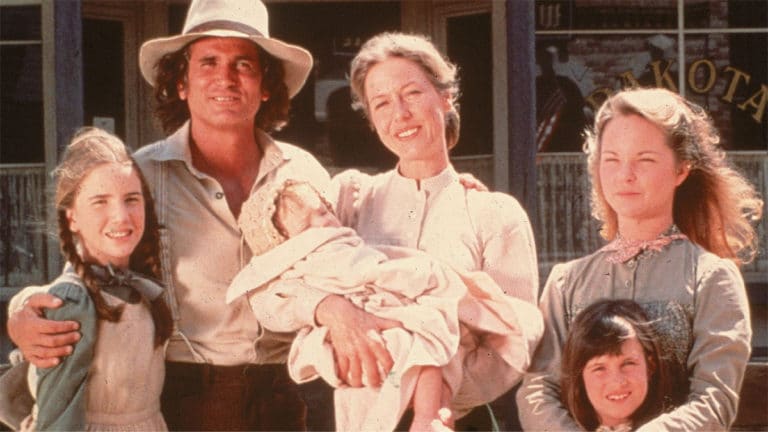
Another interesting detail concerns the household furnishings used throughout the series. Attentive viewers have noticed that a white quilt featuring a double wedding ring pattern appears on different beds in multiple episodes.
This is a relatively minor continuity detail, but it illustrates an important aspect of television production: props are often reused across scenes, episodes, and even different productions.
Producing a long-running historical drama requires a substantial collection of furniture, clothing, household accessories, and decorative objects. Maintaining an entirely separate inventory for every room and episode would be expensive and inefficient.
Reusing suitable furnishings helps production teams manage budgets while maintaining a consistent visual environment. A quilt that appears in one bedroom may later be placed in another location without attracting attention from most viewers.
However, fans who watch episodes repeatedly may begin recognizing familiar objects. These discoveries can become an enjoyable part of revisiting a classic series, particularly when the same prop appears in an unexpected setting.
The traveling quilt is a small example of how production efficiency and continuity intersect in television storytelling.
**The Lasting Legacy of Little House on the Prairie**
Although Little House on the Prairie contains historical inaccuracies, continuity problems, and occasional production mistakes, these details have done little to diminish its cultural importance.
The series remains popular because its central themes extend beyond its historical setting. Stories about family relationships, community cooperation, personal responsibility, and overcoming difficult circumstances continue to connect with audiences across generations.
Its influence also reflects the strength of its performances. Michael Landon, Melissa Gilbert, Karen Grassle, Alison Arngrim, Katherine MacGregor, and the wider cast helped create characters that audiences could remember long after individual episodes ended.
Modern viewers may notice costume inconsistencies, questionable timelines, reused props, and practical effects that appear less convincing by today’s production standards. Yet these imperfections also provide a fascinating record of how television was made during the 1970s and early 1980s.
Ultimately, the enduring appeal of Little House on the Prairie comes from its storytelling rather than its ability to reproduce every historical detail perfectly. Its behind-the-scenes secrets and occasional mistakes simply add another layer of interest to a series that continues to attract longtime fans and new audiences alike.
**Sources**
- Peacock – Little House on the Prairie: I Do, Again
- Little House on the Prairie – Season Seven Episode Guide
- Little House on the Prairie – Season Eight Episode Guide
- Little House on the Prairie – Big Sky Ranch Production History
- UPI – Katherine MacGregor’s Life and Career
- TV Guide – Little House: Look Back to Yesterday
- Hallmark Family – Little House on the Prairie Episode Guide
- Showbiz Cheat Sheet – Melissa Gilbert’s Memories of Michael Landon
Disclaimer: This content is intended for entertainment purposes only and is not based on real events.