

Teenage Heartthrob Left Hollywood to Focus on Family – Now He’s Handsome at 55 & Proud Dad of 6 Kids Who Look Like Him
Growing up in Hollywood can seem like a dream come true. Fame, financial success, recognition, and opportunities to work alongside some of the entertainment industry’s biggest names are often associated with life as a successful young actor. However, growing up in the public eye also brings unique challenges, particularly for children who must navigate adolescence while balancing professional responsibilities and public expectations.
For Kirk Cameron, the actor who became a household name during the 1980s, early success brought opportunities that many aspiring performers could only imagine. Yet his priorities eventually changed. Rather than making Hollywood fame the center of his life, Cameron increasingly focused on his Christian faith, marriage, children, and projects that reflected his personal beliefs.
Best known for portraying Mike Seaver on the popular television sitcom Growing Pains, Cameron became one of the recognizable young television stars of his generation. His career attracted considerable attention, particularly among teenage audiences. However, his journey eventually took a different direction from the conventional Hollywood success story.
Today, Cameron remains involved in entertainment while dedicating much of his public work to faith, family, and values-based filmmaking. His personal journey offers an interesting example of how childhood fame, changing beliefs, and family priorities can influence the direction of a public career.
How Kirk Cameron Became a Hollywood Star
Kirk Cameron was born on October 12, 1970, in Panorama City, California. Unlike many young people who dream of becoming actors, Cameron initially had other ambitions. He reportedly considered pursuing a career in medicine and had expressed an interest in becoming a surgeon.
His introduction to professional acting happened through a family connection. According to biographical accounts, his mother received encouragement from the mother of fellow young actor Adam Rich, who was known for his role in the television series Eight Is Enough.
The suggestion was relatively simple: take Cameron to talent agents and see whether he could find opportunities in commercials. His mother eventually followed the advice, and the decision opened the door to an unexpected career.
Cameron began appearing in advertisements and smaller acting roles. One of his early commercial appearances was for McDonald’s. Although he was not particularly enthusiastic about the audition process, opportunities continued to arrive.
In later interviews, Cameron recalled that preparing for auditions could be frustrating. Having to arrange his appearance, travel considerable distances, and spend time waiting for opportunities was not necessarily what he imagined doing as a child.
Nevertheless, his career progressed quickly. His major breakthrough came in 1985 when he was cast as Mike Seaver in Growing Pains, an American family sitcom that became popular with television audiences.

Growing Pains Turned Him Into a Teenage Heartthrob
Growing Pains became an important part of Cameron’s professional identity. The series followed the Seaver family and explored everyday experiences involving parenting, relationships, school, adolescence, and family responsibilities.
Cameron played Mike Seaver, the mischievous teenage son whose personality frequently created humorous situations. His performance helped make the character one of the show’s most recognizable personalities.
The series ran from 1985 to 1992, giving Cameron several years of exposure to a national television audience. As his popularity increased, he became a familiar face in entertainment publications and teen magazines.
His success was particularly notable because he was still growing up while working on a major television production. Unlike adult performers who enter the industry with established personal identities, young actors must develop their sense of self while managing professional expectations.
His early ambitions also remained different from the direction his career had taken. Cameron had previously considered medicine, but television success had created an entirely different set of possibilities.
His younger sister, Candace Cameron Bure, also became a successful actress. She is widely recognized for playing D.J. Tanner on the sitcom Full House. The siblings therefore experienced childhood exposure to the entertainment industry from different professional perspectives.
Although Cameron became increasingly associated with Hollywood success, his personal outlook was changing. During his teenage years, he began exploring questions about religion, purpose, and the kind of life he wanted to lead.

A Personal Religious Journey Changed His Priorities
One of the most significant developments in Cameron’s life was his growing interest in Christianity. He has explained in interviews that religion was not a central part of his upbringing.
According to Cameron, his family did not regularly attend church when he was growing up. He has described himself as having considered atheism during his teenage years, before experiencing a change in his religious beliefs.
His introduction to Christianity came through an unexpected social connection. Cameron has recounted meeting a girl he liked who invited him to attend church with her family.
His initial motivation was not necessarily spiritual. He later acknowledged that his interest in the girl played a role in accepting the invitation. However, the experience introduced him to religious teachings that encouraged him to reconsider questions about faith and the meaning of life.
Following that experience, Cameron became more interested in Christianity. He began reading the Bible, attending church, and asking questions about religious beliefs, science, and philosophy.
He has described this period as a turning point that influenced his understanding of personal responsibility and his priorities.
It is important to recognize that religious belief is a personal matter, and Cameron’s experience represents his own account rather than a universal explanation of how people develop their faith. Nevertheless, his conversion became a defining part of his public identity.
His changing outlook also affected his professional life. As he became more committed to his beliefs, he began paying closer attention to the themes and content of the television projects in which he participated.

His Changing Beliefs Created Challenges on the Growing Pains Set
Cameron’s growing religious commitment reportedly influenced his relationship with the creative direction of Growing Pains. As a young performer, he was becoming increasingly conscious of how certain storylines and dialogue aligned with his personal convictions.
Biographical accounts describe disagreements between Cameron and members of the show’s creative team over particular scripts and themes. He became less comfortable with certain types of material and wanted his professional work to reflect his developing moral perspective.
For television producers, these changes presented practical considerations. A successful sitcom depends on creative consistency, established characters, and cooperation between performers and production teams.
When an actor’s personal convictions begin influencing the material they are willing to perform, discussions about scripts and character development can become more complicated.
Cameron has subsequently spoken about the concerns surrounding his changing beliefs. He recalled that people involved in the production questioned whether his new religious commitment would significantly affect his behavior and ability to continue working on the show.
From his perspective, he was attempting to live according to his understanding of Christianity. However, the situation illustrates the difficulties that can arise when a young actor’s personal development intersects with the expectations of a long-running television production.
Despite these differences, Cameron remained associated with Growing Pains until the series concluded in 1992. His experience should therefore not be described as an immediate or complete departure from Hollywood following his conversion.
Instead, his career gradually evolved toward projects that reflected his religious interests and personal priorities.
Hollywood’s Child Actor Experiences Remain an Important Conversation
Years after Growing Pains ended, the entertainment industry faced renewed public discussion about the experiences of young performers and the responsibility of adults working around them.
The 2024 documentary series Quiet on Set: The Dark Side of Kids TV brought attention to allegations of misconduct and the working environments experienced by some former child actors in television productions.
The series prompted conversations about professional boundaries, workplace oversight, safeguarding, and the responsibilities of television networks and production companies.
Cameron also discussed his experiences involving Brian Peck, a dialogue coach and occasional actor associated with Growing Pains. Following the documentary’s release, Cameron recalled interactions that had made him uncomfortable when he was younger.
Peck was convicted in 2004 of multiple offenses involving a child. His case became part of the wider discussion surrounding the protection of young performers in the entertainment industry.
It is important to distinguish Cameron’s personal recollections from established legal findings and from the experiences of other individuals featured in the documentary. His comments do not establish that every production or person involved in the television industry shared the same problems.
However, the renewed attention highlighted why effective safeguarding procedures, responsible supervision, and clear professional boundaries are essential when children participate in entertainment productions.
For Cameron, these discussions also provided an opportunity to reflect publicly on his experiences as a young actor. He has emphasized the importance of protecting children and ensuring that adults in positions of authority are held accountable for inappropriate conduct.

Kirk Cameron Married Chelsea Noble and Built a Family
While his professional priorities were changing, Cameron was also developing a lasting personal relationship. He married actress Chelsea Noble on July 20, 1991.
The couple had met while working on Growing Pains, where Noble played Kate MacDonald, a character who became Mike Seaver’s girlfriend.
Their relationship developed beyond the television set, and they eventually established a family together. Their marriage has become an important part of Cameron’s public story, particularly because both have spoken about the significance of faith and family in their lives.
Kirk and Chelsea Cameron have six children, including four who were adopted. Adoption has been an important subject for the couple, and their family experience has influenced some of their later professional projects.
Noble was also adopted, giving the subject personal significance for her. The couple has spoken about their commitment to family relationships and the importance of helping adopted children understand their personal histories.
Adoption can involve different experiences for each child and family. Maintaining age-appropriate conversations about family history, identity, and biological origins can be an important part of supporting an adopted child’s development.
The Camerons’ family life has therefore influenced not only their personal priorities but also the subjects they have chosen to explore through entertainment and public appearances.
Rather than completely withdrawing from public life, Cameron increasingly concentrated on balancing professional activities with his responsibilities as a husband and father.
Why Kirk Cameron Decided to Move From California to Tennessee
Another significant change in Cameron’s life came when he decided to relocate from California to Tennessee.
Although he had been born and raised in Southern California, he eventually began considering whether another state would better suit his family’s priorities.
In January 2021, Cameron asked his social media followers for suggestions about places that might appeal to a Californian considering relocation. Tennessee, Florida, and Texas were among the frequently mentioned destinations.
His interest in moving reflected several personal considerations, including political and cultural preferences, family circumstances, and his views about the direction of California.
During the COVID-19 pandemic, Cameron had also expressed criticism of certain public policies and restrictions in California. His opinions reflected his personal political and religious perspectives, which were not necessarily shared by all residents of the state.
In July 2024, he publicly confirmed that he had moved to Tennessee. In an interview with the Washington Examiner, he discussed how his thinking about relocation had developed over several years.
For Cameron, Tennessee offered an opportunity to be closer to family members and live in an environment that he felt was more compatible with his preferred lifestyle.
The decision also reflected a broader pattern of Americans considering relocation for reasons such as housing costs, family connections, employment opportunities, taxes, and personal preferences.
However, individual relocation decisions should not be treated as proof that one state is universally safer or better than another. California and Tennessee have different economic conditions, public policies, housing markets, and cultural environments. What works for one family may not necessarily suit another.
In Cameron’s case, the move represented a personal decision about where he wanted to establish the next chapter of his family’s life.
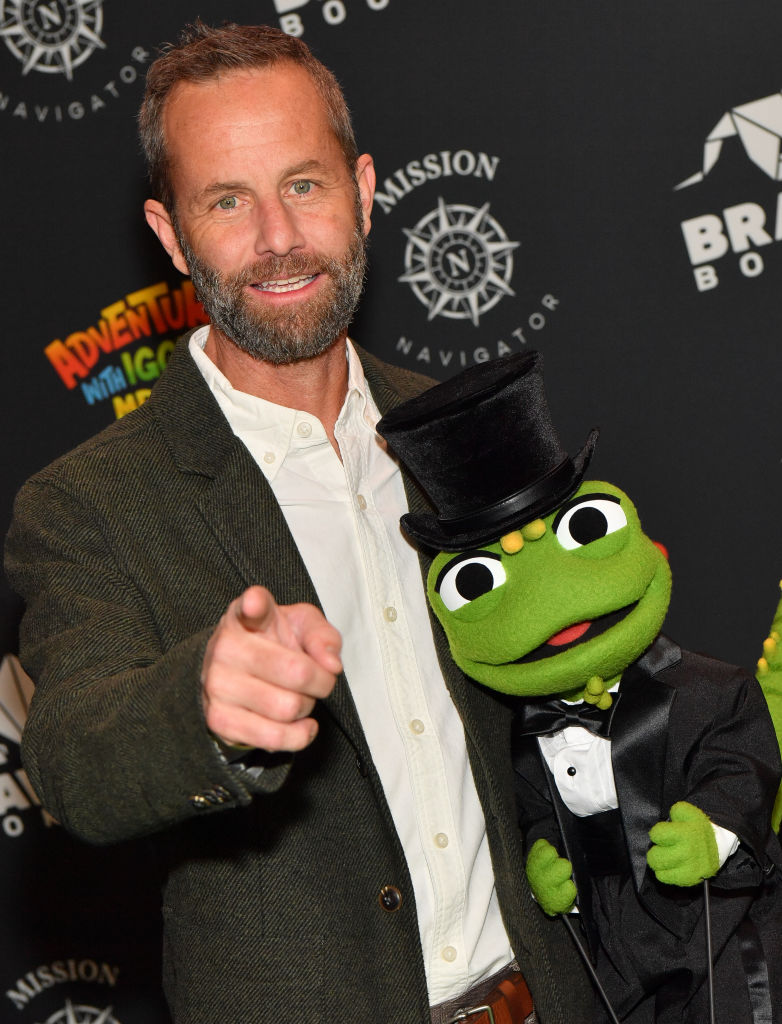
Becoming a Grandfather and Celebrating a New Family Chapter
Family has remained a central part of Cameron’s public identity. In 2024, he shared the news that he had become a grandfather following the birth of his granddaughter, Maya Jeanne Noble Bower.
He celebrated the arrival of the new family member in a social media announcement, expressing excitement about welcoming another generation into the family.
Becoming a grandparent represents a new stage of life for many parents. It often brings opportunities to develop relationships with younger family members while watching adult children establish families of their own.
For Cameron and Noble, the announcement provided another example of how their family has continued to grow over the years.
Although Cameron is known to audiences primarily for his television career, his public statements increasingly emphasize his roles as a husband, father, and grandfather.
These family experiences have also helped shape the themes of his entertainment projects, particularly those involving relationships, personal responsibility, and the importance of family connections.
Lifemark and His Continued Work in Entertainment
Despite becoming more selective about the projects he pursues, Cameron did not permanently abandon the entertainment industry.
One of his notable later projects was Lifemark, a 2022 drama produced in collaboration with the Kendrick Brothers. The film explores adoption, family relationships, and the emotional questions surrounding an adopted person’s search for their biological origins.
The story follows a young man who begins exploring his adoption history after receiving an opportunity to connect with his biological family.
For Cameron, the subject had a personal connection because four of his children were adopted and his wife had also experienced adoption.
The film reflects his interest in producing entertainment that communicates themes consistent with his Christian beliefs and family-oriented outlook.
Adoption is a complex subject that can involve emotional, practical, and legal considerations for everyone involved. Films such as Lifemark provide one perspective on these experiences, although individual adoption journeys can differ considerably.
Beyond acting and filmmaking, Cameron has also participated in religious programming, public speaking, and family-focused initiatives.
His projects include Fireproof, Left Behind, and The Homeschool Awakening. He has also been associated with faith-based television programming and public discussions about parenting, marriage, and religious life.
Another initiative involving Cameron and his wife is Camp Firefly, a summer retreat designed for families affected by serious childhood illnesses. The program reflects their interest in supporting families facing difficult circumstances.
Kirk Cameron’s Life Beyond Hollywood Fame
Kirk Cameron’s journey from teenage television star to faith-focused actor and family-oriented public figure demonstrates how personal priorities can change over time.
His early career brought widespread recognition through Growing Pains, making him a familiar face to television audiences during the 1980s and early 1990s. His later religious development influenced the types of projects he wanted to pursue and the way he approached his professional responsibilities.
His marriage to Chelsea Noble, their six children, their adoption experiences, and their relocation to Tennessee have all become important parts of his public story.
At the same time, Cameron has continued working in entertainment rather than disappearing entirely from the industry. His later projects demonstrate an effort to combine professional opportunities with his religious convictions.
His choices have attracted both supporters and critics, particularly regarding his outspoken views on cultural and political issues. Those opinions form part of his public profile, but they should be distinguished from the independently verifiable details of his career and family life.
Ultimately, Cameron’s story is not simply about a young actor walking away from fame. It is about a performer whose understanding of success changed as he grew older, developed new convictions, and established a family.
From his breakthrough on Growing Pains to his later work on Lifemark, his career has taken a different direction from the one audiences might have expected when he first became a teenage television sensation.
Today, his continued involvement in filmmaking, religious programming, and family initiatives shows that his relationship with entertainment has evolved rather than ended. His experience remains an interesting example of the different ways former child stars can redefine their careers and personal identities as adults.
Sources
- Biography.com – Kirk Cameron: Biography and Career
- Kirk Cameron Official Website – Biography and Family
- Washington Examiner – Kirk Cameron’s Move From California to Tennessee
- Entertainment Weekly – Kirk Cameron Reflects on His Growing Pains Experiences
- Billy Graham Evangelistic Association – Kirk and Candace Cameron’s Faith Journeys
- PragerU – Kirk Cameron’s Professional Background and Projects
Disclaimer: This content is intended for entertainment purposes only and is not based on real events.