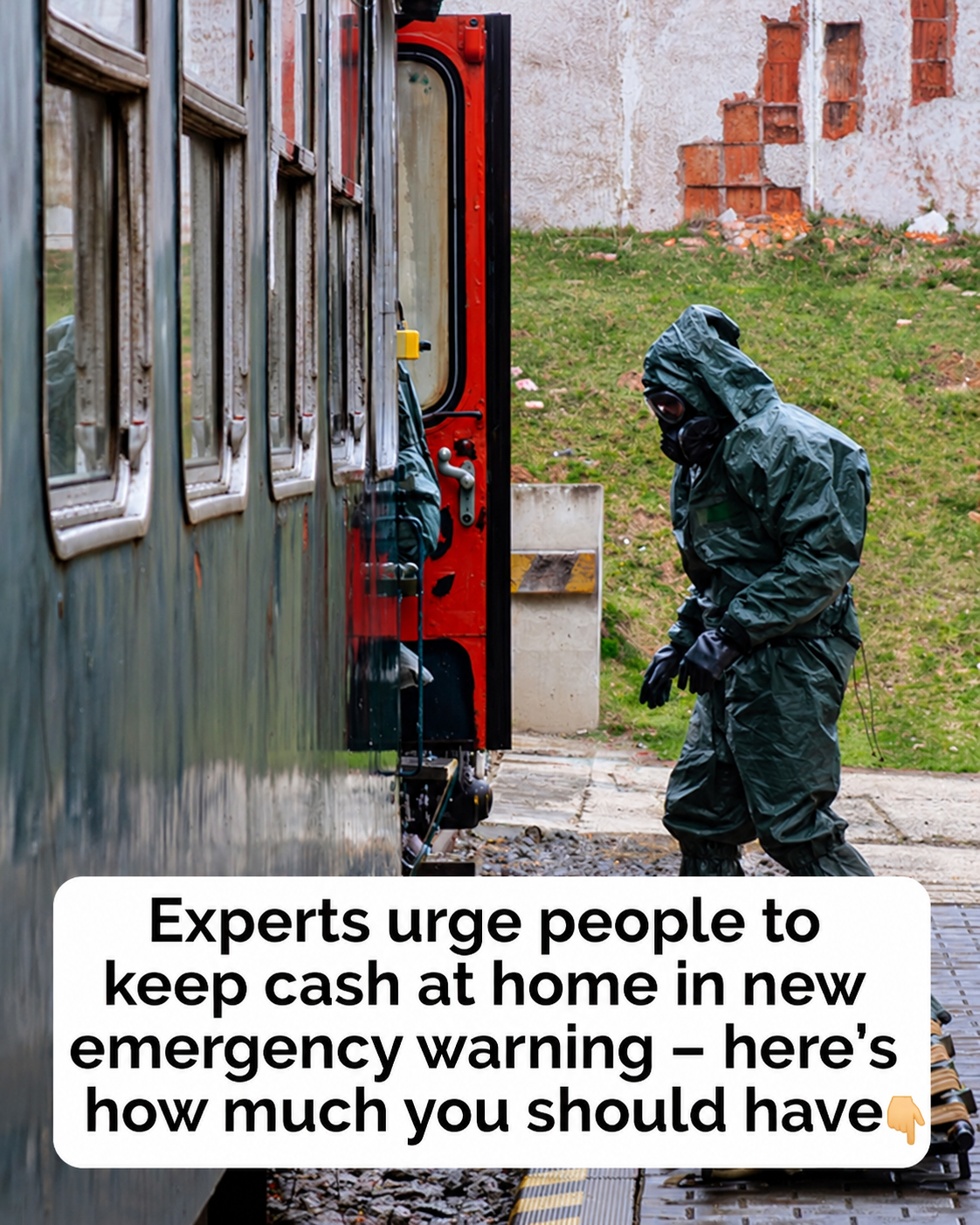

A chilling warning is being sent to UK households: if the lights go out, the internet dies, and card machines stop working, you may have only hours to act. Officials are urging families to stock essentials for at least three days and keep cash ready. The reason is a feared black sky event that could cut off normal life…
The government’s Be Ready campaign says households should prepare for the kind of disruption that could follow a major failure of the electricity grid. In that scenario, power, internet access and even basic services could be knocked out at once, leaving families unable to rely on the systems they use every day. Officials say the goal is not panic, but practical readiness.
Advice includes food, water, medication, printed documents, emergency contacts and a mix of notes and coins, since ATMs and card payments may not work. No fixed amount of cash is recommended, because every household’s needs are different. The message is clear: prepare gradually, before a crisis forces the issue.
What Emergency Planners Mean by a “Black Sky Event”
In resilience planning and national security circles, a black sky event refers to a catastrophic, widespread disruption of critical infrastructure—most notably the bulk power grid—lasting days or even weeks rather than a routine, localized two-hour outage. Unlike standard storm damage that affects a single neighborhood while neighboring towns remain lit, a black sky scenario involves cascading failures across interconnected modern networks.
Modern society relies on electricity as its foundational layer. When high-voltage transmission fails across a broad region, secondary systems begin shutting down within hours once backup batteries and local diesel generators run dry.
Potential triggers identified in national risk registers range from extreme space weather (such as severe solar geomagnetic storms) and unprecedented climate-driven storms to sophisticated cyberattacks targeting energy substations or accidental technical cascades across interconnected European and British power lines.
Why Cash and Analog Backups Matter in a Digital Economy
Over the past decade, the United Kingdom has rapidly transitioned toward a predominantly cashless society. Tap-to-pay cards, smartphone wallets, and online banking have replaced physical currency for everything from morning coffee to weekly groceries. While convenient during normal times, digital payment rails depend entirely on uninterrupted electricity, fiber-optic broadband, and mobile data towers.
During a wide-area outage, even a corner shop willing to stay open by daylight cannot process contactless cards or look up account balances. Holding physical banknotes and coins—particularly smaller denominations—restores the ability to buy bread, batteries, or fuel when electronic terminals go dark.
Moving From Panic Buying to Calm, Incremental Readiness
One of the greatest challenges governments face when issuing civil preparedness guidance is preventing sudden waves of panic buying—a phenomenon familiar from early pandemic lockdowns or fuel shortages, where empty shelves create artificial scarcity even before an emergency begins.
That is precisely why British resilience officials emphasize gradual, low-cost preparation rather than dramatic stockpiling. Buying one extra tin of soup, an extra pack of batteries, or withdrawing an extra £10 in small notes during a routine weekly shop builds a resilient 72-hour buffer over a few weeks without straining household budgets or disrupting supermarket supply chains.
Civil protection experts recommend organizing household readiness around four simple habits:
-
Audit Critical Dependencies: Identify anything in the home that stops working without a wall socket—such as refrigerated medications (like insulin), electric stairlifts, medical oxygen concentrators, or electronic door locks—and establish a manual or battery backup plan.
-
Rotate Pantry Staples: Store non-perishable foods your family actually eats, checking expiration dates every six months so supplies stay fresh and nothing goes to waste.
-
Keep Vehicle Tanks Above Half: Petrol station pumps rely on electricity to operate; maintaining at least half a tank of fuel ensures mobility if stations close temporarily.
-
Agree on a Family Meeting Plan: If mobile networks fail while family members are at school or work, having a pre-agreed meeting spot and written contact numbers prevents confusion.
Resilience as Civic Responsibility
In countries such as Sweden, Finland, and Norway, public preparedness pamphlets instructing citizens how to survive independently for 72 hours to a week have been a normal, uncontroversial part of civic life for decades. By bringing similar guidance to British households, the UK’s Prepare initiative aims to normalize practical self-reliance rather than stoke alarm.
When individual households can sustain themselves safely for the first three days of a major disruption, emergency responders, NHS teams, and utility engineers can focus their resources on restoring critical infrastructure and protecting vulnerable residents who need immediate rescue.
Quiet Preparation Before the Lights Flicker
A black sky event remains a low-probability, high-impact scenario—something every citizen hopes never materializes. Yet history repeatedly demonstrates that modern convenience can breed quiet fragility when we assume power, signal, and payment networks will never falter.
Setting aside a torch, a battery radio, bottled water, essential medicines, and a small envelope of cash does not mean expecting catastrophe. It simply means ensuring that if the grid ever goes quiet for a few days, your household stays calm, connected, and ready until the lights come back on.