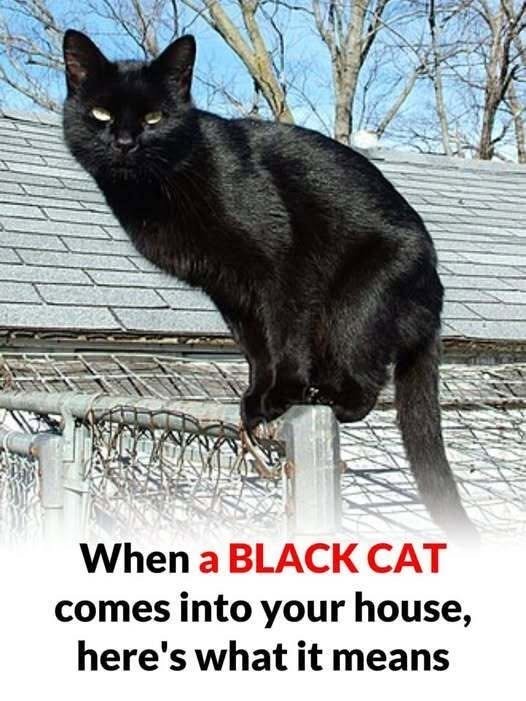

Black Cats Have Been Viewed Differently Across Cultures and History
Black cats have inspired fascination, affection, and superstition for centuries. Their meaning has varied widely according to place, period, religion, folklore, and personal experience. In some societies, a black cat has represented good fortune, protection, or prosperity. In others, it has been tied to anxiety, witchcraft stories, and warnings of bad luck.
These contrasting beliefs say far more about human culture than they do about cats themselves. A cat’s black coat is simply a natural result of genetics, and there is no scientific evidence that its color can predict luck, danger, health, or future events. Even so, black cats remain a powerful cultural symbol, especially around Halloween and in stories about mystery, magic, and the unknown.
Understanding how black cat symbolism developed can help separate historical tradition from modern fact. It also provides useful context for conversations about pet adoption, animal welfare, and the ways myths can influence how people treat animals.
Black Cats in Ancient Egypt
Cats held an important place in ancient Egyptian society. They were valued both for practical reasons, including their ability to control rodents, and for their symbolic connections to protection, family life, and religious belief. Egyptian art and archaeology show that cats were kept in homes and were closely associated with several deities.
One of the best-known feline-linked goddesses was Bastet, often depicted as a woman with the head of a cat or as a seated cat. Bastet was associated with protection, the home, motherhood, fertility, music, and joy. Her role changed over time, but she became especially connected with domestic life and safeguarding households.
It is important to avoid oversimplifying this history. Ancient Egyptians respected cats generally, but surviving evidence does not establish one universal belief that every black cat was considered uniquely lucky. Modern descriptions often blend historical information with later folklore. Still, the ancient Egyptian reverence for cats stands in sharp contrast to the negative associations that developed in parts of Europe many centuries later.
Archaeological findings, including cat burials and votive animal mummies, demonstrate the cultural and religious importance of cats in ancient Egypt. Their presence in art and ritual reflects the relationship people formed with these animals as companions, protectors of food stores, and symbols of valued qualities.
How Medieval European Superstitions Changed the Image of Black Cats
In medieval Europe, attitudes toward black cats became more complicated. Folklore, religious anxieties, and accusations connected to witchcraft contributed to an image of the black cat as an animal associated with secrecy or misfortune. These beliefs were not consistent across all countries or communities, but they became influential in popular storytelling.
During periods when witchcraft accusations were widespread, people sometimes claimed that witches had animal companions known as familiars. In folklore, cats could be portrayed as creatures that carried messages, assisted magical practices, or represented supernatural influence. Black cats, because of their dark coloring and nighttime activity, became especially prominent in these narratives.
Historical scholarship makes clear that witchcraft beliefs caused real harm to people, particularly women, who were accused and persecuted in Europe and colonial North America. Cats also suffered from association with these fears. However, it would be inaccurate to suggest that every medieval community feared black cats or that one single belief governed the entire continent. Local traditions differed substantially.
The lasting image of the black cat as an ominous figure emerged from a mix of folklore, visual art, literature, and later popular culture. By the nineteenth and twentieth centuries, writers and illustrators had further embedded the black cat in Gothic storytelling and Halloween imagery.
Black Cats and Folklore Around the World
Black cat superstitions are not universally negative. In fact, many traditions regard them as fortunate. In parts of the United Kingdom, black cats have long been connected with prosperity and good luck. Some regional customs have described a black cat arriving at a home as a favorable sign, while sailors historically viewed cats aboard ships as useful companions that could help control pests.
British folklore also includes associations between black cats and marital good fortune. In some traditions, a black cat was considered a desirable wedding gift or a sign that a bride’s household would enjoy happiness. These customs illustrate how the same animal could carry entirely different meanings depending on the cultural setting.
In Japan, the maneki-neko, or beckoning cat figurine, is widely recognized as a symbol of welcome and good fortune. While these figures appear in several colors, black versions are sometimes associated with warding off misfortune or protecting against unwanted influences. Such interpretations are cultural symbols rather than measurable facts, but they show the positive role cats can hold in popular traditions.
Folklore in other regions similarly contains mixed ideas about cats. A black cat crossing someone’s path may be viewed as unlucky in one setting and lucky in another. Direction, timing, local history, and individual family traditions can all affect the interpretation. There is no single global meaning behind a black cat entering a house or appearing on a street.
What Does It Mean When a Black Cat Enters Your Home?
From a practical perspective, a black cat entering a home usually means the animal is looking for safety, food, warmth, shelter, or a way back to a familiar place. It may be a neighbor’s pet, a lost cat, or an unowned outdoor cat. Its coat color does not change these ordinary explanations.
For people who value spiritual or symbolic interpretations, a black cat’s arrival may represent a personal moment of reflection. Some may see it as a reminder to pay attention to change, trust their instincts, set boundaries, or offer care to an animal in need. These meanings can be emotionally meaningful, but they are personal beliefs rather than evidence-based predictions.
Psychology offers one explanation for why such events can feel significant. Humans naturally look for patterns and meaning, particularly when an unusual or memorable event occurs. If someone already believes that black cats signal good or bad luck, seeing one may reinforce that expectation. This tendency does not mean a person’s feelings are unimportant; it simply shows how prior beliefs can shape interpretation.
If an unfamiliar cat comes indoors, the responsible response is not to assume it carries a message. Check whether it has an identification tag, ask nearby neighbors, and consider contacting a local animal shelter, veterinary clinic, or animal control organization. Many veterinary clinics and shelters can scan a found cat for a microchip, helping reunite it with its owner.
Black Cats, Halloween, and Popular Culture
Halloween has played a major role in preserving the black cat’s mysterious public image. Seasonal decorations often place black cats beside pumpkins, moons, witches, and bats. These images are usually intended as playful symbols of autumn and fantasy rather than statements about real animals.
Movies, books, television programs, and advertising have also used black cats to create atmosphere. Their dark fur can be visually striking against moonlit or autumn backgrounds, making them a familiar shorthand for mystery in Western popular culture. Unfortunately, repeated use of this imagery can reinforce the idea that black cats are somehow different in temperament from cats of other colors.
Animal behavior experts and veterinary organizations do not support the claim that coat color determines a cat’s personality. Temperament is influenced by many factors, including genetics, early socialization, health, environment, and individual experience. A black cat may be shy, affectionate, energetic, independent, or calm, just like any other cat.
Responsible Halloween messaging is especially important because animals should never be treated as props or abandoned after seasonal events. Families considering adoption should do so because they are ready for the long-term commitment of caring for a pet, not because an animal matches a holiday theme.
Do Black Cats Face Adoption Challenges?
Black cats are often said to be adopted less quickly than cats with lighter or more visually distinctive coats. The issue is sometimes called “black cat syndrome,” though research and shelter data have produced mixed results. Adoption patterns can differ by country, shelter, season, photography quality, age, health, and the number of animals available at a given time.
Some animal welfare organizations have reported that black animals may be overlooked in certain settings, particularly when poor lighting or low-quality photographs make them harder to see online. Others have found that adoption outcomes are more complex and cannot be explained by color alone. The most accurate conclusion is that shelters should monitor their own data rather than assume every location has the same pattern.
Regardless of statistical differences, black cats can benefit from thoughtful adoption promotion. Clear photographs, detailed personality profiles, foster care, and staff knowledge can help potential adopters focus on an animal’s needs and character. A friendly, healthy cat should not be passed over because of a cultural stereotype about fur color.
Prospective adopters should consider practical questions: Can they afford veterinary care, nutritious food, litter, enrichment, and emergency expenses? Is the cat’s personality suited to their home? Are all household members prepared for a commitment that may last well over a decade? These considerations matter much more than appearance.
The Science Behind a Black Cat’s Coat
A black coat is a normal variation in feline coloration. Cat fur color is influenced by genes that affect pigment production and distribution. The dark pigment responsible for black and brown shades is called eumelanin. Genetic combinations can produce solid black coats, black tabby patterns, or coats that appear brownish in strong sunlight.
Some black cats have faint stripes that become visible under bright light. This occurs because many cats carry tabby pattern genes, even when their overall coat appears solid black. Sun exposure, age, nutrition, and normal coat changes can also affect how dark fur looks over time.
Coat color should not be used as a shortcut for judging health or behavior. Regular veterinary care, vaccination decisions made with a veterinarian, parasite prevention where appropriate, balanced nutrition, and a safe home environment are relevant to all cats. Owners should consult a qualified veterinarian if they notice changes in appetite, activity, weight, grooming, or behavior.
Moving Beyond Superstition
Black cat symbolism reveals how traditions can persist long after their original context has changed. Ancient religious imagery, medieval folklore, colonial-era beliefs, seasonal customs, and modern media have all contributed to the animal’s unusual cultural reputation. Yet no superstition can determine whether a cat will bring luck, protection, or misfortune.
For many people, black cats are beloved companions whose presence brings comfort and companionship. Treating them with care, curiosity, and respect is a more meaningful response than relying on fear-based assumptions. Whether a black cat appears at someone’s door, crosses a path, or waits in a shelter for a home, it is first and foremost an animal with ordinary needs for safety, food, health care, and kindness.
Sources
Disclaimer: This content is intended for entertainment purposes only and is not based on real events.