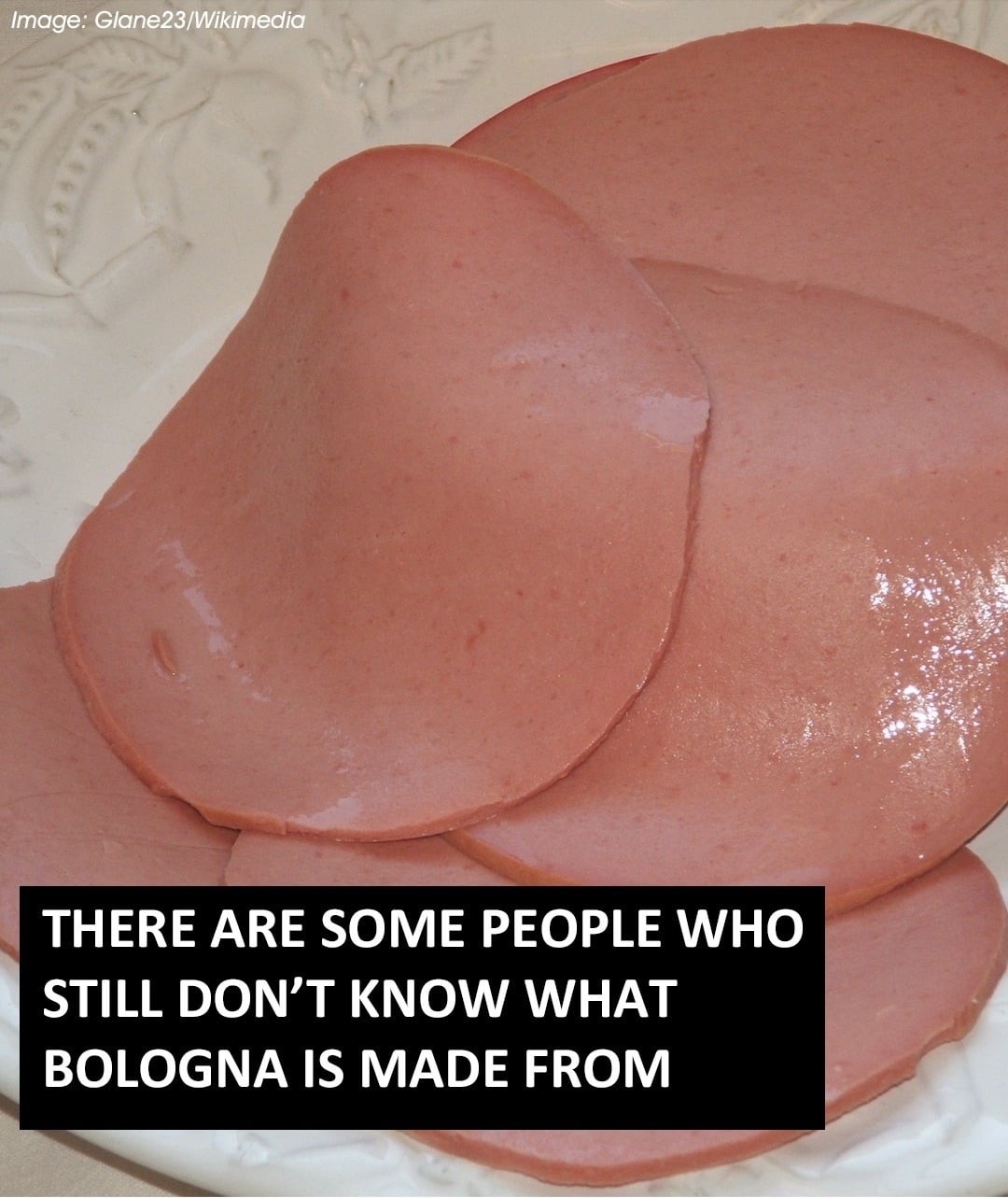

Bologna hides a secret most people never bother to question. It’s in lunchboxes, on cheap white bread, folded into neon-pink circles of mystery. We feed it to kids, joke about it as “junk,” and still keep buying it. What if the story behind that smooth pink slice is far stranger, more historic, and more carefully controlled than you ever imag…
Bologna is less a random “meat mush” and more a tightly regulated, modern descendant of old-world sausage craft. Today’s slices are usually made from beef, pork, chicken, or a blend, finely ground and emulsified into that familiar smooth paste, then cooked and often smoked in either natural or synthetic casings. While people imagine beaks, hooves, and horror stories, U.S. rules and current market demand mean most mass-produced bologna uses standard meat and fat, not the nightmare scraps of urban legend.
Its Italian cousin, mortadella, reveals the product’s heritage: a proud, flavorful sausage from Bologna, Italy, speckled with cubes of fat, peppercorns, and sometimes pistachios. American bologna, by contrast, is streamlined and homogenized, built for uniformity and affordability. Read the label and you’ll see the truth: spices, sweeteners, and emulsified meat—not a health food, but not a mystery monster either, just a processed comfort we’ve chosen to both mock and keep eating.
The Food Science Behind That Smooth, Uniform Texture
To understand why bologna looks and slices so differently from a steak or a coarse bratwurst, you have to look at meat emulsion chemistry. Unlike coarse sausages where visible chunks of muscle and fat are simply minced and stuffed into a casing, bologna is a true batter—a stable suspension of fat droplets, water, and dissolved muscle proteins.
During production, chilled meat trimmings (typically skeletal muscle from pork, beef, chicken, or turkey) are placed into a high-speed bowl chopper alongside ice, salt, curing agents, and spices. The salt extracts salt-soluble myofibrillar proteins (primarily myosin and actin) from the muscle fibers. As the blades spin rapidly, those proteins unwind and coat microscopic droplets of fat, locking water and lipids together so they do not separate during cooking.
That signature rosy-pink hue is not artificial food dye; it is the chemical result of curing—typically using small, federally regulated amounts of sodium nitrite or natural celery-derived nitrates. When heated, nitrite reacts with myoglobin (the natural oxygen-binding protein in muscle) to form nitrosomyoglobin, giving cured meats their familiar pink color while inhibiting the growth of dangerous bacteria such as Clostridium botulinum.
From Renaissance Bologna to the American Lunchbox
Long before bologna became synonymous with budget grocery aisles and late-night fried bologna sandwiches, its ancestor was celebrated as an aristocratic delicacy in northern Italy. By the Renaissance—and officially codified by a cardinal’s decree in Bologna, Italy, in 1661—Mortadella Bologna was governed by strict guild laws dictating exact ratios of finely ground pork shoulder, cubes of prized neck fat (lardelli), black pepper, myrtle berries, and coriander.
When Italian immigrants arrived in North America in the late nineteenth and early twentieth centuries, American meatpackers adapted the concept to suit industrial scale, local palates, and lower-income household budgets.
Separating Regulatory Fact From Urban Legend
Few grocery staples attract more persistent folklore than bologna and hot dogs. Urban legends routinely claim that manufacturers sweep up slaughterhouse floors—grinding ears, snouts, hooves, and unidentifiable offal into the batter.
In reality, federal food labeling laws draw a sharp legal line between skeletal muscle meat and animal byproducts:
-
Standard “Bologna” Labels: Under USDA regulations, a product labeled simply as Bologna, Beef Bologna, or Chicken Bologna must be made from skeletal muscle meat and fat. Non-skeletal organ meats or byproducts cannot be hidden anonymously inside standard bologna.
-
Mandatory Disclosure for Byproducts: If a manufacturer chooses to include edible animal byproducts (such as hearts, tongues, or livers) in a lower-cost product, federal rules strictly require the package to be explicitly labeled “Bologna with Byproducts” or “Bologna with Variety Meats,” listing every organ clearly on the ingredient panel.
-
Inspection and Traceability: Every batch of commercially sold bologna undergoes continuous federal or state inspection, temperature monitoring, and allergen labeling verification before reaching retail shelves.
The Nutritional Reality: Navigating Processed Meats Wisely
Debunking myths about mystery ingredients does not turn bologna into a superfood. Like most cured, emulsified deli meats, conventional bologna is calorie-dense, relatively high in saturated fat and sodium, and classified by nutrition researchers as a processed meat.
For consumers who enjoy its nostalgic flavor or rely on its affordability, reading the nutrition facts panel offers clear, practical guidance:
-
Compare Protein Sources: All-beef and pork-and-beef varieties typically deliver richer flavor and higher saturated fat, whereas turkey or chicken bologna lowers total calories and fat while maintaining a similar texture.
-
Watch Sodium and Serving Sizes: A single two-ounce serving (roughly two standard slices) can contain 450 to 600 milligrams of sodium—nearly a quarter of the recommended daily limit for adults. Pairing bologna with fresh vegetables, whole-grain bread, and mustard rather than salty chips helps balance an everyday meal.
-
Check Ingredient Transparency: Modern brands increasingly offer uncured options (using cultured celery juice rather than synthetic nitrites) and minimal-ingredient labels free from artificial fillers.
Why the Humble Pink Circle Endures
In an era obsessed with artisanal sourdough, organic grass-fed cuts, and complex culinary trends, bologna occupies a uniquely honest space in modern food culture. Nobody buys a pack of bologna expecting fine dining—and therein lies its quiet charm.
Whether crisped in a cast-iron skillet until its edges curl into a smoky cup or layered cold between two slices of soft bread with yellow mustard, bologna represents accessibility, predictability, and shared memory. Strip away the exaggerated horror stories, and what remains is a fascinating intersection of centuries-old Italian charcuterie craft and modern food engineering—hiding in plain sight right inside the deli drawer.