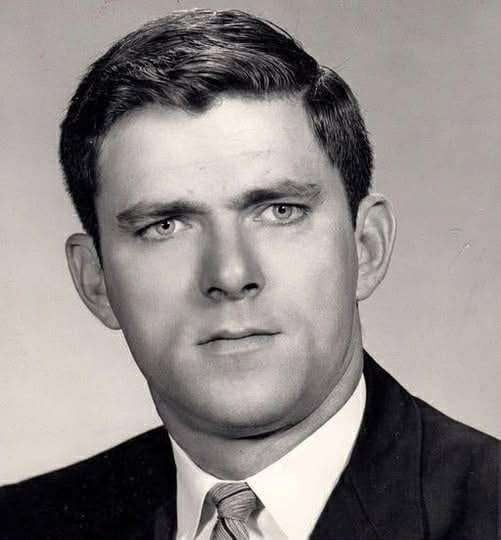

Phil Donahue didn’t just die. A whole way of talking to each other died with him. For half a century, he dragged the hardest truths into daylight and made them sit in the same room as our denial. Now the cameras are dark, the audience chairs are empty, and the nation’s most unlikely therapist has left us alone with our noise. We scroll. We shout. We retreat into feeds that never talk back. But in the quiet after his final sign-off, one brutal question won’t let go: if the man who taught us to really listen is gone, who dares to take the mic next…
Phil Donahue’s absence feels like losing a town square disguised as a talk show. He turned daytime TV into a place where ordinary people could confront power, trauma, and each other in real time. No filters, no delay, just the raw risk of being changed by what you heard. He didn’t promise safety; he promised honesty and a chance to be seen.
In a culture that now rewards instant outrage over patient listening, his legacy is less nostalgia than assignment. We cannot resurrect his studio, but we can resurrect his ethic: sit in the discomfort, ask the question no one wants, and stay long enough to hear the answer. The mic doesn’t pass to a single successor; it splinters into millions of hands. The real tribute to Donahue is terrifyingly simple: stop performing, start listening, and let the next hard conversation actually hurt.
How One Microphone Rewired Daytime Television
When The Phil Donahue Show debuted in Dayton, Ohio, in November 1967, daytime television was largely treated as domestic background noise—populated by game shows, soap operas, and polite homemaking segments. Donahue shattered that convention on his very first broadcast by interviewing atheist activist Madalyn Murray O’Hair, immediately signaling that no topic was too volatile for a weekday morning audience.
His true innovation, however, was spatial and democratic. Rather than anchoring himself behind a polished desk while experts lectured downward, Donahue stepped off the stage, walked straight into the studio risers, and handed the microphone to everyday people.
By turning the studio audience into active participants, Donahue transformed television from a one-way broadcast into a live civic forum. A homemaker in Ohio could directly challenge a sitting U.S. senator, a religious leader, a civil rights activist, or a controversial author—forcing public figures to defend their positions under the unblinking gaze of ordinary citizens.
The Anatomy of Civic Dialogue: Then vs. Now
Over nearly three decades on the air—spanning more than 6,000 episodes—Donahue tackled subjects that commercial networks routinely avoided: reproductive rights, systemic racism, clergy abuse, LGBTQ+ visibility, domestic violence, corporate malfeasance, and war. Looking back from an era defined by social media polarization, the contrast between Donahue’s studio model and modern digital discourse reveals exactly what our culture has lost.
Donahue’s genius lay in his willingness to look vulnerable on camera. He did not pretend to have every answer; instead, he modeled how an intelligent, empathetic adult confronts blind spots in public without retreating into defensiveness.
The Courage to Stand in the Aisles
Running a live, unscripted forum carried genuine professional risk. Sponsors threatened boycotts, station affiliates dropped broadcasts, and critics accused Donahue of courting controversy for ratings. Yet his endurance across 29 years proved that audiences were hungry to be treated like adults capable of wrestling with moral complexity.
His approach reshaped the entire television landscape—paving the way for successors like Oprah Winfrey, Sally Jessy Raphael, and modern town-hall journalism. More importantly, he elevated voices that had historically been sidelined from mainstream media, allowing marginalized individuals to tell their stories in their own words rather than having journalists summarize them from afar.
Carrying the Microphone Forward
The quiet left behind by Phil Donahue’s passing (at age 88 in August 2024) challenges us to look honestly at our own communication habits. Today, nearly everyone holds a broadcasting device in their pocket, yet genuine dialogue feels rarer than ever. It is effortless to post an indignant opinion online; it is extraordinarily difficult to sit across from a neighbor, a family member, or a stranger and ask, “Help me understand why you see the world that way.”
Honoring Donahue’s half-century behind the microphone does not require a television studio or a national syndication deal. It demands practicing three quiet disciplines in everyday life:
-
Trade Performance for Curiosity: Enter difficult conversations aiming to learn something true rather than to score points for an invisible audience.
-
Stay Through the Awkwardness: Resist the reflex to change the subject, reach for a phone, or walk away the moment a topic touches raw emotion or disagreement.
-
Pass the Mic: Actively create space for people whose lived experiences differ from your own, listening without interrupting to prepare a rebuttal.
The Question Left in the Room
Television history will rightfully remember Phil Donahue as a pioneer who invented modern daytime talk and earned the Presidential Medal of Freedom for expanding public discourse.
Yet the true measure of his life will not be written in media archives. It will be decided in living rooms, community meetings, workplaces, and dinner tables wherever people choose face-to-face honesty over comfortable silence. The studio lights may be out, and the aisles may be empty—but the microphone is still live, waiting to see who has the courage to pick it up and truly listen.