
What Are Escalator Side Brushes For?
Millions of people use escalators every day in airports, shopping centres, railway stations, office buildings, and public transport systems. Because they are such a familiar part of daily life, many riders may barely notice the small rows of bristles positioned along the lower edges of an escalator’s side panels. These features are sometimes called escalator side brushes, skirt brushes, or skirt deflectors.
A common assumption is that these brushes are intended to clean shoes. While they may incidentally brush away a little dust from footwear, cleaning is not their main function. Their more important purpose is to help guide passengers away from the narrow spaces near the sides of the moving steps. In other words, they are a visible and tactile part of an escalator’s wider safety design.
Understanding how these brushes work can help passengers make safer choices, particularly when travelling with children, carrying bags, or wearing loose clothing. They are simple features, but they reflect a broader approach to public safety engineering: using design cues to reduce avoidable contact with areas where moving and stationary parts meet.
What Are the Brushes on the Sides of Escalators?
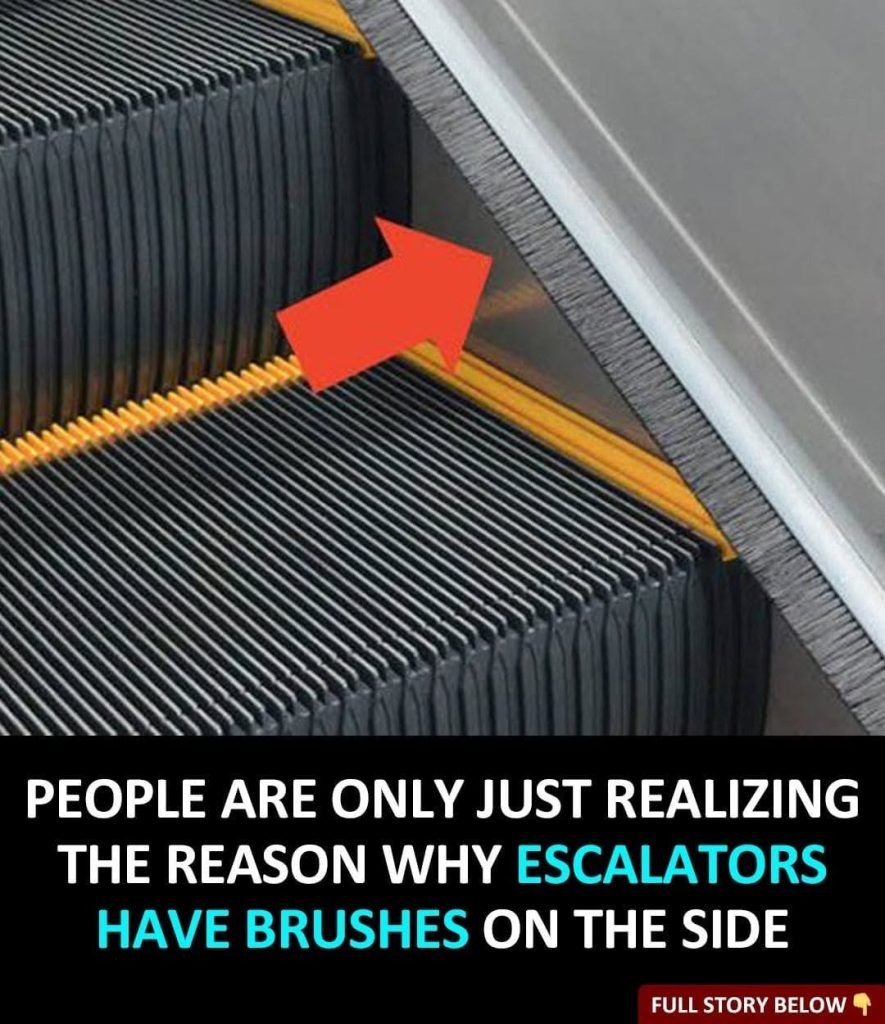
The bristles run along the base of the escalator’s side panels, often known as skirts. These panels sit beside the moving steps and form the familiar sloping walls beneath the handrails. The brushes are installed close to the gap where each moving step passes beside the stationary skirt panel.
Escalator steps are designed to move continuously in a cycle. As they travel upward or downward, they pass near fixed components, including the side panels and the comb plates at the entrance and exit of the escalator. Small clearances are necessary for the equipment to operate correctly. However, passengers should avoid placing shoes, clothing, bags, or other belongings close to these areas.
Side brushes are positioned to make riders more aware of that boundary. If a passenger’s shoe touches the bristles, the sensation can encourage them to shift their foot closer to the centre of the step. This gentle physical reminder is why the feature is often described as a deflector rather than a barrier.
The Main Purpose of Escalator Side Brushes
The primary role of escalator side brushes is to discourage contact with the edges of the steps. They are intended to help keep passengers, footwear, loose items, and clothing away from the skirt area while the escalator is moving.
They do not seal the gap or make it impossible for an object to approach the side of the escalator. A brush is not a substitute for attentive behaviour, maintenance, inspection, or the safety devices built into modern escalators. Instead, it serves as an additional layer of protection by creating a subtle prompt that riders can feel.
This kind of design is useful because people do not always consciously monitor where their feet are placed. A passenger may be reading a phone, speaking to another person, looking for an exit sign, carrying shopping, or helping a child. The brushes provide a low-key reminder without requiring the rider to read a sign or hear an announcement.
Safety experts often describe this principle as a form of behavioural guidance. The feature makes the safer position—the middle of the step—more natural and comfortable than standing right at the edge. It is a practical example of how public equipment can use small design details to promote safer use.
Why the Edges of an Escalator Need Attention
Escalators include many carefully engineered moving parts. Their steps, handrails, chains, drive systems, and landing areas operate together to move passengers efficiently. Although escalators are widely used and are designed with multiple safeguards, riders should still treat them as moving equipment rather than as ordinary stairs.
At the sides of the steps, the moving tread passes close to stationary skirt panels. At the top and bottom landings, step teeth engage with comb plates that help passengers transition between the moving escalator and the fixed floor. These areas are designed and maintained to reduce hazards, but items that are loose, flexible, or poorly positioned can create problems if they come too close to moving components.
Examples may include untied shoelaces, trailing scarves, long garments, shopping bags placed on a step, and soft footwear that presses against the side. The risk is not a reason to avoid escalators altogether. Rather, it is a reason to follow the basic instructions commonly displayed near escalator entrances: stand facing forward, hold the handrail, keep feet within the step boundaries, and keep belongings secure.
Are Escalator Brushes Designed to Clean Shoes?
No. Escalator side brushes are not primarily shoe-cleaning devices. Their location and shape may lead some riders to think they are intended to remove dirt, but that is not their central safety purpose.
The bristles can make contact with the outer edge of a shoe, and that contact may remove a small amount of dust in some cases. However, the brushes are not installed as a cleaning system, and riders should not deliberately rub their shoes against them. Doing so places feet closer to the side of the escalator than recommended.
Similarly, the brushes are not meant to sweep debris away from the escalator’s internal machinery. Escalators require routine cleaning, inspection, and maintenance carried out by trained personnel. Building operators and transport authorities have separate procedures for keeping equipment in safe working order.
How Side Brushes Fit Into Escalator Safety Design
Escalator safety does not depend on one component alone. It relies on equipment standards, professional installation, regular maintenance, emergency controls, inspections, clear passenger guidance, and responsible use by riders. Side brushes are only one element in this system.
Modern escalators may include handrails moving at a matching speed, clearly marked step edges, emergency stop buttons, comb plates, skirt panels, warning signs, and safety sensors or switches. The precise configuration can vary by manufacturer, country, building type, and applicable safety rules. Public transport networks and commercial buildings also frequently use recorded announcements and pictorial signs to reinforce safe behaviour.
The brushes are valuable because they address a simple human factor: people may drift toward the side without realising it. A noticeable but non-alarming contact with the bristles can prompt a small correction before the rider’s shoe or belongings get closer to the skirt panel.
In this sense, escalator brushes complement other safety measures. They are not designed to create fear or inconvenience. Their purpose is to make the recommended riding position easier to maintain during a short journey.
Why Children Need Extra Supervision on Escalators
Children can be especially curious about escalators. They may look at the moving steps, touch nearby surfaces, turn around to speak with a parent, or stand close to the sides. For this reason, safety organisations commonly advise adults to supervise children closely while using escalators.
Parents and carers can reduce risk by ensuring that children face forward, stand still, hold the handrail when they can reach it safely, and keep both feet on the same step. Children should not sit on the steps, play near the side panels, climb on handrails, or place fingers near the edges.
Adults should also pay attention to clothing and footwear. Long laces should be tied, loose items should be held securely, and bulky bags should not be rested on a moving step. If a child is in a pushchair, stroller, or wheeled mobility device that cannot be safely carried according to local guidance, a lift or elevator is generally the more appropriate option.
Escalator side brushes can offer a useful reminder to keep feet centred, but direct adult supervision remains essential. A child may not understand what the brushes indicate or why they should avoid them.
Safe Escalator Habits for Everyday Riders
Most escalator journeys are brief and uneventful, especially when passengers follow a few straightforward practices. These habits are recommended by safety organisations and transport operators around the world:
- Face forward and stand upright on the step.
- Keep both feet within the marked edges of the step and away from the side panels.
- Hold the handrail where practical, especially if balance may be affected by movement, luggage, or crowded conditions.
- Keep shoelaces tied and secure scarves, long clothing, and loose accessories.
- Carry bags rather than dragging them beside the step edge.
- Keep children close and supervise them throughout the ride.
- Use an elevator or lift when travelling with a stroller, large wheeled item, or equipment that cannot be safely managed on an escalator.
- Step off promptly at the top or bottom landing and move clear of the exit area.
Passengers should also avoid using an escalator if it appears damaged, unusually noisy, obstructed, or out of service. In those situations, reporting the concern to staff or building management is more appropriate than attempting to use the equipment.
What to Do if Something Becomes Caught or Feels Unsafe
If a passenger feels unsteady or notices that an item of clothing or a bag is too close to the side, the safest response is usually to remain calm, hold the handrail if possible, and step off at the next landing. Do not try to reach into gaps or interfere with the escalator’s moving parts.
If there is an immediate safety concern, emergency stop controls may be available near the top or bottom of an escalator. These controls should be used only when necessary, as a sudden stop can affect other passengers. Afterward, staff or emergency services should be contacted according to the situation and local procedures.
Building operators should arrange inspection by qualified professionals when equipment needs attention. Escalator repairs and maintenance are specialised tasks, and members of the public should never attempt to remove objects from machinery themselves.
Why Small Safety Features Matter in Public Spaces
The humble escalator brush is easy to overlook, but it illustrates an important idea in public design. Everyday environments are safer when they combine reliable engineering with clear information and practical cues that support good decisions.
Signs tell riders where to stand. Handrails provide stability. Marked step edges improve visibility. Emergency controls allow a response in urgent situations. Side brushes add another small but useful signal by encouraging passengers to stay away from the step edges.
These details matter in high-traffic places, where people of different ages, abilities, and levels of familiarity may use the same equipment throughout the day. A well-designed safety feature does not need to be dramatic to be effective. Often, its value lies in quietly helping people avoid a problem before it develops.
Conclusion: Escalator Brushes Are a Gentle Safety Reminder
The brushes along the sides of escalators are not mainly there to clean shoes. They are designed to encourage passengers to keep their feet and belongings away from the narrow area between moving steps and stationary side panels. By creating a light tactile reminder, they guide riders toward the safer central area of the step.
They are one part of a larger safety system that also depends on proper maintenance, equipment standards, warning signs, handrails, and responsible passenger behaviour. The next time you use an escalator, notice the side brushes, keep loose items secure, stand near the centre, and supervise children closely. These simple habits can help make an ordinary journey safer for everyone.
Sources
Disclaimer: This content is intended for entertainment purposes only and is not based on real events.