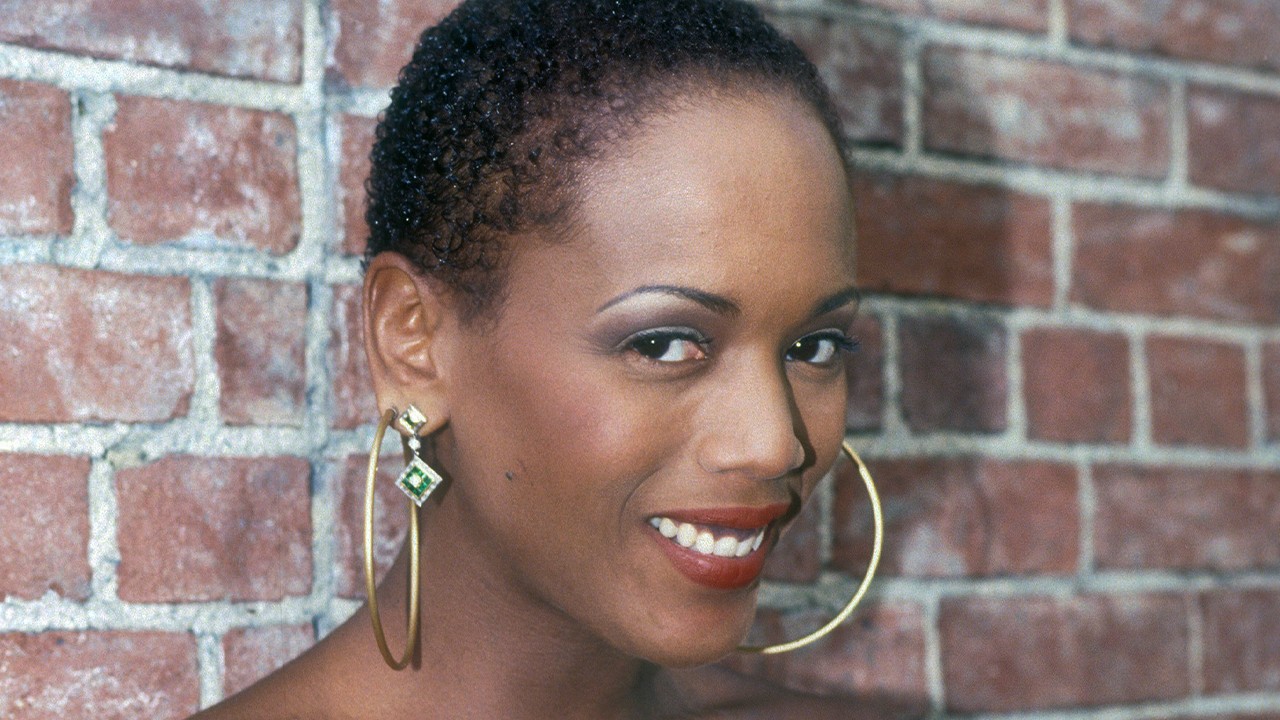

Model and actress Toukie Smith dies at 74

Toukie Smith, the model and actress known for her work in fashion, film and the NBC sitcom 227, has reportedly died at age 74. Her family said she died in New York after a long battle with multiple sclerosis.
Smith built a multifaceted career that moved between high fashion and screen acting at a time when visibility for Black models and performers was expanding, though still limited by longstanding barriers in the entertainment industry. Her work with prominent designers, her television role as Eva Rawley, and her connections to major figures in film made her a recognizable cultural presence across several decades.
According to a statement shared with The Hollywood Reporter, Smith’s twin children, Airyn and Julian, confirmed that their mother died on November 4 at a hospital in New York. They described her illness as a “long, courageous battle” with multiple sclerosis, a chronic condition that affects the central nervous system.
“Toukie was a force of nature,” Airyn and Julian said in their statement. “She left an unforgettable mark on our hearts and on everyone lucky enough to know her.” The family’s tribute reflected the private but influential life Smith maintained beyond her public career.
From Philadelphia to the New York Fashion World
Born Doris Smith in Philadelphia on September 25, 1952, she became widely known by the name Toukie, a nickname given to her by her grandmother. The name stayed with her as she entered New York’s competitive fashion scene and developed a distinctive public identity.
Smith graduated from the Fashion Institute of Technology in New York in 1972. The school has long been known for educating professionals in fashion, design, business and related creative industries, and it offered an important starting point for Smith’s eventual career in modeling.
During the 1970s, fashion was becoming increasingly international, with designers, photographers and models shaping visual culture through runway shows, editorial campaigns and department-store promotions. Yet opportunities for Black models did not always match their talent or influence. Many Black women working in fashion had to navigate an industry in which representation remained inconsistent across magazines, advertising and major runway events.
Smith nevertheless established herself as a notable figure. Her modeling work brought her into contact with internationally respected designers including Hubert de Givenchy, Thierry Mugler and Issey Miyake. Each designer represented a different creative approach: Givenchy was associated with refined Parisian couture, Mugler became known for theatrical and architectural silhouettes, and Miyake earned international recognition for innovative textiles and wearable design.
In 1978, Smith was named Bloomingdale’s Model of the Year, an acknowledgment that reflected her rising profile in New York fashion. At a time when department stores played a major role in retail marketing and fashion promotion, such recognition could help models reach broader audiences and build careers outside traditional editorial work.
Toukie Smith’s Transition From Modeling to Acting
Smith’s career did not remain confined to fashion. Like many models who sought new creative opportunities, she moved into acting, bringing the confidence and visual presence developed through runway and photographic work to television and film.
She appeared in the acclaimed television series Miami Vice, a program that became closely associated with the style, music and atmosphere of 1980s American television. Her work on the series helped introduce her to viewers beyond the fashion world.
Her best-known television role came in 1989, when she joined the NBC sitcom 227 as Eva Rawley. The series, which starred Marla Gibbs, was set in a Washington, D.C., apartment building and focused on the friendships, family relationships and daily experiences of its residents. The program was notable for centering Black characters and performers during an era when such representation was less common on major broadcast networks.
As Eva Rawley, Smith became part of an ensemble that mixed humor with familiar neighborhood dynamics. 227 had already developed a committed audience before Smith joined the cast, and her role added another personality to the show’s community-focused storytelling.
Smith also appeared in films including Talkin’ Dirty After Dark, I Like It Like That and The Preacher’s Wife. These credits reflected her willingness to work across genres and formats rather than being defined solely by her early success as a model.
The Preacher’s Wife, released in 1996, became particularly well known for its ensemble cast and music. Smith’s screen work, while often supporting in nature, contributed to a career that crossed fashion, comedy, drama and popular cinema.
A Private Life in a Public Industry
Away from her professional work, Smith was also known for her relationship with Oscar-winning actor Robert De Niro. The pair began dating in 1988 and remained together until 1996. During their relationship, they welcomed twins, Airyn and Julian, in October 1995 through surrogacy.
Although both Smith and De Niro were public figures, they largely avoided turning their family life into a constant subject of media attention. That choice was consistent with Smith’s stated belief that privacy mattered, even for people whose careers depended on public visibility.
In a 1990 interview with the Los Angeles Times, Smith expressed her view directly: “What’s great about a private life is it’s private.” The observation remains relevant in an era when the personal lives of actors, models and their families can be intensely scrutinized online.
Reports of Smith’s death prompted remembrance of her work as well as sympathy for her children, relatives, friends and colleagues. De Niro had not publicly commented at the time of the initial reporting.
Multiple Sclerosis and Public Awareness
The statement from Smith’s children said that she had lived with multiple sclerosis, often abbreviated as MS. According to the National Multiple Sclerosis Society, MS is a disease in which the immune system attacks the protective covering around nerve fibers in the central nervous system. Its effects can vary significantly from one person to another.
Symptoms may include fatigue, changes in vision, difficulty with balance or coordination, numbness, weakness and cognitive changes. The course of the disease is not the same for every person. Some people experience periods when symptoms worsen and then improve, while others may have more gradual progression over time.
Medical research has advanced the understanding and treatment of MS, and disease-modifying therapies can help many patients manage the condition and reduce disease activity. However, there is currently no single cure that works for every form of MS. Public figures who speak openly about chronic illnesses can help increase awareness, but patients and families also have the right to decide how much personal medical information they wish to share.
Smith’s family described her illness in brief, personal terms rather than providing extensive medical details. That approach preserves her dignity while acknowledging the perseverance often required of people living with chronic neurological conditions and the relatives who support them.
Toukie Smith’s Cultural Legacy
Toukie Smith’s legacy is rooted in the range of her work. She was part of the fashion industry during a period of significant creative experimentation, appearing in circles shaped by major global designers. She later reached television audiences through a popular sitcom and appeared in films that remain part of 1990s American screen culture.
Her career also illustrates how models have expanded their roles beyond the runway. Success in fashion can create visibility, but acting requires a separate set of skills and opportunities. Smith’s willingness to take on television and film roles demonstrated professional versatility at a time when transitions between these industries were not always straightforward.
For viewers of 227, Smith will be remembered as part of a series that gave network television audiences an enduring portrait of Black community life. For fashion followers, she remains associated with a generation of models who helped broaden the industry’s visual vocabulary. For family and friends, public tributes suggest that her legacy was also defined by the more personal qualities of warmth, resilience and individuality.
Her reported death has prompted reflection on a life lived across several creative worlds. While public attention often focuses on celebrity relationships or individual credits, Smith’s career was broader than any single role or association. She made her own mark in fashion and entertainment, and her work continues to be recognized by audiences who encountered her on television, in film and through the style of an important era in New York fashion.
Smith is survived by her children, Airyn and Julian, along with other loved ones. Condolences have been extended to her family and all those who knew her.
Sources
Disclaimer: This content is intended for entertainment purposes only and is not based on real events.