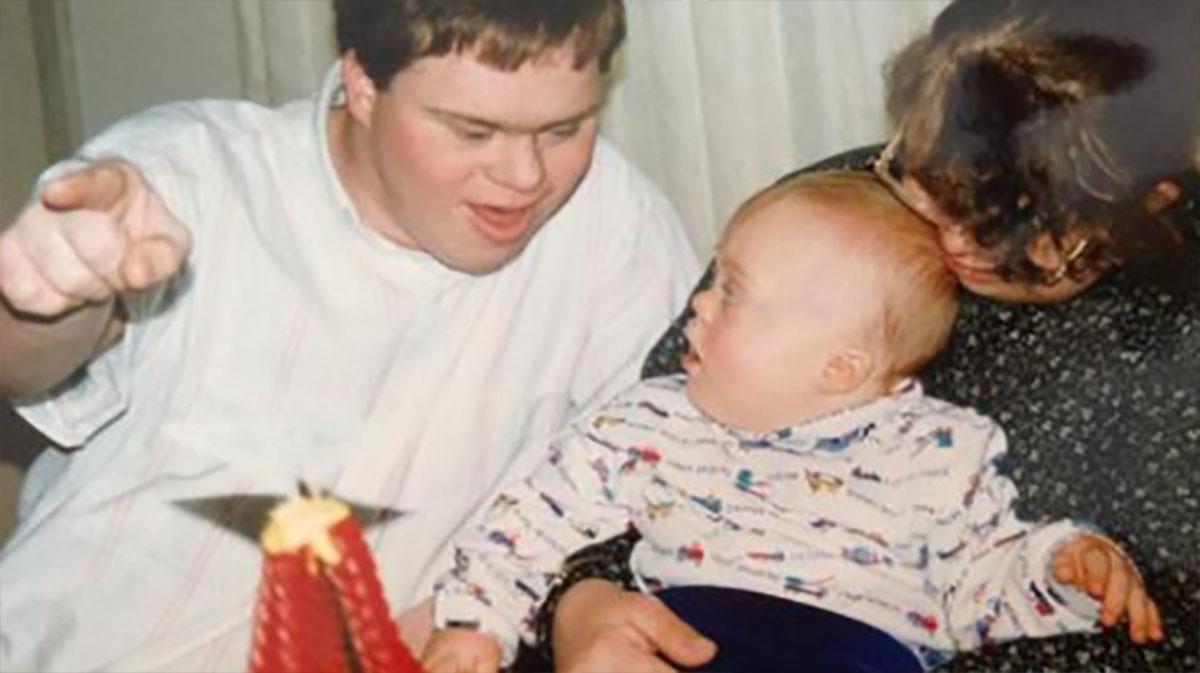

A Mother With Down Syndrome Raises Her Son With Love and Support

Questions about marriage, children, and family life can be deeply personal. Yet many adults still encounter assumptions about the “right” path through adulthood: finding a partner, building a career, marrying, and becoming a parent. Those expectations can be especially burdensome for people with disabilities, whose relationships and decisions are sometimes judged more harshly than those of others.
The story of Lisa White, a woman with Down syndrome from California, and her son Nic has been widely shared because it challenges narrow ideas about disability, adulthood, and parenting. It is also a reminder that people with Down syndrome are individuals with different abilities, needs, goals, relationships, and levels of independence. A diagnosis should not erase a person’s dignity or their right to be treated with respect.
Lisa’s family has spoken publicly about her experience, including in a 2016 profile published by Voice, a magazine associated with Down Syndrome Australia. Their account describes the practical support, health care, family involvement, and determination that shaped Lisa’s path into motherhood.
Understanding Down Syndrome and Adult Independence
Down syndrome is a genetic condition caused by the presence of an additional full or partial copy of chromosome 21. According to the U.S. Centers for Disease Control and Prevention, it is one of the most common chromosomal conditions. Down syndrome can affect physical development, learning, speech, and health in different ways, but every person’s experience is unique.
Many people with Down syndrome participate actively in their communities. They may attend school, work, form friendships and romantic relationships, make decisions about their lives, and live independently or with varying degrees of support. Some people need extensive daily assistance, while others manage many aspects of life on their own. Support needs can also change over time.
In Lisa’s case, her mother, Patti White, said Lisa had established a considerable degree of independence before becoming pregnant. At age 29, Lisa lived in her own apartment, had lived independently for years, and worked full time at a local Goodwill store. Patti told Voice that Lisa enjoyed her job and got along well with colleagues.
This background matters because discussions about disability and parenting are often reduced to assumptions. In reality, a person’s ability to parent depends on many factors: health, emotional well-being, financial circumstances, accessible services, family and community support, housing, education, and the practical help available to the household. These factors are relevant to all parents, not only parents with disabilities.
Lisa’s Pregnancy and a Family’s Response
According to the family’s account, Lisa was in a relationship with a man who also had Down syndrome. The couple lived separately, but Lisa’s mother understood that her daughter was in an adult relationship. Patti said the family had discussed subjects such as contraception and sexual health with Lisa.
At the time, inaccurate assumptions about fertility in men with Down syndrome were common. Medical understanding has developed over time, but the key point remains that fertility varies from person to person. Health professionals should provide accessible, individualized, and evidence-based reproductive health information to people with intellectual and developmental disabilities, just as they should for everyone else.
When Lisa told her mother that she was pregnant, Patti described feeling both surprised and concerned. Her response, however, was grounded in support for her daughter. Family support can be essential during pregnancy and early parenthood, particularly when parents may need help navigating appointments, benefits, child care, transportation, or communication with institutions.
Lisa later described experiencing familiar pregnancy symptoms, including nausea and fatigue, while continuing to work. Like many pregnancies, hers required regular medical monitoring. The family has said that her pregnancy was treated as high risk, a designation that can involve closer observation and individualized care from obstetric and other health professionals.
Nic was born about four weeks before his due date, according to the family’s published account. He also has Down syndrome. His father was present at his birth, and the parents initially attempted to share a home while caring for their son. The arrangement did not continue, and Nic’s father later died when Nic was young.
Lisa and Patti became central figures in Nic’s upbringing. Their experience illustrates a broader reality: parenting is often a shared effort. Grandparents, extended relatives, friends, teachers, support workers, health professionals, and community organizations can all make a meaningful difference in a child’s life. This is true across many kinds of families.
Parenting With a Disability: Why Support Matters
Public debate about parents with disabilities too often begins with doubt rather than support. Disability advocates have long argued that parents should be assessed as individuals, with attention to the practical resources and accommodations that could help a family thrive. A disability alone does not determine whether someone can offer love, stability, guidance, or a safe home.
For parents with intellectual disabilities, useful support may include easy-to-understand parenting education, visual instructions, home-visiting programs, accessible health information, reliable transportation, peer networks, and respectful coordination between family members and professionals. These services should be designed to strengthen a parent’s capacity rather than presume incapacity.
The World Health Organization has emphasized that people with disabilities have the same right to make decisions about their lives, including decisions related to relationships and family life. The United Nations Convention on the Rights of Persons with Disabilities likewise recognizes the rights of persons with disabilities to marry, found a family, retain fertility on an equal basis with others, and receive appropriate support in exercising their responsibilities.
Respecting those rights does not mean ignoring real challenges. Parenting can be demanding for anyone, and some parents require more assistance than others. A responsible approach is neither romanticizing nor dismissing a family’s circumstances. It is recognizing the person, identifying practical needs, and ensuring that support is available without stigma.
Facing Stigma Around Disability, Relationships, and Family Life
Lisa’s family said that outsiders questioned her decision to become a mother. Patti also recounted that some people distanced themselves from Lisa because they feared she might influence other women with Down syndrome to want children. Such reactions reflect a troubling belief that adults with disabilities should be denied the ordinary choices available to other adults.
Stigma can take many forms. It may appear as intrusive questions, low expectations, exclusion from conversations about sexual health, or assumptions that disability makes adult relationships inappropriate. These attitudes can limit access to education and health care while making people feel isolated.
Experts and disability organizations generally emphasize that people with intellectual disabilities need inclusive education about consent, relationships, personal boundaries, contraception, pregnancy, and parenting. Information should be clear, age-appropriate, and accessible. Excluding people from these conversations does not protect them; it can leave them less prepared to make informed decisions and seek help when needed.
Families can also benefit from professional guidance that respects both autonomy and safety. Health care teams, social workers, and disability support organizations can help parents understand available services, plan for changing needs, and build networks that reduce isolation.
Nic’s Life and the Importance of Family Connection
As Nic grew older, Lisa and Patti continued to share updates about their close relationship. In public comments attributed to Nic, he expressed affection and appreciation for his mother, describing her as someone who gave him life and love. Their words offer a personal perspective that is often missing from public discussions about disability.
In a 2016 Facebook post, Patti shared a photograph of Lisa and Nic together and wrote that Lisa was turning 50 while Nic was turning 20. She said the family’s early goal had been to ensure that mother and son could know one another and build a lasting relationship. Patti described their family unit with pride and affection.

Because publicly shared family stories can become outdated, it is important not to make assumptions about Nic’s current age, education, work, or personal circumstances without recent, reliable confirmation. What is clearly documented in the family’s own earlier accounts is the enduring importance of support, connection, and respect.
What This Story Teaches About Inclusion
Lisa and Nic’s story is not a blueprint for every family affected by Down syndrome. No individual family can represent all people with a particular diagnosis. Instead, it offers an opportunity to consider a more inclusive principle: people should be seen as whole individuals, not defined solely by a disability.
Families flourish in different ways. Some parents raise children independently; others depend on co-parenting, relatives, community programs, or formal services. Rather than asking whether a person “like Lisa” should be allowed to become a parent, a more constructive question is how society can ensure that every family has access to fair treatment, accurate health information, and appropriate support.
For readers who know a person with Down syndrome, one practical step is to listen without making assumptions. Encourage self-advocacy, respect privacy, and recognize adult relationships and choices. For communities and institutions, inclusion means offering accessible information, employment opportunities, health care, education, and services that enable people to participate fully in society.
Lisa’s family faced uncertainty and criticism, but their public account centers on resilience and love. It is a meaningful reminder that disability does not cancel a person’s humanity, their relationships, or their place within a family.
Sources
- Centers for Disease Control and Prevention: Facts About Down Syndrome
- World Health Organization: Disability and Health
- United Nations: Convention on the Rights of Persons with Disabilities
- Down Syndrome Australia Voice: “An Unexpected Motherhood”
- National Institute of Child Health and Human Development: Down Syndrome
Disclaimer: This content is intended for entertainment purposes only and is not based on real events.