
TikTok User Says He Found Possible Learjet Debris After Reported West Palm Beach Crash
Claims shared online about a possible Learjet crash near West Palm Beach, Florida, and alleged debris found in a workplace parking lot should be treated with caution unless they are confirmed by official aviation investigators or local authorities. Social media posts can provide early eyewitness accounts, images and videos after an aviation event, but they are not a substitute for evidence collected and assessed by agencies such as the National Transportation Safety Board (NTSB) and the Federal Aviation Administration (FAA).
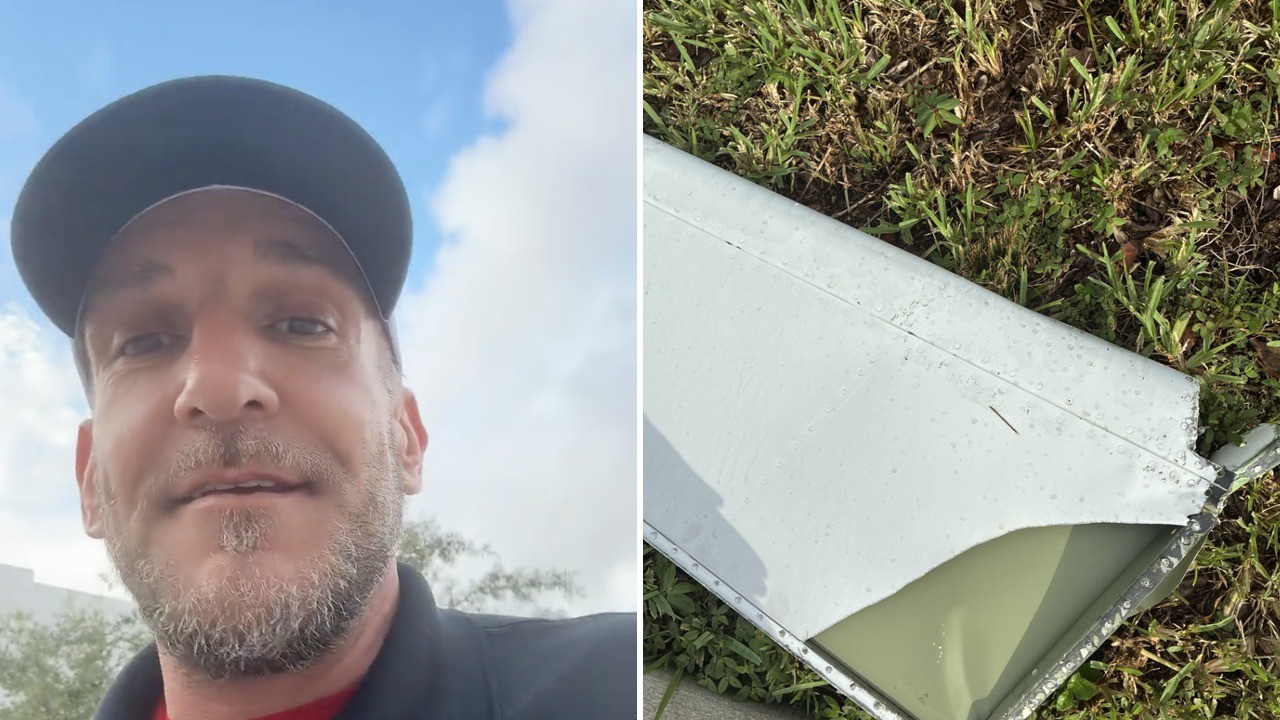
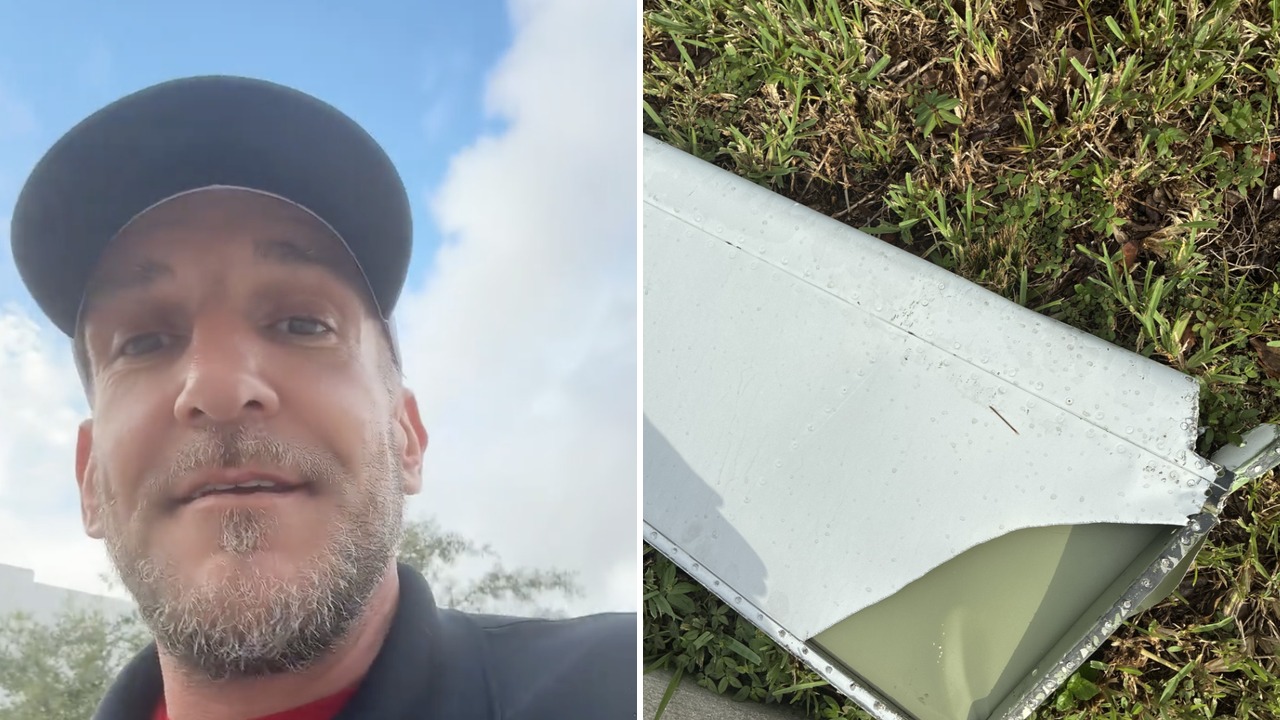
A TikTok user using the account name MoversToTrust said he found an object in a work parking area that he believed could be aircraft debris. In the video, the user said the object was located roughly a mile from the reported crash area and described contacting law enforcement through a non-emergency number after taking a closer look at it.
However, an object photographed or discussed online cannot be reliably identified as part of a specific aircraft without examination by qualified investigators. Aircraft components often contain part numbers, manufacturer markings and maintenance information, but interpreting those details requires access to aviation records and the wreckage investigation. The public should therefore avoid treating social media images as conclusive proof of an aircraft’s condition, the sequence of events, or the cause of an accident.
Why Official Verification Matters After an Aviation Incident
Major aviation incidents can generate an enormous amount of online discussion within minutes. Videos, witness comments, flight-tracking screenshots and photographs may circulate before emergency services have secured the scene. While some of this material can later help investigators establish a timeline, it can also be incomplete, incorrectly dated, edited or associated with an unrelated event.
In the United States, the NTSB is the independent federal agency responsible for investigating civil aviation accidents. The FAA also has an important role in aviation oversight, including aircraft certification, pilot regulation, airport safety and air traffic operations. When an accident is under investigation, authorities generally release verified information gradually as they identify the aircraft, document the wreckage, interview witnesses and review recorded data.
The early stage of an investigation is particularly sensitive. Investigators must first establish basic facts, including the aircraft registration, the operator, the flight’s planned route, weather conditions, communications with air traffic control, maintenance history and the location of debris. Until those details are verified, claims about mechanical failure, pilot actions or external causes remain speculative.
Reports of a Learjet 60 crash, named victims, a specific flight route or comments attributed to investigators should be checked directly against official NTSB and FAA releases, as well as reporting from established news organizations with transparent sourcing. No conclusion should be drawn from viral posts alone.
How Aircraft Debris Fields Are Examined
When an aircraft breaks apart in flight or strikes the ground, the distribution of debris can be a significant part of the evidence. Investigators map the locations of components, record their condition and compare the findings with the aircraft’s design, flight path and known performance characteristics. This work can help investigators determine whether an important component separated before impact or whether it detached as a consequence of impact forces.
A debris field can vary widely in size. The location of material depends on altitude, airspeed, wind, terrain, the angle of impact and the extent of any in-flight breakup. Small, lightweight pieces may travel farther than heavier components. Yet the presence of debris away from a main crash site does not, by itself, establish why an accident occurred.
For that reason, authorities generally ask members of the public not to move suspected aircraft debris. Touching, transporting or altering an object can affect the evidence chain and potentially create safety risks. Some aircraft components may have sharp edges, composite materials, fuel residue, hydraulic fluid or electrical components. People who discover what they believe may be wreckage should keep a safe distance, note the location if possible and contact local emergency services or law enforcement.
Understanding the Role of Tail and Elevator Components
Online discussions about aircraft accidents often focus on visible components, especially parts of the tail. The horizontal stabilizer and elevator are important elements of an aircraft’s flight-control system. In general terms, the horizontal stabilizer helps provide longitudinal stability, while the elevator is a movable control surface used to influence pitch, or the aircraft’s nose-up and nose-down movement.
That basic function does not mean that photographs of a possible tail component can explain an accident. Aircraft are complex systems, and loss of control can involve numerous factors. Investigators may consider mechanical condition, weather, icing, turbulence, flight-control systems, crew actions, instrument data, operational procedures and the aircraft’s structural integrity. They also assess whether damage seen after an accident occurred before or during impact.
In a formal investigation, specialists may reconstruct portions of the aircraft, inspect fracture surfaces, review repair records and send components for laboratory analysis. They can compare damage patterns with aerodynamic loads and examine whether a part shows signs of fatigue, overstress, corrosion or other conditions. Those methods are far more reliable than interpreting a short video or an isolated image.
What Investigators Review in a Private Jet Accident
A Learjet is a family of business jets that has been widely used for corporate travel, charter operations and private transportation. Like all civil aircraft operating in the United States, a Learjet must comply with applicable airworthiness, maintenance and operating rules. The precise regulations can depend on whether the flight is private, chartered, corporate or conducted under another operating framework.
If a business jet accident occurs, investigators typically examine a broad range of evidence. This includes the aircraft’s maintenance status, engine condition, fuel system, flight controls, avionics and any available onboard recording equipment. Depending on the aircraft and its configuration, data may be available from cockpit voice recorders, flight data recorders, electronic flight displays, engine-monitoring systems or portable electronic devices.
Air traffic control recordings and radar information can also help establish the flight’s route, altitude, speed and communications. Weather records are reviewed carefully, including wind, visibility, cloud conditions, precipitation, turbulence forecasts and convective activity. Investigators may also interview air traffic controllers, airport staff, maintenance personnel, witnesses and individuals familiar with the flight’s planning.
The NTSB’s process is designed to identify probable cause and make safety recommendations, not to assign criminal or civil liability. A preliminary report may be released within weeks or months, while a final report can take considerably longer. Complex cases may require extensive testing and analysis before the agency reaches a conclusion.
How Social Media Can Complicate Aviation News Coverage
Social media platforms have changed the speed at which aviation news reaches the public. A witness can upload video from a roadside, parking lot or nearby building almost immediately. This can offer useful context, but it can also amplify uncertainty. Videos may not show the full event, and perspective, sound delay, image quality and camera movement can make it difficult to assess what is happening.
Speculation is especially common when a video appears to show an aircraft descending rapidly, turning sharply or leaving a trail. Aviation experts repeatedly caution that visual evidence alone is rarely enough to identify a specific failure. A dramatic-looking maneuver may be influenced by camera angle, distance, weather, smoke, lighting or a lack of visible reference points.
Claims involving missiles, sabotage, intentional actions or other extraordinary explanations require an especially high standard of evidence. Credible reporting should distinguish clearly between verified facts, witness accounts and unconfirmed online claims. Repeating an allegation without independent support can mislead readers, distress affected families and interfere with public understanding of the investigation.
Responsible coverage should also avoid sharing personal details about possible victims until identities have been formally confirmed by authorities and families have been notified. In the aftermath of any fatal aviation event, accuracy and compassion are essential.
What the Public Should Do When They Find Suspected Aircraft Wreckage
Anyone who believes they have found aircraft debris should not attempt to collect, clean or post identifying markings as proof of an accident theory. The safest course is to leave the object where it is, avoid touching it and report it to local authorities. If there is an immediate fire, fuel smell, smoke or other urgent hazard, people should call emergency services.
Officials may ask witnesses for photographs, video or information about the location and time of discovery. Such material can be useful when provided directly to investigators, along with an accurate description of how it was obtained. It is also important to preserve original files when possible, because metadata and timestamps may assist in verification.
People near an active accident scene should follow instructions from law enforcement and emergency personnel. Crash sites can contain hazards that are not immediately visible, and investigators need to protect the area so evidence can be documented properly.
Waiting for Facts in an Aviation Investigation
The central lesson from any developing aviation story is that early information can change. Initial witness accounts may be revised, aircraft details may be corrected and apparent damage may be understood differently after a technical inspection. Aviation safety investigations depend on methodical evidence gathering rather than rapid conclusions.
For readers following claims about alleged Learjet debris in West Palm Beach, the most reliable updates will come from the NTSB, the FAA, local public safety agencies and established news organizations that cite named officials or official records. If an accident investigation is opened, the agency’s preliminary and final reports will provide the most authoritative account of the event and any safety findings.
Until then, photos and videos shared on TikTok or other platforms should be regarded as unverified public claims, not confirmed evidence about an aircraft accident or its cause.
Sources
Disclaimer: This content is intended for entertainment purposes only and is not based on real events.