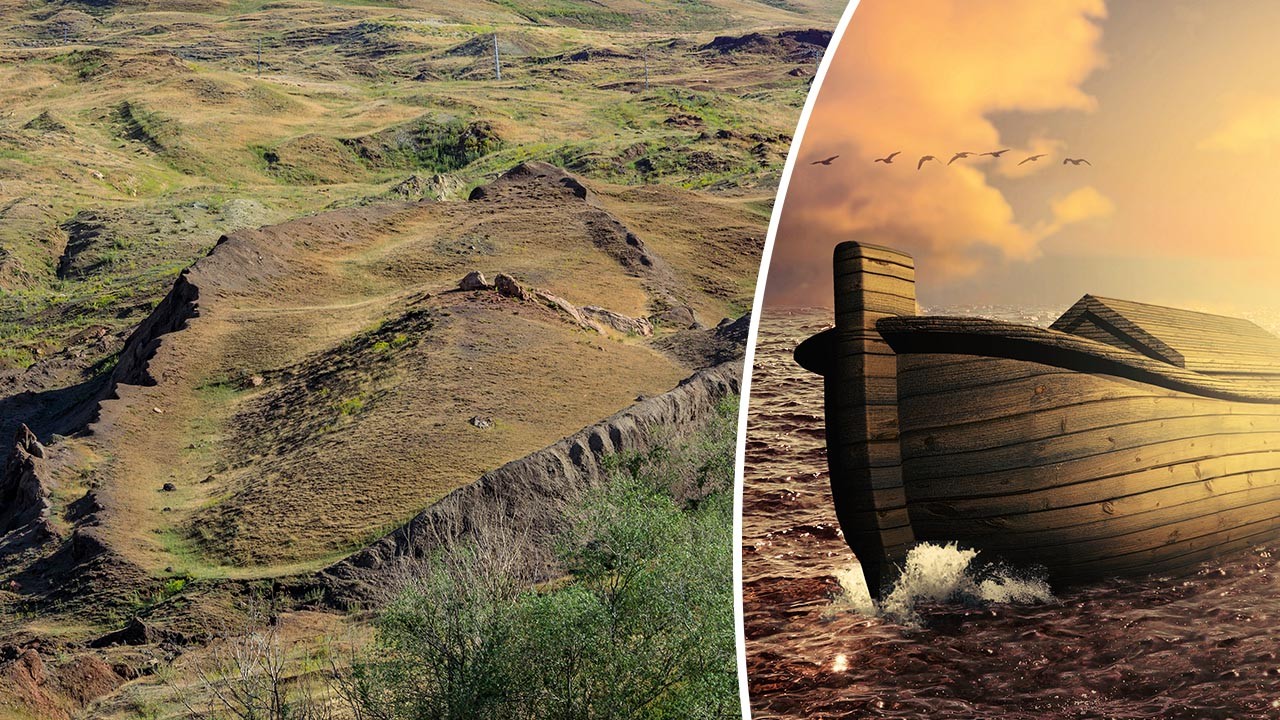

Noah’s Ark is a legendary story recorded in ancient texts, most notably the Bible. Over the decades, there has been global curiosity about the story’s factual foundation and whether any archaeological evidence of Noah’s Ark could be discovered. Among the candidates that have sparked the most intrigue stands the Durupınar formation in eastern Turkey, a site that has delivered both mystery and debate within the scientific and religious communities.
Discovering the Durupınar Formation
Located in the rough, mountainous terrain of eastern Turkey, the Durupınar site rests close to Mount Ararat, a region often cited in traditions as the Ark’s resting place after the biblical flood. The formation attracted widespread attention when it was first identified by Turkish Army Captain Ilhan Durupinar in 1959 during an aerial survey. Its elongated, symmetrical shape immediately sparked theories that it might be more than a mere geological coincidence – perhaps even the legendary Ark itself.
Measuring about 157 meters (515 feet), the Durupınar formation’s length is remarkably similar to the dimensions described in the Book of Genesis. This symmetry and size have fueled speculation and driven decades of research by both professional scientists and amateur Ark enthusiasts. However, the formation’s enigmatic origins have been a point of contention among experts, sparking ongoing efforts to unearth definitive answers.
Modern Research and Advanced Technology at the Site
Recently, new scientific momentum has taken shape around the Durupınar formation. A collaborative research effort involving archaeologists and geologists from Sivas Cumhuriyet University and Noah’s Ark Scans has gained official approval from Turkish authorities, opening the way for a multidimensional investigation of the site. For the first time in decades, scientists are employing cutting-edge techniques such as ground-penetrating radar (GPR), electrical resistivity tomography (ERT), LiDAR mapping, and focused core drilling to study the formation in detail.
Core drilling has allowed researchers to penetrate up to 18 meters below the surface. These core samples are now undergoing comprehensive analysis in laboratories. In early test results, researchers have discovered material that is rich in organic matter, as well as cavities filled with mud and water. Some have speculated about what these findings may indicate, particularly in light of the many tunnels, straight lines, right angles, and void spaces detected beneath the surface, which some interpret as possible corridors or chamber-like features.
Andrew Jones, the founder of Noah’s Ark Scans, emphasizes the caution with which the team is interpreting these discoveries. As Jones stated in recent reports, “We have not identified any material as ancient wood or established its age,” as laboratory analysis is still in progress. According to Jones, in one instance, a drilling operation was interrupted by a very hard layer. “Petrified or heavily mineralized wood is one possibility we want tested; a hard rock block within the surrounding debris is another,” he noted. Nevertheless, Jones clarified that the team is at the hypothesis-testing stage and has not yet announced any formal findings regarding the Ark’s existence.
Dimensions and Biblical Parallels
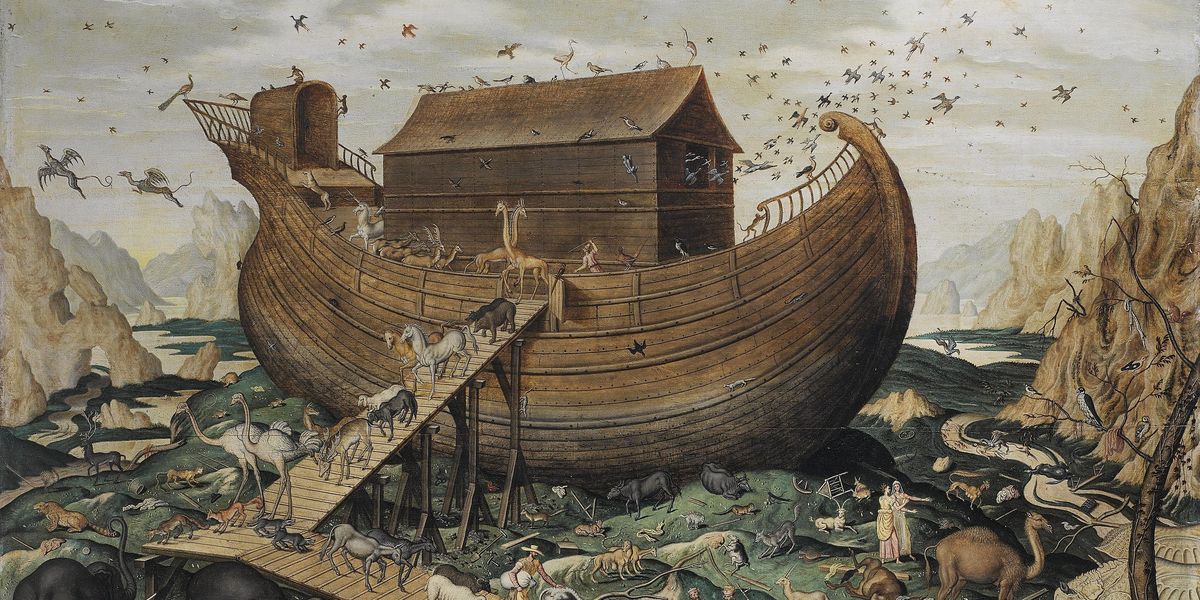
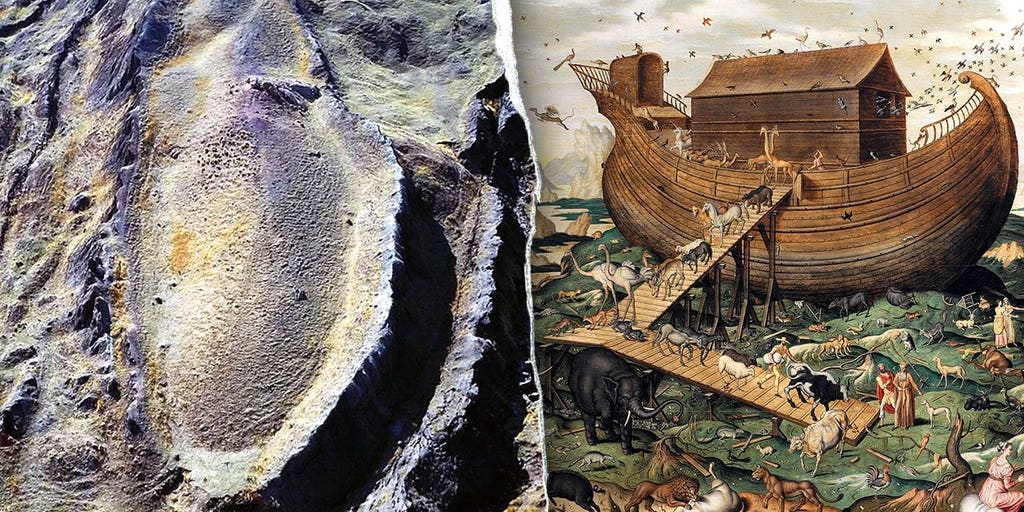
The debate surrounding Durupınar is energized by the striking correlation between its length—about 157 meters—and biblical accounts, which describe the Ark as being 300 cubits long (variously interpreted as between 137 and 157 meters depending on cubit definition). This alignment has prompted some researchers and enthusiasts to propose that Durupınar may represent the remains of a human-made structure dating back millennia. Supporters reference both the geological formation’s physical dimensions and subsurface anomalies found in scans as suggestive evidence.
Despite these correlations, scientists have consistently stressed that such evidence remains circumstantial. None of the core samples have, as yet, revealed ancient timbers or artifacts of human craftsmanship that would provide unequivocal proof of the Ark’s historicity. Until radiometric dating, chemical analysis, and detailed sedimentological studies are completed and peer-reviewed, the site remains a captivating but unproven candidate for the Ark.
Scientific Perspectives and Disputed Claims
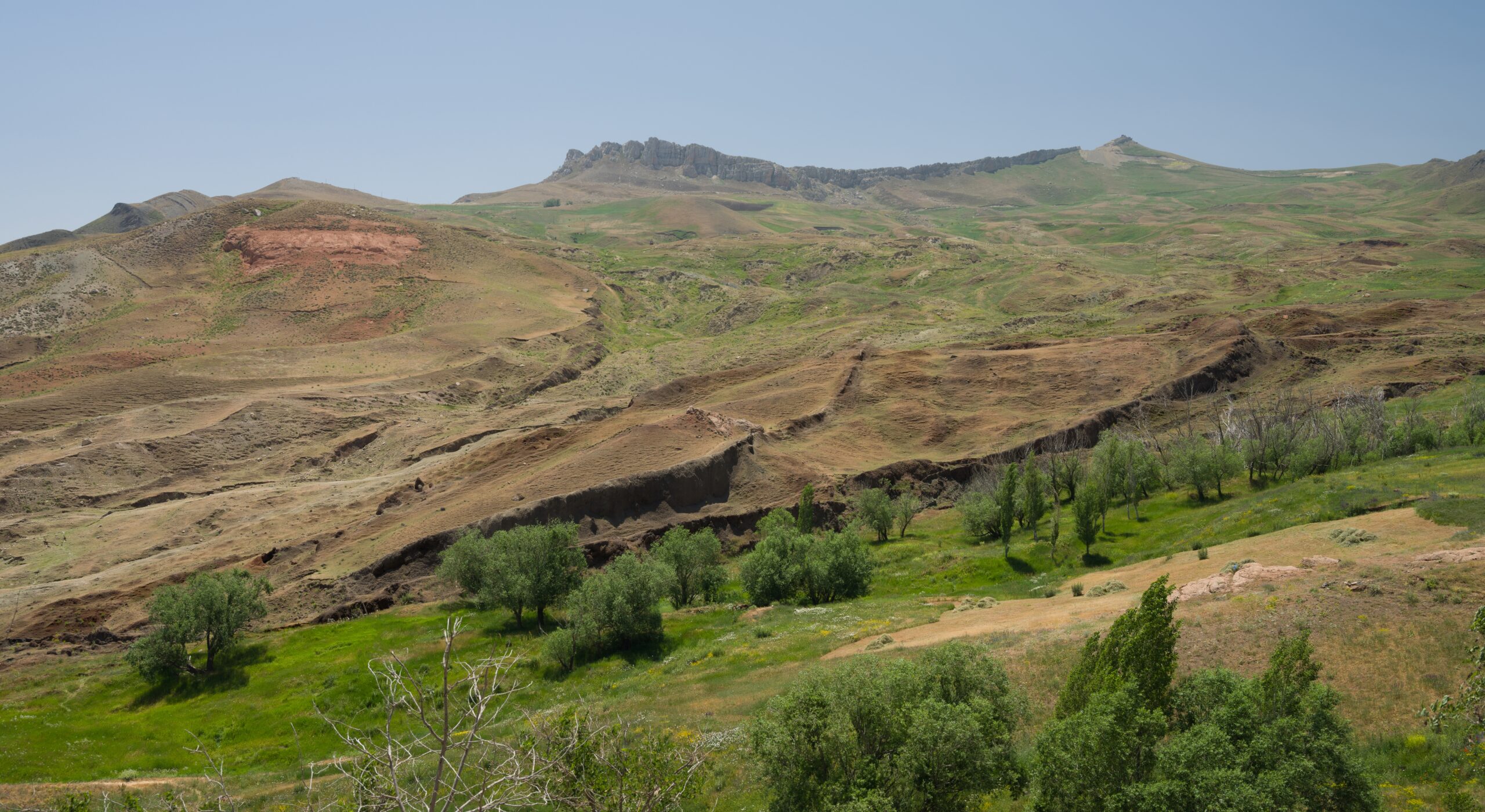
There are sharply divided opinions in the scientific community about the true nature of the Durupınar formation. Many geologists maintain that the formation is a purely natural feature, resulting from geological processes that have shaped the region over thousands, if not millions, of years. Limestone, volcanic ash, and erosion patterns are the prevailing explanations for the site’s shape and structure, according to these experts.
Early and recent geological surveys, including work by Turkish and international teams, have found layers consistent with sediment deposition and tectonic activity commonly found in the region. They argue that the boat-like outline is an example of a syncline—a natural fold produced by the movement of earth’s crust. Just as notable, there is no widely accepted evidence of wooden beams or fastenings, which would be expected in a vessel built by humans, especially one as ancient as described in biblical accounts.
Nonetheless, proponents of the Ark theory continue to point out anomalies in radar and drilling data, speculating about artificial structures or possible remnants of ancient human activity. These interpretations, however, are NOT confirmed by mainstream archaeology or geology. Continuous reassessment of the evidence using modern analytical methods remains ongoing, with further findings expected as current core samples are analyzed in greater detail. A comprehensive release of laboratory results is reportedly scheduled for 2027, which could provide new data to advance—or settle—the debate.

International Interest and Societal Reactions
The Durupınar formation has consistently drawn the attention of both the academic world and the public at large. The possibility of discovering Noah’s Ark inspires fascination across cultures, owing to the story’s iconic status in Christianity, Judaism, and Islam alike. Pilgrims, tourists, journalists, and scientists have all visited the remote region to view the formation firsthand and to participate, directly or indirectly, in the quest to resolve one of ancient history’s most compelling mysteries.
Media coverage of recent excavations—particularly those employing advanced scanning, drilling, and imaging technology—has intensified debate. News outlets highlight both the promise of modern technology to answer ancient questions and the resilience of traditional skeptic perspectives. While some coverage in popular media promotes the idea of the site being the “real” Ark, academic publications and scientific panels are more reserved, emphasizing methodological rigor and the preliminary nature of the findings so far.
Internationally, scientific organizations and universities have expressed interest in partnering with Turkish authorities on further studies. The potential to discover organic matter dating to the relevant historical period could impact not only the field of biblical archaeology but also our broader understanding of ancient civilizations in Anatolia and the Near East.
Expert Views on Future Discovery
Scholars and experts in the fields of archaeology, geology, and history of religion generally call for patience and scientific scrutiny. Dr. Ahmet Yildirim, a geologist at Istanbul University specializing in sedimentary formations, has commented, “Regardless of the formation’s origins, only comprehensive laboratory analysis and transparent peer-reviewed publication can determine the facts.” Supporters of the Ark theory, including independent researchers and faith-based organizations, advocate for allowing hypotheses to be fully tested, encouraging a multidisciplinary approach that combines geology, archaeology, and even genetic studies on organic materials.
International archaeological standards require that claims of world-historical discovery undergo rigorous, independent verification to avoid the dangers of confirmation bias or premature public declaration. As such, most expert voices urge a step-by-step approach, wherein each new data point is scrutinized before drawing extraordinary conclusions. This methodology is vital in securing both public trust and scientific credibility.

The Status of Current Investigations
The present phase of exploration focuses on the detailed analysis of core samples and the mapping of subsurface anomalies. Electrical resistivity and ground-penetrating radar data are being cross-referenced with paleontological and chemical examinations of rock, mud, and any organic remnants. The research team leading the drilling emphasizes that, as of now, no conclusive evidence—such as verifiably ancient timbers, inscriptions, or metalwork—has been discovered.
Their findings, expected in 2027, are anticipated to shed more light on the formation’s precise origins, potentially transforming our understanding of this enigmatic site. Both scientific objectivity and ongoing curiosity ensure that the Durupınar formation remains a focal point in discussions of biblical history, geological science, and humanity’s search for tangible truths within foundational legends.
Conclusion: The Enduring Mystery of Durupınar
In summary, the Durupınar formation represents a unique convergence of legend, faith, and empirical science. Ongoing studies at the site illustrate the importance of advanced technology and international collaboration in investigating claims of historic significance. While the hypothesis that this is the remains of Noah’s Ark continues to attract passionate discourse, scientific standards dictate that only well-verified, repeatable evidence should be considered conclusive.
As new discoveries are anticipated in the coming years, the global community will watch closely for developments that may resolve, or further complicate, a mystery that has captivated minds for over half a century. For now, the Durupınar formation stands as a reminder of the enduring allure of humanity’s greatest stories and the power of science to illuminate the past.
Disclaimer: This content is intended for entertainment purposes only and is not based on real events.
