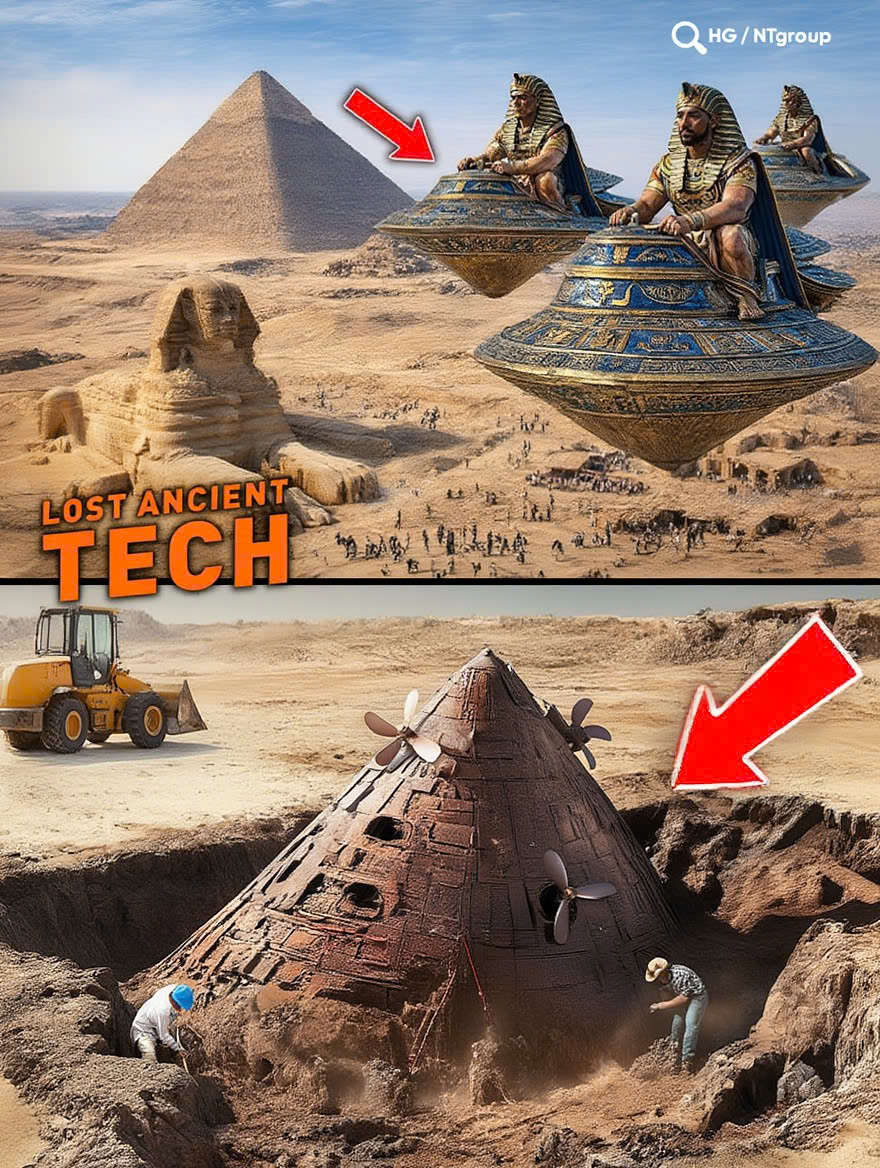

For generations, ancient Egypt has captured the imagination of historians, travelers, filmmakers, and mystery enthusiasts alike. Towering pyramids, intricate temples, and remarkably advanced architectural achievements continue to inspire awe thousands of years after they were built.
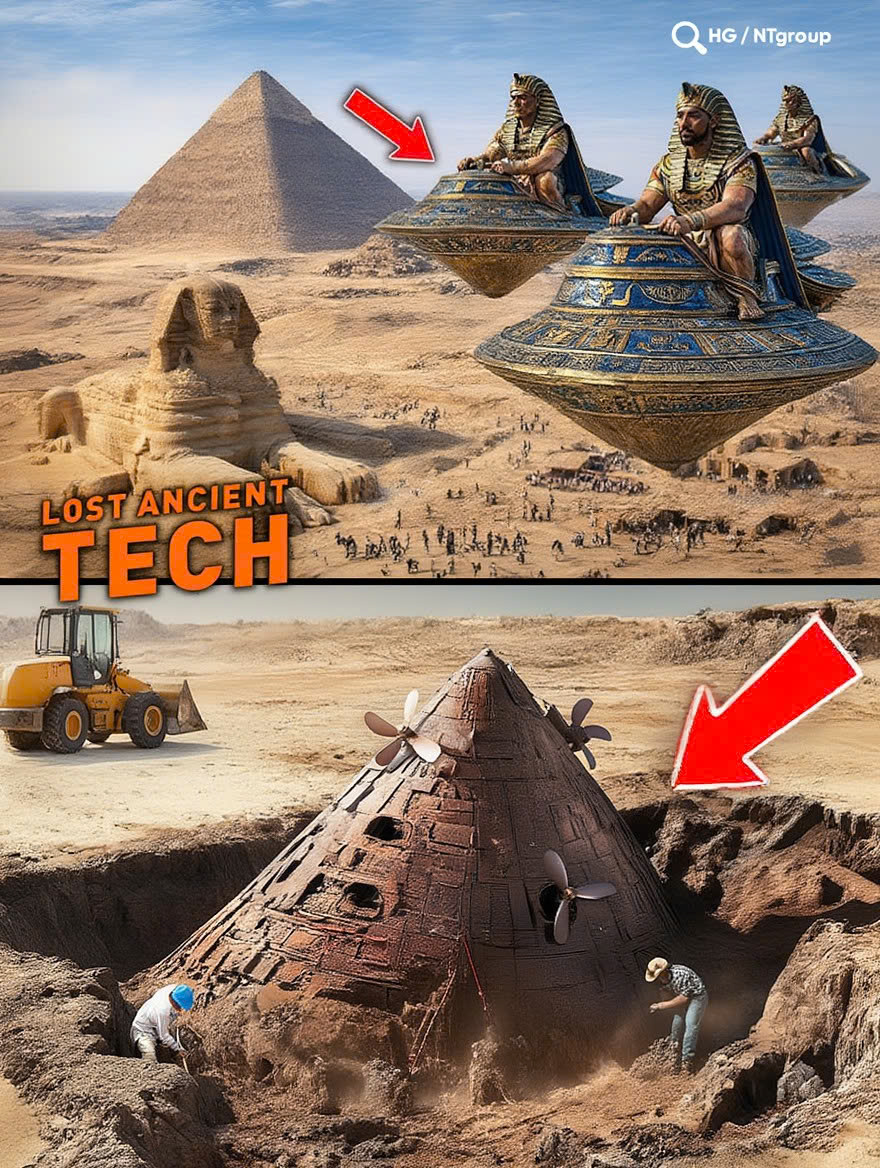
In recent years, however, social media has reignited a different kind of fascination: theories claiming that ancient Egyptians may have possessed advanced flying technology long before modern aviation existed.
Images of unusual carvings, bird shaped artifacts, and mysterious temple symbols frequently circulate online alongside dramatic captions suggesting evidence of ancient aircraft, gliders, or futuristic machines hidden within Egyptian history. Viral videos and speculative articles often present these discoveries as proof that lost civilizations possessed knowledge far beyond what historians officially recognize.
While these theories continue attracting widespread attention, archaeologists and historians consistently state that there is no verified evidence supporting the existence of ancient Egyptian aviation technology.
Yet the persistence of these claims reveals something important about human curiosity. People remain deeply fascinated by mysteries, hidden knowledge, and the possibility that ancient civilizations understood more about the world than modern society realizes.
The debate surrounding these so called “flying machine” theories reflects not only interest in Egypt itself, but also humanity’s timeless attraction to wonder, mythology, and unexplained ideas.
Why Ancient Egypt Inspires So Much Speculation
Few civilizations inspire as much mystery as ancient Egypt.
The civilization’s achievements remain extraordinary even by modern standards. Massive pyramids aligned with remarkable precision, enormous temples covered in symbolic artwork, advanced irrigation systems, and sophisticated astronomical observations all contribute to Egypt’s enduring reputation as one of history’s greatest civilizations.
Because many monuments survived for thousands of years, modern audiences often encounter ancient Egyptian accomplishments in visually dramatic ways. This creates a sense of timelessness and mystery that fuels public imagination.
Historians note that whenever societies encounter remarkable achievements from the distant past, people naturally wonder how such accomplishments were possible with limited technology.
In the case of Egypt, these questions sometimes evolve into speculative theories involving lost technologies, forgotten sciences, or hidden knowledge.
The Bird Shaped Artifact That Sparked Debate
One of the most frequently discussed objects connected to ancient aviation theories is the so called “Saqqara Bird,” a small wooden artifact discovered in Egypt and dating back more than two thousand years.
The object resembles a bird with extended wings, but some internet theorists argue that its shape resembles a glider or small aircraft model.
Supporters of the theory claim the object demonstrates understanding of aerodynamics or early flight concepts. Images comparing the artifact to modern aircraft designs often circulate widely online.
Archaeologists, however, generally interpret the artifact differently.
Most experts believe the object was likely a ceremonial item, decorative figure, toy, or symbolic representation connected to Egyptian religious or cultural practices. Researchers also point out that birds held significant spiritual symbolism in Egyptian mythology, making bird inspired objects common throughout ancient Egyptian art.
Importantly, no archaeological evidence suggests the object functioned as a real flying machine or represented advanced aviation technology.
The Famous “Helicopter Hieroglyphs”
Another major source of online speculation involves carvings inside the Temple of Seti I at Abydos.
Photographs of these carvings appear to resemble modern objects such as helicopters, submarines, or aircraft when viewed from certain angles. These images have become some of the most widely shared examples used in ancient technology theories.
To many viewers unfamiliar with Egyptian hieroglyphics, the carvings appear remarkably similar to modern machinery.
However, Egyptologists explain that the phenomenon has a much simpler explanation.
According to researchers, the shapes were created through overlapping inscriptions made during different historical periods. Over time, erosion and damage caused multiple layers of hieroglyphs to visually combine, producing accidental patterns that resemble familiar modern objects.
This phenomenon is sometimes called pareidolia, a psychological tendency where human brains recognize meaningful patterns or familiar shapes within random visual information.
Pareidolia explains why people may see faces in clouds, animals in rock formations, or recognizable machines within damaged ancient carvings.

The Psychology Behind Ancient Technology Theories
The popularity of ancient aviation theories reflects several fascinating aspects of human psychology.
People are naturally drawn to mysteries and hidden possibilities. Stories suggesting that ancient civilizations possessed forgotten knowledge tap into a deep curiosity about humanity’s past and the limits of human achievement.
Psychologists studying conspiracy theories and speculative beliefs often explain that uncertainty encourages imaginative interpretation. When historical evidence is incomplete or visually ambiguous, people may fill gaps with dramatic explanations that feel emotionally exciting.
Additionally, modern audiences sometimes underestimate the intelligence and capabilities of ancient civilizations. Because people associate advanced achievements with modern technology, extraordinary ancient accomplishments can seem almost impossible without hidden tools or futuristic knowledge.
Ironically, many historians argue that these theories unintentionally diminish the genuine achievements of ancient cultures by implying they could not have succeeded using the engineering, mathematics, and organizational skills available at the time.
The Real Engineering Genius of Ancient Egypt
While there is no evidence of ancient aircraft, the actual accomplishments of Egyptian civilization remain astonishing.
Ancient Egyptians developed sophisticated systems for architecture, agriculture, astronomy, and construction long before modern machinery existed.
The pyramids themselves required careful planning, mathematical precision, transportation systems, and organized labor on an enormous scale. Temples and monuments demonstrate advanced understanding of geometry, alignment, and structural engineering.
Researchers continue studying how ancient builders transported massive stone blocks, designed durable structures, and coordinated large construction projects with remarkable efficiency.
Importantly, experts emphasize that these achievements are fully explainable through known historical methods without requiring futuristic technology.
The true story of Egyptian innovation may actually be more impressive because it demonstrates what human creativity and organization can accomplish using relatively simple tools and accumulated knowledge.

Social Media and Viral Mystery Culture
The internet has played a major role in reviving ancient technology theories.
Platforms such as YouTube, TikTok, Facebook, and online forums reward visually intriguing and emotionally engaging content. Images of mysterious carvings or unusual artifacts naturally attract attention because they spark curiosity and debate.
Content creators often present speculative theories using dramatic music, edited imagery, and emotionally charged narration, which can make unsupported claims feel persuasive to viewers unfamiliar with archaeology.
Media literacy experts encourage audiences to distinguish between evidence based historical research and entertainment driven speculation.
This does not mean people should avoid curiosity or imaginative thinking. Rather, experts suggest balancing fascination with careful examination of credible archaeological research and historical context.
Mythology, Sky Gods, and Symbolism
Ancient Egyptian mythology also contributes to modern speculation.
Egyptian religious traditions frequently referenced gods associated with the sky, sun, stars, and celestial travel. Deities such as Horus and Ra were symbolically connected to the heavens and cosmic order.
Some modern theorists interpret these myths literally, suggesting they may describe advanced technology or ancient flight.
Historians, however, explain that sky symbolism appears throughout many world mythologies because early civilizations closely observed celestial movements and connected them to spiritual beliefs.
Ancient cultures often used symbolic language and artistic imagery to express religious concepts rather than technical descriptions of machinery.
Understanding mythology within its historical and cultural context helps researchers avoid projecting modern technological interpretations onto ancient symbolic traditions.
Why People Want to Believe
Part of the enduring appeal of ancient technology theories lies in the emotional excitement they create.
Mystery stories offer a sense of wonder that feels larger than ordinary life. They invite audiences to imagine hidden histories, forgotten civilizations, and extraordinary possibilities waiting to be discovered.
In uncertain times, speculative narratives may also provide emotional comfort by suggesting humanity once possessed deeper wisdom or lost knowledge.
At the same time, scientists and historians argue that reality itself is already remarkable enough.
Ancient Egypt achieved extraordinary advances in architecture, administration, medicine, mathematics, and astronomy through human ingenuity alone. Recognizing those accomplishments does not require hidden aircraft or futuristic machines.
The Importance of Historical Context
One challenge with viral internet theories is that artifacts are often removed from their original archaeological context.
Professional archaeology relies not only on objects themselves but also on where they were found, how they were used, surrounding evidence, and historical records connected to them.
Without context, ordinary artifacts can appear mysterious or misleading.
Historians emphasize that responsible interpretation requires careful analysis rather than isolated visual comparisons or dramatic speculation.
This approach helps preserve accurate understanding of ancient cultures while still appreciating the wonder of historical discovery.

Conclusion
Theories about ancient Egyptian flying machines continue capturing public imagination because they combine mystery, history, mythology, and the excitement of hidden possibilities.
While archaeologists consistently state that no verified evidence supports the existence of ancient aviation technology, the fascination surrounding these ideas reveals humanity’s enduring curiosity about the past.
Social media has amplified these discussions by transforming unusual artifacts and ambiguous carvings into viral mysteries debated by millions worldwide.
Yet perhaps the most extraordinary truth is that ancient Egypt’s real achievements already stand among the greatest accomplishments in human history. Through mathematics, engineering, organization, and creativity, Egyptian civilization built monuments and cultural systems that continue inspiring awe thousands of years later.
Sometimes the genuine story of human innovation is every bit as remarkable as the myths imagined around it.
Sources
US Gym Room At Home
Smithsonian Institution
Encyclopaedia Britannica
National Geographic
The British Museum
History Channel historical archives
American Research Center in Egypt
Journal of Archaeological Science
