
More than a decade after the disappearance of Malaysia Airlines Flight MH370 disappearance, the story continues to capture global attention. Few aviation events have generated as much speculation, emotion, and determination to find answers.
In recent years, renewed interest has emerged around the use of advanced underwater drones—autonomous machines capable of exploring the ocean floor in ways that were once impossible. Headlines suggesting that these drones have “finally found what MH370 left behind” have spread rapidly online.
But what do we actually know? And how much of this narrative is grounded in confirmed information versus ongoing investigation?

The Disappearance That Changed Aviation History
On March 8, 2014, Malaysia Airlines Flight MH370 vanished while traveling from Kuala Lumpur to Beijing. Despite extensive search efforts involving multiple countries, the aircraft’s main wreckage has never been conclusively located.
Over time, pieces of debris believed to be from the aircraft were found along coastlines in the Indian Ocean. These discoveries confirmed that the plane likely ended its journey in a remote ocean region, but they did not solve the full mystery.
The lack of definitive answers has kept MH370 in public consciousness, turning it into one of the most discussed aviation cases in modern history.
The Rise of Underwater Drone Technology
In the years following the disappearance, search teams began turning to increasingly advanced tools. Among the most promising are autonomous underwater vehicles, often referred to as underwater drones.
These machines are designed to map vast areas of the ocean floor with high precision. Equipped with sonar, cameras, and navigation systems, they can operate at extreme depths where human divers cannot reach.
Organizations like Ocean Infinity have been at the forefront of deploying these technologies in the search for MH370. Their fleets of drones can scan large areas efficiently, significantly improving the chances of locating submerged objects.

What Has Actually Been Found?
Despite viral headlines, it is important to clarify that there has been no universally confirmed announcement that the main wreckage of MH370 has been definitively located as of now.
However, underwater searches have identified various objects and anomalies on the ocean floor. These findings are often carefully analyzed to determine whether they could be linked to the missing aircraft.
The challenge lies in the complexity of the ocean environment. The seabed is vast and uneven, filled with natural formations and debris that can resemble man-made objects on sonar images.
As a result, each potential discovery requires extensive verification before any conclusions can be drawn.
Why the Search Is So Difficult
The Indian Ocean, where MH370 is believed to have ended its flight, is one of the most remote and least explored regions on Earth.
Search teams face several major challenges:
Extreme depth, often reaching several thousand meters
Rough underwater terrain with ridges and valleys
Limited visibility and unpredictable conditions
A search area spanning thousands of square kilometers
Even with modern technology, scanning such a vast region is a time-consuming process.
The Role of Data and New Theories
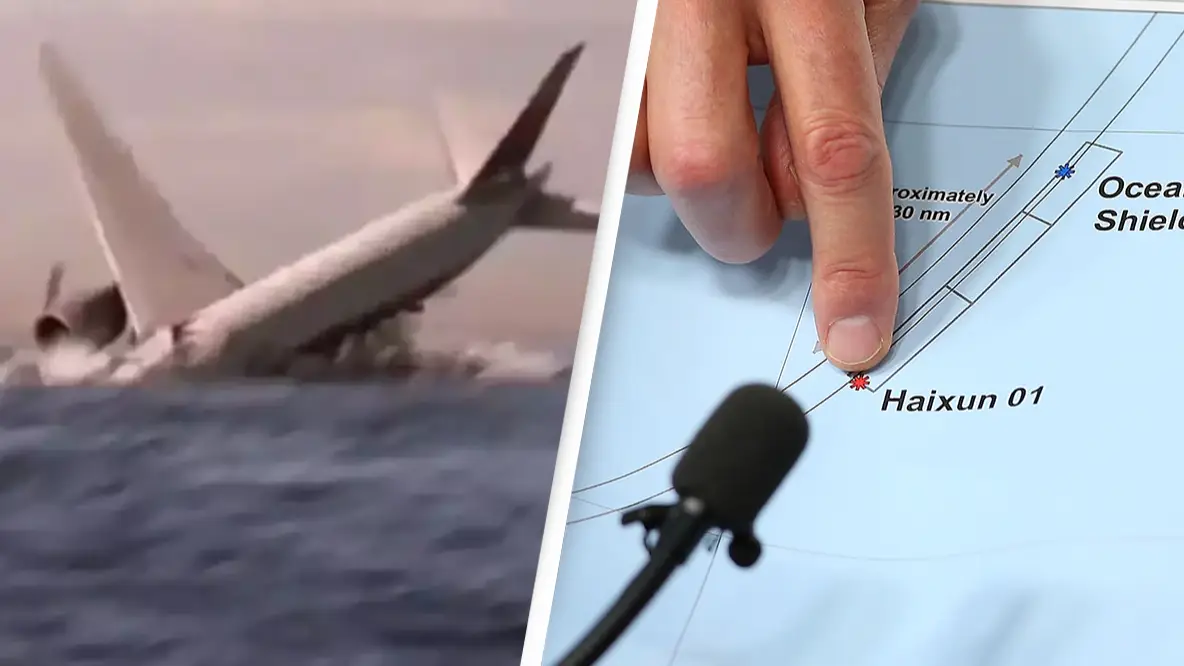
Over the years, researchers have used satellite data, ocean drift analysis, and flight path modeling to narrow down possible search zones.
Some recent efforts have focused on refining these models using improved data and computational techniques. These updates help guide underwater drones to areas with a higher probability of containing wreckage.
While no single theory has been universally accepted, the combination of data analysis and advanced technology continues to move the search forward.
The Impact of Viral Headlines
Headlines claiming that MH370 has finally been found often spread quickly across social media. These stories tend to simplify complex developments or present preliminary findings as confirmed conclusions.
In reality, official investigations follow strict verification processes. Any confirmed discovery would be announced through credible aviation authorities and supported by clear evidence.
This gap between viral content and verified information highlights the importance of critical thinking when consuming news online.
Why the World Still Cares
The enduring interest in MH370 is not just about solving a technical mystery. It is also about closure.
Families, investigators, and the global community continue to seek answers about what happened. The story represents both a human and scientific challenge—one that combines emotion with the pursuit of truth.

Looking Ahead: Will the Mystery Be Solved?
With ongoing advancements in technology, there is cautious optimism that more answers may eventually emerge.
Companies like Ocean Infinity have expressed interest in continuing the search using improved methods and updated data.
Each new mission builds on previous efforts, bringing researchers closer to understanding what happened.
Conclusion: Between Hope and Reality
The idea that underwater drones have finally found what MH370 left behind is compelling—but as of now, it remains part of an evolving story rather than a confirmed conclusion.
What is certain is that technology has transformed the search in remarkable ways. From satellite tracking to deep-sea robotics, each advancement brings new possibilities.
At the same time, the story of Malaysia Airlines Flight MH370 disappearance reminds us of the limits of human knowledge and the vastness of the natural world.
Perhaps the most powerful aspect of this mystery is not just the search itself, but the determination behind it—a reflection of humanity’s enduring need to understand, to खोज, and to find meaning even in the most challenging questions.
