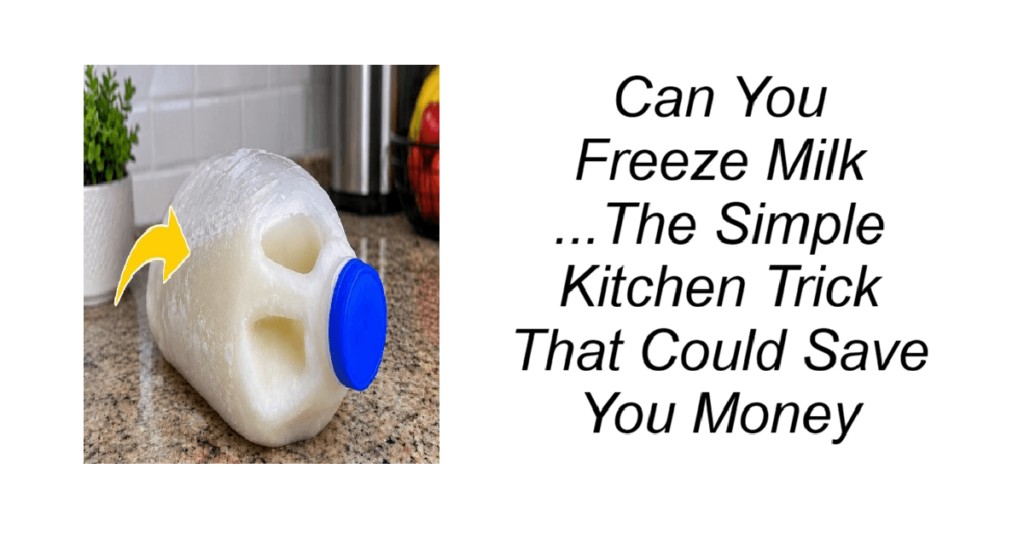

Can You Freeze Milk …The Simple Kitchen Trick That Could Save You Money
Milk is a staple in many kitchens, used in tea and coffee, poured over cereal, added to sauces, and included in countless baking recipes. Yet it is also one of the groceries that households may end up discarding when they buy more than they can use before the date on the carton.
Freezing milk can be a practical option for reducing avoidable food waste and keeping a useful backup supply at home. The answer to the common question, “Can you freeze milk?” is yes: cow’s milk can be frozen safely when it is fresh, packaged appropriately, and thawed under refrigeration. However, freezing is not entirely without changes. The milk may separate or develop a slightly different texture after thawing, particularly if it is whole milk.
Understanding how freezing affects milk, how much space to leave in the container, and how to thaw it safely can help households make the most of food they have already purchased. This guide explains the science, food-safety guidance, and practical uses for frozen milk.
Can You Freeze Milk Safely?
Yes. Fresh pasteurized cow’s milk can be frozen. Freezing does not sterilize food or improve milk that is already nearing spoilage, but it pauses the growth of microorganisms while the product remains frozen. The United States Department of Agriculture notes that food kept continuously frozen at 0°F, or -18°C, remains safe from a food-safety perspective, although quality can decline over time.
For best results, milk should be frozen while it is still fresh and has been stored correctly in the refrigerator. It is sensible to freeze it before its use-by date rather than waiting until the last possible day. If milk has been left out for an extended period, has developed an off smell, or shows other signs of spoilage, freezing is not an appropriate solution.
The main effect of freezing milk is usually a change in its physical texture. Milk is an emulsion containing water, proteins, fat, natural sugars, vitamins, and minerals. When it freezes, the water portion forms ice crystals. This can disturb the balance of fat and proteins in the liquid, which is why thawed milk may look separated, watery, or slightly grainy. These texture changes do not necessarily mean the milk is unsafe.
Most of the nutritional value remains available after freezing. Milk continues to provide protein, calcium, iodine in many regions, and other nutrients after it has been thawed. Still, taste and consistency matter, especially for people who prefer milk for drinking rather than for cooking.
Why Milk Containers Need Space in the Freezer
One of the most important details is that milk expands when frozen. Like many water-containing foods and drinks, it takes up more space as it turns to ice. A completely full container may bulge, leak, split, or, in some cases, break during freezing.
Before placing milk in the freezer, leave headspace at the top of the container. Around 1 inch, or 2.5 centimetres, is a useful general guide for many containers, though the appropriate amount can vary with the size and shape of the package. If a plastic milk jug is nearly full, simply pour out and use a small amount first.
Choosing a suitable container is equally important. Food-safe, freezer-safe plastic containers generally work well. Some original plastic milk jugs may also be suitable, provided they have enough headspace and are not damaged. Check packaging instructions if they are available. Ordinary glass bottles should be avoided unless they are specifically marked as freezer-safe and have adequate space for expansion, as glass can crack under pressure.
Smaller portions can be especially convenient. Freezing milk in measured quantities means a household can thaw only what it expects to use. For example, milk can be divided into containers for baking, cooking, or several cups of tea and coffee. Freezer-safe bags can also be used if they are sealed carefully and laid flat on a tray until frozen. This can save space, but bags should be handled cautiously to avoid punctures and leaks.
How Long Can Frozen Milk Be Kept?
For the best flavour and texture, frozen milk is commonly used within about three months. This recommendation focuses on quality rather than a strict safety deadline. At a steady freezer temperature of 0°F or -18°C, food remains safe for a much longer period, but quality can gradually change as storage continues.
Labelling makes a meaningful difference. Write the date the milk was frozen on the container, along with the quantity if it has been divided into portions. A simple label helps households use the oldest milk first and prevents containers from being forgotten at the back of the freezer.
Freezer performance also matters. A freezer should stay consistently cold, and milk should be placed where it will not be repeatedly exposed to warmer air each time the door opens. If a power cut occurs, official food-safety advice should be followed based on how long the freezer was without power and whether the food remained frozen or still contained ice crystals.
Why Does Thawed Milk Look Separated?
Separation is one of the most noticeable results of freezing milk. After thawing, the milk may appear more watery at the bottom, while richer particles or fat rise toward the top. It may also have small particles or a less smooth consistency than fresh milk.
This happens because freezing affects the emulsion that gives milk its uniform appearance. In fresh homogenized milk, fat droplets are distributed throughout the liquid. Freezing and thawing can cause these components to separate. The effect tends to be more noticeable in whole milk, which has a higher fat content.
Lower-fat and skimmed milk often retain a more even texture after thawing, although they can still separate somewhat. Plant-based milk alternatives may also be frozen, but their performance varies considerably by product. Ingredients such as stabilizers, emulsifiers, oils, and proteins differ among brands, so checking the manufacturer’s guidance is useful.
In many cases, shaking the thawed container vigorously will redistribute much of the separation. A clean whisk or a brief blend may improve the consistency further if needed. Even when thawed milk is not ideal for drinking straight from a glass, it can still be highly useful in cooked dishes.
How to Freeze Milk Step by Step
Freezing milk does not require special equipment, but a few careful steps can improve the result.
- Start with fresh milk. Freeze milk that has been kept refrigerated and still appears and smells normal. Do not freeze milk as a way to rescue a product that may already be spoiled.
- Check the container. Use a clean, food-safe freezer container or a suitable original plastic jug. Avoid containers that are cracked, weak, or not designed for freezing.
- Leave room at the top. Pour out a small amount if necessary, leaving approximately 1 inch or 2.5 centimetres of headspace to allow for expansion.
- Seal securely. Close the lid or cap firmly. If using a freezer bag, remove excess air without overfilling the bag and ensure the seal is complete.
- Label the milk. Add the freezing date and, if useful, the portion size.
- Freeze promptly. Place the milk in a freezer set to 0°F or -18°C or colder. Keep it upright until it has frozen solid if using a rigid container.
Portioning is often the most efficient approach. A family that mainly uses milk in recipes may prefer one- or two-cup portions. Someone who drinks only occasional coffee may find smaller portions more practical. Thoughtful portion sizes reduce the need to thaw more milk than necessary.
How to Thaw Frozen Milk Safely
The safest way to thaw milk is in the refrigerator. Move the frozen container from the freezer to the fridge and allow it to thaw gradually. A small container may thaw overnight, while a large jug can take longer. Place it on a plate or in a bowl in case condensation or a minor leak occurs.
Milk should not be thawed on a kitchen counter, near a heat source, or in warm water. Leaving perishable food at room temperature can allow bacteria to multiply more quickly. Refrigerated thawing keeps the milk at a safer temperature while it returns to liquid form.
Once the milk is fully thawed, shake it thoroughly before pouring. Keep it refrigerated and use it promptly. Guidance may differ according to local food-safety authorities and the product’s handling history, but using thawed milk within a few days is a cautious quality-focused approach. Always check the milk before use. Discard it if it has an unpleasant sour smell, unusual colour, curdling unrelated to a recipe, or other clear signs of spoilage.
It is worth noting that food-safety guidance on refreezing can be more nuanced than a simple blanket rule. The USDA states that food thawed in the refrigerator can generally be refrozen, though quality may be reduced. In practice, repeatedly freezing and thawing milk is unlikely to give the best flavour or texture, so thawing only the amount needed remains the most practical strategy.
Best Ways to Use Thawed Milk
Thawed milk can work well in a wide variety of recipes, especially dishes where a small texture change is less noticeable. It can be used in pancakes, waffles, muffins, breads, cakes, mashed potatoes, creamy soups, sauces, scrambled eggs, custards, and savoury bakes.
For baking, the milk’s slight separation is often not a concern because the ingredients are mixed and cooked. It can also be used in hot drinks after shaking well, although some people may prefer fresh milk in coffee or tea if they notice a difference in texture.
Frozen milk can also provide a useful emergency supply. Keeping a modest amount in the freezer may help during poor weather, busy periods, or times when a household cannot easily get to the shops. This can be particularly helpful for cooking, provided the milk is rotated regularly and stored safely.
Food Waste, Household Budgets, and Smart Storage
Using food efficiently is both a household budgeting issue and a broader environmental concern. Producing, transporting, refrigerating, and packaging milk requires resources. When edible food is discarded, those resources are also wasted. The United Nations Environment Programme has highlighted food waste as a significant global issue with environmental, economic, and social consequences.
Freezing is not the only way to reduce milk waste. Buying a container size that matches normal consumption, keeping milk cold, returning it to the refrigerator promptly after use, and checking dates before shopping can all help. In the United Kingdom, the Food Standards Agency distinguishes between “use by” dates, which relate to safety, and “best before” dates, which primarily concern quality. Consumers should follow the relevant labelling and local official guidance.
For households that regularly have leftover milk, freezing can be a simple addition to these habits. It is not a replacement for proper refrigeration or sensible food handling, but it can prevent fresh milk from being unnecessarily thrown away.
Final Thoughts: Is Freezing Milk Worth It?
Freezing milk is a safe and useful kitchen technique when done correctly. Fresh milk can be frozen in an appropriate container with room for expansion, kept at a stable freezer temperature, and thawed in the refrigerator. The biggest trade-off is that the texture may change, particularly with full-fat milk, but shaking the container usually helps.
For drinking, the difference may be noticeable to some people. For baking, sauces, soups, and other cooked meals, thawed milk is often an excellent option. By freezing milk in small portions and using it within a few months for the best quality, households can stretch their grocery budget and make better use of food already in the kitchen.
Sources
Disclaimer: This content is intended for entertainment purposes only and is not based on real events.