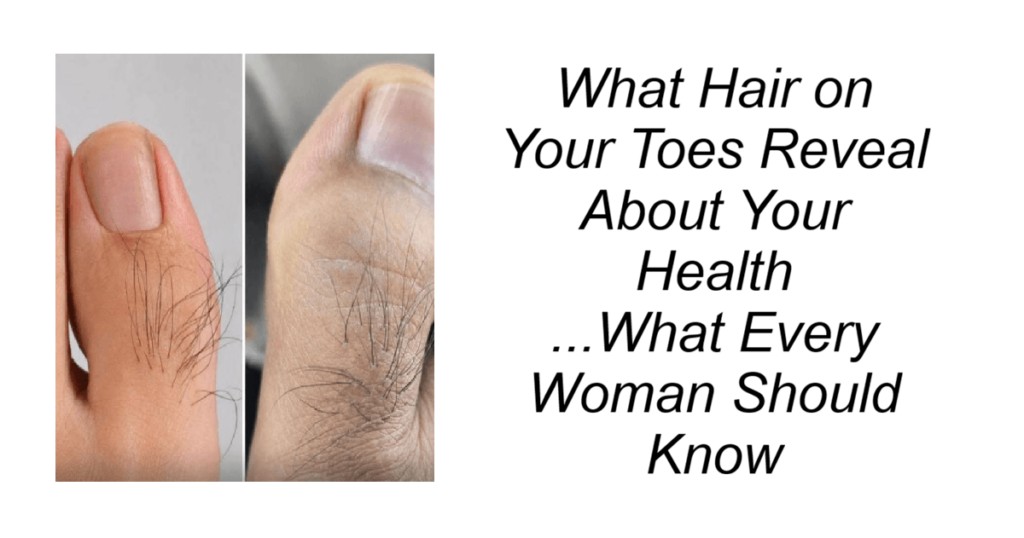

What Hair on Your Toes Reveal About Your Health …What Every Woman Should Know
Hair on the toes is a small physical feature that many people barely notice. Some women have visible, darker toe hair, while others have very fine, light-colored hair or little hair at all. In most cases, these differences are entirely normal and reflect genetics, age, hormones, skin tone, and personal grooming habits.
However, a new or progressive change in hair growth on the toes, feet, or lower legs can occasionally be one clue among several that blood flow to the legs may be reduced. This is why clinicians may consider changes in leg hair during a wider assessment of vascular health. It is important to be clear: toe hair alone cannot diagnose a circulation problem, and naturally hairless toes are not, by themselves, a reason for alarm.
The most useful approach is to know what is typical for your body and to pay attention to changes that occur alongside symptoms such as leg pain while walking, cold feet, skin-color changes, numbness, or wounds that heal slowly. This article explains the connection between toe hair and circulation, the warning signs that may merit medical advice, and how healthcare professionals evaluate peripheral artery disease.
Why Do Some People Have Hair on Their Toes?
Hair follicles are found over most of the human body, including the tops of the toes and feet. The amount, thickness, and color of this hair vary widely. Genetics play a major role: people from the same family may share similar patterns of body hair, although individual variation is still common.
Hormones can also influence body hair. Androgens, a group of hormones present in people of all sexes, affect how body hair grows and how noticeable it becomes. Age may gradually alter hair density and texture as well. As people get older, hair can become finer, lighter, or less abundant in various areas of the body.
For these reasons, there is no “correct” amount of toe hair for women or for anyone else. Some people have always had smooth-looking toes without any underlying medical issue. Others may have prominent hair on their toes and lower legs. Neither pattern is automatically a sign of better or worse health.
The more relevant observation is a meaningful difference from a person’s usual pattern. For example, someone who has long had visible hair on their toes and lower legs may want to note if that hair becomes sparse over months or years, especially if other foot or leg symptoms appear at the same time.
Can Toe Hair Be Linked to Blood Circulation?
Hair follicles need oxygen and nutrients, which are supplied through small blood vessels. When circulation to the lower limbs is substantially reduced, the skin and its structures may not receive the same level of blood supply as before. In some cases, this can contribute to thinner or reduced hair growth on the legs, feet, and toes.
One condition associated with reduced circulation is peripheral artery disease, often shortened to PAD. PAD occurs when arteries outside the heart and brain become narrowed, most commonly because fatty deposits called plaque build up within artery walls. When it affects the legs, PAD can reduce the amount of oxygen-rich blood reaching the muscles, skin, and feet.
The American Heart Association and the U.S. Centers for Disease Control and Prevention describe PAD as a common cardiovascular condition that may affect the legs and feet. It is more likely in older adults and in people with risk factors such as smoking, diabetes, high blood pressure, high cholesterol, kidney disease, or a personal or family history of cardiovascular disease.
Reduced hair growth is sometimes listed as a possible physical sign of longstanding reduced circulation. Yet it is not a definitive or especially specific sign. A person may have PAD without any noticeable hair loss, while another person may have sparse toe hair simply because of genetics, normal aging, or hair-removal methods. Medical evaluation depends on the complete picture, not one visible feature.
Peripheral Artery Disease: Understanding the Bigger Picture
Peripheral artery disease is important because it can affect mobility, foot health, and overall cardiovascular risk. The plaque buildup that contributes to PAD may also be present in arteries supplying the heart or brain. For that reason, identifying and managing PAD can be part of a broader effort to reduce the risk of heart attack and stroke.
Symptoms vary widely. Some people experience no obvious symptoms, particularly in earlier stages. Others develop a classic symptom called claudication: cramping, aching, heaviness, or tiredness in the calf, thigh, buttock, or hip during walking or other activity. The discomfort often improves after a few minutes of rest because the muscles need less oxygen when activity stops.
Not all leg discomfort is caused by PAD. Arthritis, nerve conditions, spinal problems, muscle injuries, and venous conditions can also cause pain or heaviness in the legs. This is one reason self-diagnosis based on a single symptom—or on toe hair—is unreliable. A clinician can assess the timing, location, severity, and triggers of symptoms and determine whether circulation testing is appropriate.
Signs That May Accompany Reduced Blood Flow to the Feet
Changes in toe hair are most meaningful when considered with other symptoms or visible changes. A medical review may be worthwhile if you notice a combination of the following signs:
- Leg discomfort during activity: Cramping, fatigue, or aching in the calves, thighs, hips, or buttocks that starts with walking and improves with rest.
- One foot feeling cooler than the other: A persistent temperature difference can be relevant, particularly when paired with other changes.
- Changes in skin color: Skin may look unusually pale, bluish, reddish, or darker than usual. Color changes should be assessed in the context of a person’s normal skin tone.
- Slow-healing sores or cuts: A wound on a toe, foot, or lower leg that does not heal as expected needs prompt professional attention, especially for people with diabetes.
- Shiny or thin-looking skin: The skin of the lower legs may appear smooth, fragile, or less elastic in some people with reduced circulation.
- Changes in nail growth: Toenails may seem slower-growing, thickened, brittle, or different in appearance. These changes also have many possible nonvascular causes, including fungal infection and normal aging.
- Reduced pulses: This is something a trained clinician may identify during an examination; it cannot always be assessed accurately at home.
- Numbness, weakness, or pain at rest: Persistent symptoms should not be ignored, particularly if they are new or worsening.
These signs do not confirm PAD. They simply indicate that a healthcare professional may need to assess circulation and rule out other causes. Seeking advice early can be particularly valuable for people with diabetes, because diabetes can affect blood vessels and nerves in the feet, sometimes reducing awareness of injuries.
When Should You Seek Medical Advice?
Consider scheduling a routine appointment with a doctor or qualified healthcare professional if you have a clear reduction in lower-leg or toe hair along with exertional leg pain, ongoing coldness in one foot, changes in skin appearance, or other symptoms listed above. It is also sensible to raise the topic during a regular checkup if you have cardiovascular risk factors such as smoking history, diabetes, high cholesterol, or high blood pressure.
More urgent medical attention may be needed for a foot that becomes suddenly cold, pale, blue, severely painful, numb, or weak, or for a wound that shows signs of infection or is not healing. These symptoms can have different causes, but prompt assessment is important. People with diabetes should follow individualized foot-care guidance and contact their healthcare team about new sores, blisters, color changes, or loss of sensation.
It is best not to delay care because symptoms seem minor. At the same time, it is equally important not to panic over naturally sparse body hair. The key distinction is between a lifelong normal pattern and a new change paired with other warning signs.
How Doctors Check for Circulation Problems
Healthcare professionals do not diagnose PAD by looking at toe hair alone. An evaluation usually begins with questions about symptoms, medical history, medications, exercise habits, smoking, diabetes, and family history of cardiovascular disease. The clinician may examine the legs and feet, check the skin, assess temperature, and feel for pulses at specific points in the feet and ankles.
A commonly used test is the ankle-brachial index, or ABI. This noninvasive test compares blood pressure measured at the ankle with blood pressure measured in the arm. A lower ankle pressure relative to arm pressure can suggest reduced blood flow in the leg arteries.
If the ABI result is unclear or if more detail is required, a clinician may recommend other tests. These can include Doppler ultrasound, exercise-based circulation testing, computed tomography angiography, or magnetic resonance angiography. The choice depends on symptoms, examination findings, medical history, and whether treatment planning is needed.
Professional evaluation also helps distinguish arterial circulation issues from venous problems, nerve-related symptoms, joint conditions, skin disorders, and other causes of changes in the feet and legs.
Other Reasons Toe Hair May Look Different
There are many everyday explanations for less visible toe hair. Shaving, waxing, tweezing, depilatory creams, electrolysis, and laser hair-reduction treatments can all change how hair looks or how quickly it regrows. Friction from socks, footwear, or repeated rubbing may also affect hair in localized areas.
Hair naturally changes with age. In addition, certain skin conditions, nutritional issues, endocrine disorders, medications, and stress-related hair changes can affect hair growth in different parts of the body. These possibilities further reinforce why isolated toe hair loss should not be treated as proof of poor circulation.
If hair changes are widespread, rapid, patchy, or accompanied by fatigue, unexpected weight changes, skin symptoms, or other concerns, a clinician may consider causes beyond PAD. A personalized assessment is more useful than relying on online symptom lists.
Healthy Habits That Support Vascular Health
Whether or not someone has symptoms, several evidence-based habits support heart and blood-vessel health. Avoiding tobacco is one of the most important steps, as smoking substantially increases the risk of PAD and other cardiovascular diseases. If quitting is difficult, medical support, counseling, and approved cessation treatments can improve the likelihood of success.
Regular physical activity, within a person’s abilities and medical guidance, supports cardiovascular fitness. A balanced eating pattern emphasizing vegetables, fruits, whole grains, legumes, nuts, and appropriate sources of protein can help manage blood pressure, cholesterol, and blood sugar. People with diagnosed PAD may be offered structured exercise therapy and treatment plans tailored to their health needs.
Managing diabetes, blood pressure, and cholesterol is also central to lowering cardiovascular risk. Medication may be recommended for some people, but treatment decisions should be made with a qualified clinician who understands the individual’s health profile.
The Bottom Line on Toe Hair and Health
Toe hair is a normal human variation, not a health test. Having little or no hair on the toes does not automatically mean that circulation is poor, and visible toe hair does not guarantee that circulation is normal. What matters most is whether you notice a change from your typical pattern and whether that change occurs with other symptoms involving the legs or feet.
Reduced hair growth can sometimes be one sign associated with peripheral artery disease, particularly when it appears alongside exercise-related leg pain, cool skin, color changes, reduced pulses, or slow-healing wounds. A healthcare professional can evaluate these symptoms with a physical examination and, when appropriate, simple circulation tests such as the ankle-brachial index.
Paying attention to your feet is part of practical self-care, especially if you have diabetes or cardiovascular risk factors. Awareness should lead to informed action, not unnecessary worry: notice meaningful changes, protect your foot health, and seek professional advice when symptoms persist or worsen.
Sources
Disclaimer: This content is intended for entertainment purposes only and is not based on real events.