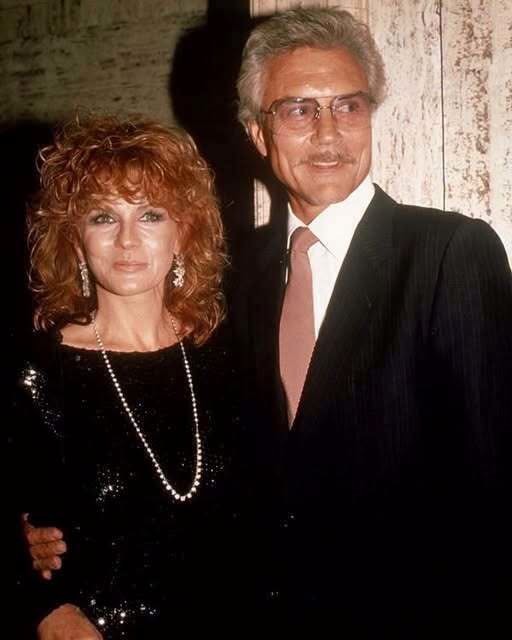

Ann-Margret and Roger Smith: A Hollywood Partnership Built on Commitment
Ann-Margret is widely recognized as one of the most distinctive entertainers of Hollywood’s classic studio-era transition into the 1960s and 1970s. Known for her screen presence, singing, dancing, and dramatic range, she became a major star through films including Bye Bye Birdie, Viva Las Vegas, Carnal Knowledge, and Tommy. Her career brought international fame, critical recognition, and two Academy Award nominations.
Behind the public image, however, one of the most important parts of Ann-Margret’s life was her five-decade marriage to actor and television star Roger Smith. Their relationship was shaped by the unusual pressures of the entertainment industry, changing careers, serious health challenges, and a shared commitment to privacy. Smith died in 2017 at age 84, ending a marriage that had lasted nearly 50 years.
Their story continues to interest film fans not only because of their Hollywood status, but also because it offers a portrait of a long-term partnership that endured far beyond the headlines of their era.
Ann-Margret’s Rise as a Hollywood Star
Born Ann-Margret Olsson in Sweden in 1941, Ann-Margret moved with her family to the United States as a child. She developed an interest in performance early in life and studied at Northwestern University before pursuing entertainment professionally. Her combination of musical ability, dance training, and charisma helped her stand out at a time when film studios were searching for versatile young performers.
Her breakthrough came with the 1963 musical Bye Bye Birdie, in which she played Kim MacAfee. The film introduced her to a broad audience and established her as a lively, commanding screen presence. A year later, she appeared opposite Elvis Presley in Viva Las Vegas, one of the best-known musical films of both performers’ careers.
The popularity of Viva Las Vegas made Ann-Margret a frequent subject of entertainment coverage. Her professional friendship and reported romantic relationship with Presley have been discussed in biographies and retrospectives for decades. Yet that chapter represented only one period in a career and personal life that continued to evolve long after the film’s release.
Ann-Margret later earned significant critical praise for dramatic work that expanded public perceptions of her abilities. She received an Academy Award nomination for Best Supporting Actress for Carnal Knowledge in 1971 and another nomination, this time for Best Actress, for her role as Nora Walker in the 1975 film adaptation of Tommy. These performances demonstrated that her career extended well beyond musical comedy and celebrity publicity.
Who Was Roger Smith?
Roger Smith was already a familiar television actor before his marriage to Ann-Margret. Born in 1932, he appeared in films and television programs during the 1950s and 1960s, gaining particular recognition as private investigator Jeff Spencer on the ABC detective series 77 Sunset Strip. The program was a popular part of American television during its run from 1958 to 1964.
Smith’s screen career included appearances in studio films and television productions, but his professional role changed substantially after he married Ann-Margret. Over time, he became closely involved in managing her career and business decisions. Accounts of their partnership often emphasize that Smith encouraged her to seek substantial roles and helped organize the professional side of a demanding career.
That work was significant in an industry where performers, particularly women, were often expected to remain within a narrow public image. Ann-Margret’s move into more challenging dramatic projects coincided with a period in which she and Smith were building their life together. While no single person can be credited with an artist’s success, Smith’s support was an important part of the professional partnership they developed.
How Ann-Margret and Roger Smith Met
Ann-Margret and Roger Smith met in the 1960s, when both were working in Hollywood. They married on May 8, 1967, in Las Vegas. Their union joined two performers who understood the demands of public life, including travel, publicity, uncertain schedules, and the constant scrutiny often faced by high-profile entertainers.
For audiences accustomed to brief celebrity relationships and frequent tabloid speculation, the length of their marriage became notable. Ann-Margret and Smith generally kept many details of their private life away from the public. Rather than regularly turning their relationship into a media event, they were often described through their professional loyalty to one another and their continued presence together at major events.
Smith had three children from his previous marriage: Victoria, Tracey, and Jordan. Ann-Margret became a stepmother, and family life remained an important element of the couple’s world alongside their work in entertainment.
Professional Support and a Changing Career
Roger Smith eventually reduced his own acting work and focused much of his attention on Ann-Margret’s career. This transition reflected the practical realities of managing a major entertainer’s schedule, contracts, appearances, and long-term opportunities. It also reflected the couple’s confidence in working together.
During the 1970s, Ann-Margret continued to develop as an actor while maintaining her identity as a performer who could work in film, television, concerts, and live stage productions. Her career required resilience and flexibility. Unlike many stars associated mainly with a single decade or genre, she remained visible across several generations of audiences.
Her later work included acclaimed television performances and guest appearances, as well as roles in feature films. She received Emmy recognition for television work and continued to be celebrated for a career that combined show-business energy with dramatic ambition. Smith’s work behind the scenes was part of the foundation that allowed her to navigate those opportunities.
Ann-Margret’s 1972 Stage Accident
In 1972, Ann-Margret experienced a serious accident during a performance at Lake Tahoe, Nevada. She fell from an elevated platform while appearing on stage and sustained facial injuries that required medical treatment. The accident interrupted her work at a crucial point in her career and led to a period of recovery away from the spotlight.
Reports from the time and later accounts described the incident as physically and emotionally difficult. Ann-Margret underwent reconstructive dental treatment and returned to performing after her recovery. Her return became an important example of professional perseverance, particularly because live performance had long been central to her identity as an entertainer.
Roger Smith was present during this period and supported her recovery. Their experience also illustrates a broader reality faced by performers: careers in film and television may appear glamorous from a distance, but they can involve demanding schedules, physical risks, and personal uncertainty. Ann-Margret’s eventual return to work demonstrated both her determination and the support system around her.
Roger Smith’s Health Challenges
Later in life, Roger Smith faced serious health issues, including myasthenia gravis, a chronic autoimmune neuromuscular condition that can cause weakness and fatigue. He was also reported to have Parkinson’s disease. These illnesses affected his ability to work and increasingly required care and attention from those close to him.
Myasthenia gravis affects communication between nerves and muscles. According to health authorities, symptoms can include weakness in muscles that control movement, speech, swallowing, or breathing, although experiences and treatment needs vary among individuals. Parkinson’s disease is a progressive neurological condition that can affect movement and may also produce non-motor symptoms. Both conditions can have substantial effects on daily life.
As Smith’s health declined, Ann-Margret adjusted her own professional commitments and devoted more time to supporting him. Their circumstances brought a different kind of visibility to their relationship: not the publicity of movie premieres, but the quieter work of caring for a spouse facing chronic illness.
Public discussion of caregiving often focuses on practical responsibilities, but the emotional dimension is equally important. Long-term caregiving can involve changing routines, managing uncertainty, coordinating medical care, and preserving a loved one’s dignity. Ann-Margret’s commitment to Smith was frequently cited in coverage of their marriage as evidence of their mutual loyalty.
Roger Smith’s Death and Ann-Margret’s Life After Loss
Roger Smith died on June 4, 2017, in Los Angeles. He was 84. News coverage of his death remembered both his television career and his long marriage to Ann-Margret. For many admirers, the relationship had become one of the more enduring partnerships associated with Hollywood’s mid-century generation of stars.
The loss of a spouse after decades together can be profound, regardless of public status. Ann-Margret had shared much of her adult life with Smith, from the height of her film stardom to the challenges of illness and later life. Their marriage had lasted through major personal and professional changes that few public relationships navigate without intense outside attention.
Although Ann-Margret’s accomplishments include acclaimed films, major awards, concert performances, and decades of public admiration, commentary about her life has often returned to the significance she placed on family and marriage. This perspective gives her career story a human dimension beyond celebrity: professional recognition can be meaningful, but personal connection may remain the most enduring source of pride and purpose.
The Enduring Legacy of Ann-Margret and Roger Smith’s Marriage
Ann-Margret and Roger Smith’s marriage is remembered because it was long, collaborative, and tested by circumstances that would challenge any family. Their lives included career transitions, a major accident, health concerns, and bereavement, yet their partnership lasted nearly half a century.
Their story should not be treated as a simple Hollywood fairy tale. Like all long relationships, it existed within real pressures and private complexities that are not fully known to the public. What is clear from credible reporting and public records is that they remained married from 1967 until Smith’s death in 2017, worked together professionally, and supported one another through difficult periods.
For audiences, their legacy offers a thoughtful reminder that celebrity biographies are not defined only by famous films, awards, or public romances. Ann-Margret’s career remains important to film history, while her partnership with Roger Smith continues to represent commitment, care, and companionship over time.
Sources
- Academy of Motion Picture Arts and Sciences: 1972 Academy Awards
- Academy of Motion Picture Arts and Sciences: 1976 Academy Awards
- The New York Times: Roger Smith obituary
- Turner Classic Movies: Ann-Margret biography
- National Institute of Neurological Disorders and Stroke: Myasthenia Gravis
- National Institute of Neurological Disorders and Stroke: Parkinson’s Disease
Disclaimer: This content is intended for entertainment purposes only and is not based on real events.