
Wheel of Fortune Bonus Round Debate: Why “I Did My Homework” Was So Difficult
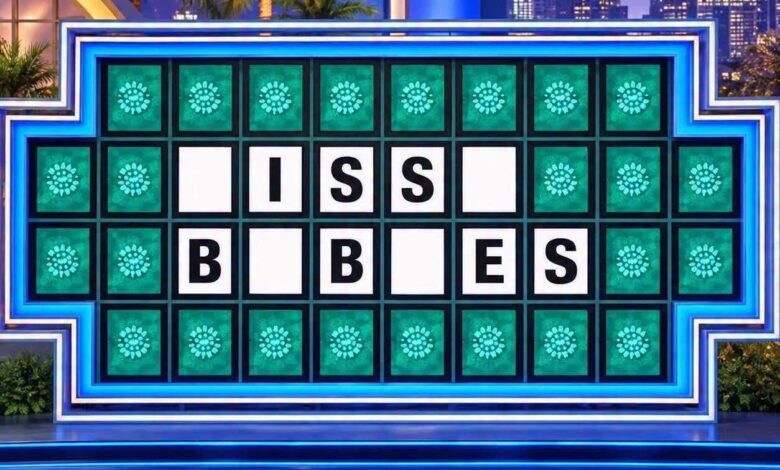
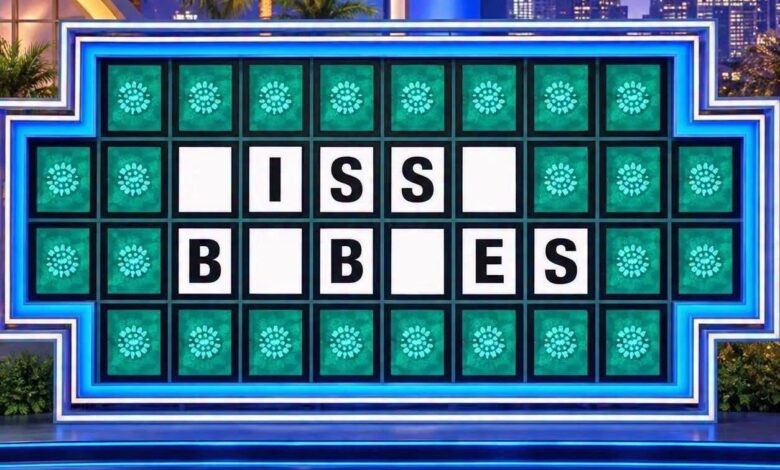
A Wheel of Fortune Bonus Round featuring contestant Conner Kemmsies prompted a wider discussion among viewers about puzzle categories, time pressure, and the difference between seeing an answer after the fact and finding it in seconds. Kemmsies, a commercial pilot, appeared on a Valentine’s Day episode and reached the final puzzle after earning $19,080 in cash and prizes during the main game.
In the Bonus Round, he had the opportunity to add a further $40,000 to his total. The puzzle category was “Phrase,” and the board showed the opening words “I DID MY,” with the final word still concealed. Although the eventual answer, “I DID MY HOMEWORK,” appeared straightforward once revealed, Kemmsies was unable to complete it before the round’s countdown ended.
The missed puzzle became memorable not because the answer was obscure, but because many viewers believed the visible words allowed several plausible endings. The moment offered a useful illustration of why word puzzles can be far more challenging in a studio setting than they appear to people watching at home.
What Happened in the Wheel of Fortune Bonus Round?
The Bonus Round is designed to be a high-pressure conclusion to each Wheel of Fortune episode. A contestant who reaches this stage receives a puzzle category and a partially revealed board. After the show supplies its customary letters, the contestant selects additional consonants and a vowel. The board is then updated, and the contestant has a short period to state the complete answer.
That format creates a very different task from casually solving a puzzle at home. Contestants must process the category, identify a pattern, consider likely word combinations, and commit to one answer while cameras, an audience, and a potentially substantial prize are all part of the moment.
For Kemmsies, the visible wording began with “I DID MY.” The solution was “I DID MY HOMEWORK,” a familiar statement in everyday English. However, before the answer was revealed, there were numerous grammatically natural possibilities that could have followed the same opening. A player might consider phrases such as “I did my best,” “I did my job,” “I did my part,” or “I did my share.”
Those alternatives do not mean the official answer was invalid. Rather, they explain why a contestant could struggle to identify the intended completion quickly. A puzzle’s difficulty is not determined only by whether its answer is familiar; it is also shaped by how many reasonable answers appear possible before the missing letters are known.
Why the “Phrase” Category Drew Attention
Much of the online reaction focused on the category label: “Phrase.” Some viewers argued that the category did not narrow the puzzle enough because “I did my” can begin many ordinary statements. From that perspective, the issue was not whether “I did my homework” is a valid expression. It clearly is. The concern was that the category gave limited guidance when the board left an entire common word unrevealed.
Other viewers took a different view. In the vocabulary of game shows, a “phrase” can include a familiar expression, a complete statement, or a commonly used sequence of words. It is not limited to idioms, sayings, or fragments with a single predictable ending. Under that broad and long-established use of the category, “I DID MY HOMEWORK” fits comfortably as a phrase.
Both responses can be understood in context. Viewers critical of the category were evaluating the puzzle from the contestant’s position, where uncertainty mattered most. Viewers who defended the puzzle were judging the finished answer and its relationship to the category. The disagreement was therefore less about spelling or grammar than about how much assistance a category should provide in a final-round puzzle.
Game-show categories serve an important purpose: they give contestants a framework for organizing possible answers. A category such as “Food & Drink” may immediately guide a player toward ingredients, meals, or beverages. “Before & After” signals a specific wordplay format. “Phrase,” by contrast, is intentionally broad. It can include a large range of everyday language, which makes it flexible for producers but potentially demanding for contestants.
Why Familiar Answers Can Be Hard Under Pressure
The reaction to Kemmsies’ puzzle reflects a common feature of competitive problem-solving. Once people know the answer, it often feels obvious. Psychologists describe a related tendency as hindsight bias: after learning an outcome, people may overestimate how predictable it was beforehand. In a word-game setting, that can lead an audience to think, “I would have gotten that immediately,” even though the contestant had less information and far less time.
Pressure can also affect recall and decision-making. A contestant may recognize several possible word patterns at once but be unable to select the intended one quickly enough. The task is not simply to know that “homework” is a common word. It is to decide, in real time, that it is more likely than every other possible completion.
Short time limits intensify that challenge. When a person is given only seconds to answer, the brain may focus on the most immediately available possibilities rather than systematically testing every option. A contestant can become caught between several reasonable guesses, especially when the visible words form an incomplete thought instead of a distinctive idiom or title.
Television production adds another layer. Players know their family, friends, and a national audience are watching. They are standing on a brightly lit stage, speaking into a microphone, and responding to a host while an important financial prize is at stake. Even experienced professionals can find that environment more demanding than a living-room guessing game.
The Significance of the $40,000 Prize
The $40,000 prize added emotional weight to the moment. Kemmsies had already had a successful appearance, leaving the main game with $19,080 in cash and prizes. That is a meaningful outcome and reflects strong performance across the episode. Still, the Bonus Round offered a clear opportunity to substantially increase his total with one final solution.
In game-show storytelling, this contrast is part of what makes the final round compelling. A contestant can have an excellent game, build a significant total, and still face a last puzzle that is difficult for reasons unrelated to general knowledge or skill. The final result can turn on a single word, a single letter pattern, or a fleeting association.
For audiences, a large bonus prize can make a near miss feel especially frustrating. It is natural for viewers to replay the puzzle mentally and ask whether they would have made the same guess. Yet the financial stakes do not change the basic structure of the round: the contestant must provide the official solution before the time expires.
The episode also demonstrated why game shows routinely generate debate on social media. Fans often bring different expectations to a puzzle. Some prioritize strict validity: if the answer matches the category and board, the puzzle is fair. Others prioritize solvability: if several answers seem equally likely, they may see the puzzle as insufficiently specific. Neither perspective is unusual, particularly in a format built around language and rapid decisions.
How Wheel of Fortune Puzzle Categories Work
Wheel of Fortune has used categories for decades to help shape puzzles and signal the type of answer contestants should seek. Categories can include things such as “Thing,” “Place,” “Person,” “Event,” “Show Biz,” “Around the House,” “Song Lyrics,” and “Phrase.” The exact categories vary by episode and puzzle design.
A “Phrase” category generally encompasses ordinary language that does not fit more precisely into another label. It may be a short statement, a familiar saying, or an expression used in conversation. Because English includes many common phrases with similar openings, this category can sometimes create more ambiguity than categories tied to a specific topic.
That ambiguity is not necessarily a rule violation. Puzzle games frequently balance recognizability with uncertainty. If every board had only one obvious possible completion from the first few letters, the game would lose much of its challenge. At the same time, audiences may reasonably prefer final-round puzzles that provide enough distinct clues for a contestant to make a confident leap.
The Kemmsies puzzle sits directly in that tension. “I DID MY HOMEWORK” is a recognizable and conventional statement. But “I DID MY” is also an opening that permits several natural continuations. The answer was valid, while the path to it was less certain than it looked after the reveal.
A Reminder About Perspective in Game-Show Moments
Kemmsies reportedly handled the missed opportunity with good humor, an approach that helped place the moment in perspective. He did not leave empty-handed, and his appearance gave viewers a memorable example of the mental demands of the Bonus Round.
It is easy for audiences to evaluate a puzzle from the advantage of complete information. Once the board displays “I DID MY HOMEWORK,” the answer appears simple and inevitable. But that final image does not recreate the contestant’s experience: limited letters, a ticking clock, multiple possible completions, and the pressure of making an immediate decision.
The broader lesson is that an answer can be both ordinary and difficult to retrieve. Everyday phrases rely on context. When that context is reduced to a category as broad as “Phrase,” the contestant must supply the missing certainty independently. Some will make the connection in time; others will not.
Ultimately, the debate over this Wheel of Fortune moment reflects what makes the show enduringly engaging. Its puzzles are simple enough for viewers to play along with, yet unpredictable enough to produce surprises. Kemmsies’ Bonus Round did not hinge on an obscure fact or a complicated rule. It hinged on a familiar word that became elusive in the few seconds when it mattered most.
Sources
Disclaimer: This content is intended for entertainment purposes only and is not based on real events.