
Why Your Dog Barks at Certain People and Walks Past Everyone Else
A dog may walk calmly past several people and then suddenly bark at one person who appears no different to the owner. This behavior can be confusing, especially when it seems that a dog has singled out a stranger without an obvious reason. In most cases, however, barking is not random. Dogs respond to a combination of visual details, movement, distance, sound, location, scent, and their own past experiences.
Understanding why a dog barks at certain people can help owners make walks, visitor arrivals, and daily routines less stressful. The goal is not to assume that a dog is accurately judging a person’s character. Rather, it is to identify the circumstances that make the dog feel alert, uncertain, overexcited, or uncomfortable. By observing the situation carefully and using humane training approaches, owners can often reduce barking and help their dog feel safer.
Dogs Notice More Than People May Realize
People often focus on whether a stranger looks friendly, but dogs experience an encounter differently. A dog may notice the speed of a person’s approach, the direction they are walking, their posture, their voice, or an unusual object they are carrying. A person passing at a distance may barely register, while someone who stops, faces the dog directly, or reaches toward it can feel much more significant.
Dogs also rely heavily on their senses. Their hearing can detect sounds that people may not notice, while their sense of smell provides information about other animals, food, environments, and recent activities. A person’s scent may be unfamiliar because they have been around another dog, smoke, workplace chemicals, medical settings, or strong fragrances. Although scent can contribute to a dog’s interest or wariness, owners should avoid drawing broad conclusions about an individual based only on a dog’s reaction.
The important question is not simply, “Why does my dog dislike that person?” A more useful question is, “What changed in this specific encounter?” Looking for patterns can reveal whether the trigger is distance, appearance, movement, location, or the dog’s emotional state at that moment.
Appearance Can Influence a Dog’s Reaction
Some dogs react more strongly to people wearing hats, helmets, hoods, sunglasses, long coats, uniforms, or bulky clothing. These items can change the outline of a person’s body and partly conceal facial features. For a dog that has had limited exposure to these variations, an unfamiliar silhouette may be surprising.
Mobility aids, umbrellas, bicycles, skateboards, suitcases, or large packages may also attract attention. The object itself is not necessarily frightening, but it can move unpredictably, make unfamiliar noises, or alter the way a person walks. A dog that is comfortable with pedestrians may be uncertain around someone using crutches or carrying a large box.
Physical differences should never be treated as a reason to blame or avoid another person. The responsibility is on the dog’s handler to create distance, use appropriate management, and train the dog gradually and respectfully. Dogs can learn that people with different appearances and movement patterns are safe when introductions occur at a pace the dog can handle.
Body Language, Movement, and Personal Space Matter
Canine communication is highly sensitive to movement and social distance. A person who walks past without engaging may be easy for a dog to ignore. By contrast, a person who approaches head-on, bends over the dog, reaches toward its head, makes prolonged eye contact, or speaks loudly may create more social pressure.
Many well-meaning people greet dogs in ways that feel intrusive from the dog’s perspective. Reaching over a dog’s head, hugging, or trying to pet a dog immediately can be uncomfortable, particularly for shy, young, older, or poorly socialized dogs. Even a friendly dog may bark if it is startled or unable to move away.
Distance is often one of the most important factors. Every dog has a threshold: the point at which a person, animal, sound, or object is close enough to trigger a noticeable reaction. Below that threshold, the dog may observe calmly and accept treats or respond to cues. Beyond it, the dog may become tense, bark, pull, freeze, or attempt to leave. Training is generally most effective when the dog remains below this threshold.
Past Experiences Can Shape Future Barking
A dog does not need to have had a major negative event to become wary in a particular situation. A single startling incident, such as a loud greeting, sudden movement, dropped object, or unwanted handling, can make some dogs more sensitive to similar circumstances in the future. Temperament, genetics, age, health, and early social experiences can all affect how easily a dog becomes concerned.
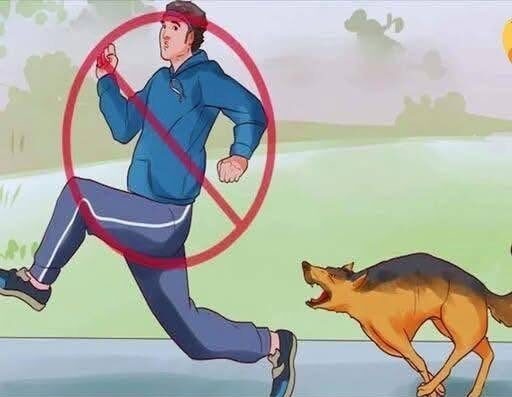
For example, a dog may bark at people who walk quickly after being startled by a runner in the past. Another dog may react to deep voices, uniforms, or people carrying tools because those details were present during an earlier uncomfortable event. Owners may not always know the full history, particularly if a dog was adopted as an adult. It is still possible to manage the behavior compassionately without knowing every cause.
It is also important to remember that dogs can have good and difficult days. Fatigue, pain, illness, lack of sleep, a busy environment, or repeated exposure to triggers can lower a dog’s tolerance. A dog that coped well with strangers yesterday may react more quickly today. A sudden behavioral change, especially in an adult or senior dog, should be discussed with a veterinarian because discomfort and medical conditions can affect behavior.
Why Dogs Often Bark More at Home Than on Walks
Location can dramatically change a dog’s behavior. A dog that ignores strangers outdoors may bark intensely when someone approaches the front door, window, driveway, or fence. Home is a familiar space, and the arrival of visitors, delivery workers, or neighbors can be highly predictable and stimulating.
Doorbells, knocking, footsteps, vehicle sounds, and the sight of someone stopping near the property can all become cues for barking. In some cases, the behavior is reinforced unintentionally. The dog barks, the visitor eventually leaves, and the dog may appear to have succeeded in making the person go away. Over time, this pattern can strengthen the barking response.
Managing the environment is often more practical than expecting a dog to remain calm during every arrival. Before opening the door, owners can move the dog behind a closed interior door, use a sturdy baby gate where appropriate, provide a quiet room, or offer an enrichment activity away from the entryway. Reducing the dog’s direct access to windows or fences may also help limit repeated rehearsals of barking behavior.
Socialization Means Positive Exposure, Not Forced Greetings
Puppy socialization is often misunderstood. It does not mean that every stranger must pet, hold, or closely interact with a puppy. Effective socialization involves safe, positive exposure to the ordinary sights, sounds, people, surfaces, and situations a dog may encounter throughout life.
A puppy can gain confidence simply by watching people from a comfortable distance while receiving treats, praise, or time to explore. Seeing individuals of different ages, heights, clothing styles, and movement patterns can be useful when the puppy remains relaxed. Short, controlled experiences are generally more beneficial than overwhelming encounters.
Owners should pay attention to the puppy’s body language. A relaxed dog may have soft eyes, a loose body, normal breathing, and the ability to look away or focus on the handler. Signs that the situation may be too difficult include turning away, crouching, tucked tail, pinned-back ears, repeated lip licking, yawning when not tired, refusing food, barking, or trying to retreat.
If a puppy shows discomfort, increase the distance and reduce the pressure. Allowing the puppy to move away is not “giving in”; it can prevent fear from escalating. Gradual, reward-based exposure builds confidence more reliably than forcing a dog to endure an interaction it finds frightening.
How to Respond When Your Dog Barks at a Person
When barking begins, prioritize safety and space. Avoid pulling the dog toward the person to prove that there is nothing to fear. Do not ask a stranger to pet the dog, offer a hand for the dog to sniff, or stand still while the dog is visibly distressed. These actions can increase pressure and may put both the dog and person in an uncomfortable situation.
Instead, calmly create distance. On a walk, cross the street, turn around, step behind a parked car, or move to the side of a wide path. At home, place the dog behind a secure barrier before guests enter. If possible, redirect the dog with a simple, familiar cue such as “let’s go” or “find it,” followed by treats scattered on the ground in a safe area.
Reward calm behavior before barking starts whenever possible. If your dog notices a person at a manageable distance and then looks back at you, mark that moment with a reward. Over repeated sessions, the dog may begin to associate the sight of people with good outcomes rather than uncertainty or alarm. The process should be gradual, and the dog should not be pushed close enough to react strongly.
Avoid Punishment-Based Responses to Fear or Reactivity
Yelling, leash jerks, intimidation, or punishment tools can suppress warning signals without resolving the emotion behind them. A dog that is punished for growling may learn that growling is unsafe to express, while still feeling uncomfortable. Because growling can be an important warning sign, it is better to respond by increasing distance and addressing the situation thoughtfully.
Reward-based training focuses on teaching alternatives and changing the dog’s emotional association with a trigger. This may include practicing attention cues, rewarding calm observation, using distance strategically, and helping the dog develop predictable routines. Progress is rarely perfectly linear, but consistent, low-pressure training can make meaningful improvements over time.
When Growling, Snapping, or Lunging Requires Professional Support
Barking can reflect excitement, frustration, fear, alerting behavior, or a request for more distance. However, if a dog stiffens, growls, snaps, lunges, or has made contact with a person, the situation deserves prompt and careful attention. Keep the dog and others separated with secure management while seeking guidance.
Start with a veterinary examination, particularly if the behavior is new, worsening, or linked to touch or movement. Pain, sensory changes, neurological conditions, and other health issues can influence behavior. A veterinarian can also recommend an appropriately qualified behavior professional.
Look for professionals who use evidence-based, humane methods and who are transparent about their qualifications. Depending on the dog’s needs, help may come from a veterinarian with behavior expertise, a board-certified veterinary behaviorist, or a certified trainer or behavior consultant working with positive reinforcement. Provide a clear history of what happens before, during, and after each incident. Details about distance, setting, body language, time of day, and likely triggers are valuable.
Helping Your Dog Feel Safer Around People
A dog that barks at certain people is communicating that something in the situation is difficult or highly arousing. The most constructive response is curiosity rather than blame. Observe patterns, protect personal space, avoid forced interactions, and reward calm choices.
With patient management and training, many dogs can become more comfortable around unfamiliar people. Some may never enjoy being greeted by everyone they meet, and that is acceptable. A successful outcome may simply be a dog that can notice a person, remain calm at a safe distance, and continue with its day. Respecting those limits supports the welfare of the dog and the safety of the people around it.
Sources
Disclaimer: This content is intended for entertainment purposes only and is not based on real events.