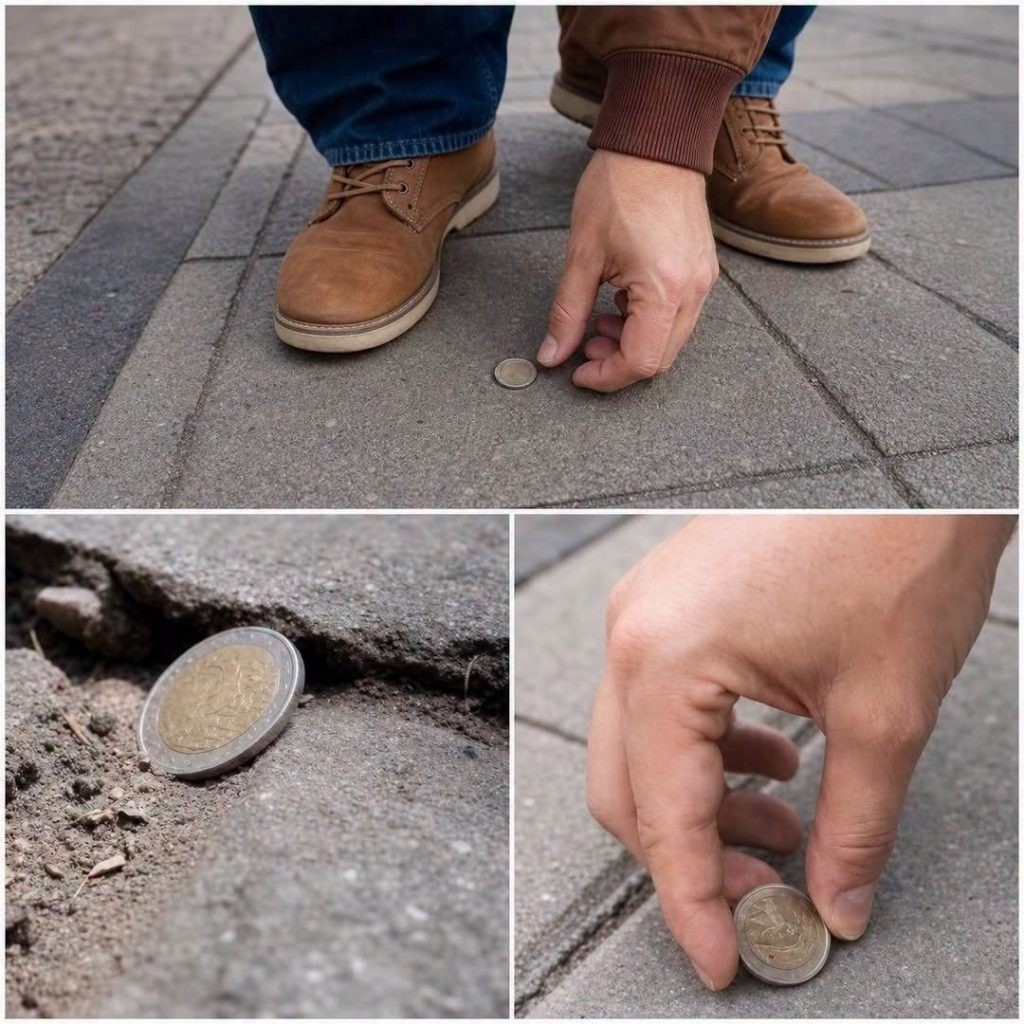

What Does It Mean When You Find a Coin?
Finding a coin on the pavement, in a parking lot, or near a shop entrance is a small experience that can unexpectedly brighten an ordinary day. Its monetary value may be modest, but the moment often feels more significant than the amount involved. Across many cultures, people have connected found coins with good fortune, prosperity, remembrance, and the possibility of new opportunities.
These interpretations are traditions rather than proven predictions. Finding a coin does not reliably forecast financial success, change the course of events, or provide evidence of a supernatural message. Still, the experience can be meaningful on a personal level. It may prompt gratitude, bring back a memory, or simply offer a welcome reminder that pleasant surprises can appear in everyday life.
This article examines why found coins attract so much attention, the origins of common coin superstitions, what psychology can tell us about noticing money on the ground, and practical steps to consider before keeping an unusual coin.
Why Finding a Coin Feels Meaningful
Coins have long represented exchange, security, and economic participation. Unlike a receipt or a bank balance, a coin is a physical object that can be held, examined, saved, or passed along. For centuries, coins have also carried images of rulers, national symbols, historical events, and cultural values. Their practical function as money gives them an immediate association with resources and possibility.
Because money is important in daily life, even a small amount can capture attention. A coin found unexpectedly is different from money received as change after a purchase: it feels unplanned. That element of surprise can make the discovery more memorable. Behavioral research has consistently shown that small positive events can influence mood, especially when they interrupt a routine or encourage someone to focus on the present moment.
For many people, the meaning comes less from the coin itself than from the story they attach to it. A person looking for reassurance during a difficult week may see the discovery as an encouraging sign. Someone who enjoys collecting coins may immediately wonder about its age, mint mark, or historical background. Another person may simply appreciate the modest good fortune of finding something useful.
Coins and Good Luck Traditions
The idea that found money brings good luck is widespread, particularly in English-speaking countries. A familiar rhyme says, “Find a penny, pick it up, all day long you’ll have good luck.” Versions of this saying have circulated for generations, helping turn an everyday observation into a recognizable folk belief.
Such sayings are part of folklore: shared customs, stories, and beliefs passed between people and communities. Folklore can be culturally important even when it is not scientifically testable. It often offers a simple way to frame uncertainty. Rather than treating an unexpected coin as meaningless, the tradition encourages a hopeful interpretation.
In practical terms, finding a coin may create a small sense of reward. That positive feeling can influence how someone remembers the rest of the day. If another pleasant event happens afterward, it may seem to confirm the coin’s lucky status. If nothing unusual occurs, the person may still remember the original discovery as a cheerful moment.
There is no credible evidence that a found coin causes good or bad outcomes. Luck beliefs are best understood as cultural practices and personal rituals, not financial advice or a reliable method of predicting the future. Nevertheless, choosing to see a harmless everyday event positively can support a more appreciative outlook.
Heads Up, Tails Down: Does the Side of the Coin Matter?
One of the best-known coin superstitions concerns which side is facing upward. In many popular traditions, a coin discovered “heads up” is thought to bring good luck, while a coin showing tails is sometimes viewed as less favorable. People who follow the custom may turn a tails-up coin over before leaving it behind, believing they are improving the luck of the next person who sees it.
The origin of this belief is difficult to identify precisely. It likely developed through a mixture of older customs surrounding symbolic images, chance, and the historical use of heads and tails in games of probability. Coins have often displayed portraits or official emblems on one side, which may have contributed to the idea that the “heads” side has special significance.
From a scientific perspective, the orientation of a coin has no known effect on future events. Its position depends on ordinary physical factors, including how it was dropped, kicked, or moved by wind, water, or passing vehicles. Yet the custom remains popular because it adds a playful decision to a routine encounter.
For people who enjoy traditions, flipping a coin to heads can be a small act of kindness. It does not need to be treated as a serious prediction. Instead, it can be seen as a way of participating in a shared cultural ritual and perhaps giving another passerby a reason to smile.
Finding Coins and Memories of Loved Ones
Some individuals interpret a found coin as a symbolic reminder of a loved one who has died. The experience may feel especially moving if it occurs on an anniversary, during a difficult period, or while the person is already thinking about someone important to them. In grief-related communities and personal storytelling, coins are sometimes described as “pennies from heaven” or as gentle signs of remembrance.
It is important to approach this belief respectfully. There is no scientific evidence that coins are messages from people who have died. At the same time, grief is personal, and people often find comfort in objects, places, songs, or routines that help them maintain a sense of connection with someone they miss.
Health organizations and bereavement specialists commonly recognize that memories and symbolic rituals can be part of a normal grieving process. Keeping a coin in a memory box, placing it near a photograph, or using it as a prompt to share a story about a loved one can be a meaningful personal practice. If grief becomes overwhelming or begins to interfere substantially with everyday life, support from a qualified mental health professional or bereavement service may be helpful.
A coin does not have to prove anything to hold emotional value. Its significance can come from the memory it evokes and the care a person attaches to it.
Why You May Start Noticing More Coins
After finding one coin, some people report seeing loose change everywhere. This can feel like a pattern, but psychology offers a straightforward explanation. Human attention is selective: people cannot consciously process every object in their surroundings, so the brain prioritizes information that seems relevant, new, or rewarding.
Once a coin has captured someone’s attention, coins may become more noticeable during future walks. This is related to a phenomenon often called the frequency illusion, also known as the Baader-Meinhof phenomenon. After encountering a word, product, idea, or object, a person may feel as though it suddenly appears much more often. Usually, the item was present before; it simply did not stand out.
Confirmation bias can also play a role. People naturally tend to remember examples that support an existing idea more easily than examples that do not. If someone believes found coins are a sign of luck, they may remember each coin they see while forgetting the many days when no coin appears or no notable event follows.
These mental shortcuts are normal features of human cognition. Understanding them does not make the experience less enjoyable. It simply helps distinguish between a meaningful personal interpretation and a factual claim about cause and effect.
Practical Advice Before Picking Up a Coin
In most situations, picking up ordinary loose change is a simple and low-risk choice. However, safety and common sense should come first. Do not step into traffic, enter a restricted area, reach into unsafe spaces, or put yourself at risk to retrieve a small coin. No amount of loose change is worth an injury.
Basic hand hygiene is also sensible. Coins circulate widely and can carry dirt or microorganisms from the surfaces and hands they contact. The risk from briefly handling a coin is generally low, but washing hands with soap and water after handling money is a practical habit, particularly before eating or touching the face. If soap and water are unavailable, alcohol-based hand sanitizer can be useful.
Local laws and property rules may matter as well. A coin on a public sidewalk is usually treated differently from money found inside a business, workplace, school, or private venue. If you find a substantial amount of cash, a wallet, identification, or an item that clearly belongs to someone, the responsible action is to notify the property owner, venue staff, or local authorities as appropriate.
Could a Found Coin Be Valuable?
Most coins found in circulation are worth their face value. Yet an older coin, an unusual denomination, a foreign issue, or a piece with a distinctive mint mark may be of interest to collectors. Value depends on several factors, including rarity, condition, historical demand, metal content, minting errors, and whether the coin is authentic.
If a coin appears old or unusual, avoid cleaning, polishing, scratching, or using chemicals on it. Cleaning can damage its surface and may reduce collector value. Store it carefully in a dry container or coin holder, and seek an opinion from a reputable coin dealer, professional numismatist, museum resource, or recognized coin-collecting organization.
It is also wise to be cautious about online claims that an ordinary coin is worth a large sum. Reliable appraisals depend on close examination and comparison with credible market records. A date alone rarely determines value, because many older coins were produced in large quantities. Condition and specific varieties often matter just as much.
A Small Discovery With Personal Meaning
Finding a coin can be viewed through several lenses at once. Culturally, it may connect to long-standing traditions about luck and abundance. Emotionally, it may trigger a comforting memory of someone special. Psychologically, it may reflect the way attention makes familiar objects suddenly stand out. Practically, it may be a small amount of spending money or an intriguing addition to a collection.
None of these interpretations needs to cancel out the others. A person can understand that coins do not predict the future while still enjoying a folk saying. They can recognize the psychology of selective attention while also appreciating the personal comfort a found coin provides. The most balanced approach is to treat the moment with curiosity, gratitude, and realism.
Ultimately, a coin on the ground is not a guarantee of wealth or a message that can be objectively verified. But it can offer something simpler: a brief pause in the day, a reason to look more closely at the world, and a reminder that small unexpected moments can matter.
Sources
- American Psychological Association — information on attention, perception, and cognitive processes.
- CDC — guidance on handwashing and everyday hygiene.
- National Institute of Mental Health — information on mental health support and self-care.
- United States Mint — collecting basics and educational resources about coins.
- Encyclopaedia Britannica — background on folklore and traditional beliefs.
Disclaimer: This content is intended for entertainment purposes only and is not based on real events.