
Unexpected Deer Visitors: Understanding a Close Wildlife Encounter
They did not run away. That was the detail that made the encounter feel unusual.
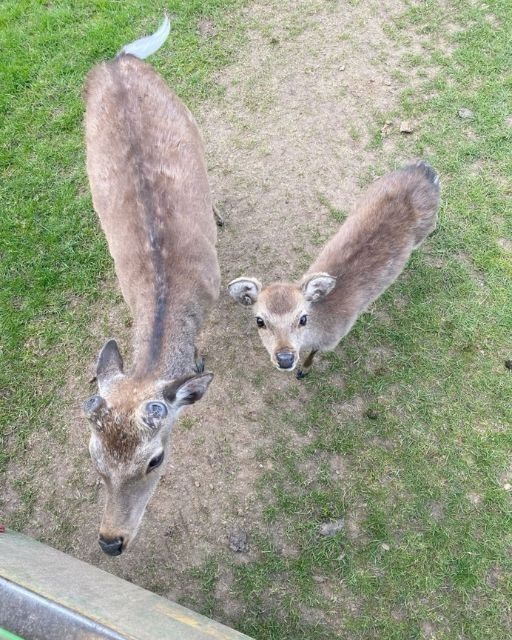
While hay was being tossed outdoors, two deer emerged from the woods and stood nearby. Rather than immediately freezing or retreating, the animals watched from the edge of the property. One deer remained farther back, appearing more cautious. The smaller deer seemed especially attentive, holding eye contact long enough to make the moment feel memorable.
A photograph and a lighthearted social-media post may seem like a natural response to an unexpected wildlife visit. Yet a close encounter with deer can also raise practical questions: Why are deer approaching people? Is the behavior normal? Could food, habitat changes, or seasonal conditions be influencing the animals? And what is the safest way for people to respond?
Wildlife agencies generally advise people to appreciate deer from a distance. Deer are common in many rural, suburban, and semi-wooded communities, but they remain wild animals. Their presence near a yard, barn, garden, or hay storage area does not necessarily mean something is wrong. It may simply reflect the way deer adapt to changing landscapes and search for reliable food and cover.
Why Deer May Appear Near Homes, Barns, and Fields
White-tailed deer, the most widespread deer species in much of North America, are highly adaptable. They can live in forests, agricultural areas, parklands, suburbs, and locations where wooded cover is close to lawns or cultivated fields. In Europe and other regions, different deer species show similar flexibility when habitat, vegetation, and low-disturbance areas are available.
Hay, pastureland, gardens, shrubs, fruit trees, and ornamental plants can all attract deer. Even when deer are not directly eating stored hay, they may be drawn to the broader setting: open ground, nearby vegetation, water sources, woodland edges, and areas that offer an easy route back to cover.
Deer are also often most active during dawn and dusk, though they can appear at any time of day. Their movements change with weather, breeding seasons, hunting pressure, construction activity, traffic, availability of food, and the presence of people or pets. A deer that steps quietly out of the woods may be following a familiar travel corridor that has existed long before nearby homes or farm buildings were developed.
In some communities, deer become accustomed to seeing people at a distance. This does not mean they are domesticated or safe to approach. It can mean that the animals have learned that a particular area is relatively predictable and that people there have not threatened them. Wildlife specialists often call this habituation: an animal becomes less reactive to repeated, non-threatening human activity.
What It Means When Deer Do Not Run Away
Many people expect deer to bolt the moment they are noticed. Often they do. Deer have strong survival instincts and rely on hearing, smell, and movement detection to identify possible danger. Stillness can be part of their natural response. Before moving, a deer may pause to assess a sound, scent, or unfamiliar person.
A deer that watches a person calmly may be evaluating the situation rather than showing trust. The animal may have detected no immediate threat, especially if the person is standing still, speaking softly, or performing a routine task from a distance. Deer also vary individually. Younger animals may be curious, while adults may appear cautious but remain nearby if they believe an escape route is available.
Seasonal factors matter as well. In late spring and early summer, young deer may be seen alone while their mothers forage nearby. A fawn that appears to be by itself is not automatically abandoned. Wildlife agencies commonly warn that people should not pick up, feed, or relocate a young deer unless a licensed wildlife rehabilitator or local wildlife authority has advised them to do so.
During the autumn breeding season, commonly called the rut, deer behavior can be more unpredictable. Male deer may travel more widely and may be less focused on avoiding roads or yards. Adult males with antlers should be given especially generous space. A deer that feels cornered, startled, or unable to leave can react defensively, even if it had previously seemed calm.
A Memorable Moment, Not a Reason to Feed Wildlife
Close wildlife sightings can be meaningful. Watching deer move quietly through a landscape can remind people that natural ecosystems exist alongside farms, neighborhoods, and roads. However, experts consistently discourage feeding wild deer.
Food provided by people can change normal movement patterns and encourage animals to gather in places where they are more likely to encounter vehicles, pets, and people. Supplemental feeding may also increase contact among deer, which can contribute to the spread of disease in some populations. In several jurisdictions, feeding deer is restricted or prohibited because of these concerns.
Human food is not an appropriate substitute for a deer’s natural diet. Deer are browsers that typically eat leaves, twigs, shoots, acorns, fruits, and other plant material depending on the season and local habitat. Sudden dietary changes can be harmful, particularly during difficult winter conditions when a deer’s digestive system is adapted to available natural browse.
The best approach is simple: enjoy the sighting without trying to make it happen again. Avoid leaving food scraps outside, secure livestock feed where possible, and keep a respectful distance. A wildlife encounter is safest when the animal can move away freely and the observer does not try to touch, follow, or photograph it at close range.
How to Respond Safely When Deer Visit Your Property
If deer appear near a home, farm, or garden, there are several practical steps that can help protect both people and wildlife.
- Keep your distance: Watch deer from indoors or from a location that does not block their path. Avoid approaching for photographs or attempting to interact with them.
- Do not feed them: Feeding can encourage repeat visits and reduce the animal’s natural caution around people.
- Keep pets supervised: Dogs may chase or stress deer, and frightened wildlife can injure itself while trying to escape. Keep dogs leashed or under close control outdoors.
- Protect gardens humanely: Fencing, deer-resistant plant choices, and approved deterrents may help reduce browsing without harming animals.
- Drive carefully: Deer are most active around dawn and dusk, but they can cross roads at any hour. If one deer crosses, others may follow.
- Contact local experts when necessary: If a deer appears injured, trapped, or unusually distressed, call a local wildlife agency, animal control office, or licensed wildlife rehabilitator rather than trying to handle it.
People should also avoid interpreting a single sighting as proof that an animal is sick or tame. A deer may simply be resting, feeding, assessing its surroundings, or using a familiar route. Still, an animal that appears disoriented, cannot move normally, is trapped in fencing, or displays persistent unusual behavior should be reported to local wildlife professionals.
Deer, Suburban Growth, and Shared Landscapes
The appearance of deer near human activity reflects a broader environmental reality. As communities expand into formerly rural or wooded areas, the boundary between wildlife habitat and developed land becomes less distinct. Forest fragments, greenbelts, drainage corridors, parks, and agricultural edges can all function as wildlife pathways.
Deer populations are influenced by habitat quality, predators, hunting regulations, weather, disease, and local land-use patterns. In some areas, deer numbers are carefully managed by wildlife authorities to reduce crop damage, protect forest regeneration, and lower the risk of vehicle collisions. In other areas, conservation efforts focus on preserving habitat and maintaining healthy populations.
Wildlife management is therefore not only about individual encounters. It is also about balancing ecological health, public safety, agricultural needs, and community values. Local regulations can vary significantly, so residents should rely on guidance from their state, provincial, national, or regional wildlife agency when they have concerns about deer in their area.
For homeowners and land managers, prevention is often more effective than reacting after deer have become regular visitors. Removing attractants, protecting valuable plants, repairing damaged fencing, and using landscaping that is less appealing to deer can reduce conflict while allowing wildlife to continue moving through the environment.
The Importance of Observing Wildlife Responsibly
The smaller deer’s steady gaze may have felt like a personal moment, but it was also a reminder that wildlife encounters are shaped by instinct. Deer do not experience a human gathering hay, holding a phone, or posting online in the same way people do. They are responding to sounds, movement, scent, available food, cover, and the need to stay safe.
That perspective can make a wildlife sighting even more valuable. Rather than treating an animal’s closeness as an invitation, people can see it as an opportunity to observe quietly and learn. A respectful encounter leaves no food behind, creates no stress for the animal, and gives it an unobstructed way to return to the woods.
Photographs can help document local wildlife, especially when shared responsibly without revealing sensitive locations or encouraging others to approach animals. When taking pictures, use a zoom lens or capture the scene from a safe distance. The wellbeing of the animal should always matter more than getting a closer image.
For many people, the quiet appearance of two deer at the edge of a field is a welcome surprise. It can be a brief connection to the natural world in an ordinary day. The safest response is also the most respectful: pause, observe, give the deer space, and let them continue on their way.
Sources
Disclaimer: This content is intended for entertainment purposes only and is not based on real events.