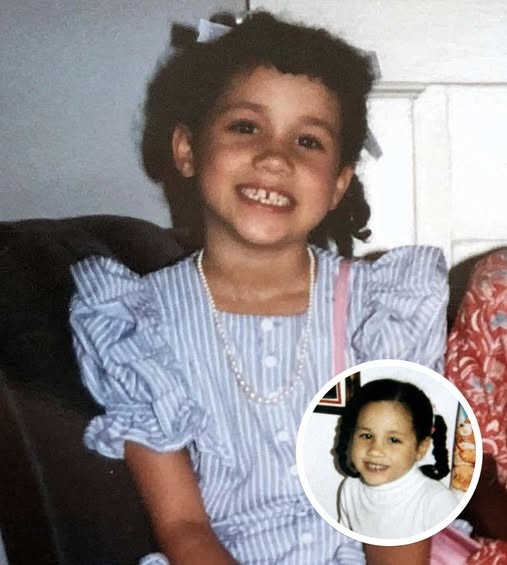

Meghan Markle’s Early Life, Identity and Family Background
Before becoming the Duchess of Sussex and one of the most closely watched public figures in the world, Meghan Markle grew up in Los Angeles, California. Her early life has attracted sustained interest because it offers context for many of the themes she has later discussed publicly, including identity, family, work, representation and belonging.
Meghan, whose full name is Rachel Meghan Markle, was born on August 4, 1981. She is the daughter of Doria Ragland, a social worker and former makeup artist, and Thomas Markle Sr., a retired television lighting director. Her parents came from different racial backgrounds: Ragland is Black and Markle Sr. is white. Meghan has spoken openly in interviews and essays about the ways her biracial identity shaped her childhood and her understanding of the world.
Her personal story has also become part of a broader international conversation about race, representation and the pressures placed on people with mixed heritage to define themselves for others. While Meghan’s experiences are individual to her family and upbringing, they have resonated with many people who have faced similar questions about identity and social expectations.
Growing Up in Los Angeles
Meghan Markle was raised in the Los Angeles area, a city known for its ethnic, cultural and economic diversity as well as its deep ties to the entertainment industry. Her father worked behind the scenes in television, including on the long-running sitcom Married… with Children. His work exposed Meghan to studio environments at a young age, an experience that may have helped make the entertainment world feel familiar before she began acting professionally.
Her mother, Doria Ragland, worked in makeup before later becoming a licensed clinical social worker and yoga instructor. Meghan has frequently spoken warmly about her relationship with her mother, who has remained a visible and supportive presence at major moments in her adult life, including her wedding to Prince Harry in 2018.
Like many families in a major metropolitan area, the Markles balanced work schedules, school commitments and everyday responsibilities. Meghan has described herself as a “latchkey kid,” a term commonly used for children who return home from school before their parents arrive from work. The phrase does not necessarily describe neglect; rather, it reflects an era in which many working parents relied on children, relatives, neighbours or after-school arrangements to manage the hours between school and the end of the workday.
In public comments, Meghan has recalled spending time at home independently while her parents worked. She has described simple weekday routines involving quick meals, television and schoolwork. Such recollections are familiar to many people raised in households where both parents had demanding jobs and convenience was an important part of daily family life.
Meghan Markle’s Reflections on Biracial Identity
A central part of Meghan Markle’s public narrative has been her experience as a biracial woman. In a widely discussed 2015 essay for Elle, written before her marriage into the British royal family, she explained that she had sometimes struggled with how forms and institutions asked her to identify herself. She recalled being asked to select one racial category on a school form and feeling that no single box fully reflected her family or her sense of self.
Meghan wrote that her father encouraged her to identify as Caucasian on that form because he believed it would be easier for others to understand. She said she instead left the box blank, a decision she described as an attempt to remain true to the complexity of her identity. The essay was widely shared because it addressed a common experience among multiracial people: the pressure to simplify a personal background that cannot always be captured by administrative categories.
Her account also included memories of her father creating a doll family set that better represented their household after she noticed that a standard set did not reflect all of its members. The story was often cited by readers as an example of a parent trying to respond thoughtfully to a child’s questions about representation.
Experts who study race and identity have long noted that multiracial individuals may experience identity differently depending on family relationships, school environments, community demographics and the assumptions made by others. There is no single biracial experience. Meghan’s comments should therefore be understood as her personal perspective, rather than a universal account of mixed-race identity.
Family Routines and Different Public Accounts
Meghan has described some elements of her childhood in informal, relatable terms. In interviews and public conversations, she has recalled eating microwave meals and fast food on busy days, as well as watching programmes such as Jeopardy! while eating at a television tray. These memories presented an image of an ordinary working family managing a fast-paced routine in Los Angeles.
Thomas Markle Sr. has publicly disputed aspects of how Meghan has characterised her early upbringing. He has said that he was actively involved in her school routine, including picking her up or arranging transportation when his work schedule required it. He has also challenged the suggestion that convenience food was the defining feature of her childhood.
Differences in family recollections are not unusual, especially when memories are discussed years later and become part of a wider public story. A child’s experience of a household can differ from a parent’s understanding of the same period. Work pressures, travel, changing family circumstances and the passage of time can all influence how people remember events.
Because these accounts have been discussed publicly by family members, it is important to distinguish between firsthand personal recollections and independently documented facts. Meghan’s descriptions provide insight into how she remembers her childhood, while her father’s comments offer his own perspective. Neither account can fully capture every detail of a family’s private life.
Education and Early Ambitions
Meghan attended private school in Los Angeles and later studied at Northwestern University in Illinois. She graduated with a degree in theatre and international studies, combining an interest in performance with an academic focus on global affairs. This educational background preceded her work as an actor, producer, advocate and media entrepreneur.
Before gaining wider recognition for her role as Rachel Zane in the legal drama Suits, Meghan worked in several areas connected to media and communications. She also completed an internship at the United States embassy in Argentina during her university years. Her early professional path reflected interests that extended beyond acting alone.
In later years, she became involved with causes relating to women’s empowerment, education and community support. Before joining the royal family, she worked with UN Women and became a global ambassador for World Vision Canada. Her advocacy has included support for girls’ education and women’s participation in public life.
From Actress to Global Public Figure
Meghan Markle’s relationship with Prince Harry brought her into an institution with centuries of history and unprecedented global visibility. Their engagement was announced in November 2017, and they married at St George’s Chapel, Windsor Castle, in May 2018. The wedding drew significant international attention and was viewed by many observers as a notable moment for diversity within the modern British monarchy.
At the same time, intense media scrutiny accompanied Meghan’s entry into royal life. Public discussion around her often involved issues of race, class, nationality and the expectations placed on women in prominent roles. In 2021, Meghan and Harry gave an interview to Oprah Winfrey in which they discussed their experiences within the royal household and with the media. Buckingham Palace later issued a statement saying that the issues raised, particularly those related to race, were concerning and would be addressed privately.
The couple stepped back from duties as working members of the royal family in 2020 and later established their home in California. They have since continued charitable work through the Archewell Foundation and pursued projects in audio, television and publishing. Their lives remain the subject of major public interest, but their stated focus has included building greater independence and protecting family privacy.
Why Meghan Markle’s Childhood Story Continues to Matter
Interest in Meghan Markle’s early years is not solely about celebrity biography. Her story has become a reference point in wider discussions about social mobility, family diversity, mixed-race identity and the way public figures describe their pasts. For some readers, her memories of a working household and an uncertain sense of belonging are recognisable. For others, the debate around competing family accounts illustrates the limits of public narratives about private lives.
Her upbringing also highlights the important role of representation. When people see families, communities and identities reflected in public life, it can influence how they understand their own place in society. Meghan’s prominence has prompted conversations in Britain, the United States and elsewhere about who is represented in major cultural institutions and how public discussion can affect people from minority backgrounds.
It is equally important to approach these conversations with care. Public figures can inspire debate, but they are also individuals whose family relationships and childhood experiences are complex. A balanced understanding of Meghan Markle’s background recognises both the information she has chosen to share and the fact that personal history is rarely defined by one simple version of events.
Meghan Markle’s Early Life in Context
Meghan Markle’s childhood in Los Angeles took place far from the royal settings that would later define much of her public image. She grew up in a working family connected to the television industry, attended school, navigated questions about identity and eventually developed ambitions that led her into acting, advocacy and international public life.
Her recollections of being a biracial child, spending time alone after school and living with the routines of working parents offer one perspective on the experiences that shaped her. Her father’s differing public comments add another perspective, reminding audiences that family stories can be personal, complicated and open to interpretation.
Whatever view readers take of the public debate around Meghan and the royal family, her early life remains relevant to understanding her later work and public voice. It reflects themes that extend well beyond one individual: the search for identity, the impact of representation, the demands of family life and the lasting influence of childhood experiences.

Sources
- BBC News: Profile and background on Meghan, Duchess of Sussex
- Reuters: UK news and reporting on the Duke and Duchess of Sussex
- The Royal Family: Official information from the British monarchy
- UN Women: Official information on women’s equality and empowerment
- World Vision Canada: Official organisation information
- Elle: Meghan Markle’s 2015 essay on her identity
Disclaimer: This content is intended for entertainment purposes only and is not based on real events.
