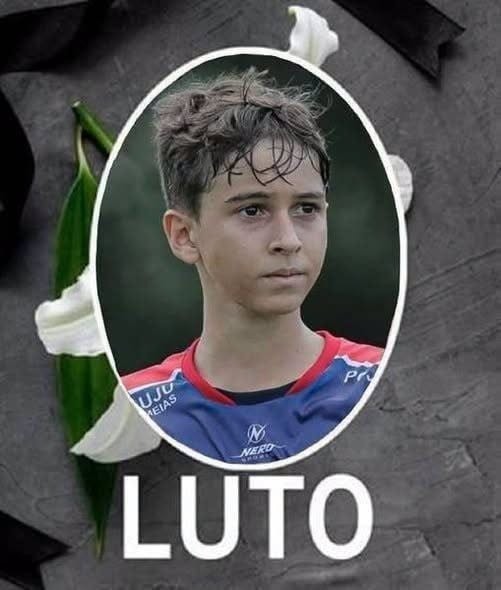

A 14-year-old footballer went out to play with friends and never came home. In Goiânia, the sudden death of Ezequiel “Zequinha” Sena Neres left his family devastated and teammates mourning a boy remembered for his quiet kindness. His father said his medical checks were current, making the loss even harder to comprehend for everyone who had watched him drea…
Ezequiel Sena Neres died in March 2025 after suffering cardiorespiratory arrest during a casual football match with church friends in Goiânia, Goiás. His father, Dione Neres, said the teenager felt unwell, rested, and later returned to play before collapsing. He was taken to a nearby pediatric hospital, where efforts to revive him were unsuccessful. According to his father, the young athlete’s routine medical examinations were up to date, and he was cleared for strenuous activity.
Known affectionately as Zequinha, the G2 Futebol Clube right winger had begun playing futsal at six. Those who knew him remembered a polite, dedicated student, a valued teammate, and a boy who dreamed of becoming a businessman. His club announced its grief, while coaches and teammates paid tribute to his shy smile and calm nature. He was buried at Cemitério Parque de Goiânia, leaving his family, church, and football community mourning a life cut painfully short.
A Dream Cut Short: The Sudden Loss of Ezequiel “Zequinha” Sena Neres
A 14-year-old footballer went out to play with friends and never came home. In Goiânia, the sudden death of Ezequiel “Zequinha” Sena Neres left his family devastated and teammates mourning a boy remembered for his quiet kindness. His father said his medical checks were current, making the loss even harder to comprehend for everyone who had watched him dream of a bright future on and off the pitch.
Ezequiel Sena Neres died in March 2025 after suffering cardiorespiratory arrest during a casual football match with church friends in Goiânia, Goiás. His father, Dione Neres, said the teenager felt unwell, rested, and later returned to play before collapsing. He was taken to a nearby pediatric hospital, where efforts to revive him were unsuccessful. According to his father, the young athlete’s routine medical examinations were up to date, and he was cleared for strenuous activity.
Known affectionately as Zequinha, the G2 Futebol Clube right winger had begun playing futsal at six. Those who knew him remembered a polite, dedicated student, a valued teammate, and a boy who dreamed of becoming a businessman. His club announced its grief, while coaches and teammates paid tribute to his shy smile and calm nature. He was buried at Cemitério Parque de Goiânia, leaving his family, church, and football community mourning a life cut painfully short.
The Unfathomable Shock of Youthful Tragedy
When a teenager passes away under sudden circumstances, the shock waves ripple far beyond the immediate household. Adolescence is fundamentally associated with vitality, growth, and endless potential. For a child like Zequinha—who lived an active life centered around sports, church, and school—death is an unexpected intruder that shatters the implicit promise of a long life ahead.
For parents, the death of a child disrupts the natural order of life. Dione Neres’s account reflects the unbearable disbelief experienced by families in these moments: how does a healthy, active 14-year-old who passed all medical evaluations simply collapse while playing a game he loved? The tragedy is compounded by the routine nature of the afternoon. It was not a high-risk adventure, but a casual match among church friends—a safe, wholesome environment where parents expect their children to build memories, not lose their lives.
The Challenge of Pre-Participation Screening
One of the most perplexing aspects for grieving families is that the athlete was recently “cleared” by a doctor. Standard routine medical exams for young athletes typically involve physical evaluations, listening to the heart with a stethoscope, and reviewing family history. However, subtle electrical or structural heart conditions frequently evade routine checkups without advanced diagnostic tools like echocardiograms or continuous genetic and cardiac monitoring.
Additionally, when a player experiences early warning signs—such as transient dizziness, chest tightness, or unusual fatigue—they may attribute it to simple exhaustion or heat. As seen in Zequinha’s case, taking a brief rest before returning to the field is a natural response for a dedicated player, unaware that the body is signaling a serious cardiac event.
