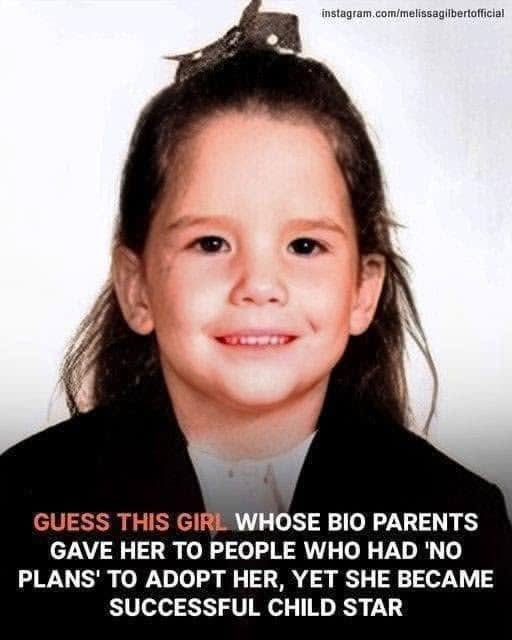

Melissa Gilbert’s Adoption Story, Childhood Stardom and Search for Identity
Melissa Gilbert became one of the most recognizable child actors in American television through her role as Laura Ingalls on Little House on the Prairie. For millions of viewers, she was the determined and warm-hearted “Half Pint” at the center of a beloved family drama. Away from the cameras, however, Gilbert’s personal life included a different and deeply private story: she was adopted shortly after her birth and later sought a fuller understanding of her biological roots.
Her experiences reflect themes that are familiar to many adopted people and families: belonging, family history, personal identity, and the desire to understand the circumstances surrounding one’s early life. Gilbert has discussed parts of her story in interviews and memoirs, describing adoption not as a single event but as one part of a life shaped by loving relationships, career pressures, grief, discovery, and personal growth.
Melissa Gilbert Was Adopted as a Newborn
Melissa Ellen Gilbert was born in Los Angeles, California, on May 8, 1964. She was adopted as an infant by Barbara Crane and Paul Gilbert. Her adoptive parents were involved in the entertainment industry, and their household eventually became connected to Hollywood’s television and film community.
Gilbert has publicly stated that she was adopted very soon after birth. While adoption stories can involve complicated legal, medical, and family circumstances, her own account emphasizes that her adoptive family became her family in every meaningful daily sense. They raised her, supported her early acting ambitions, and helped create the environment in which she began working professionally as a child.
Her adoptive father, Paul Gilbert, was an actor and comedian. He died when Melissa was young, an event that had a lasting emotional effect on her. Her mother later married television producer and director Harold Abeles. Gilbert’s early family life was therefore shaped by both affection and loss, as well as the unusual demands that came with growing up around the entertainment business.
Growing Up in Hollywood Before Becoming a Television Star
Gilbert began auditioning for acting work at a young age. Like many child performers of her era, she appeared in commercials and smaller projects before landing the role that would define the first chapter of her public career.
In 1974, she was cast as Laura Ingalls in NBC’s Little House on the Prairie, a television adaptation inspired by the books of Laura Ingalls Wilder. The series followed the Ingalls family as they built a life in nineteenth-century America. It combined family drama, historical themes, and stories about community, hardship, resilience, and childhood.
Gilbert worked alongside Michael Landon, who played Charles Ingalls and served as an important creative force behind the program. Landon’s role in the series extended beyond acting: he was also a producer, writer, and director. Gilbert has spoken over the years about the significance of her relationship with him and the guidance he offered during her formative years in television.
Little House on the Prairie ran for nine seasons from 1974 to 1983, followed by several television specials. The show reached audiences in the United States and internationally, remaining available through reruns, home media, and streaming platforms long after its original broadcast. Its continued popularity made Gilbert’s portrayal of Laura Ingalls an enduring part of American television history.
Child Fame and the Challenges of Public Expectations
Being widely known from childhood can make it difficult to separate a public character from a private person. Viewers who grew up watching Gilbert often associated her with the optimistic and independent Laura Ingalls. Yet Gilbert’s real life, like that of many former child stars, involved experiences that television audiences could not see.
Former child performers frequently describe the pressure of long working days, adult professional expectations, limited privacy, and the challenge of developing an independent identity while being recognized by the public. Entertainment-industry organizations have increasingly emphasized the importance of safeguards for young performers, including education, financial protections, and responsible working conditions.
Gilbert’s later work and public comments have shown an awareness of these pressures. She remained active in television, film, stage productions, and voice acting after Little House on the Prairie ended. Her career also led to leadership roles within the Screen Actors Guild, where she served as president from 2001 to 2005. In that capacity, she was involved in representing performers during a period of significant change in the media industry.
Understanding Her Biological Family Background
For adopted people, curiosity about biological relatives can arise at many stages of life. Some seek medical information, others want to know more about family history, and some hope to understand the decisions that led to an adoption. There is no single universal adoption experience, and not every person chooses to search for biological relatives.
Gilbert has written and spoken publicly about learning more about her biological background as an adult. Her account illustrates how information passed down within families may be incomplete, misunderstood, or shaped by the social expectations of an earlier era. Adoption practices in the United States have changed substantially over time, particularly in relation to record access, privacy, and communication between adoptive and biological families.
In the mid-twentieth century, many adoptions were arranged with limited disclosure. Records were often sealed, and adopted people could face legal or practical barriers when attempting to obtain original documentation. Policies differ by state, and access to records remains an important issue for adoptees, birth parents, adoptive families, and advocates.
Gilbert’s personal journey should not be reduced to a sensational revelation. Rather, it underscores a broader reality: discovering new information about one’s beginnings can be emotional and complex. It can bring answers, but it may also create further questions. Experts and adoption-support organizations often recommend that people approaching a family search have access to reliable records, clear legal guidance, and emotional support when needed.
Adoption, Identity and Family Connections
Research and clinical guidance on adoption generally recognize that identity development is an ongoing process. For adopted people, questions about heritage, medical history, ancestry, and early-life circumstances can become more significant during adolescence or adulthood. These questions do not diminish the importance of adoptive families. Instead, they can exist alongside love, loyalty, and gratitude toward the people who provided care.
Families formed through adoption are diverse. Some maintain open communication with biological relatives, while others have little or no contact. Some adoptions occur within extended families, while others are arranged through agencies or private legal processes. Every situation involves individual histories and legal considerations.
Public conversations about adoption have also become more nuanced in recent decades. Many advocates encourage language that respects adopted people, biological parents, and adoptive parents without assuming that any one viewpoint applies to everyone. Terms such as “biological parent,” “birth parent,” and “adoptive parent” can be used differently depending on personal preference and circumstance.
Gilbert’s story has resonated because it contains both a familiar Hollywood narrative and a more universal human question: how do people make sense of where they come from while honoring the relationships that shaped them?
Melissa Gilbert’s Career Beyond Little House on the Prairie
Although Little House on the Prairie remains central to Gilbert’s public legacy, it was not the end of her professional work. She continued acting in television films, guest roles, miniseries, and theatrical productions. She also worked as a voice actor, including on animated programs.
Her professional life expanded into writing. In her memoir Prairie Tale, Gilbert reflected on her childhood, her career, family relationships, and the transition from child actor to adult performer. Memoirs are personal accounts rather than independent historical records, but they can provide valuable insight into how public figures understand and describe their own experiences.
Gilbert has also written about aging, lifestyle changes, and her decision to spend more time outside the traditional Hollywood environment. In later years, she and her husband, actor Timothy Busfield, have spoken publicly about building a life in New York’s Hudson Valley region. Her public image has evolved from child star to working actor, author, advocate, and public speaker.
Why Melissa Gilbert’s Story Continues to Interest Audiences
Interest in Melissa Gilbert’s life is partly connected to the lasting influence of Little House on the Prairie. The series continues to introduce new audiences to the Ingalls family, while longtime viewers often feel a strong connection to the cast members they watched growing up.
At the same time, Gilbert’s adoption story adds an important layer to the public understanding of her life. It reminds audiences that familiar celebrities have private histories that may be more complicated than their screen roles suggest. Her story also encourages thoughtful discussion about adoption records, family narratives, and the importance of allowing individuals to define their own journeys.
There is a natural public interest in stories of personal discovery, particularly when they involve well-known figures. However, responsible coverage should avoid speculation about private family members or treating adoption as entertainment. The most useful perspective is one grounded in verified information and respect for the people involved.
A Legacy of Resilience, Work and Self-Discovery
Melissa Gilbert’s life cannot be summarized only by her adoption or her role on a famous television series. She is a performer whose career began early, a public figure who held leadership responsibilities in her profession, and an author who has shared parts of her personal history on her own terms.
Her experience also speaks to a larger cultural shift. Conversations about adoption now more often acknowledge that people may have multiple meaningful family connections and may seek truthful information about their origins without rejecting the families who raised them. The search for identity is not necessarily a rejection of the past; it can be a way of understanding it more completely.
For fans, Gilbert remains closely associated with Laura Ingalls and the values that made Little House on the Prairie memorable: perseverance, family connection, and compassion. For those interested in adoption and identity, her story offers a reminder that personal histories are rarely simple—and that learning more about one’s beginnings can be an important part of a lifelong process of self-understanding.
Sources
Disclaimer: This content is intended for entertainment purposes only and is not based on real events.
