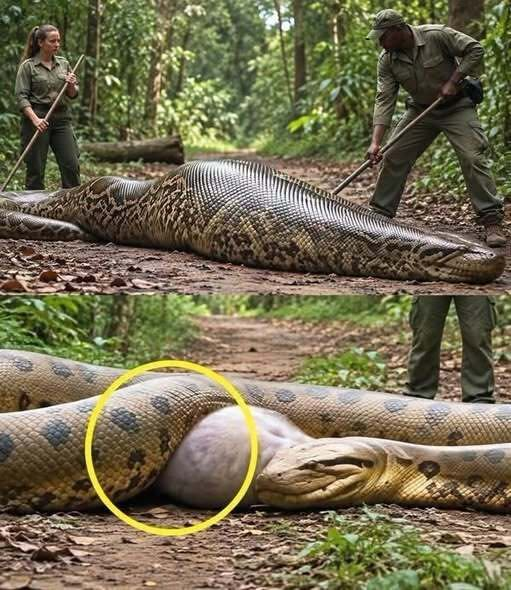

Park Rangers Rescue a Large Anaconda After an Unexpected Discovery
Even the mightiest predators can face unexpected challenges in their natural habitats. In a recent incident at a protected wetland in South America, park rangers encountered a large anaconda displaying signs of distress. The snake, regarded as one of the region’s most formidable species, was struggling after ingesting an unidentified foreign object. This discovery not only shed light on the animal’s immediate plight, but also highlighted broader concerns about the impacts of human activity and environmental contamination in protected areas.
Anacondas: Giants of the Wetlands
Anacondas are among the most iconic reptiles in South America, particularly in regions such as the Amazon and Pantanal. The green anaconda (Eunectes murinus) is the largest snake species in the world by weight, and it thrives in swamps, marshes, and slow-moving rivers. Despite their reputation as apex predators, anacondas are susceptible to threats ranging from habitat loss to pollution.
In their environments, anacondas help maintain ecological balance. They prey on a variety of animals, including fish, birds, and mammals. Their presence is an indicator of healthy wetlands. Thus, incidents affecting their wellbeing are not only critical for the species itself but also signal broader environmental challenges.
The Distressing Encounter
The rescue unfolded as rangers monitored the area for illegal activities and environmental hazards. Upon spotting the snake, they noted unusual behavior: sluggish movement and visible discomfort. Detailed observation revealed that the anaconda had ingested something atypical—not wild prey, but a foreign object. With concern for both the animal’s health and the safety of the habitat, the rangers initiated protocols to assess the situation without causing additional harm.
Wildlife rescue professionals are trained to minimize stress on animals during interventions. In this particular case, rangers consulted regional veterinary experts, who advised on how to approach the snake, which can weigh over 200 kilograms and reach lengths exceeding six meters.
The Role of Human Activity in Protected Habitats
Incidents like this invite scrutiny of human impacts in wild landscapes. Protected wetlands are often thought of as pristine, but challenges persist. Pollution—especially plastic waste—has become increasingly problematic. Animals, including anacondas, may mistake debris for food or inadvertently ingest materials during feeding. Such foreign objects can cause internal injuries, blockages, or poisoning that threaten their survival.
Studies by environmental organizations including the World Wildlife Fund (WWF) and the International Union for Conservation of Nature (IUCN) highlight the importance of maintaining clean habitats for native species. Legal protections exist for wetlands, yet enforcement gaps and growing tourism occasionally contribute to the introduction of hazardous materials.
Medical Assessment and Rescue Protocols
Once the rangers recognized the snake’s distress, they assembled a team equipped for wildlife rescue. Veterinary specialists and herpetologists provided guidance, referencing best practices developed by institutions such as the Wildlife Conservation Society. The team took precautions to immobilize the anaconda safely, using equipment designed to minimize injury.
Veterinary examinations often include manual palpation and diagnostic imaging, such as portable ultrasound devices, to evaluate the internal condition. In the case of foreign-object ingestion, depending on the size and nature of the item, professionals may attempt manual extraction or, in severe cases, perform surgery.
Reports from similar cases demonstrate that large snakes are particularly sensitive to anesthesia and surgical intervention. Therefore, the decision-making process prioritizes non-invasive techniques whenever feasible. The rangers’ approach reflected advanced training and a commitment to the animal’s welfare.
Aftermath and Recovery
Following the removal of the object, the anaconda was placed under observation in a designated rehabilitation enclosure. The recovery period allowed for monitoring of vital signs, behavior, and re-establishment of normal feeding patterns. Consultation with snake experts revealed that stress and injury can lead to complications such as infections or feeding refusal.
The snake’s progress was documented to provide case data for future rescues. When the anaconda showed signs of full recovery and the absence of complications, it was released back into its native habitat. Rangers continue to monitor the area to ensure ongoing protection and mitigate risks of similar incidents.
Expert Views on Wildlife Protection
Herpetologists and ecologists have commented on the importance of intervention when endangered species face unnatural threats. Dr. Lucia Martinez, a leading researcher on South American reptiles, emphasizes that rapid response is crucial for the survival of affected animals, but caution must always prevail to avoid unintended stress or injury.
Veterinary medicine has advanced significantly, with new protocols and technologies improving outcomes. However, experts stress that prevention is preferable to rescue. Keeping habitats free of contaminants is the most effective way to ensure the survival of keystone species like anacondas.
Park management authorities also highlight the value of public awareness campaigns. When communities and visitors understand the consequences of littering and habitat disruption, engagement and compliance improve. Partnerships with conservation NGOs have brought training, equipment, and educational materials to frontline rangers across South America.
International and Societal Reactions
The anaconda rescue sparked widespread interest in regional and global media, drawing attention to the urgency of protecting wildlife in sensitive ecosystems. Environmental groups worldwide echoed calls for tougher restrictions on pollutants and better enforcement in protected areas.
In countries beyond South America, similar challenges have been recognized. The plight of marine animals ingesting plastic waste, or birds suffering from contamination, has prompted legislative changes in the European Union, United States, and Asia. Organizations such as the United Nations Environment Programme (UNEP) coordinate international efforts to curb pollution and support rehabilitation programs for affected wildlife.
Local communities around the South American wetland are increasingly participating in stewardship initiatives. Eco-tourism operators are adopting sustainability policies, reducing single-use plastics, and supporting educational tours that promote responsible behavior. These changes stem from growing recognition of the interconnectedness between healthy environments and social well-being.
Lessons Learned and the Path Forward
This encounter between rangers and the vulnerable anaconda underscores the complex reality of conservation. Even in protected regions, human influence can infiltrate and impact native species. The rescue was not simply an act of compassion, but a catalyst for dialogue about prevention, education, and systemic change.
Scientists advocate for enhanced monitoring systems, expanded ranger training, and stricter regulations on source pollution. Financial investment from governmental agencies and non-profit organizations continues to increase, supporting technology and personnel that are crucial for rapid response. Data-sharing platforms, including global wildlife databases, facilitate coordination across borders.
The ongoing challenge is to balance human interests, such as recreation and development, with the imperative to preserve ecosystems. Wetlands serve as hotspots of biodiversity, reservoirs of clean water, and buffers against climate change. Their protection is a shared responsibility, and stories like that of the rescued anaconda inspire engagement and vigilance.
Conclusion: Commitment to Conservation
The dramatic rescue of a large anaconda in South America is a powerful reminder of the vulnerability of even the most formidable wild creatures. It illustrates the real-world consequences of environmental contamination and the critical role of trained personnel in safeguarding nature. Through collective awareness, scientific research, and robust policy, societies can mitigate risks and support the thriving of native species. As the anaconda returns to its habitat, the call for ongoing vigilance, proactive management, and community action remains more urgent than ever.
Sources
- Reuters
- BBC
- The Guardian
- World Wildlife Fund
- International Union for Conservation of Nature
- Wildlife Conservation Society
- United Nations Environment Programme
Disclaimer: This content is intended for entertainment purposes only and is not based on real events.
