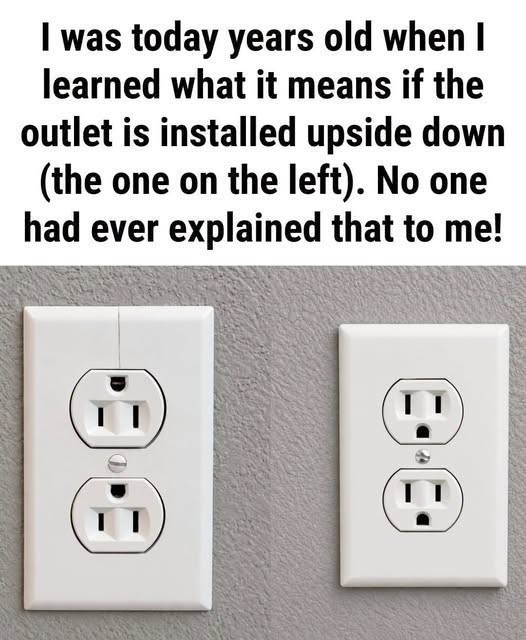

That Strange, Upside-Down Outlet on Your Wall Might Not Be a Mistake
If you have ever wondered about an upside-down electrical outlet on your wall, you are not alone. Many homeowners, renters, and even some new electricians have noticed receptacles with the ground hole oriented on top, appearing different from the standard configuration. While it may look like an error or careless installation, the orientation of outlets often reflects decisions made during construction, electrical code compliance, safety best practices, or intentional design choices. This comprehensive guide explores the reasoning behind flipped outlets, their practical purpose, and what homeowners should know for proper and safe electrical use.
Historical Context: Switched Outlets and Lighting Design
The phenomenon of upside-down outlets is closely tied to the evolution of home lighting design in North America. In numerous houses built before integrated ceiling light fixtures became standard, architects and electricians often relied on “switched outlets” to provide lighting. These are standard wall receptacles that are controlled by a wall switch rather than supplying constant power.
Before widespread adoption of ceiling fixtures—particularly in bedrooms and living rooms—it was common for homes to be wired in such a way that only wall outlets could serve as the main lighting source. The functionality was simple: you could plug in a standing or table lamp and conveniently control it at the door with the flick of a switch, just as you might with a ceiling light.
Visual Cues: Why Are Some Outlets Flipped?
With a growing number of outlets serving dual purposes—some always delivering power, others controlled by a wall switch—electricians sought easy ways to indicate which outlets were switch-operated. In the absence of dedicated labeling, flipping the outlet so that the ground (round) hole is at the top became a convenient visual marker. Enter the upside-down outlet.
In these scenarios, a flipped outlet can act as a silent indicator that the receptacle is, or may be, controlled by a wall switch. This visual cue makes it easier to locate the proper plug for a lamp or appliance that should be switched on or off with a wall switch, helping to avoid confusion—especially for new inhabitants who were not present when the house was wired.
Partial Switched Outlets: Split Receptacles Explained
Another common configuration found in many American homes is the “split” outlet: a single duplex outlet in which one half is switch-controlled and the other always hot. For example, the top outlet may be switched while the bottom stays live at all times (or vice versa). This setup allows flexibility for residents to plug in lamps or appliances that should be controllable by a wall switch while maintaining access for devices like clocks, phone chargers, or wireless routers that must stay powered constantly.
Electricians achieve this by modifying the metal tab that connects the two halves of the receptacle, wiring each section separately to different sources—one from the switch and one direct from the panel. While some electricians consistently flip the switched half or the entire outlet to indicate this setup, others use labels or leave outlets in the traditional orientation, so appearance cannot always be relied upon as an accurate guide to function.
Electrical Code and Industry Standards: Is There a Requirement?
A common misconception is that there exists a national or international electrical code mandating upside-down outlets for switched receptacles or for safety. In the United States, the National Electrical Code (NEC) sets forth requirements for safety, wiring integrity, and installation consistency, but it does not require a specific orientation (ground-hole up, down, or sideways) for standard residential outlets. Local building codes usually defer to the NEC for these details, though some jurisdictions or builders may have their own preferences or customary practices.
Because the code does not specify, the visual orientation of an outlet alone can never serve as a guarantee for its purpose. A flipped receptacle could denote a switched outlet, a decision made out of safety concerns, or simply the prior owner or electrician’s personal taste. This lack of uniformity means homeowners should never assume function based solely on appearance.
Safety Considerations: Why Some Electricians Flip Outlets
Aside from indicating switched outlets, there are reasons related to safety and functionality for installing outlets with the ground on top. Some electricians believe that having the ground terminal at the top offers added protection. If a metallic object (such as a falling paperclip, a picture frame’s wire, or a loose plug) slips between a partially exposed plug and the wall, it may contact the ground prong first, reducing the likelihood of a short circuit or potential shock when compared with a “ground-down” orientation.
However, the safety benefits of ground-up orientation remain a subject of professional debate. Both ground-up and ground-down installations are permitted by code. Either can be found in residential and commercial settings, and neither is proven categorically safer under all circumstances. As a result, ground-up outlets are more a matter of convention, preference, or specific job-site instruction than compliance with regulatory requirements.
Testing Outlets: How to Identify a Switched Receptacle
Given the lack of universal labeling and variable installation practices, the only reliable way to determine whether an outlet is switched is through physical testing:
- Plug a lamp or known working device into the outlet.
- Make sure the device is turned on.
- Toggle any wall switches in the vicinity while watching to see if the device turns on or off.
If the outlet only supplies power when a specific wall switch is on, you have identified a switched receptacle. In split outlets, try both the upper and lower plug, as sometimes only one responds to the switch. Testing each outlet is critical not only for usability but also for maximizing safety when plugging in important devices.
Expert Views: Electricians’ Preferences and Best Practices
Professional electricians bring various perspectives to the debate about outlet orientation. Some trade associations and training programs recommend ground-up for institutional or commercial installations where safety is prioritized, such as hospitals and schools. Other professionals favor the traditional ground-down approach, as it is more familiar to homeowners and integrates better with wall plates and decorative features. Ultimately, most experts agree that the most important factor is consistent and code-compliant installation rather than orientation alone.
Labeling switched outlets or including them in a home’s electrical drawings is encouraged, especially in larger or multi-unit buildings where outlet functions can be confusing. Homeowners undertaking renovations or electrical repairs should document changes and communicate with future residents or electricians.
International Practices: Outlet Orientation Around the World
The practice of flipping outlets for visual cues or marginal safety benefits is most prevalent in North America, where the NEMA 5-15 configuration (three-prong) dominates residential electrical design. In other countries, such as the UK or Australia, outlets differ in shape, and regulations around orientation and switching are more standardized, reducing confusion. Switched wall outlets are also the norm for both high- and low-power devices in these regions, making the North American approach somewhat unique.
Societal Impact: Navigating Modern Power Demands
As homes continue to evolve with more electronic devices than ever, the humble wall outlet has assumed even greater relevance. Smart plugs, USB charging outlets, and integrated lighting systems have added complexity to electrical wiring practices. Understanding the intended function and safe use of each outlet, regardless of its orientation, helps residents prevent accidents, maximize efficiency, and avoid unnecessary repairs—or mistaking a working, switched outlet for a broken one.
Modern homebuyers and renters are encouraged to familiarize themselves with their electrical layout, especially in older homes. This awareness can aid in choosing appropriate spots for lighting, computers, entertainment devices, and appliances, while securing essential always-on electronics—for example, routers, carbon monoxide detectors, and alarm systems—into outlets that receive constant power.
Conclusion: Practical Tips and Next Steps
The sight of an upside-down wall outlet may puzzle residents, but it is rarely the result of a mistake. Whether indicating a switched receptacle, a safety preference, or simply an arbitrary decision, the orientation of an outlet is a subtle reminder of your home’s electrical history and design intent. When in doubt, never assume a receptacle’s function by appearance alone; test it before plugging in important devices, and consult a licensed electrician with any safety concerns or when planning changes to your wiring.
By understanding the reasons behind upside-down outlets and the principles of switched receptacles, homeowners can make informed choices, use their electrical infrastructure as intended, and promote safety and convenience in the living space.
Sources
Disclaimer: This content is intended for entertainment purposes only and is not based on real events.
