
Petticoat Junction: The Quiet Evolution and Hidden Heartache of a Classic TV Series
Introduction: A Pillar of Television Comfort
For millions of television viewers during the 1960s and 1970s, Petticoat Junction represented an idealized, gentle slice of Americana. Set in the fictional rural community of Hooterville and centered around the Shady Rest Hotel, the show delivered heartwarming stories, comedic moments, and a sense of stability in an era frequently marked by change. Its signature opening credits featuring the train known as the Hooterville Cannonball, the three Bradley sisters, and Uncle Joe made it iconic. Yet, beneath the serene exterior, the series experienced significant dynamic shifts that audiences, then and now, may not have fully realized.
The Bradley Sisters: Evolving Faces in Hooterville
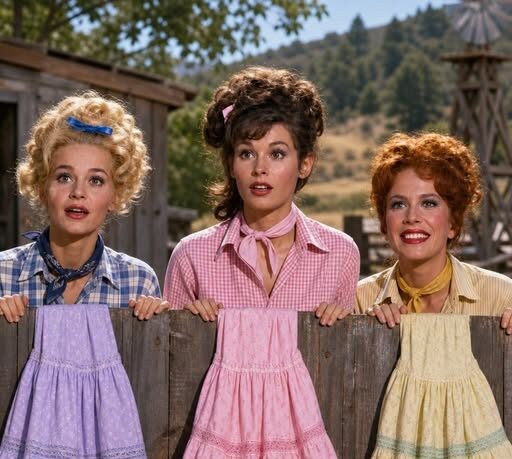
Central to Petticoat Junction were the three Bradley sisters: Betty Jo, Billie Jo, and Bobbie Jo. Of the trio, Betty Jo—portrayed by Linda Kaye Henning—remained the only sister consistently played by the same actress throughout the entire seven-season run. This continuity provided the show with a familiar anchor, as audiences followed Betty Jo’s growth and storylines each week.
However, the roles of Billie Jo and Bobbie Jo underwent notable transformations:
- Billie Jo Bradley saw three actresses take on her role. Jeannine Riley introduced viewers to Billie Jo, followed by Gunilla Hutton, and finally Meredith MacRae, who held the position until the series’ end.
- Bobbie Jo Bradley was first played by Pat Woodell and was subsequently replaced by Lori Saunders in the third season, a role Saunders kept for the remainder of the show.
For casual viewers, the interconnected lives in Hooterville seemed to proceed seamlessly. But attentive fans could literally observe the changing faces of the Bradley family on their screens, an evolving dynamic that quietly marked the underlying transition within the show’s cast.
Opening Credits: Traces of Past Cast Members
The frequent cast changes led to subtle quirks in the show’s presentation. Notably, after Meredith MacRae was cast as Billie Jo, the opening sequence still featured a distant shot of Gunilla Hutton in that role. This small but noticeable detail persisted for a period, creating an odd duality in which one actress portrayed Billie Jo in the episodes while a different one’s image remained in the credits. Additionally, the order in which the sisters were presented shifted: the first two seasons listed them as Billie Jo, Bobbie Jo, and Betty Jo, while from season three onward, the order switched to Betty Jo, Bobbie Jo, and Billie Jo—an indicator of the show’s behind-the-scenes evolution.
An Alternate History: Sharon Tate’s Near Miss
Before Petticoat Junction even aired, a casting decision presented a fascinating alternate history. Sharon Tate—who would go on to be one of the most recognized actresses of the 1960s—was initially considered for Billie Jo Bradley, and a cast photograph was even taken with her. Ultimately, the role went to Jeannine Riley, but the idea lingers as one of television’s compelling “what if” moments: had Tate been cast, her career—and possibly the public’s association with her—might have unfolded very differently.
A Real-Life Romance Originating on Set
Sometimes the boundaries between fiction and reality blurred in Hooterville. Linda Kaye Henning, daughter of series creator Paul Henning, played Betty Jo Bradley. Mike Minor joined the cast later as Steve Elliott, and his character married Betty Jo on screen. Life imitated fiction when Henning and Minor married in real life. Her father, initially concerned about potential accusations of nepotism, only let Linda Kaye audition after careful consideration, but she ultimately earned the role and became the longest-serving actress among the Bradley sisters.
Hooterville Cannonball: The Iconic Train with Its Own Oddities
The famous Hooterville Cannonball, which featured prominently in the show’s iconic train sequences, also embodied Petticoat Junction’s subtle inconsistencies. The outdoor shots utilized the historic Sierra No. 3 steam locomotive from California, while some scenes relied on studio replicas or mock-ups. Observant viewers might notice that during the show’s run, the train was variously numbered ‘3’ and later ‘8’, with no explanation provided within the narrative. To fans, these were fun bits of trivia, but they also underscored the resourcefulness and adaptation behind the scenes.

Bea Benaderet: The Heart of the Shady Rest Hotel
At the heart of Petticoat Junction was Bea Benaderet, cast as Kate Bradley—the matriarch of the family and proprietor of the Shady Rest Hotel. Kate’s warmth and steady presence provided the emotional core that grounded the series. Benaderet arrived at the series with vast experience; before joining Petticoat Junction, she was already well-versed in radio and television, having appeared on shows including “The George Burns and Gracie Allen Show” and voicing Betty Rubble in “The Flintstones.”
Benaderet’s performance was widely lauded for its natural charm and relatability. Viewers connected deeply with Kate’s character, drawing comfort from her guidance, humor, and caring leadership amid the often absurd or comedic situations in Hooterville.
The Battle Behind the Scenes: Benaderet’s Illness
Despite the cheerful mood on screen, a serious and heartbreaking challenge unfolded behind the scenes. During the show’s later seasons, Bea Benaderet was diagnosed with lung cancer and began receiving treatment that necessitated periods of absence from filming. Showrunners took creative steps to explain or work around her character’s limited visibility—substitute maternal figures were introduced and scripts were adapted to account for her health-related absences.
Benaderet’s resilience allowed her to return briefly to filming during the 1968-69 season. However, her comeback was short-lived as her illness progressed. Ultimately, her final episodes were bittersweet; for one significant family moment—Betty Jo’s baby’s birth—Benaderet’s voice was recorded and a stand-in was filmed from behind, allowing Kate Bradley to appear present while the reality was that Benaderet was no longer able to participate on camera.
The Legacy of Bea Benaderet and Petticoat Junction
When Bea Benaderet’s health deteriorated to the point where she could no longer appear on the show, Petticoat Junction was forced to reckon with the loss of its central figure. The transition highlighted not only the endurance and professionalism of its cast and crew, but also the vital role an empathetic, relatable matriarch had played in the show’s popularity and legacy.
Benaderet’s passing in 1968 marked a poignant chapter in the series’ history. The affection audiences held for Kate Bradley was a testament to Benaderet’s ability to convey warmth, humor, and wisdom. Her absence was deeply felt, both among her fellow cast members and the loyal all-ages audience drawn to the family’s adventures at the Shady Rest Hotel.
After her death, the producers refrained from recasting the role, choosing instead to introduce new characters and shift storylines. The show’s final two seasons sought to recapture the heart Benaderet brought to the series but struggled to maintain the same familial connection that had previously defined Petticoat Junction.
A Series of Adaptation and Resilience
Throughout its seven-year run (1963–1970), Petticoat Junction demonstrated an impressive degree of flexibility in the face of routine cast changes, real-life challenges, and evolving television standards of the era. Audience connection remained high, in part because the series responded with warmth, humor, and an optimism that contrasted with the more provocative programs emerging at the time.
The show’s legacy is not merely as a comforting rural sitcom, but as a testament to adaptation, perseverance, and the genuine affection that can grow between a show and its loyal viewers. While Petticoat Junction was often seen as a straightforward, gentle comedy, the fluid dynamics behind the camera and on-screen shifts only deepened its authenticity and enduring appeal.
Enduring Appeal and Cultural Influence
Decades after its final episode aired, Petticoat Junction retains a following among classic TV enthusiasts. Its homespun humor, distinct Americana setting, and blend of comedy and heart have influenced later shows and continue to garner new audiences through reruns and streaming platforms. Collectors and historians frequently revisit the series to uncover more about television production in a transitional era, often citing Petticoat Junction as a key representation of 1960s American pop culture.
The show’s ongoing appeal is also fueled by the personal stories connected to its cast—tales of resilience, tragedy, romance, and authenticity—making the gentle fictional world of Hooterville a touchstone for generations of viewers seeking comfort, nostalgia, and warmth.
Conclusion: The Quiet Impact Behind the Shady Rest Hotel
Petticoat Junction endures as more than just a classic sitcom. Its story is a compelling chronicle of television adaptation, cast transitions, industry challenges, and behind-the-scenes emotion. Whether remembered for its gentle comedy, its memorable cast of characters, or the quietly heroic perseverance of its actors, the series remains an indelible part of American television history. Its enduring charm continues to remind us that even the softest, most comforting stories on screen can conceal moments of real-life struggle—and, in the process, shape enduring cultural memories.
Sources
Disclaimer: This content is intended for entertainment purposes only and is not based on real events.
