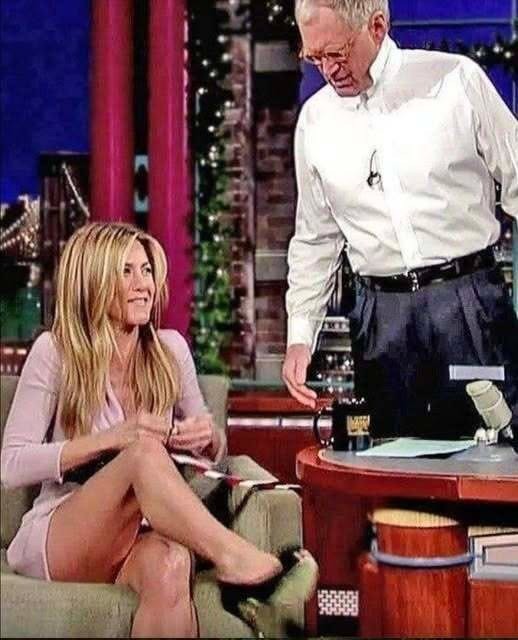

The Evolving Legacy of David Letterman’s Interviews with Jennifer Aniston
Introduction: Late-Night Humor Under the Modern Lens
Late-night television has historically mirrored the evolving cultural norms of each era, blending entertainment with commentary but often reflecting prevailing standards that may be reevaluated years later. David Letterman, a trailblazing host of “The Late Show,” became an icon for his irreverent wit and unpredictable style. Yet, as society’s understanding of gender, boundaries, and professionalism in media has grown, past moments from his show—especially interviews with high-profile female guests such as Jennifer Aniston—have come under renewed scrutiny. Revisiting these segments not only offers insight into Letterman’s hosting style but serves as a lens through which to examine broader questions about the treatment of women in the entertainment industry.
David Letterman’s Impact on Late-Night Television
David Letterman’s tenure on late-night television marked a pivotal shift in the format’s tone and expectations. His humor, often underpinned by irony and absurdity, set him apart from contemporaries. Letterman became known for pushing boundaries, weaving playful banter with unpredictability. However, this signature style, celebrated in its own time, has yielded moments that feel less comfortable when viewed through today’s lens—particularly when the jokes come at the expense of guests’ personal boundaries.
Jennifer Aniston: A Recurring and Revered Guest
Jennifer Aniston rose to international stardom with her role on “Friends” and quickly became a staple figure in pop culture. Her appearances on “The Late Show with David Letterman” were highly anticipated, with audiences eager to catch glimpses of her personal life and on-screen projects. However, several interviews, once played for laughs, have become the subject of debate regarding the treatment of female guests on late-night platforms.
The 2006 Interview: Focus on Appearance Sparks Discomfort
In 2006, Aniston visited Letterman to promote her romantic comedy “The Break-Up.” From the outset of the segment, it was clear that the conversation would be directed away from her professional achievements and toward her physical appearance. Letterman’s repeated comments about Aniston’s legs, including adjectives like “tremendous,” “well-shaped,” and “muscular,” set a tone in which the actress was positioned more as a spectacle than an artist. The camera operators reinforced this focus, providing up-close shots that accentuated the on-air comments.
Aniston attempted to ease the tension with humor, referencing the hot New York summer as the reason for her outfit. Nonetheless, the conversation repeatedly circled back to her physique instead of her creative contributions or insights about her film. Even as Aniston shifted toward discussing the movie, Letterman redirected attention to her appearance, highlighting a pattern that minimized professional dialogue in favor of appearance-based commentary.
Boundary-Pushing Questions About Private Life
The conversation became increasingly personal as Letterman probed into Aniston’s private life, specifically rumors about her relationship with co-star Vince Vaughn. Rather than exploring the dynamics of their working relationship or her artistic process, Letterman pressed for details about their off-screen romance and even speculated whether scenes of nudity in the film were driven by her co-star’s suggestions.
Despite the intrusive nature of these questions, Aniston maintained composure, politely deflecting and suggesting that such queries would have been better directed at Vaughn during his appearance on the show. Her professionalism in the face of persistent personal inquiry resonated as a testament to her ability to navigate challenging situations with wit and grace.
The 1998 “Hair Incident”: A Notorious Moment Revisited
To fully understand the evolving discourse around Letterman’s interviews with Aniston, it is necessary to revisit the infamous 1998 segment. In a moment that has now become emblematic of boundary overstepping, Letterman unexpectedly leaned toward Aniston, took a strand of her hair, and placed it in his mouth. The audience at the time responded with laughter, but the look of shock and discomfort on Aniston’s face told a different story.
Following the incident, Letterman handed Aniston a tissue to clean her hair. The combination of unexpected physical contact and the expectation that Aniston would laugh it off underscores the pressures placed on female celebrities to tolerate such behavior while maintaining a likable persona.
Aniston’s Professionalism and Resilience
Despite the recurring instances of awkwardness and discomfort, Jennifer Aniston’s ongoing career showcases remarkable resilience and professionalism. She continued to appear on “The Late Show” and similar platforms, refusing to let uncomfortable moments define her public image.
Notably, in a 2008 appearance promoting “Marley & Me,” Aniston cleverly shifted the interview’s dynamic by presenting Letterman with a Brooks Brothers necktie—the same tie she had famously worn on a magazine cover. Through this gesture, she reclaimed control of the narrative, blending humor with commentary on her own media portrayal. As she helped Letterman put on the tie, she playfully exclaimed, “This is exciting, I’m dressing Dave!” In that moment, Aniston turned the expected script on its head, illustrating her capacity to navigate and reshape the power dynamics in real time.
Changing Norms: Context and Cultural Re-Evaluation
The debates surrounding these interviews have intensified in the wake of movements like #MeToo, which call for accountability and new standards regarding the treatment of women in all professional settings, including entertainment. Clips once dismissed as harmless or merely playful are now seen as representations of a time when boundaries were often negotiable for the sake of comedy, particularly when it came to female guests. Modern viewers, equipped with greater awareness around consent and respect, are reconsidering what kinds of humor—or on-air dynamics—should be acceptable.
This cultural shift is not unique to Letterman or Aniston but reflects larger transformations within the media industry. Across both social media and traditional outlets, there has been an ongoing reckoning with how women—especially those in the public eye—have been asked to tolerate invasions of privacy or reductions of their talents to subjects of banter or objectification.
The Role of Late-Night Television in Shaping Conversation
Late-night talk shows, while often viewed as platforms for lighthearted entertainment, play an influential role in shaping viewers’ understanding of social dynamics. The content and tone set by hosts guide discussions not just about show business but about broader societal issues. As old episodes are rewatched and reassessed, they prompt necessary conversations about what has changed and what still needs to evolve regarding gender dynamics, workplace respect, and the expectations placed on public figures.
Letterman, like many of his peers, worked within an environment where the comedic value was often placed above personal comfort. As standards change, these archived episodes become resources for understanding how past attitudes were formed, reinforced, and ultimately, challenged.
Expert Insights and Industry Reflections
Media scholars and gender studies experts have frequently pointed to such late-night moments as prime examples of how women’s contributions in the arts have often been overshadowed by a focus on their physical attributes or private lives. According to academic commentary in publications like The Guardian and The New York Times, there is increasing recognition of the professionalism required by female performers not just in their craft but in their ability to manage the dynamics of promotional interviews. The resilience shown by Aniston and others has become emblematic of a wider phenomenon wherein women in the public eye must perform under scrutiny that extends far beyond their work.
Industry professionals now routinely acknowledge the need for safer, more respectful environments, both in media representation and real-life studio settings. Training for on-air hosts increasingly focuses on drawing boundaries, fostering meaningful conversations, and centering creative achievements rather than personal or physical curiosities.
Global and Societal Reactions
Internationally, the reassessment of these interviews has fueled dialogue about how shifting standards are not confined to one country or market. Media watchdogs, advocacy groups, and fans alike have advocated for more consistent scrutiny of television archives across networks and cultures. This phenomenon reflects wider societal desire for greater respect for women’s voices and visibility, which is echoed in global movements for equality in the workplace and continued debates about representation in media.
Social media platforms have helped to amplify these conversations, allowing viewers to share clips, analyze moments, and build consensus around what is and is not appropriate in the modern era. While some defend historic interviews as products of their time, others see them as opportunities for learning and growth.
Conclusion: What These Late-Night Moments Teach Us
The ongoing discussion around David Letterman’s interviews with Jennifer Aniston demonstrates how cultural memory and media analysis are continually evolving. What was once celebrated as edgy or comedic is now subject to critical re-evaluation, inspiring change in both audience expectations and industry standards. Jennifer Aniston’s ability to withstand, adapt, and ultimately redirect the narrative is a testament both to her resilience as a performer and to the changing tides of television history.
As we look back on these late-night moments, it becomes evident how far media and society have come—and what still remains to be done to ensure respect, fairness, and professional acknowledgment for all performers, regardless of gender. The legacy of these interviews is not just a story about a talk show host and a Hollywood star, but a broader lesson about the world in which they were televised and how audiences are now empowered to ask for better.
Sources
Disclaimer: This content is intended for entertainment purposes only and is not based on real events.
