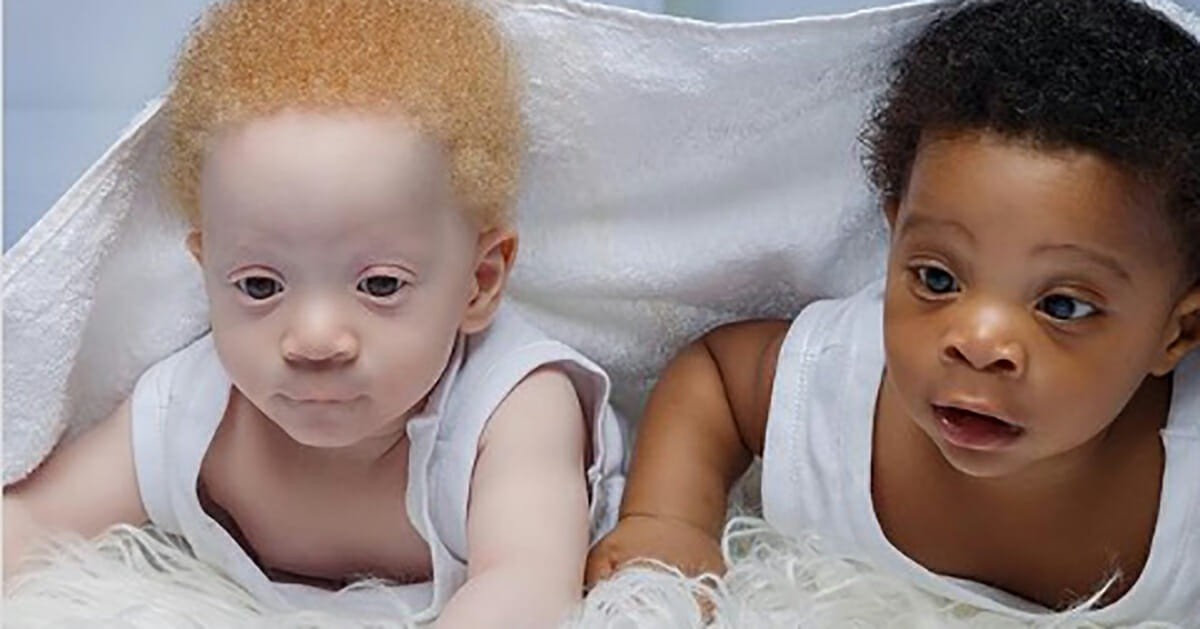

Amazing Story of Nigerian Twins Daniel and David: How Genetics Surprised a Lagos Family

Stacy and Babajide Omirin from Lagos, Nigeria, had a heartfelt wish: to welcome a second child into their family and provide a sibling for their beloved daughter, Demilade. Like many parents, they dreamed of expanding their family, cherishing the joy that new life brings. However, their journey took an unexpected and fascinating turn during a routine prenatal visit, leading to a remarkable outcome that continues to inspire and educate many around the globe.
The Unexpected Surprise: Discovering Twins
During Stacy’s pregnancy, the couple anticipated the arrival of a single child. The standard ultrasounds and scans did not reveal anything unusual. At one of her appointments, Stacy was delighted but shocked to learn that she was carrying twins. The prospect of welcoming not one, but two babies, filled the couple with joy, excitement, and understandable apprehension.
On February 26th, 2019, Stacy underwent a scheduled cesarean section, surrounded by medical staff and her supportive husband. Both parents eagerly awaited the birth of their twin sons, Daniel and David. The moment was filled with anticipation, but nothing could have prepared them for what followed.
Astonishing Differences at Birth
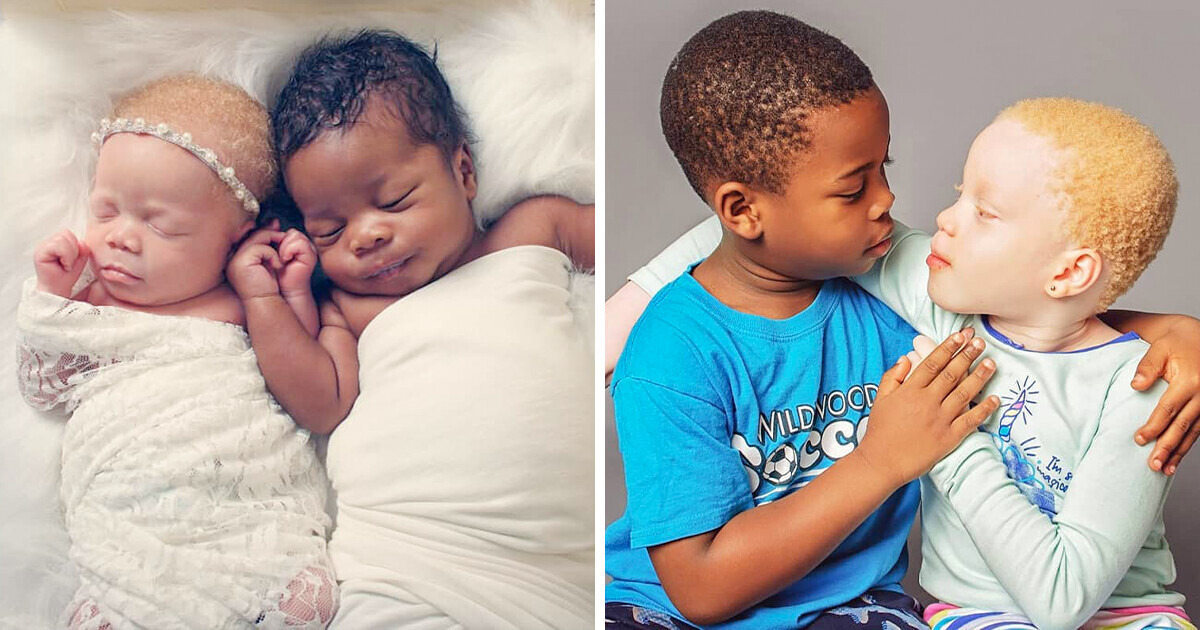
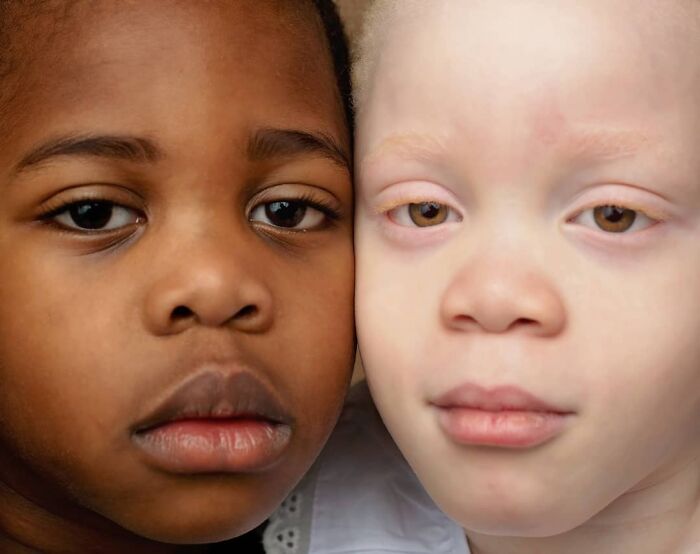
The delivery of Daniel and David was only separated by a few minutes, but visually, the differences between the brothers were immediately apparent. Daniel arrived first, bearing a strong resemblance to his elder sister: dark skin and curly black hair. David entered the world shortly after, but with a startlingly different appearance—he had golden blonde curls and white skin. Both children, however, shared their parents’ expressive brown eyes.
The contrast was striking. Both Stacy and Babajide are Nigerian and have dark skin, so the birth of a white twin was an utter surprise. The nurses and doctors in the delivery room were amazed, gathering to witness this rare event. “It seems you are having totally unidentical twins,” Stacy recalls one doctor saying. The family’s story quickly moved from bewilderment to awe and delight at their unique blessing.
Understanding the Genetics: What Is Oculocutaneous Albinism?
The brothers’ differing appearances sparked questions from friends, family, and even strangers. Genetic testing and further medical examination confirmed that Daniel and David were indeed biological twins, sharing both parents. David, however, was diagnosed with oculocutaneous albinism, a rare inherited genetic condition. This disorder affects the production of melanin, leading to reduced pigmentation in the skin, hair, and eyes.
Albinism is caused by mutations in one of several genes involved in melanin biosynthesis. The condition is typically inherited in an autosomal recessive manner, meaning both parents must carry the gene for a child to be affected. While Daniel inherited a typical genetic profile for pigmentation, David received two copies of the mutated gene, resulting in his unique appearance. Both children are otherwise healthy and active.
Albinism in Nigeria and Beyond: Medical and Social Perspectives
Oculocutaneous albinism is relatively rare worldwide, but its prevalence is higher in certain regions. The World Health Organization estimates that in sub-Saharan Africa, approximately one in 5,000 to one in 15,000 people is born with albinism. In Nigeria alone, over two million individuals are believed to be living with the condition, making education and awareness especially important.
In regions like Europe and North America, the occurrence is estimated at about one in 20,000. Besides visible differences, people with albinism may face health challenges such as sensitivity to sunlight (photophobia and increased risk of skin cancer), and visual impairment due to the impact of albinism on eye development (nystagmus, reduced visual acuity).
Despite medical advances, people with albinism often encounter social stigma and discrimination, particularly in parts of Africa where myths and misconceptions persist. Some communities struggle to fully accept those with the condition, leading to social and economic exclusion. Advocacy groups and human rights organizations continue to work towards greater acceptance, legal protection, and access to healthcare for affected individuals.
The Family’s Reaction: Embracing Uniqueness
The birth of Daniel and David not only surprised Stacy and Babajide but also filled them with pride and gratitude. Stacy recollects her worries about how others would perceive her children, especially David, who visibly differed from both his family and local community. “We did not know about their differences while I was pregnant, the scan did not show such, so it was a huge surprise and the most amazing moment,” she explained in an interview.
Babajide’s response was warm and enthusiastic. He affectionately nicknamed David “Mr. Golden,” immediately embracing his sons for their individuality. For more than ten minutes after their birth, he stood in awe, expressing deep love and wonder at what he described as “God’s wonderful work.”
Community and Societal Reactions
While the family’s close circle responded with joy and curiosity, reactions from the broader community have been mixed. Stacy describes how she is often questioned about the twins’ parentage when in public. People sometimes express disbelief that both boys are her “biological” children given the stark difference in their looks. “People say, ‘Excuse me madam, which one of the kids is yours?’ I just say both of them are mine and people look at me as if I am joking,” Stacy recalls. The experience, while sometimes exhausting, has also provided opportunities to educate others about genetics and albinism.
Importantly, Stacy says their family has not experienced outright discrimination. Instead, the boys’ striking appearance usually invites curiosity and admiration. The twins have become local celebrities of sorts, with their story gaining international attention through press coverage and social media.
Raising Awareness and Celebrating Diversity
Recognizing the platform their family now has, Stacy is keen to use their story to raise awareness about albinism and promote acceptance of those who look “different.” She has started an Instagram account dedicated to sharing updates on Daniel and David’s growth and experiences, as well as to connect with other families affected by albinism.
Modeling agencies have reached out, captivated by the twins’ captivating look. While Stacy is open to her boys’ participation in modeling, her primary focus remains on their wellbeing, education, and nurturing their self-confidence. She also leverages her profession as a clothing designer to further celebrate and showcase her sons’ unique beauty, challenging stereotypes and offering positive representation.
Expert and Advocacy Group Views on Albinism
Experts in genetics and advocacy organizations emphasize the importance of public education regarding albinism. According to the World Health Organization and non-governmental groups such as Under the Same Sun, ignorance and misunderstanding about albinism can fuel harmful myths. For instance, in some parts of Africa, individuals with albinism have faced discrimination, marginalization, and even dangerous superstitions.
There are ongoing initiatives aimed at providing better health services, protective clothing, sunscreen, vision care, and social support to individuals with albinism. Promoting inclusive education and community outreach has helped reduce stigma over time. The story of Daniel and David contributes to this process by sparking conversation and fostering greater cultural understanding.
Personalities and Future Hopes
Despite appearing different, Daniel and David share a close bond as twins and best friends. Their personalities, however, are distinct. Daniel is known for his outgoing nature and love for food, often leading in social situations. David tends to be more contemplative and observant, preferring to take in his surroundings before acting. Both children thrive on love and positive energy from their family.
Stacy and Babajide are committed to supporting their sons as they grow, ensuring that both boys develop a strong sense of identity and belonging. They hope their experience encourages greater openness about genetic diversity and helps other families in similar situations feel seen and supported.
The Societal Importance of Understanding Albinism
The Omirin family’s story highlights both the beauty of genetic variance and the challenges individuals with albinism may face. In societies where conformity is often prized, stories like Daniel and David’s foster appreciation for the diversity of human experience. Increased media coverage and advocacy can drive real improvements in the lives of people with albinism, from healthcare to social inclusion.
Educational campaigns and responsible journalism are essential in dispelling myths and fighting discrimination, promoting a culture of empathy and respect. Role models like Daniel and David, along with their supportive family, can change hearts and minds—not only in Nigeria but worldwide.
Conclusion: Celebrating Uniqueness and Looking Forward
The birth and upbringing of Daniel and David Omirin serve as a powerful testament to the wonder of genetics and the importance of acceptance. Their family’s journey embodies resilience, love, and the everyday courage required to challenge societal norms. As the twins continue to grow, their story reminds us that what truly matters is not the color of our skin or the shape of our features, but the character and kindness we bring to the world.
Disclaimer: This content is intended for entertainment purposes only and is not based on real events.
