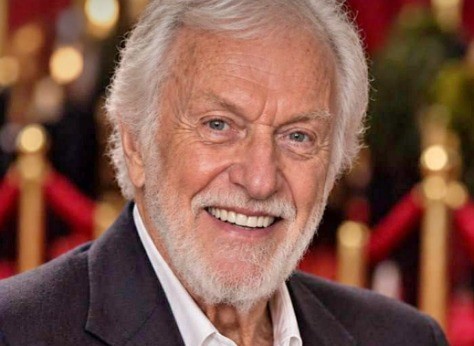

There was a time when families did not scroll through endless streaming menus at night.
There was one television in the living room.
When a familiar theme song began playing, parents and children could gather around the same screen, knowing that for the next half hour or so, they were going to laugh together.
For millions of Americans, some of those memories were connected to one unmistakable performer: Dick Van Dyke.
With his energetic dancing, physical comedy, warm personality and remarkable ability to make ordinary situations feel hilarious, Van Dyke became one of the defining entertainers of American television and film.
But his influence was about more than simply appearing in popular productions.
Across decades, his work became part of the cultural background of several generations. Viewers encountered him through television sitcoms, Broadway, movies, music and later appearances that introduced his unmistakable style to new audiences.
His career is a reminder that some entertainers do not simply become famous.
They become part of people’s memories.
The Television Show That Changed Everything
Long before streaming services made entire seasons available with a few clicks, television comedy depended on appointment viewing.
In 1961, The Dick Van Dyke Show premiered on CBS.
The series followed television comedy writer Rob Petrie, played by Van Dyke, as he balanced his professional life with his family and the everyday chaos surrounding him.
The show debuted on October 3, 1961, and eventually ran for five seasons, ending in 1966 with 158 episodes.
It was not simply Van Dyke’s performance that made the series memorable.
The show brought together an extraordinary creative team, including creator Carl Reiner, Mary Tyler Moore, Rose Marie, Morey Amsterdam and numerous writers and directors.
Its official archive credits the series with 15 Emmy Awards.
For viewers growing up during that era, Rob Petrie was more than a fictional character.
He became a familiar presence in the living room.
The show’s humor came from misunderstandings, workplace disasters, family situations and physical comedy—the kind of stories that could be enjoyed by different generations sitting together.
And that accessibility became one of Van Dyke’s greatest strengths.

The Comedy Was Physical, But the Warmth Was Personal
Watch Dick Van Dyke perform and one thing becomes immediately obvious: he was not afraid to look ridiculous.
He could trip, stumble, dance, fall into furniture or turn an ordinary movement into a comedy routine.
But the physical humor worked because it rarely felt cruel.
There was an almost childlike sense of play in the way he performed.
That quality helped make his characters approachable.
He could be energetic without being intimidating, sophisticated without feeling distant, and talented without losing the sense that he was simply having fun.
That combination became an important part of his public image.
For audiences, watching him could feel less like observing a distant celebrity and more like spending time with an endlessly entertaining friend.
From Television to the Big Screen
Television may have made Dick Van Dyke a household name, but his career did not stay on the small screen.
His film work introduced him to entirely new audiences.
One of the most recognizable examples is Disney’s Mary Poppins, where Van Dyke played Bert opposite Julie Andrews.
The movie became a beloved musical classic, combining songs, choreography, animation and live-action filmmaking in a way that remains recognizable decades later.
Van Dyke’s performance also became one of the film’s most discussed elements.
His Cockney accent has famously attracted criticism and jokes over the years, but the performance itself became inseparable from the movie’s charm.
And Van Dyke continued working in family-friendly entertainment.
Another major milestone arrived with Chitty Chitty Bang Bang, the 1968 musical adventure film in which he played Caractacus Potts.
Together, projects such as these helped establish an important part of his screen legacy: entertainment that could be enjoyed by adults and children sitting in the same room.
Why His Work Became Part of Childhood Memories
There is something interesting about the entertainers people remember from childhood.
Often, they are not remembered because of one particular performance.
They are remembered because of how their work made people feel.
Maybe a child watched a movie with a parent.
Maybe a family gathered around the television.
Maybe an older generation introduced a younger one to a favorite scene years later.
Those experiences can transform entertainment into something much more personal.
That is part of what makes Van Dyke’s career so enduring.
Someone who watched The Dick Van Dyke Show during its original run could later introduce their children or grandchildren to his movies.
A person who discovered him through Mary Poppins could eventually encounter his earlier television work.
Different generations could therefore recognize the same performer for completely different reasons.
His Career Was Built on More Than One Talent
It is easy to remember Dick Van Dyke primarily as a comedian.
But his career has always involved several different forms of performance.
He was a singer.
He was a dancer.
He was a stage performer.
He was a television actor.
He was a film actor.
And he had the unusual ability to combine these talents within a single performance.
That versatility helped him move between entertainment formats at a time when the boundaries between Broadway, television and Hollywood were becoming increasingly important.
His career therefore cannot be reduced to one sitcom or one movie.
It was a collection of performances spread across decades.
The People Behind the Legend
One of the easiest mistakes in discussing a legendary entertainer is to suggest that success happens because of one person alone.
Van Dyke himself was surrounded by talented collaborators throughout his career.
The Dick Van Dyke Show was created by Carl Reiner, while its cast included Mary Tyler Moore, Rose Marie, Morey Amsterdam, Richard Deacon and Larry Mathews, among others. The show’s official history also credits a large group of writers, directors, musicians and production staff.
That matters because television history is rarely created by a single performer.
The chemistry between actors, the writing, direction, music, editing, production design and countless behind-the-scenes decisions all contribute to what audiences eventually remember.
Van Dyke’s talent was central to the show’s identity, but the larger creative team helped turn that talent into television history.
A Career That Continued Across Generations
Many performers from television’s early golden age eventually disappeared from popular culture.
Van Dyke remained visible.
Part of that longevity came from his willingness to continue performing and connecting with audiences.
His career also extended into music and live performance. The official Dick Van Dyke Show site notes his later work with the vocal group The Vantastix, including performances connected with charitable events.
This continued visibility helped introduce him to audiences who were not alive when The Dick Van Dyke Show originally aired.
That is one of the clearest signs of a lasting cultural legacy.
A performer becomes truly enduring when people who never experienced their original era still recognize the name, the face or the style.
The Recognition of a Lifetime
Van Dyke’s contribution to American entertainment eventually received one of the country’s most prominent cultural honors.
He was among the recipients of the 43rd Kennedy Center Honors, recognizing lifetime artistic achievement. The ceremony, originally scheduled for 2020, was postponed and ultimately held in 2021.
The recognition was significant because the Kennedy Center Honors celebrate contributions to American culture through the performing arts.
By that point, Van Dyke’s career had already stretched across television, film, theater and music.
His work had outlasted several generations of entertainment trends.
And yet, perhaps the most meaningful measure of his legacy cannot be found in an award.
It can be found in memory.
Why People Still Remember Dick Van Dyke
Think about the performers you remember from childhood.
Perhaps you remember a particular television theme song.
Maybe you remember watching an old movie with your parents.
Maybe there was a comedian whose facial expressions made you laugh before you even understood the joke.
These memories often remain surprisingly powerful.
Dick Van Dyke’s career has benefited from that same connection.
His performances were energetic enough to entertain children, sophisticated enough to amuse adults, and familiar enough to become part of family viewing traditions.
That combination is difficult to recreate.
Entertainment changes constantly.
Technology changes.
Audiences change.
But laughter is remarkably timeless.
The Legacy Behind the Laughter
The most interesting part of Dick Van Dyke’s career may not be the number of productions he appeared in.
It may be the emotional connection created by those performances.
He played characters who made mistakes.
Characters who stumbled.
Characters who danced.
Characters who found themselves caught in ridiculous situations.
And audiences laughed because, underneath all the comedy, there was something recognizable.
People make mistakes.
Families misunderstand each other.
Work becomes chaotic.
Plans go wrong.
Sometimes the best response is simply to laugh.
That quality helped make Van Dyke’s performances accessible across generations.
Final Thoughts
Dick Van Dyke did not literally shape every American childhood, and his influence naturally varies from person to person.
But there is a reason his name continues to appear whenever conversations turn to classic American entertainment.
His career crossed television, film, theater and music.
His work with The Dick Van Dyke Show helped establish one of television’s enduring sitcom legacies, while films such as Mary Poppins and Chitty Chitty Bang Bang introduced his distinctive combination of comedy, movement and musical performance to generations of movie audiences.
Decades after his biggest early successes, the laughter remains familiar.
And perhaps that is the real secret of a lasting entertainer.
The screen may eventually go dark.
The credits may roll.
But if someone remembers watching you with their family and smiling, a small part of your work can remain alive long after the original moment has passed.
That is the kind of legacy Dick Van Dyke built—one laugh, one dance and one unforgettable performance at a time.
Frequently Asked Questions
What is Dick Van Dyke best known for?
Dick Van Dyke is particularly known for The Dick Van Dyke Show, as well as major film roles including Mary Poppins and Chitty Chitty Bang Bang. His career has also included stage performance, singing and dancing.
When did The Dick Van Dyke Show begin?
The Dick Van Dyke Show premiered on CBS on October 3, 1961. The series ran for five seasons and consisted of 158 episodes.
Who played Laura Petrie?
Mary Tyler Moore played Laura Petrie, Rob Petrie’s wife, on The Dick Van Dyke Show.
How many episodes did The Dick Van Dyke Show have?
The series had 158 episodes across five seasons, according to the show’s official archive.
Did Dick Van Dyke receive a Kennedy Center Honor?
Yes. Dick Van Dyke was among the 2020 Kennedy Center Honors recipients, with the ceremony ultimately taking place in May 2021 after being postponed. The honor recognized his lifetime artistic achievements.
Why is Dick Van Dyke still culturally remembered?
His work spans multiple entertainment formats and generations. Television audiences remember The Dick Van Dyke Show, while film audiences have encountered him through productions such as Mary Poppins and Chitty Chitty Bang Bang. His distinctive combination of comedy, music and physical performance has helped keep his work recognizable over time.
