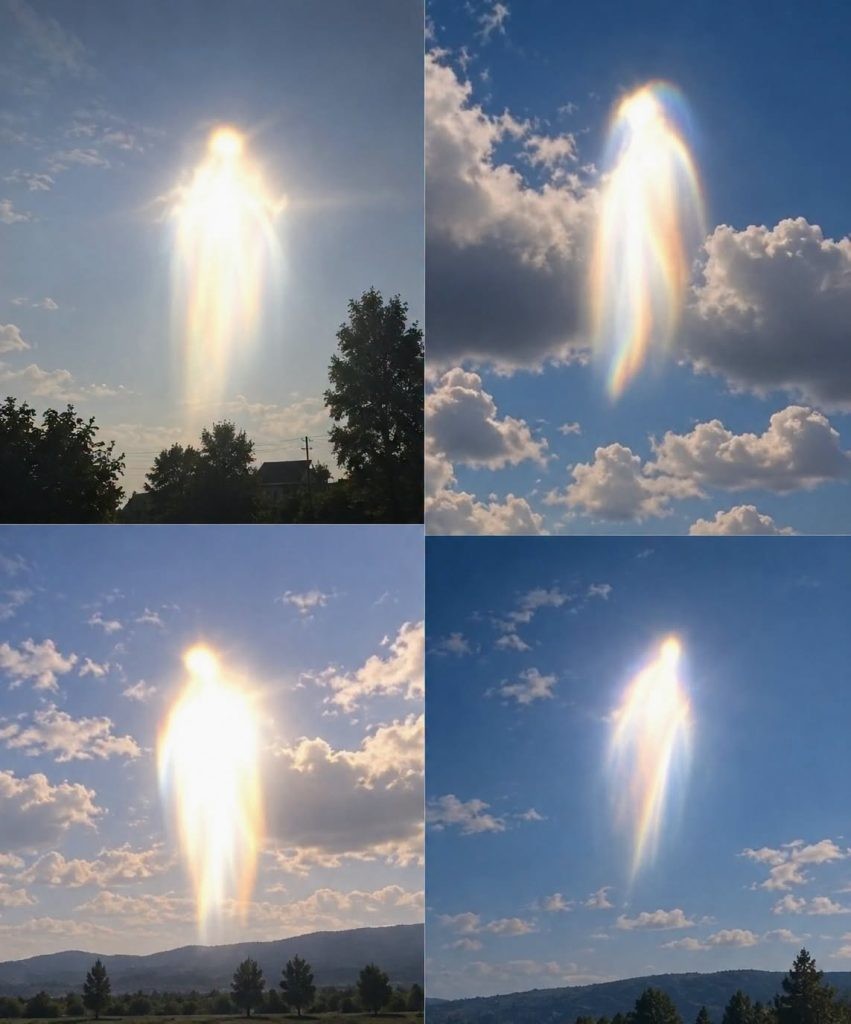

What People Saw Above Ikaria: The Science Behind Mysterious Atmospheric Phenomena
Introduction: Unraveling the Mystery Above Ikaria
Witnessing strange shapes and luminous glows in the sky has long captured human imagination. When such displays occur above serene coastal landscapes like the Greek island of Ikaria, they can appear especially enigmatic. Recently, observers above Ikaria reported seeing phenomena that, at first glance, resembled mysterious crafts hovering over the horizon. However, these atmospheric spectacles can be unraveled using the principles of physics, meteorology, and human perception.
Sunlight, Air, and Water: The Ingredients Behind the Illusion
The origins of these captivating displays start with a few basic elements: sunlight, air, and water. During sunrise and sunset, the sun’s rays traverse a much greater thickness of Earth’s atmosphere. This longer path alters how light interacts with the environment, resulting in familiar but often misunderstood visual effects.
As sunlight encounters air filled with particles, droplets, ice crystals, and layers of differing temperatures, a variety of optical phenomena can emerge. Among the most striking are halos and light pillars—rings and vertical columns of light that encircle or emanate from the sun. These forms arise when ice crystals high in the atmosphere bend and reflect the solar rays, concentrating them into geometric shapes.
Refraction and Scattering: The Science of Light’s Journey
Light waves are susceptible to two main processes as they traverse the atmosphere: refraction and scattering.
- Refraction occurs when light changes direction as it passes through substances of varying density, such as layers of warm and cold air. This bending can stretch, shrink, elevate, or depress the appearance of distant objects and lights. Over the ocean, this effect is amplified by sharp air temperature transitions close to the water’s surface.
- Scattering happens when light encounters tiny particles or droplets suspended in air. Depending on particle size and wavelength, specific colors of light are redirected more efficiently, leading to vivid colors near the horizons during twilight and the distinctive blue of the daytime sky.
Combined, these effects turn the horizon into a subtle natural lens, sometimes making objects appear detached or stretched—creating the very ‘solid’ or unusual shapes that surprise onlookers above Ikaria.
Mirages and Atmospheric Lensing: Illusions Born From Nature
One especially dramatic form of atmospheric distortion is the mirage. These are not hallucinations, but real optical events stemming from how light bends in the presence of vastly different air temperatures. On calm seas, mirages can lift ships or coastlines above the horizon, deform them into looming towers, or even make them seem to float in mid-air. In rare cases, this effect is known as the Fata Morgana, producing intricate, rapidly shifting visual puzzles.
Mirages occur because warm air near the water is less dense, causing light from the sky or distant objects to curve downward before reaching the observer’s eyes. As a result, the image seen is often a mix of reality and illusion, painted by the unique atmospheric conditions of the moment.
The Role of Water: The Sea as a Reflective Stage
The sea does more than just reflect the sky—it subtly enhances atmospheric illusions. On calm days, the smooth water acts as a perfect mirror, doubling the images of halos, pillars, and distorted objects. Meanwhile, as wind or temperature gradients ripple across the surface, they introduce shimmering and constantly shifting patterns that further alter these visions. Even a thin layer of mist or sea spray can amplify sunlight’s effects, leading to glowing arches, colored rings (called coronas), or mysterious luminous patches.
Perception and Illusion: Decoding What We See
Physical optics are only one aspect of what creates mysterious sights in the sky. The human brain plays an equally vital role, trying to decipher confusing visual cues.
Our eyes and minds process patterns quickly, often looking for shapes that are familiar or suggest life and motion. When we see bright areas or shifting glows, especially in unexpected places, our brains rapidly assemble those inputs into recognizable forms. This psychological effect is why a fleeting glow might resemble a structured vehicle or creature rather than just a patch of light.
This instinctive pattern recognition is known as pareidolia, the tendency to see shapes, faces, or objects in random arrangements. Such rapid interpretation once served evolutionary purposes—detecting threats or opportunities in ambiguous situations—but it can just as easily mislead in modern times, especially when paired with striking atmospheric phenomena.
Atmospheric Phenomena Through History and Across Cultures
The displays above Ikaria are part of a long global history of mysterious lights and shapes in the sky. Ancient mariners, explorers, and rural communities have all reported seeing spectral ships, ghostly apparitions, and glowing columns that defied easy explanation. These natural illusions sometimes gave rise to legends about gods or otherworldly visitors, particularly in isolated areas where scientific knowledge was limited.
Today, with greater understanding of atmospheric optics, scientists are able to explain these phenomena in terms of known physical laws. Yet, public fascination persists—often fueling conversations about UFOs or unexplained occurrences. The case above Ikaria is a reminder that even in the age of satellites and cameras, the natural world retains the power to create awe and curiosity.
Modern Science and Expert Views
Meteorologists and optical physicists emphasize the importance of observation and careful analysis in distinguishing true anomalies from rare but natural effects. Modern tools, such as high-resolution cameras, weather balloons, and atmospheric sensors, allow scientists to measure temperature gradients, humidity, and particle concentrations over time. These data help predict when and where optical phenomena might occur—and what their likely appearance will be.
Experts also encourage public reporting of unusual sights, as photographic evidence and detailed witness accounts can assist in reconstructing and explaining events. In many cases, what at first seems inexplicable proves to be an extraordinary interplay between sunlight, atmosphere, and perception rather than evidence of artificial or extraterrestrial origin.
Leading scientific organizations, including the American Meteorological Society and the World Meteorological Organization, maintain active educational resources to help the public learn more about atmospheric optics and related phenomena. These resources highlight the diversity and predictability of natural light displays, encouraging curiosity and critical thinking.
Societal and International Reactions to Atmospheric Mysteries
Whenever rare or strange atmospheric events occur, they can spark significant attention from both local communities and international observers. Images and accounts from Ikaria have circulated on social media, prompting global interest and speculation. In some cases, such reports have been mistakenly linked to the presence of unidentified flying objects or secret technologies, underscoring the importance of scientific literacy in distinguishing facts from speculation.
Organizations such as the European Space Agency and regional meteorological services often issue statements when widespread reports of atmospheric illusions emerge. These statements aim to provide reassurance, clarify misconceptions, and promote understanding of the underlying natural causes. Educational outreach efforts stress that, while spectacular, almost all unusual sky phenomena can be attributed to a combination of well-understood physical processes acting in unique circumstances.
Appreciating the Beauty of Natural Phenomena
Far from diminishing the wonder of these sights, understanding the science behind them reveals new layers of fascination. The very ordinariness of the ingredients—sunlight, water vapor, dust, and differing air temperatures—serves as a reminder of nature’s ability to astonish without resorting to the supernatural or technological.
Ikaria’s unique combination of geography, sea, and atmospheric conditions makes it a perfect stage for such phenomena, but similar sights can be witnessed across the globe. Whether observed over frozen tundras, rolling plains, or open water, these optical displays invite viewers to pause and reflect on the dynamic relationship between light, air, and perception.
By exploring these effects with curiosity and scientific rigor, we gain a deeper appreciation for both the beauty and complexity of our planet’s atmosphere. At the same time, we are reminded of the importance of critical thinking—recognizing that nature, unaided, is capable of producing visions every bit as astonishing as any tale of the extraordinary.
Conclusion
The sightings above Ikaria are a spectacular fusion of light, air, and human perception. What begins as sunlight filtered through ordinary elements can be transformed, by the intricacies of atmospheric optics, into scenes of remarkable beauty and apparent mystery. By studying and understanding these processes, we not only resolve the enigma but also enrich our experience of the world—finding wonder in the chemistry of sky, sea, and sun.
Sources
- BBC
- The Guardian
- Reuters
- Al Jazeera
- World Health Organization (WHO)
- NOAA: Atmospheric Optics
- American Meteorological Society: Atmospheric Optics Resources
Disclaimer: This content is intended for entertainment purposes only and is not based on real events.
