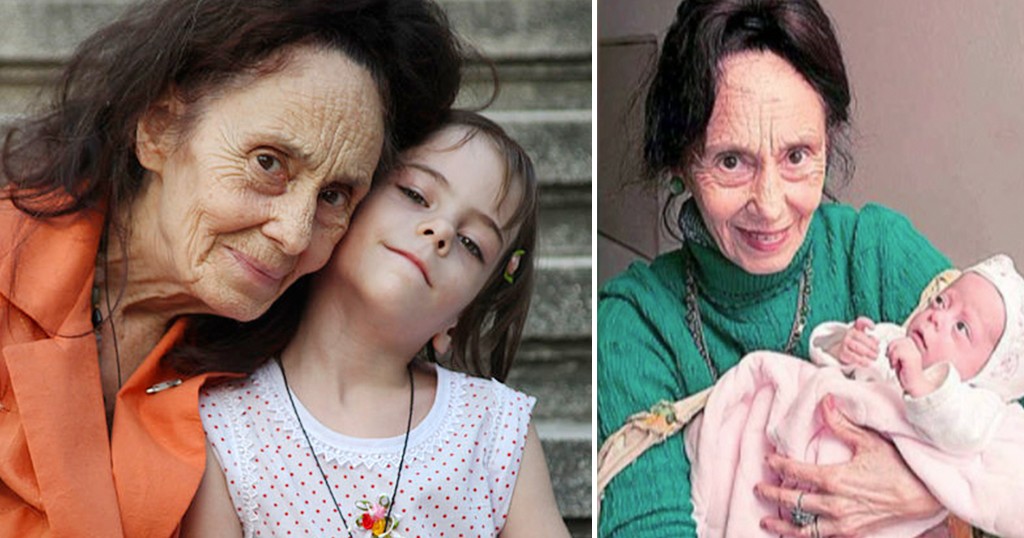

The Story of Adriana Iliescu: Becoming the World’s Oldest Mother at 66

Becoming a parent is an unparalleled milestone in life, often bringing profound change and a sense of responsibility. For many, the life-altering moment when a child enters their world is the beginning of a lifelong journey of love, learning, and devotion. Few stories, however, are as remarkable as that of Adriana Iliescu of Romania, who, in 2005, gained international attention by becoming the world’s oldest mother at the time—giving birth at the age of 66. This event not only made news across the globe but also sparked debates on medicine, ethics, and societal norms surrounding motherhood at an advanced age.
The Birth That Became World News
When Adriana Iliescu welcomed her daughter, Eliza, in 2005, it marked a historic moment in reproductive medicine. At 66, Adriana became the world’s oldest documented mother, a feat that earned her a place in the Guinness World Records. Eliza’s birth was significant not just for the Iliescu family, but also for the scientific and ethical discussions it generated worldwide.
News outlets quickly spread Adriana’s story. The global public was fascinated and sometimes bewildered by the circumstances that led to Eliza’s birth. The advanced maternal age, enabled by breakthroughs in in-vitro fertilization (IVF), challenged traditional perceptions of motherhood and family structure.

Public Reaction and Personal Resilience
In the years following her daughter’s birth, Adriana Iliescu faced intense media scrutiny and public judgment. Many commentators questioned her decision, raising concerns about her age and the long-term welfare of her child. In an interview with the Daily Mail in 2010, she addressed these criticisms directly. Adriana emphasized her robust health and vitality, stating, “If we are talking about my energy, then I feel like a young woman. I feel like I’m 27, and when I feel a bit more tired, I feel like I’m 37. I am healthier than women more than half my age.”
She also brushed off comments that labeled her as “granny,” affirming that she did not have Eliza to rejuvenate her image. Rather, her motivation was the deep-seated desire to nurture and educate a child.
Remarkably, Adriana even considered having another child. “Medically, it’s possible,” she said, noting advancements in reproductive technology even for women in their seventies, although she was not rushing such a decision.

Adriana and Eliza: A Strong Mother-Daughter Bond
Despite external skepticism, Adriana focused her energy on being a present and supportive mother. Eliza, described as a lively and joyful individual, developed a close and loving relationship with her mother. Adriana maintained a healthy lifestyle—avoiding smoking and alcohol, and citing her parents’ longevity as hope that she would be there for Eliza for many years to come. “If I live as long as my parents did, Eliza will be 20 by the time I pass away,” she reflected.
Adriana’s journey to motherhood was, in fact, years in the making. Earlier in her life, she experienced traumatic loss when, due to medical necessity, she had to abort her first pregnancy as a newlywed. Later, at 24, her husband left her, causing her to pour her efforts into her academic career as a university lecturer in Romania. By the time she completed her doctorate at 37, she felt emotionally ready to have a child, but IVF technology was not yet available.

The Role of Medicine and Perseverance
IVF was introduced in Romania in the late 1990s. Adriana was 57 when the technology finally became accessible. Undeterred by societal pressure or medical risks, she commenced treatment. Her first attempt at IVF in 2000 was unsuccessful, leading to disappointment yet fortifying her resolve. Some acquaintances and segments of the public viewed her ambition as unconventional or even unethical, but Adriana refused to yield.
She eventually sought help from Dr. Bogdan Marinescu in Bucharest. In 2004, Adriana became pregnant with triplets. However, only one child, Eliza, survived after the other two succumbed in utero. Eliza was born prematurely and required an extended stay in the NICU, fighting hard in her earliest days of life. The experience was a profound testament to both medical progress and personal determination.

Religious and Social Controversy
The story of Adriana’s late-life motherhood drew reactions not only from the public and press but also from religious groups. Upon Eliza’s baptism, Adriana described feeling isolated due to her age, recounting derogatory comments from some nuns and individuals who disapproved of her post-menopausal pregnancy. Despite this, Adriana remained grounded in her faith, viewing Eliza as a divine blessing and persevering through ostracism and misunderstanding.
These criticisms reflect broader societal tensions around biotechnology, generational expectations, and religious views on assisted reproduction—an ongoing topic in ethics and family studies worldwide.

Adriana Iliescu in 2025: Life, Legacy, and Continuing Work
Now approaching 20 years since Eliza’s birth, Adriana Iliescu, at 83, stands as an example of resilience and late-in-life accomplishment. Contrary to assumptions about her health or capacity, Adriana remains actively engaged in her intellectual and literary pursuits. She has authored over 25 children’s books and lectures part-time at a university in Bucharest. The experience and wisdom she brings to parenting are complemented by meticulous planning for her daughter’s future.
When she chose IVF, Adriana made legal arrangements to ensure Eliza’s well-being should anything happen to her. She asked Dr. Marinescu, the physician instrumental in Eliza’s conception and birth, to serve as both the girl’s godfather and legal guardian in the event of Adriana’s passing.
The family’s private life is preserved, but available information shows Adriana’s dedication to her daughter’s happiness and education. This has been bolstered by the widespread admiration for Adriana’s persistence against social odds and her success in raising a thriving, well-rounded child.

Eliza Iliescu: Maturity, Talents, and Academic Ambition
After two decades, Eliza has become a bright, articulate, and motivated young woman. According to independent coverage by Brightside, Eliza is an award-winning student interested in literature, humanities, philosophy, and the Romanian language. She is pursuing plans to attend college, following in her mother’s academic footsteps.
Eliza has drawn attention for her public performances—in particular, her recent appearance on stage with former Eurovision contestant Theodor Andrei, where she showcased poise and talent in front of audiences. Her achievements have led to widespread praise on social media, where she is regarded as a role model for her generation.
The bond between Adriana and Eliza is evident. Despite media portrayal and ongoing scrutiny, Eliza enjoys a supportive, nurturing environment. Observers often remark on the happiness and confidence that radiate from the young woman, a testament to the strong foundation established by her mother.
Societal and Ethical Reflections on Late Motherhood
Adriana Iliescu’s story has prompted ongoing reflection within medical, ethical, and social fields. Assisted reproductive technology has redefined the limits of parenthood, raising both opportunities and complex questions. Health risks associated with pregnancy at an advanced age—ranging from pre-term birth to maternal complications—remain key concerns. Medical experts emphasize the importance of individualized risk assessment and informed consent.
Ethically, the debate continues regarding the welfare of children born to older parents, societal impacts, and the potential emotional and financial strains. While some criticize late-life parenthood, others underscore the right of individuals to pursue parenthood regardless of age, provided that the child’s best interests are prioritized.
Internationally, similar cases have arisen, reflecting varying cultural and regulatory approaches to reproductive technology. Guidelines vary widely, with some countries imposing upper age limits for fertility treatments and others taking a more permissive stance.
Adriana herself remains steadfast in her belief: that love, devotion, and preparedness are the cornerstones of good parenting—regardless of age. Her lifelong dedication to education and nurturing her daughter has made a positive impression on many who follow her story.
Conclusion: Inspiration and Lessons from Adriana Iliescu’s Journey
The case of Adriana Iliescu is as much about the possibilities of science as it is about the enduring strength of the human spirit. Her journey, against biological, social, and ethical challenges, illustrates the complex landscape of modern parenthood. Through determination, a supportive network, and a lifelong commitment to education and values, Adriana has shaped a future for her daughter Eliza—one marked by achievement, confidence, and hope.
As debates over assisted reproduction continue, Adriana’s experience serves as a reminder of the diverse ways families are formed and the enduring impact of love and responsibility in parenting—at any age.
Disclaimer: This content is intended for entertainment purposes only and is not based on real events.
