
The Secret of Blanche Monnier: Imprisoned for 25 Years

In the early 20th century, a dramatic story emerged from France that would capture the collective attention of the country and the world. It was a tale that exposed the darkest side of familial secrecy, societal pressures, and the consequences of unwavering tradition. The case of Blanche Monnier, a woman hidden from the world for 25 years in her family home, is as confusing as it is tragic. This article delves into the life, imprisonment, and later rescue of Blanche Monnier, presenting a nuanced analysis of the incident and its wider historical and societal implications.
Early Life: A Prominent Family in 19th-Century France
To understand the magnitude of Blanche Monnier’s ordeal, it is essential to appreciate her social background. Born in 1849 in the city of Poitiers, Western France, Blanche belonged to the Monnier family, a household of considerable reputation and respectability.
Her father, Charles-Emile Monnier, had been a distinguished head of the local arts faculty, earning the esteem of peers. Her mother, Louise Monnier, was known throughout Poitiers for her charitable efforts and public generosity, a figure often present at society events and philanthropies. The Monnier family’s prominence extended to Blanche’s brother, Marcel, who graduated as a lawyer and held a reputable position as an administrative official.

Blanche herself was considered a lively, intelligent, and attractive young woman. With thick curls, bright eyes, and an independent spirit, she stood out among her peers and drew attention from potential suitors. Her vivacity and desire to define her own destiny, though admired by some, conflicted with the conservative values deeply rooted in her family—a dynamic that would ultimately prove tragic.
The Disappearance: Unanswered Questions and Societal Pressures
By 1876, Blanche, aged 26, remained active in Poitiers society. She was well-liked and courted by several men, considered an eligible and desirable match. Yet, in a move that would bewilder her friends and community, Blanche vanished without warning.
Louise Monnier, the matriarch, explained her daughter’s absence with vague stories—Blanche had supposedly left on a trip or relocated abroad for personal reasons. Friends and relatives, lacking concrete information and hindered by the Monnier family’s reticence, eventually stopped inquiring. As time passed, Blanche’s fate faded from public memory, lost behind the closed doors of a respectable household.
Behind these doors, however, Blanche was living under unimaginable circumstances—imprisoned in a small, shuttered attic room, denied proper care or any connection to the outside world.
The Mysterious Letter That Unveiled the Truth
The truth about Blanche Monnier might have never been uncovered if not for an anonymous letter. On May 23, 1901, the Paris Attorney General’s office received a short but disturbing note.
“Monsieur Attorney General, I have the honor to inform you of an exceptionally serious matter. A woman, a spinster, has been locked away in Madame Monnier’s house, half-starved and living in filth for the past twenty-five years.”
The authorities responded swiftly. Upon arrival at the Monnier residence, the police encountered resistance—Louise Monnier refused them entry, her composure masking the gravity of the situation inside. Once inside the house, officers were hit by an overpowering stench that led them directly to the attic, behind a locked door.
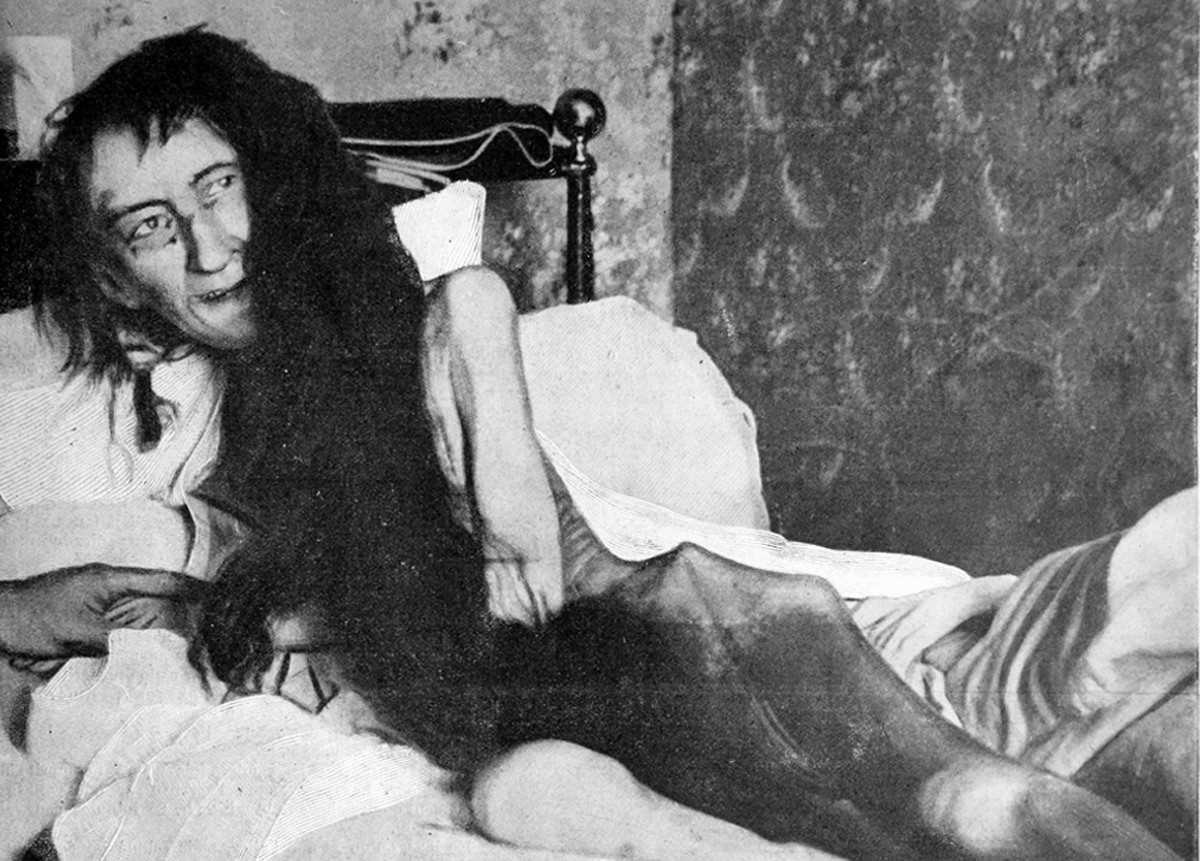
Forcing open the door, the police discovered Blanche lying in squalor—her body gaunt, hair matted, weighed down by years of confinement and neglect. She was wrapped in filthy blankets, surrounded by rotting food, fragments of old meals, vermin, and insects. She had lived in darkness for so long that when the officers broke through the boarded window, Blanche struggled to adjust to the incoming sunlight.
According to contemporary newspaper reports, she weighed barely 55 pounds—severely malnourished but miraculously alive. A police officer later recounted the disturbing scene: “As soon as light entered the room, we noticed, in the back, lying on a bed, her head and body covered by a repulsively filthy blanket, a woman identified as Mademoiselle Blanche Monnier. The unfortunate woman was lying completely naked on a rotten straw mattress. All around her was formed a sort of crust made from excrement, fragments of meat, vegetables, fish, and rotten bread. We also saw oyster shells and bugs running across Mademoiselle Monnier’s bed.”
On the soot-stained walls of her confinement, Blanche had written, often during moments of clarity: “Shall I ever regain my freedom, or am I to be forever consigned to this living tomb?”
The Immediate Aftermath: Medical Care and Public Outrage
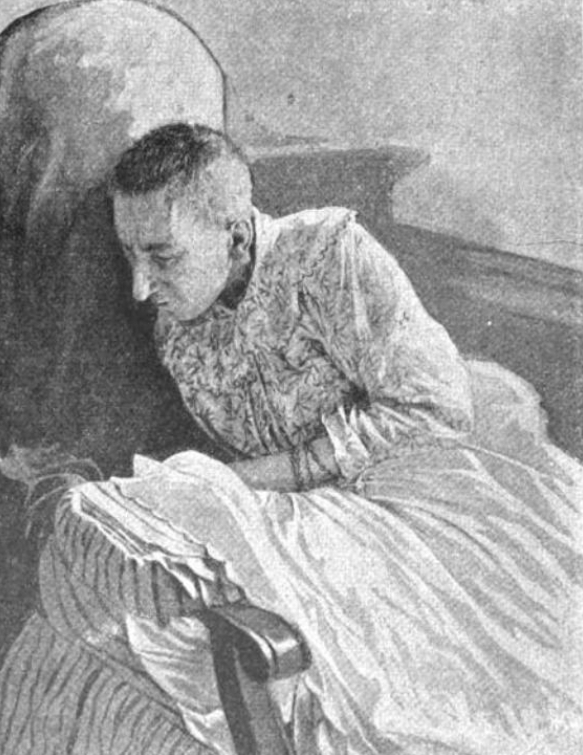
Once discovered, Blanche was immediately rushed to a Paris hospital. Doctors feared for her survival; the consequences of her two and a half decades of deprivation were stunning. In addition to being severely malnourished, she suffered from physical weakness and emotional trauma. Yet, Blanche remained startlingly lucid, expressing joy at the sensation of fresh air and sunlight.
As Blanche was rescued, Louise Monnier, then 75, was calmly arrested. Ultimately, she confessed to her role in her daughter’s confinement. Public anger was immediate, with crowds surrounding the Monnier home, voicing their outrage at such a betrayal of familial and social trust.
The Motive: Social Class and Family Honor
According to Louise’s statements to police, Blanche’s imprisonment began one night in 1876. The family had become aware of her relationship with a local lawyer—a man considered lacking in wealth and status for the Monnier family’s standards. Unable to persuade Blanche to abandon her love, Louise and Marcel decided to isolate her in the hope that she would eventually submit to their wishes.
Blanche, however, refused to relent, and days became months. Even when her beloved died in 1885, Blanche’s mother refused to release her. The family’s inflexible adherence to social expectations, compounded by a desire to avoid scandal, led to years of Blanche’s continued captivity. The case became a lens through which to examine the social constraints women faced in late 19th-century Europe, especially concerning marriage and autonomy.

The Monnier case stands as a powerful warning about the potentially destructive nature of misplaced pride and the desire to uphold appearances at all costs.
Legal Proceedings: Trials, Acquittals, and Unanswered Questions
Following Blanche’s rescue, legal action was quickly brought against her family. Louise Monnier’s confession was followed in short order by her death just 15 days after her arrest. Reports stated that she succumbed to a heart attack while in custody, still expressing concern for her daughter with the words, “Ah, ma pauvre Blanche.”
Blanche’s brother, Marcel, was initially convicted and sentenced to 15 months in prison for his involvement. However, following an appeal, Marcel was acquitted. The court cited a lack of sufficient evidence and noted the absence of a legal framework at the time holding family members accountable for failing to act in circumstances like Blanche’s. The judges recognized moral failure but admitted that the penal code did not clearly state a duty to rescue in such intrafamilial contexts.
This outcome sparked much public debate, reflecting ongoing discussions about individual rights, mental capacity, and societal responsibilities, themes that remain relevant in various judicial and social systems today.
The Anonymous Letter: A Lingering Mystery
An enduring question remains: Who wrote the letter that saved Blanche Monnier? The sender was never identified. Some have speculated that the letter originated from a former soldier involved with one of the Monnier family’s servants, someone on the periphery of the household but disturbed enough to break the family’s silence. Without this intervention, Blanche may never have been found, underlining the critical impact of civil courage in the face of wrongdoing.
Skepticism and Legacy: Media, Literature, and Continued Fascination
The story of Blanche Monnier is not without complexities. Early reports often sensationalized or distorted facts, making it difficult for historians to separate myth from reality. The conditions of her captivity, the motivations of her family, and even certain aspects of Blanche’s own experience remain partly shrouded in uncertainty due to incomplete records and biased reporting.
Nonetheless, Blanche’s ordeal received renewed attention with the publication of André Gide’s La Séquestrée de Poitiers in 1930, a work that brought her plight to new generations. Since then, the Monnier case has been referenced in academic studies, psychological analyses of captivity, and numerous documentaries. Despite an enduring fascination with the case, no major feature film has been produced about Blanche Monnier; references in literature and documentaries continue to ensure her memory persists.
Societal Impact and Psychological Reflections
The case of Blanche Monnier resonates in legal, psychological, and feminist discussions. It revealed shortcomings in the French legal system regarding the protection of vulnerable family members, prompting eventual changes in how authorities investigate alleged domestic crimes. Blanche’s resilience under such dire circumstances has attracted study from mental health experts, who point to her survival as both tragic and indicative of the human capacity to endure extreme adversity.
From a societal perspective, the Monnier case forced the public to face uncomfortable truths about the perils of unfettered familial authority, the potential for abuse under the guise of protection, and the dangers of isolating those who defy social expectations. The story also opened discussions across Europe about women’s rights, autonomy, and the need to safeguard individuals against arbitrary or malicious confinement.
Remembering Blanche Monnier
Despite the incomplete record and the cloud of mystery still surrounding aspects of her story, what remains beyond doubt is Blanche Monnier’s extraordinary perseverance. Her story stands as a testament to the need for vigilance, compassion, and societal checks on power—even within seemingly reputable families. While contemporary audiences may never fully grasp every detail of her suffering, Blanche’s story compels continued reflection on justice, mental health, and the values that underpin family and society.
Although her life was irreversibly changed by years of solitude and deprivation, Blanche Monnier’s courage in the face of adversity is an enduring reminder of the resilience of the human spirit.
Disclaimer: This content is intended for entertainment purposes only and is not based on real events.
