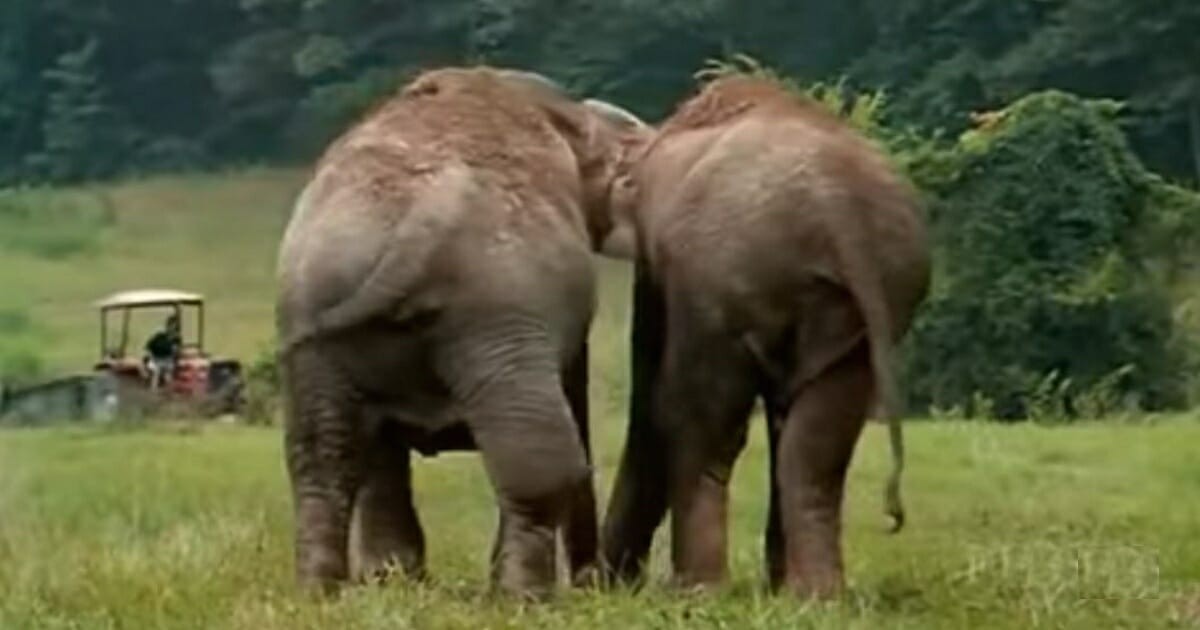

Emotional Reunion of Circus Elephants Shirley and Jenny After 22 Years

In recent decades, scientific research and firsthand observations have fundamentally changed our understanding of non-human animals and their emotional lives. Once widely considered mere “beasts,” animals are increasingly recognized for their remarkable capacity for feeling—even the ones with which humans have little everyday interaction. Research has demonstrated that many animals experience and express love, grief, joy, and distress. Among these, elephants stand out as some of the most emotionally intelligent creatures on the planet.
This insight was powerfully illustrated in a widely publicized reunion between two former circus elephants, Shirley and Jenny, which was documented in 2000 at The Elephant Sanctuary in Tennessee. Their story, which captivated audiences around the world, provides a moving example of how deeply animals can bond—and how these connections endure, even after decades apart.
The Depth of Animal Emotion: Scientific Perspectives
Modern animal behaviorists and cognitive scientists have compiled a wealth of evidence indicating that many animal species possess complex emotional lives. Mammals, and particularly elephants, are renowned for their intelligence, social relationships, and capacity for memory and affection. According to researchers, elephant herds in the wild function as close-knit social units, with individuals displaying loyalty, empathy, and even altruism. Institutions such as the American Psychological Association and researchers cited by National Geographic uphold the view that elephants exhibit behaviors suggesting grief, joy, and a collective sense of family.
Decades of being viewed mostly through the lens of human utility—as circus performers, laborers, or pets—gave rise to misleading beliefs that animals were largely emotionless. However, a synthesis of ethological studies, animal rescue experiences, and documentation from sanctuaries is challenging this outdated perspective. The reunion of Shirley and Jenny provided further compelling validation.

The Journey of Shirley and Jenny: From Circus Life to Sanctuary
Shirley and Jenny’s paths first crossed many years ago, when both were performers in a traveling circus. Their daily lives involved complex routines, frequent travel, and constant proximity to handlers and other animals. For elephants, whose natures thrive in stable, supportive social groups, the circus environment often deprives them of stable relationships and natural behaviors. It is within such a setting that Shirley and Jenny formed an early bond—a friendship forged through shared circumstance and the gentle intelligence characteristic of their species.
Eventually, however, the two elephants were separated and sent to different facilities, starting a separation that would last more than two decades. The details of their lives in the intervening years are a testament to the resilience of elephants. Despite experiencing the stresses and privations so often faced by captive animals, both Shirley and Jenny survived—a tribute to their strength and adaptability.
The Elephant Sanctuary: A Place of Healing
Located in Hohenwald, Tennessee, The Elephant Sanctuary is the largest natural-habitat refuge for captive elephants in the United States. Its mission is to provide a safe haven for elephants who have spent their lives in captivity—whether in entertainment, zoos, or private ownership—offering them space, companionship, and the closest possible approximation of a natural environment.
When Shirley and Jenny were brought to the sanctuary, their past together was initially unknown to staff. However, it soon became apparent that a remarkable event was unfolding. Caregivers at the sanctuary noticed an immediate recognition between the two elephants, even after more than 20 years of separation.
A Reunion Marked By Deep Emotion
The emotional reunion, captured on video and broadcast by PBS, became an iconic moment in the campaign for animal rights and welfare. Approaching each other through the gates of the sanctuary enclosure, Shirley and Jenny displayed unmistakable excitement and affection. The footage reveals the elephants gently touching trunks, rumbling in recognition, and pressing their bodies close together—a behavior known as “bonding” in elephant social structures.
Such behavior has been interpreted by ethologists as reassurance, affection, and an affirmation of social bonds. For observers present at the scene, including the sanctuary’s staff and keepers, the power of the elephants’ emotions was undeniable. Some described it as akin to a reunion between long-lost friends—or even family members.
Long-Term Memory and Social Bonds in Elephants
Elephants are known for their extraordinary memory. Research published in scientific journals and summarized by organizations such as the World Wildlife Fund (WWF) confirms that elephants can recall specific individuals, places, and events for decades. Such memory facilitates their complex social lives and helps them navigate migratory routes that span generations.
The instant recognition between Shirley and Jenny after 22 years apart reinforces the concept that elephants’ memories serve not only practical survival functions, but also the maintenance of social and emotional relationships. “Their reunion supports what many in animal science have been emphasizing for years—that animals experience lasting connections and even feelings of longing or loss when separated from those they care about,” states Dr. Joyce Poole, a renowned elephant ethologist.
Wider Societal Reactions: Rethinking Animal Welfare
The widely circulated footage of Shirley and Jenny’s reunion contributed to a surge of public discussion about the ethical treatment of animals—and, more specifically, the appropriateness of keeping sentient beings in captivity. Animal welfare advocates argue that such reunions highlight the urgent need for policies that recognize animals’ cognitive and emotional needs.
Organizations such as the Humane Society, World Wildlife Fund, and PETA frequently cite moments like these as evidence that animals—especially highly social and intelligent ones like elephants—require much more than food and shelter to flourish. At a policy level, countries around the world have begun updating laws relating to animal performances, with some banning wild-animal circuses entirely, while others have tightened regulations relating to animal welfare.
Expert Perspectives on Elephant Social Intelligence
Experts in animal cognition and welfare widely agree that elephants’ social structures are among the most sophisticated in the animal kingdom. Their lives revolve around matriarchal family units, where learned elders guide the herd and calves are cherished collectively. Dr. Cynthia Moss, director of the Amboseli Elephant Research Project, has documented countless cases of elephants expressing sorrow at deaths, happiness at reunions, and intricate communication within herds.
“Elephant reunions, particularly after such lengthy separations, are exceedingly rare in captivity but common in the wild where herds are rarely divided,” Moss explains. “The case of Shirley and Jenny offers poignant evidence of the emotional depth these animals are capable of.”

Animal Sanctuaries and the Road to Recovery
The Elephant Sanctuary in Tennessee and similar institutions around the world are founded on the belief that with proper care and environment, elephants and other animals can recover from the psychological trauma of captivity. Reports from caregivers suggest that socialization with other elephants, freedom of movement, and a natural habitat are essential factors in rebuilding trust and fostering resilience among rescued animals.
Shirley and Jenny’s story, while rare, is not entirely unique. Other sanctuaries have observed comparable bonds between rescued elephants. However, the sheer length of time separating these friends underscores just how profound and persistent animal memory and attachment can be.
The Human Role: Learning and Advocacy
Witnessing such emotionally charged reunions compels reflection on humanity’s responsibility toward animals in captivity and the broader relationship human society maintains with wild creatures. Exposure to stories like Shirley and Jenny’s can inspire both individuals and policymakers to reconsider the use of animals for entertainment and to support sanctuaries and organizations dedicated to animal welfare.
Increasingly, experts recommend a humane, scientifically informed approach that respects the cognitive complexity of animals and seeks to provide them with opportunities for social living, choice, and autonomy. This shift is evident in educational efforts, legislative reforms, and the growth of global support for sanctuaries.
International Response and the Future of Captive Elephants
The emotional power of Shirley and Jenny’s reunion resonated not only in the United States, but also internationally. Countries such as the United Kingdom, Austria, and several others have proposed or enacted laws banning or severely limiting the use of wild animals in circuses. Global organizations such as the International Union for Conservation of Nature (IUCN) and World Animal Protection emphasize the importance of protecting animals from isolation and psychological stress, advocating for environments that allow for the natural behaviors so essential to their well-being.
Meanwhile, public demand has grown for ethical treatment across all spheres involving animals, from entertainment and tourism to zoos and research. Increased awareness, bolstered by stories like Shirley and Jenny’s, is prompting a gradual but meaningful reconsideration of humanity’s relationship with our fellow creatures.
Watch the Reunion: A Lasting Message
The profoundly moving visual documentation of Shirley and Jenny’s reunion is readily available, serving as a reminder of the meaningful connections that animals are capable of forming. It not only reinforces the scientific consensus on animal emotion, but also acts as a catalyst for change—encouraging people everywhere to support compassionate treatment for all animals.
Watch the video of their reunion below:
Conclusion: Lessons in Empathy and Responsibility
Shirley and Jenny’s story is more than just a testament to the endurance of animal bonds; it’s a call to recognize the rich inner lives of the beings with whom we share the planet. As research continues to unveil the complexity of animal emotion and cognition, it is incumbent upon society to ensure humane treatment and provide sanctuaries for those recovering from exploitation or captivity.
By supporting ethical initiatives, educating others, and adopting policies that protect animals, we can foster a world where all creatures have the opportunity for dignity, companionship, and happiness.
Disclaimer: This content is intended for entertainment purposes only and is not based on real events.
