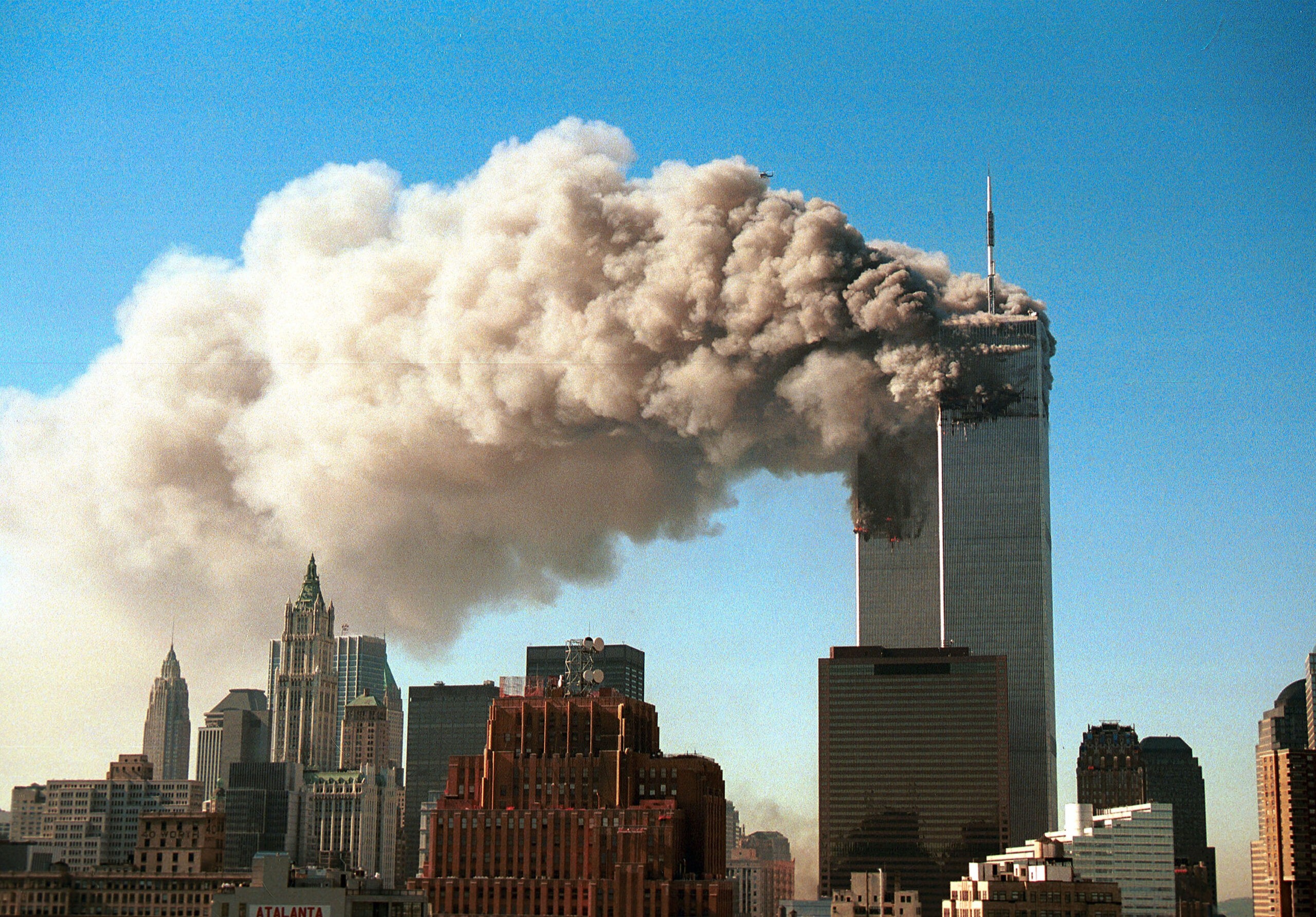

For 25 years, one photograph from September 11, 2001, has remained etched into the memory of millions.
Taken during the attacks on the World Trade Center, the image became known as “The Falling Man.” It captured a single figure against the enormous scale of the unfolding disaster, creating one of the most difficult and enduring photographs in modern photojournalism.
For many who saw it, the photograph was almost impossible to process.
But behind the image was a question that would remain unanswered for years: Who was the man in the photograph?
One family believes he may have been their loved one.
Twenty-five years later, that possibility continues to shape the memories of Jonathan Briley’s sister, Gwen Briley-Strand, who has spent decades remembering the brother she lost on that tragic morning.
A Photograph That Became Part of History
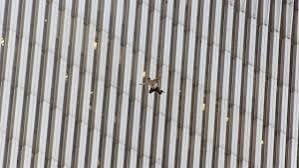
On the morning of September 11, 2001, Associated Press photographer Richard Drew was working near the World Trade Center.
As the attacks unfolded, he documented the extraordinary scenes around the towers.
Among the photographs captured that morning was a frame that would later become known around the world as “The Falling Man.”
The photograph was published by newspapers the following day. Almost immediately, it generated intense public reaction.
Some readers argued that such an intimate moment should never have been printed. Others believed the image represented the terrible human reality of what had happened inside the towers.
Over time, however, its place in history changed.
Rather than simply being viewed as a shocking photograph, it increasingly came to be regarded as an important piece of photojournalism — an image that reminded people that behind the enormous scale of September 11 were thousands of individual human stories.
Who Was the Man in the Photograph?
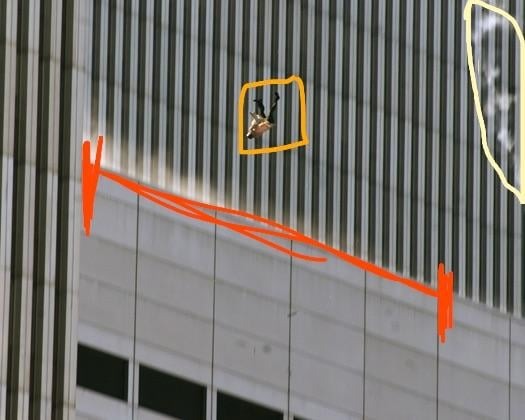
The identity of the man has never been officially established.
In the years following September 11, several possible identities were suggested.
One early theory involved Norberto Hernandez, a pastry chef who worked at Windows on the World, the restaurant at the top of the North Tower.
Hernandez’s family rejected the identification.
Years later, journalist Tom Junod investigated the photograph and, importantly, examined a sequence of images taken by Richard Drew rather than relying on the famous frame alone.
Based on details such as the man’s clothing and physical characteristics, Junod concluded that the person most likely pictured was Jonathan Briley, a 43-year-old sound engineer who worked at Windows on the World.
But the identification was never conclusively proven.
That uncertainty has remained one of the most haunting aspects of the photograph.
Remembering Jonathan Briley
Jonathan Briley was more than a possible name attached to a famous photograph.
To his family, he was a brother, a son, and a deeply religious man.
His sister, Gwen Briley-Strand, has remembered him as someone whose faith played an important role in his life. He had been ordained a deacon only months before the attacks.
Music was also part of his upbringing. As a young man, he grew up around gospel music and played piano.
Those details offer a very different picture from the one frozen inside the famous photograph.
Before September 11, Jonathan had an ordinary life filled with family, faith, work, and personal memories.
His sister’s memories help restore some of that humanity.
‘Sometimes It Feels Like Yesterday’
For Gwen, the passage of time has never completely erased the emotions surrounding her brother’s disappearance.
Twenty-five years can feel like an entire lifetime.
Yet grief does not always follow the calendar.
“There are times when it feels like 25 years but, then again, there are times when it feels like yesterday,” she told the Daily Mail.
She described grief as coming in waves, with some years being easier than others.
That experience is familiar to many families who lost loved ones on September 11.
Anniversaries can bring back memories that have remained quiet for months or even years.
A photograph, a song, a familiar place, or simply a date on the calendar can suddenly make the past feel close again.
For Gwen, September 11 remains inseparable from the memory of her brother.
Their Last Family Memories
One of the most meaningful memories Gwen has shared is a trip to Florida that Jonathan took with her and her husband shortly before the attacks.
It was not planned as a final farewell.
At the time, there was no reason for anyone to believe they would never see Jonathan again.
That is often one of the most painful parts of losing someone unexpectedly.
Ordinary moments become precious only afterward.
A conversation that seemed routine can become a treasured memory.
A family trip can become the final photograph in someone’s personal history.
For Gwen, that Florida trip remains one of the last memories she has of being together with her brother.
A Family’s Different Way of Understanding the Photograph
The photograph has inevitably carried a painful meaning for Jonathan’s family.
Yet Gwen has resisted the idea that the people depicted in photographs from that morning should simply be judged for their final moments.
She has spoken instead about the extraordinary circumstances surrounding the victims and the unimaginable choices people faced that morning.
Her faith has helped shape the way she understands what happened.
For her, Jonathan’s story is ultimately not about one photograph.
It is about a person whose life existed long before September 11 and whose memory continues through the people who loved him.
Richard Drew Never Set Out to Capture One Famous Image
Richard Drew has explained that he was photographing the unfolding events rather than deliberately searching for a single iconic image.
His camera captured a sequence of moments.
Only later did he realize that one particular frame had become something much larger than the other photographs.
The image’s stillness is part of what made it so memorable.
There are no crowds surrounding the figure in the frame. There is no explanation of what happened immediately before or after.
Instead, viewers are left with a single frozen moment from an incomprehensible day.
That ambiguity is part of why the photograph has remained so difficult to forget.
Why “The Falling Man” Still Matters
Photographs can preserve history in ways that words sometimes cannot.
A written account can explain numbers, locations, timelines, and events.
A photograph can remind us that every number represented a real individual.
That is one reason “The Falling Man” has remained part of discussions about September 11.
The photograph does not tell us everything about the person pictured.
It does not reveal his name with certainty.
It does not tell us what he was thinking.
And it cannot capture the life he lived before that morning.
But it does remind viewers that the people affected by September 11 were not simply statistics.
They were parents, children, siblings, friends, colleagues, musicians, teachers, workers, and neighbors.
Each had a story.
Twenty-Five Years Later
As the 25th anniversary of September 11 approaches, the world continues to revisit photographs, recordings, personal memories, and stories from that day.
Some details have become part of history books.
Others remain deeply personal.
For Gwen Briley-Strand, the anniversary is both.
It is a moment when the world remembers a tragedy that changed history, but it is also a reminder of the brother she lost.
The uncertainty surrounding “The Falling Man” means that no one can say with absolute certainty who appears in that famous photograph.
But for Jonathan’s family, the possibility has remained deeply significant.
And perhaps that is why the story continues to resonate.
Behind every historic photograph is a human being whose life cannot be reduced to a single frame.
Remembering the Person, Not Just the Photograph
Twenty-five years later, “The Falling Man” remains one of the most recognizable photographs connected to September 11.
Its history is complicated.
Its identity remains officially unresolved.
And its meaning has changed as generations have grown further removed from that terrible morning.
But for families who lost someone, September 11 has never simply been a historical event.
It is personal.
For Gwen, remembering Jonathan means remembering his faith, his music, his family, and the ordinary moments they shared before the world changed forever.
Whether or not the man in Richard Drew’s photograph was definitively Jonathan Briley may never be established.
What can be remembered with certainty is that Jonathan had a life before that photograph — a life filled with people who knew him, loved him, and still carry his memory.
And that may be the most important thing to remember after all these years.
Not just the photograph.
Not just the mystery.
But the person behind the story.
