
Look inside almost any closet and you’re likely to find at least one.
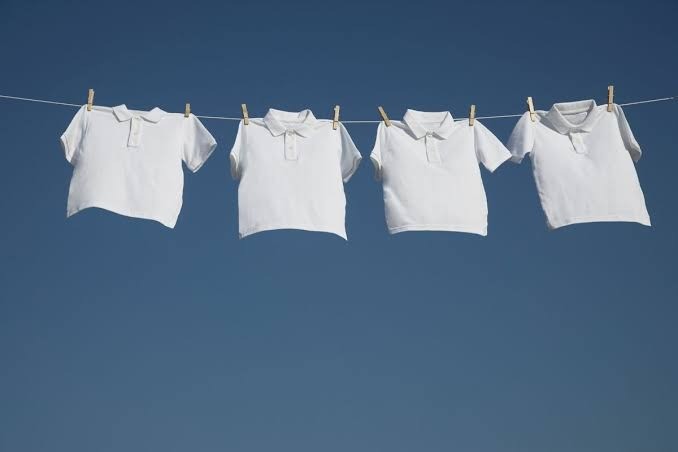
A plain white T-shirt.
A favorite black one.
A shirt with a logo, a band name, a funny phrase or a completely unnecessary graphic you bought because it made you laugh.
Today, the T-shirt is one of the most recognizable pieces of clothing in the world. It’s worn by children and adults, athletes and celebrities, workers and executives.
But the humble T-shirt wasn’t always the everyday wardrobe staple we know today.
For much of its early history, it was considered something much less glamorous.
It was worn underneath other clothing.
It was practical.
It was inexpensive.
And it wasn’t necessarily something you wanted strangers to see.
So how did this simple garment become known as a T-shirt?
The answer is surprisingly straightforward — but the story behind its rise is much more fascinating.

Where Did the T-Shirt Get Its Name?
The name “T-shirt” comes from the garment’s basic shape.
When laid flat, the body and sleeves form a shape resembling the capital letter T.
That’s where the name comes from.
The term became associated with the short-sleeved, collarless shirt that eventually evolved into the modern T-shirt.
But while the name may seem obvious today, the garment itself went through a long transformation before becoming a fashion staple.
It began primarily as practical clothing rather than something people wore to make a statement.
The T-Shirt Started as an Undergarment
The modern T-shirt developed from earlier forms of undershirts and underwear.
During the late 19th and early 20th centuries, workers and sailors increasingly used lightweight knitted shirts as a comfortable layer beneath heavier clothing.
These garments were useful because they were easier to wash than bulky outerwear.
They could also absorb sweat and help keep other clothing cleaner.
For sailors and workers performing physically demanding jobs, practicality mattered much more than fashion.
The shirt was simply something you wore underneath your regular clothes.
Nobody was buying one because it looked cool.

Why Sailors Helped Popularize the T-Shirt
Sailors played an important role in the development of the modern T-shirt.
Naval uniforms required practical clothing that could be worn comfortably in demanding environments.
Lightweight undershirts offered several advantages.
They were easier to move in.
They were relatively easy to wash.
And they could be worn beneath heavier uniforms.
Over time, these simple shirts became increasingly familiar outside strictly military environments.
Workers began wearing similar garments because they offered the same advantages.
The T-shirt was comfortable, durable and uncomplicated.
Those qualities helped it move from military and industrial settings into everyday life.
The T-Shirt Becomes Workwear
As manufacturing and industrial jobs expanded during the early 20th century, practical clothing became increasingly important.
Factory workers, farmers, mechanics and laborers needed clothes that could withstand physical activity.
A simple knitted shirt was an obvious choice.
Unlike a formal button-down shirt, a T-shirt didn’t have complicated buttons or stiff collars.
It allowed greater freedom of movement and could be worn comfortably in warm conditions.
It also had another major advantage:
It was inexpensive.
Mass production made basic cotton garments increasingly accessible to ordinary consumers.
The T-shirt was beginning to escape its identity as strictly military underwear.
The Famous “T” Shape
The design itself is remarkably simple.
A traditional T-shirt consists of a central body with two short sleeves extending outward.
Viewed from above or laid flat, those pieces create a rough T shape.
That’s why the name works so perfectly.
There’s no complicated origin story hidden behind the letter.
The “T” refers to the silhouette.
Interestingly, the simplicity of that shape eventually became one of the garment’s greatest strengths.
Because there was so little built into the design, the shirt became an almost perfect blank canvas.

When Did People Start Wearing T-Shirts on Their Own?
The transition from underwear to outerwear happened gradually.
By the middle of the 20th century, T-shirts were increasingly being worn as standalone garments.
Their popularity grew because they were comfortable, inexpensive and easy to care for.
Young people in particular began embracing casual clothing.
The T-shirt fit perfectly into this changing attitude toward fashion.
You didn’t need to wear it beneath a jacket.
You didn’t need a tie.
You didn’t need to tuck it beneath a formal shirt.
You could simply put it on and go.
That simplicity helped transform the T-shirt into a symbol of casual style.
Hollywood Changed the T-Shirt Forever
Then came Hollywood.
Movies played an enormous role in changing how audiences viewed ordinary clothing.
Actors began appearing on screen wearing simple T-shirts, helping the garment develop a new image.
Instead of looking like underwear, the T-shirt began to look youthful, confident and rebellious.
Two actors in particular became strongly associated with the look:
Marlon Brando and James Dean.
Brando’s appearance in A Streetcar Named Desire and Dean’s iconic role in Rebel Without a Cause helped cement the T-shirt’s association with youthful rebellion.
Suddenly, wearing a T-shirt wasn’t merely practical.
It could also be stylish.
It could communicate attitude.
And it could make a person look effortlessly cool.

The T-Shirt Becomes a Symbol of Rebellion
The transformation was significant.
A garment once hidden beneath clothing had become something worn proudly on the outside.
Young people embraced the T-shirt because it represented a break from traditional formal dress.
Instead of polished suits and stiff collars, the T-shirt represented comfort and individuality.
It was democratic.
A wealthy person could wear one.
A factory worker could wear one.
A teenager could wear one.
A celebrity could wear one.
The garment didn’t require a particular social status.
That helped make it one of the most universal pieces of clothing ever created.
From Plain Cotton to Personal Expression
The next major transformation came when people began putting designs on T-shirts.
Logos.
Political messages.
Band names.
Sports teams.
Company advertisements.
Artwork.
Slogans.
The blank T-shirt had become a canvas.
This changed the meaning of the garment.
A plain shirt could simply be clothing.
A printed shirt could communicate something about the person wearing it.
It could reveal someone’s favorite band, sports team, sense of humor or political beliefs.
The T-shirt had evolved from an anonymous undershirt into a form of personal expression.
Why Printed T-Shirts Became So Popular
Printing technology helped accelerate the trend.
As screen printing and other garment-decoration techniques became more accessible, companies could produce shirts featuring increasingly elaborate designs.
Businesses realized that T-shirts could also function as advertising.
A person wearing a branded shirt was effectively carrying a small advertisement wherever they went.
Musicians discovered another opportunity.
Concert T-shirts became souvenirs that allowed fans to demonstrate their connection to a particular artist.
Sports organizations did the same.
The T-shirt became both clothing and merchandise.
The T-Shirt and Pop Culture
By the second half of the 20th century, T-shirts were deeply connected to popular culture.
They appeared in movies and television shows.
Celebrities wore them.
Musicians sold them.
Designers incorporated them into fashion collections.
Teenagers used them to communicate their identities.
And ordinary people wore them simply because they were comfortable.
Few garments had managed to cross so many cultural boundaries.
The T-shirt could be casual or fashionable.
Simple or elaborate.
Cheap or expensive.
Personal or commercial.
Its flexibility was almost unlimited.
Why White T-Shirts Became Iconic
Among all T-shirt styles, the plain white T-shirt became particularly recognizable.
Part of its appeal is its simplicity.
A white T-shirt can be paired with jeans, shorts, trousers, skirts or jackets.
It works across generations.
It can look casual or polished depending on what surrounds it.
Hollywood helped reinforce the image.
The white T-shirt became associated with classic American style, particularly when worn with denim.
That combination remains recognizable decades later.
The T-Shirt Is No Longer Just a Basic Garment
Today, the T-shirt exists at almost every level of fashion.
You can buy an inexpensive basic shirt from a mass-market retailer.
You can purchase a luxury designer version for hundreds of dollars.
You can order a custom shirt with your own design.
You can buy one at a concert, sporting event or tourist attraction.
The basic shape remains remarkably similar.
What changes is the fabric, cut, design, branding and context.
That adaptability is one reason the T-shirt has survived so many changes in fashion.
Why T-Shirts Became a Global Uniform
Walk through almost any major city in the world and you’ll see T-shirts.
They are worn in offices with casual dress codes.
They appear in gyms and restaurants.
Children wear them to school.
Travelers wear them while exploring new countries.
Workers wear them as part of uniforms.
Celebrities wear them on red carpets and in everyday life.
The T-shirt has effectively become a global casual uniform.
Its success isn’t based on one particular trend.
It’s based on practicality.
It’s comfortable.
It’s easy to produce.
It’s easy to wash.
It’s easy to customize.
And it can fit almost any personal style.
The Hidden History of an Ordinary Shirt
Perhaps the most interesting thing about the T-shirt is how ordinary it looks today.
We rarely stop to think about it.
You put one on without considering its history.
But that simple piece of fabric represents more than a century of changes in work, military clothing, manufacturing, entertainment and popular culture.
It moved from the inside of a uniform to the outside.
It went from being associated with work to being associated with rebellion.
Then it became a canvas for advertising, art and personal identity.
Few garments have undergone such a dramatic transformation.
So Why Is It Called a T-Shirt?
Ultimately, the answer is wonderfully simple.
It’s called a T-shirt because of its T-shaped design.
But the history behind that name tells a much bigger story.
The garment began as practical underwear and gradually became workwear, casual clothing, a symbol of youthful rebellion and eventually one of the world’s most versatile fashion staples.
The T-shirt didn’t need an elaborate design to become famous.
Its greatest strength was its simplicity.
A few pieces of fabric.
Two sleeves.
A basic shape.
And an almost limitless ability to tell the world something about the person wearing it.
From Underwear to a Global Fashion Icon
The next time you pull a T-shirt from your closet, take a second look.
That ordinary shirt has a surprisingly rich history.
It was shaped by sailors and workers, popularized by Hollywood, embraced by young people and transformed by printing and advertising.
And through all those changes, its basic T-shaped design remained.
That’s why the name has lasted.
The T-shirt may have started out as something people were never supposed to see.
Today, it’s one of the most visible forms of clothing in the world.
And perhaps that’s the most remarkable part of its story: a garment designed for simplicity became a universal language of comfort, culture and identity.
