

A relationship rarely changes overnight.
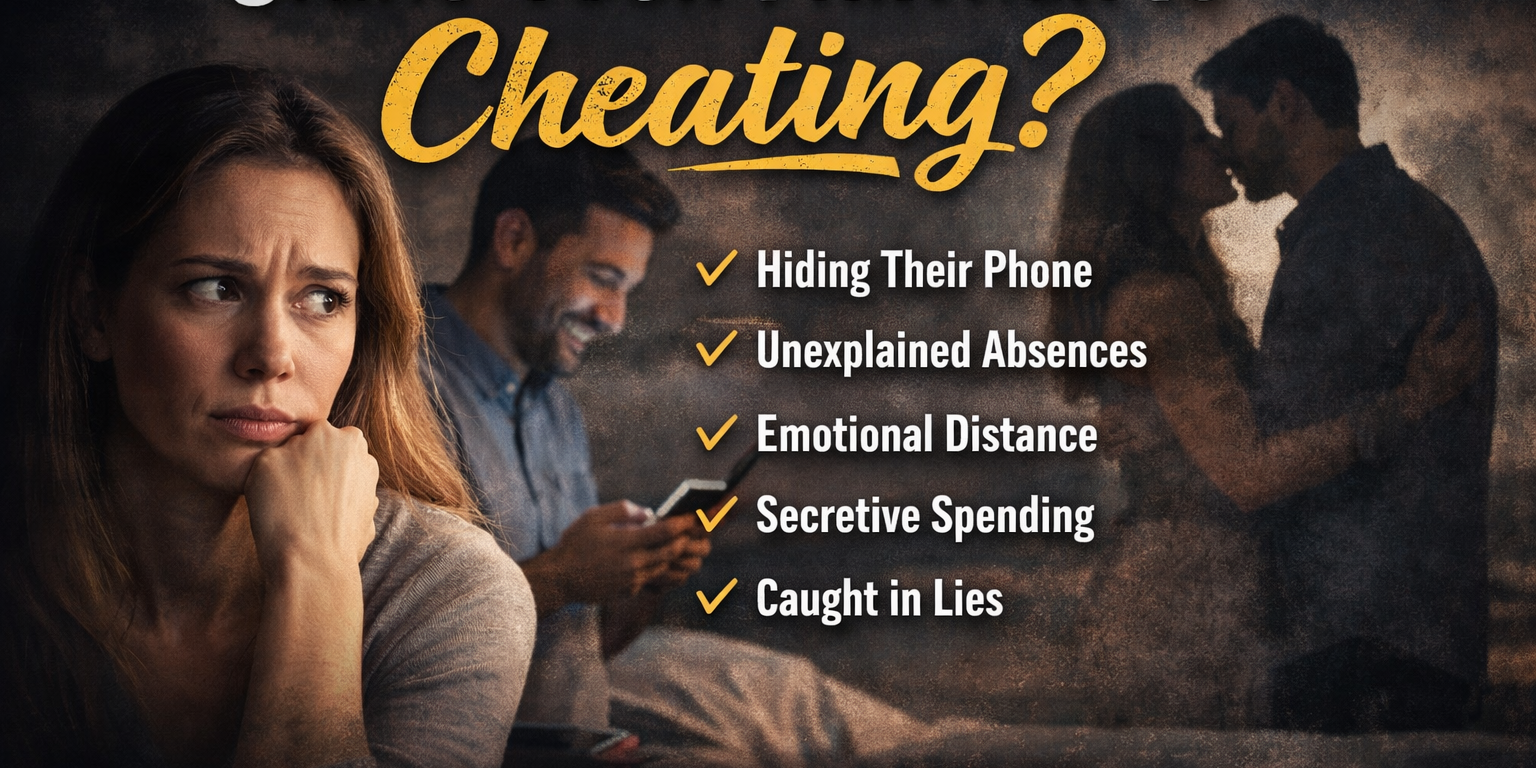
Sometimes, the first signs are almost invisible: a password that suddenly changes, an unexplained transaction on a shared account, or a person who becomes unusually protective of their phone. On their own, these details may mean absolutely nothing. But when several unexplained changes begin appearing together, a partner may naturally start wondering whether something has changed beneath the surface.
That question has recently received renewed attention after Catherine De Noire, a manager at a legal adult establishment, discussed some of the ways clients have reportedly been discovered by their partners. Her observations, reported by the New York Post, focused less on sophisticated deception and more on ordinary mistakes involving money, digital technology and physical receipts.
Her stories are interesting not because they provide a foolproof way to identify unfaithfulness, but because they highlight a broader truth about relationships: secrecy often creates traces that are difficult to maintain indefinitely.
At the same time, relationship experts caution against treating individual behaviors as proof of anything. A changed password could be a security decision. An unusual ATM withdrawal could have a completely innocent explanation. A person spending more time on their phone could simply be responding to work.
The important question is therefore not whether one clue proves anything, but what happens when communication and trust begin to break down.
1. Unusual Financial Activity Can Raise Questions
One of the examples discussed by Catherine De Noire involved late-night ATM withdrawals.
According to her account, some clients did not carry enough cash and therefore used nearby ATMs. The situation could become noticeable when unusually large withdrawals appeared at unusual times, particularly when the account was shared with a partner.
Financial records are particularly revealing because they create a history.
Unlike a conversation that disappears, a bank transaction can remain visible for weeks or months. A withdrawal that doesn’t fit someone’s usual routine may therefore prompt questions.
But there is an important distinction between an unusual transaction and evidence of infidelity.
People withdraw money for countless legitimate reasons. They may be traveling, helping a friend, paying for an unexpected expense or simply changing their normal spending habits.
For that reason, financial activity should be viewed as a conversation starter rather than a conclusion.
In healthy relationships, couples can generally discuss unusual expenses without immediately assuming the worst.
2. Digital Technology Can Leave an Unexpected Trail
Modern relationships exist alongside an enormous amount of digital information.
Location services, shared calendars, payment applications, photographs and online accounts can all create records of daily activity.
De Noire reportedly described situations in which people forgot that location sharing was enabled or failed to realize that their movements could remain visible through digital services.
The irony is that technology can make secrecy both easier and harder.
A smartphone can provide privacy, but it can also create timestamps, location records and notifications. A person may believe an interaction is completely private while overlooking a setting that automatically synchronizes information elsewhere.
This does not mean partners should secretly monitor one another.
In fact, excessive surveillance can create another serious relationship problem. Trust cannot be built by constantly checking someone’s location or searching through their devices.
Instead, couples benefit from discussing expectations around privacy and transparency before disagreements arise.
3. Receipts and Physical Evidence Still Matter
Technology may dominate modern life, but old-fashioned paper can sometimes be just as revealing.
According to De Noire, she has encountered situations in which physical receipts or tickets found in a partner’s belongings led to uncomfortable questions.
The broader lesson is simple: everyday objects can sometimes contradict a person’s explanation.
A receipt from a restaurant, hotel or unfamiliar location does not automatically indicate dishonesty. There may be an entirely reasonable explanation.
However, when an object conflicts with what someone has previously said, it can naturally create uncertainty.
The healthiest response is not immediate accusation. It is an opportunity for both people to explain what happened and determine whether the explanation makes sense.
4. Sudden Changes in Routine Can Be Noticeable
Financial records and digital footprints are not the only clues people notice.
Changes in routine can sometimes attract attention as well.
Someone may suddenly start leaving home earlier, returning later, becoming unusually protective of their personal schedule or developing unexplained commitments.
Again, none of these behaviors automatically indicate relationship problems.
People’s routines change for many reasons. A new job, additional responsibilities, social activities or personal interests can all produce noticeable differences.
The concern becomes greater when several changes appear simultaneously and communication about them becomes increasingly difficult.
Relationship researchers emphasize that infidelity has many possible motivations and does not always mean that a relationship was fundamentally unhappy. The American Psychological Association notes that research identifies both relationship-related and individual motivations, making the subject considerably more complicated than the stereotype that people only become unfaithful because they dislike their relationship.
5. Password Changes Can Feel More Significant Than They Are
Passwords are another area where ordinary security decisions can be misunderstood.
Changing a password is often sensible. People lose devices, experience security concerns or simply update their accounts periodically.
But if someone suddenly changes passwords that were previously shared within a relationship while also becoming unusually defensive about their devices, a partner may naturally wonder why.
The key issue is not the password itself.
It is the change in behavior and communication surrounding it.
A healthy relationship can accommodate personal privacy. Partners do not necessarily need access to every account or every private conversation.
At the same time, secrecy that deliberately violates previously agreed boundaries can undermine trust.
The distinction between privacy and secrecy is therefore important.
Privacy means maintaining a reasonable personal space.
Secrecy means deliberately concealing information that another person has a legitimate reason to expect to know.

6. Why Individual Clues Are Not Proof
One of the biggest dangers in discussions about relationship “red flags” is assuming that every unusual behavior has one explanation.
Human behavior is rarely that simple.
Someone may become quieter because of stress at work.
They may spend more time on their phone because of a new project.
They may withdraw money because they are purchasing a gift.
They may change a password because of a security warning.
They may even change their daily routine because they are struggling with something they have not yet learned how to discuss.
This is why relationship professionals generally encourage curiosity rather than immediate judgment.
The American Psychological Association recently highlighted the importance of approaching infidelity with a stance of curiosity and understanding rather than simply assigning blame. Experts also note that definitions of infidelity themselves can vary between couples, particularly as relationships increasingly involve digital communication.
7. Trust Is Often the Bigger Story
The fascination with “how people get caught” can make relationship problems sound like detective stories.
But beneath the receipts, passwords and location services lies something much more important: trust.
A relationship depends on the belief that both people can communicate honestly about what they want, what they need and where their boundaries are.
When that communication disappears, even completely innocent behavior can become suspicious.
Someone who normally explains their plans may suddenly stop doing so.
A partner who once discussed financial decisions may become secretive.
A couple who previously shared their concerns may begin avoiding difficult conversations.
Those changes can damage trust even before anyone knows exactly what caused them.
The APA describes betrayal more broadly as behavior that violates a partner’s expectations of trust and regard, and notes that such experiences can produce significant emotional consequences.
That is why rebuilding trust requires more than simply answering one question.
It requires understanding why communication broke down in the first place.
8. Why Some People Hide Relationship Problems
There is no single explanation for secretive behavior.
Some people may fear confrontation.
Others may be avoiding an uncomfortable conversation about dissatisfaction, boundaries or personal choices.
Research discussed by the APA suggests that motivations surrounding infidelity can differ substantially. Some situations are connected to relationship difficulties, while others involve factors that are more personal and may not reflect dissatisfaction with the relationship itself.
This distinction matters because it challenges a common assumption.
If someone behaves dishonestly, it does not automatically mean their partner somehow caused it.
Relationship difficulties can be shared, but responsibility for a person’s decision to break an agreed boundary remains with the individual who made that decision.
Understanding the motivation can nevertheless help explain what happened and determine what should happen next.

9. Communication Can Be More Useful Than Investigation
When someone becomes suspicious, the instinct to investigate can be powerful.
But constantly checking devices, following movements or searching belongings can create a cycle of anxiety.
A calmer approach is often to begin with a direct conversation.
Instead of saying, “I know you’re hiding something,” a person might explain what they have noticed and how it makes them feel.
For example, they might say that several recent changes have made them feel disconnected and that they would like to understand what is happening.
This approach leaves room for an honest explanation without turning the conversation into an interrogation.
The APA’s relationship resources emphasize communication and therapeutic approaches that help couples address betrayal, rebuild trust and understand the relationship dynamics surrounding difficult events.
10. Rebuilding Trust Takes More Than an Explanation
If dishonesty is eventually confirmed, answering the immediate questions is only the beginning.
Trust is not restored by one conversation.
It is rebuilt through consistent behavior over time.
That can involve acknowledging what happened, answering reasonable questions honestly, establishing clearer boundaries and demonstrating reliability.
Professional approaches to relationship repair can also help couples decide whether they want to rebuild the relationship or move in separate directions. The APA notes that some couples are able to repair relationships after infidelity, while others ultimately decide that separation is the healthier path.
There is no universal answer.
Every relationship has its own history, boundaries and circumstances.
The Bigger Lesson Behind the Viral Stories
The stories shared by people working in unusual environments naturally attract attention because they offer a glimpse into situations most people never encounter personally.
But the broader lesson is surprisingly ordinary.
People leave traces.
A transaction appears on a statement.
A notification appears on a phone.
A receipt ends up in a pocket.
A routine changes.
A story doesn’t quite match the evidence.
Yet none of these things should automatically be treated as proof that a partner has been unfaithful.
The more important question is what those changes reveal about communication between two people.
Are they still comfortable talking openly?
Do they respect each other’s boundaries?
Can difficult questions be asked without fear?
And when something goes wrong, are both people willing to confront it honestly?
Those questions reach much deeper than any single receipt or location record.

Final Reflection
Stories about secretive relationships often capture attention because they appeal to a very human instinct: our desire to understand what happens behind closed doors.
But relationships are rarely as simple as a list of clues.
A changed password may be nothing.
An unusual purchase may have an innocent explanation.
A new routine may reflect an entirely different part of someone’s life.
What matters is the larger pattern of trust, honesty and communication.
Human curiosity naturally makes us look for hidden explanations, especially when something doesn’t seem to add up. Yet curiosity is most useful when it leads to understanding rather than suspicion.
In the end, the strongest relationships are not those in which partners know every movement the other person makes. They are the relationships in which both people feel safe enough to communicate honestly, respect reasonable privacy and address uncomfortable questions with maturity.
Because when trust is strong, even difficult conversations can become an opportunity to understand each other better.
