
The Story Behind the Smallpox Vaccine Scar: History, Science, and Legacy

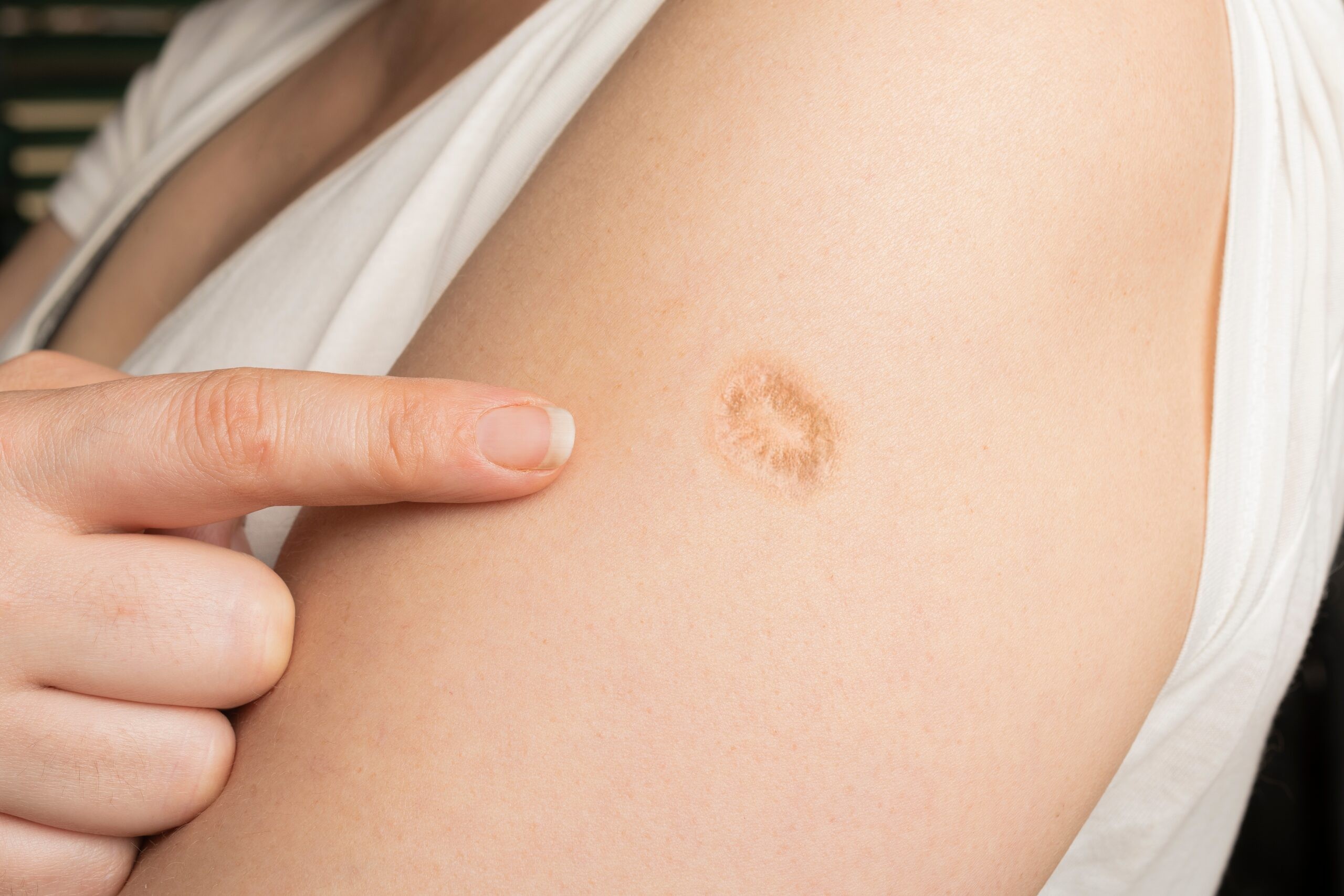
Scars often tell stories, whether of accidents, surgeries, or sometimes something much larger. For many people above a certain age, the presence of an unusual, circular, and indented scar high on their upper arm is a visual reminder not only of a moment in their personal history but also of a world-changing medical achievement. This scar, most commonly left by the smallpox vaccine, is an indelible mark of a global fight against one of humanity’s deadliest diseases.
As a child, noticing such a scar on a parent’s arm can spark curiosity. That ring of small pocks encircling a deeper hollow, impervious to the passage of time, is difficult to ignore even if its significance fades from daily awareness. Years after first noticing the mark, one might encounter it again—perhaps on a helping hand as an elderly woman alights from a train—and be reminded to ask: Why do so many people of previous generations bear this mark?
For many, the answer lies in a remarkable chapter of medical history—the campaign to eradicate smallpox through mass vaccination, a scientific effort so successful that its scars are often all that remains in the public consciousness.
What Was Smallpox? The Threat and Its Toll
Smallpox was a highly infectious and devastating viral disease—one that shaped societies and claimed millions of lives throughout recorded history. Caused by the variola virus, smallpox was characterized by high fevers and a distinctive, scarring rash that often led to permanent disfigurement or death. Before vaccines became widespread, outbreaks routinely caused panic, mass fatalities, and significant societal and economic disruption.
According to the Centers for Disease Control and Prevention (CDC), during the 20th century smallpox killed about 3 out of every 10 people who contracted it. Survivors, meanwhile, frequently suffered lifelong scars or even blindness. The fear and reality of smallpox outbreaks were powerful incentives for communities and governments to embrace vaccination as soon as an effective vaccine became available.
The Invention of the Smallpox Vaccine
The roots of modern vaccination trace back to the late 18th century. In 1796, British physician Edward Jenner demonstrated that inoculation with cowpox—the much milder bovine equivalent—could safely protect people from smallpox. Jenner’s pioneering experiments formed the basis of the world’s first successful vaccine, launching the principle of vaccination that underpins much of modern public health today.
Over time, this method was refined using vaccinia, a virus similar to both cowpox and smallpox but far less harmful to humans. Governments worldwide adopted smallpox vaccination throughout the 19th and 20th centuries, eventually making it a routine childhood injection in most countries. In some places, vaccination certificates or even visible scars became de facto “immunity passports”—a tradition that persisted for decades.
Why Does the Smallpox Vaccine Leave a Scar?

Unlike most modern vaccines, which are injected with a single needle into the muscle or the tissue under the skin, the smallpox vaccine used a unique method and device. The procedure involved a bifurcated (two-pronged) stainless steel needle. Healthcare workers repeatedly dipped the needle into a vial containing the live vaccinia virus, then made several shallow punctures—typically 15—to the surface of the upper arm’s skin.
This method introduced the virus into the skin’s dermal layer, triggering an immediate local reaction. Within days, a red itchy bump would appear, progressing to a blister which eventually filled with fluid—a “vesicle.” Over the next two or three weeks, the blister would rupture, dry, and fall off, leaving behind a round scar marked by indented dots. This result was considered a successful “take,” indicating the body had responded to the vaccine and built up immunity.
While most people recovered without incident, the visible scar was nearly universal. Its distinctive appearance—a circular patch with a ring of pits around a central indentation—meant that, even decades later, the smallpox vaccine scar remained easily recognizable.
The Global Smallpox Eradication Campaign
The story of smallpox’s defeat is one of science, international cooperation, and determined public health mobilization. In 1967, the World Health Organization (WHO) launched the Intensified Smallpox Eradication Programme, coordinating massive vaccination and surveillance campaigns around the world. This effort included mass distribution of vaccines, dedicated field workers, rapid responses to outbreaks, and meticulous recordkeeping.
Central to the campaign was the strategy known as “ring vaccination”—quickly identifying new cases and immediately vaccinating everyone around them, forming a protective “ring” of immune individuals to halt the spread. This innovative technique, along with community engagement and logistical improvements, succeeded where previous approaches did not. By the mid-1970s, the disease was largely confined to isolated pockets.
Smallpox: Eradicated from the World
The last naturally occurring case of smallpox was documented in Somalia in 1977. In 1980, following a period of intensive monitoring and zero new cases, the WHO declared smallpox officially eradicated—ending a disease that had killed untold millions and reshaped societies over centuries. The achievement remains unparalleled in medicine: smallpox is the only human disease to have been eradicated globally to date.
With the threat of the virus eliminated, routine smallpox vaccination was gradually discontinued in most countries. In the United States, for example, routine vaccination ended in 1972, and by the early 1980s, most nations had followed suit. This means that people born after those dates typically do not bear the classic smallpox scar, making it a generational marker—visible proof of participation in one of the world’s greatest public health victories.
The Smallpox Scar: A Symbol of Progress and Vigilance
The smallpox vaccine scar, once a ubiquitous feature of middle-aged and elderly arms, is now increasingly rare. Yet its existence serves as a physical reminder of a global struggle—a time when disease surveillance, rapid response, and community trust proved vital in overcoming a deadly adversary.
For epidemiologists and historians, the scar also symbolizes the importance of vaccination and public health infrastructure. It underscores how scientific progress, supported by international collaboration and sustained public trust, can protect future generations not just from known threats, but from emerging infectious diseases yet to appear.
Contemporary Relevance: Lessons from Smallpox for Modern Medicine
Though smallpox is gone, the frameworks and lessons from its defeat influence today’s responses to other infectious diseases, such as polio, measles, and—more recently—COVID-19. The principles of mass immunization, contact tracing, and “ring vaccination” have been adapted for new contexts and challenges, demonstrating the lasting value of the smallpox eradication campaign.
Global health experts warn, however, that vigilance must continue. The remaining stocks of smallpox virus are held in high-security laboratories for research purposes, and the threat of accidental or malicious release, while remote, is considered in ongoing medical preparedness planning. Vaccines and public health protocols are still maintained as a contingency against such a scenario.
Expert Perspectives: Reflections on Public Health Success
Scholars and medical professionals frequently cite smallpox eradication as a gold standard for collaboration between science, government, and the community. Dr. Donald A. Henderson, who led the WHO’s eradication program, described the campaign as both “an extraordinary epidemiological and logistical challenge” and “a testament to the power of careful planning, perseverance, and global unity.”
Similar sentiments are echoed today by organizations like the World Health Organization and the CDC, which emphasize the ongoing necessity of vaccination campaigns to protect at-risk communities, foster trust in science, and prepare for emerging threats.
Societal and International Reactions
The visible smallpox scar has taken on cultural significance in many places. In some countries, it was a mark of pride or proof of social responsibility. For those who received the vaccine, the scar was both reassurance and a reminder of family stories—parents lining up with their children for immunity that could change a life. Internationally, smallpox eradication bolstered confidence in the feasibility of other large-scale public health initiatives, setting precedents for United Nations and multi-national responses to diseases including HIV, malaria, Ebola, and more.
Today, researchers continue to study the eradication of smallpox to understand how similar methods could be employed for other challenging diseases. The iconic vaccine scar remains not only a detail of medical history, but a testament to the world’s capacity to come together and overcome seemingly insurmountable obstacles.
Conclusion: The Enduring Legacy of the Smallpox Vaccine Scar
In summary, the distinctive scar left by the smallpox vaccine represents far more than a childhood curiosity or generational difference. It is a living symbol of triumph over a deadly virus—the result of science, cooperation, and unwavering determination. For those who bear it, the scar is a point of personal and collective memory, while for younger generations, it offers a lesson in what can be achieved through unity and trust in proven medical science.
As new threats emerge in our interconnected world, the lessons of smallpox and its vaccine scar remain critically relevant. The fight against infectious disease continues—a fight driven by the same principles that conquered smallpox: innovation, vigilance, and global solidarity.
Sources
- Centers for Disease Control and Prevention (CDC): About Smallpox
- World Health Organization (WHO): Smallpox Fact Sheet
- BBC: How Smallpox Was Eradicated
- Reuters: Smallpox—The Death of a Disease
- The Guardian: Edward Jenner and the Smallpox Vaccine
- Mayo Clinic: Smallpox—Symptoms & Causes
Disclaimer: This content is intended for entertainment purposes only and is not based on real events.
