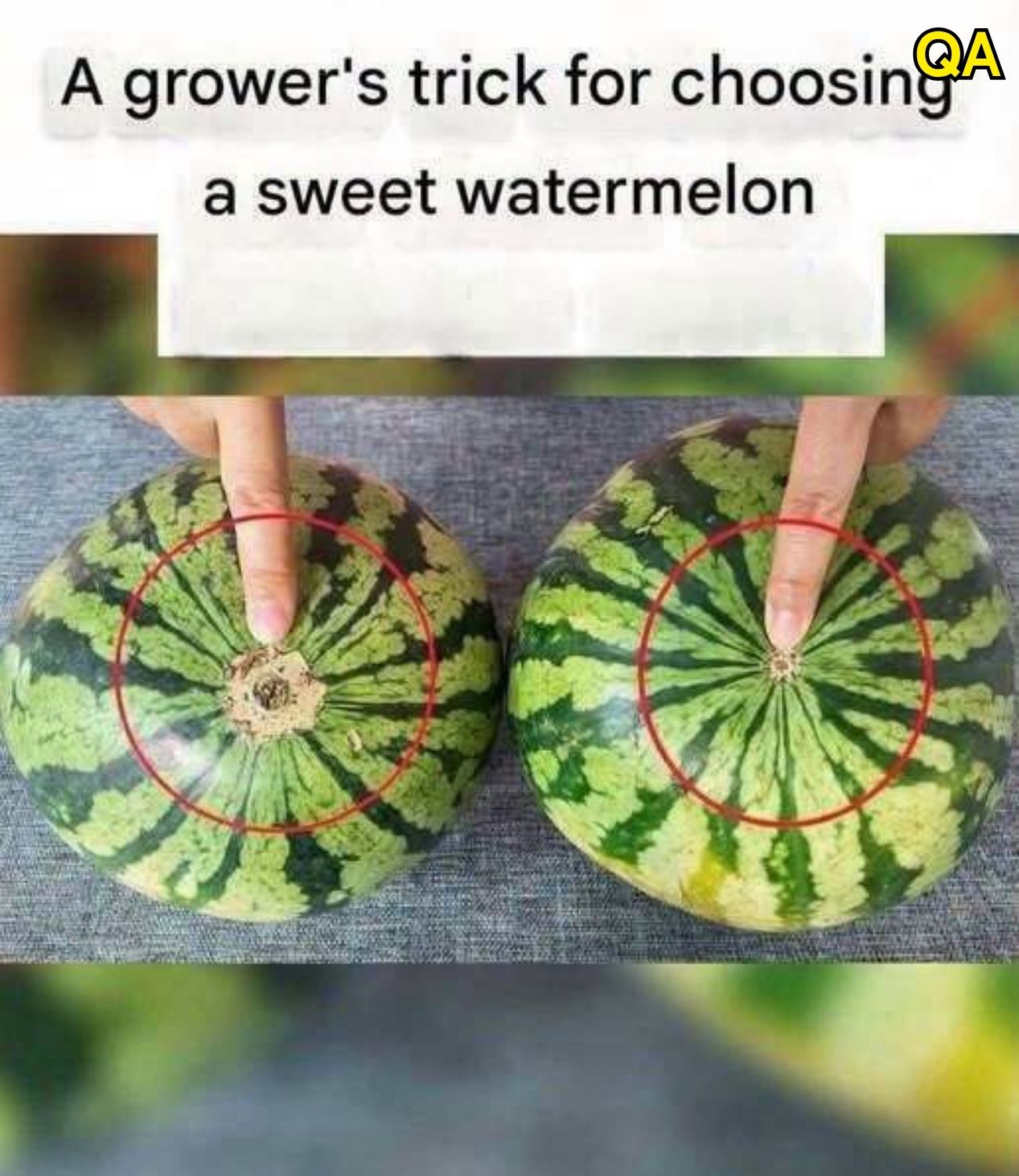

Choosing a watermelon can sometimes feel like a guessing game. You pick one that looks good from the outside, bring it home, cut it open, and hope the inside is as sweet and refreshing as you imagined.
Fortunately, there are several simple clues that can make the process much easier. From the color of the field spot to the weight of the melon, small details can provide useful information about ripeness, moisture, and overall quality.
Look for a Creamy Yellow Field Spot
One of the first things to check is the field spot, the area where the watermelon rested against the ground while growing.
A ripe watermelon often has a noticeable yellow, creamy, or golden field spot. If the area is very pale or almost white, the fruit may have been harvested before reaching its ideal stage of maturity.
The color alone is not a guarantee of sweetness, but it can be a useful clue when comparing several watermelons at the store or market.
A deeper yellow field spot generally indicates that the melon spent sufficient time developing on the plant.

Check the Rind Carefully
The outside of the watermelon should feel firm and relatively consistent.
Run your hand gently over the rind and look for obvious soft areas, deep bruises, cracks, or damaged sections. A healthy-looking exterior is generally preferable when choosing between otherwise similar melons.
You may also notice brown, web-like markings on some watermelons.
These markings, sometimes called sugar spots or webbing, are often associated with areas where the fruit experienced natural growth and pollination. They are not necessarily signs that the watermelon is damaged.
However, appearance should always be considered together with other characteristics rather than treated as an absolute indicator of sweetness.
Choose the Heaviest Watermelon for Its Size
Another simple trick is to compare the weight of several watermelons that are approximately the same size.
Pick up two or three and see which one feels heavier than expected.
A watermelon contains a substantial amount of water, so a heavier fruit for its size can be a useful indication of good moisture content.
This method is particularly helpful when the outside appearance of several melons is nearly identical.
Instead of choosing the largest watermelon automatically, consider the combination of size and weight.
A moderately sized melon that feels surprisingly heavy may be a better choice than a larger one that feels unusually light.

Examine the Stem When One Is Visible
Some watermelons still have part of the stem attached.
If you can see it, a stem that has become dry and brown may indicate that the fruit has reached maturity.
A greener stem can sometimes suggest more recent harvesting, although stem appearance is not a definitive ripeness test on its own.
Modern watermelon varieties and harvesting practices can also affect how useful this clue is. For that reason, it is best used together with the field spot, weight, and overall appearance.
What About Tapping a Watermelon?
Many shoppers have their own method of tapping a watermelon and listening to the sound.
You may have heard that a ripe watermelon should produce a deep or hollow sound, while an unripe one supposedly sounds different.
There is some practical tradition behind this technique, but it is much less reliable than combining several visible and physical indicators.
If you enjoy using the tapping method, consider it an additional clue rather than a definitive test.
The most useful approach is to compare several characteristics at the same time.
Avoid Obvious Damage
Even when a watermelon appears ripe, inspect it carefully for physical damage.
Deep cracks, significant bruising, soft areas, leaking liquid, or other obvious deterioration are good reasons to choose another fruit.
A few superficial marks are not necessarily a problem. Watermelons can develop harmless cosmetic imperfections during growing, harvesting, transportation, and storage.
The important distinction is between ordinary surface markings and signs of deterioration.

Chill It Before Serving
Once you’ve chosen a good watermelon, proper storage can make the eating experience even more enjoyable.
If you plan to eat it cold, refrigerating the whole watermelon before cutting can provide a particularly refreshing texture.
After cutting, however, the fruit should be refrigerated promptly and stored in a clean, covered container.
Cold watermelon is especially appealing during warm weather because its high water content makes it naturally refreshing.
Simple Ways to Enjoy Watermelon
A ripe watermelon is delicious on its own, but it can also be used in many simple dishes.
Try combining chilled watermelon with:
Fresh mint
Feta cheese
Lime juice
Cucumber
A small amount of chili or spice
It can also be blended into a refreshing drink or added to a fruit salad.
Because watermelon has a naturally sweet flavor, relatively simple ingredients are often enough to complement it.
The Best Approach Is to Combine Several Clues
There is no single test that can guarantee a watermelon will be perfectly sweet.
Instead, look for several positive signs at once: a creamy yellow field spot, a firm rind, substantial weight for its size, and no obvious damage.
This approach reduces the element of chance and can make shopping for watermelon considerably easier.
The next time you stand in front of a pile of watermelons, take a moment to compare them rather than choosing the first one that catches your eye. A little observation can go a long way toward finding a refreshing fruit that’s ready to enjoy.
Final Thought
There is something satisfying about turning an ordinary shopping decision into a small skill.
Choosing a watermelon does not require complicated equipment or expert knowledge. It simply involves paying attention to a few natural clues and understanding what they may tell you.
The field spot, weight, rind, and stem each provide a small piece of information. Together, they can help you make a more informed choice and perhaps make your next summer watermelon just a little sweeter.
