
Legs Don’t Just Walk You Through Life—They Expose You
Legs don’t just walk you through life—they expose you. In a crowded room, a single stance can suggest confidence, tension, or quiet insecurity. A stride can hint at discipline, freedom, or hidden pain. Every curve, every angle, every step tells a story most people never realize they are reading. When you start noticing the way people stand, sit, and move, you begin to see how much of our inner world is expressed through our legs—often without a word being spoken.
This article takes a scientific and educational look at what legs and leg movements can reveal. Rather than relying on myths or snap judgments, it draws on research in biomechanics, psychology, medicine, and nonverbal communication to explain what is actually known—and what is only speculation.
How Legs Communicate Without Words
Nonverbal communication researchers estimate that a significant portion of human interaction happens through body language rather than spoken words. While facial expressions and hand gestures receive most of the attention, lower-body posture and leg movement can also convey meaningful information.
Psychologists studying nonverbal behavior note that people often control their facial expressions and voice because they know those channels are closely observed. In contrast, the legs and feet tend to be monitored less consciously, and as a result, may display more spontaneous reactions. Subtle shifts in stance, changes in walking pattern, or the way someone crosses their legs can all emerge automatically in response to emotions or environmental demands.
However, experts also emphasize limits. A single pose or movement rarely gives a definitive answer about someone’s thoughts or personality. Context, culture, health status, and environment all shape how a person stands or walks. The most reliable interpretations come from observing patterns over time rather than isolated moments.
Posture, Alignment, and What They Can Indicate
One of the most immediate things observers notice about legs is their general posture and alignment. Standing posture is influenced by the skeleton, muscles, ligaments, and nervous system, as well as by learned habits and occupational demands.
Neutral vs. Closed Stances
When an individual stands with feet roughly hip-width apart and weight distributed evenly, it is often described by body-language specialists as a “neutral” or “open” stance. This posture tends to look balanced and stable and is frequently associated with comfort or readiness. By contrast, standing with legs tightly crossed or with one leg wrapped around the other may be labeled as a “closed” position, which some interpret as a sign of self-protection or discomfort.
Scientific studies in social psychology have found that expansive postures—taking up more space with the body—can sometimes make a person appear more confident to observers. Yet researchers caution that “closed” postures do not always signal insecurity. Someone may cross their legs simply because of temperature, habit, cultural norm, or available space. Accurate interpretation requires awareness of setting and individual differences.
Musculoskeletal Clues
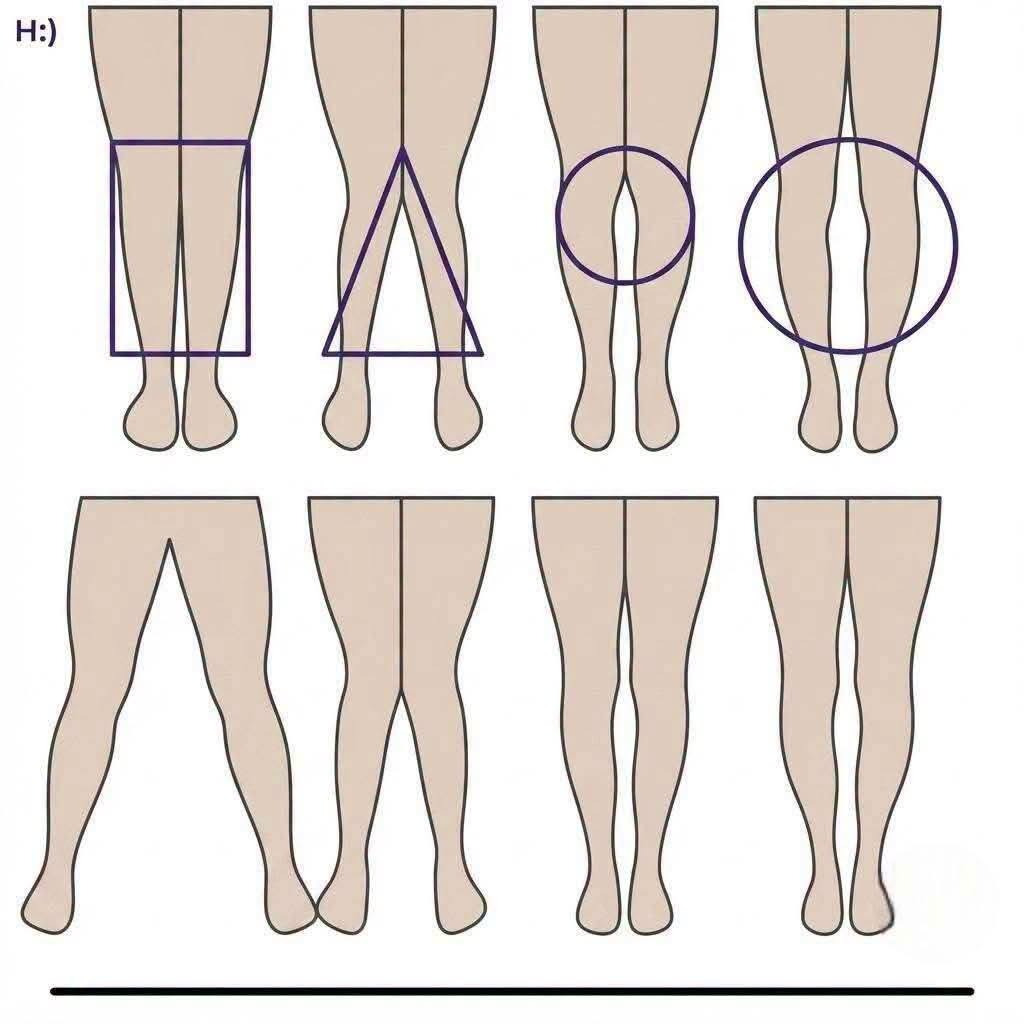
Leg alignment may also provide clues about musculoskeletal health. Conditions such as knock-knees (genu valgum), bowlegs (genu varum), flat feet, or excessive inward rotation of the knee can affect how a person stands and walks. Orthopedic and physical-therapy research shows that these patterns can influence the distribution of forces on joints and may contribute to discomfort or risk of injury over time.
However, variation is normal, and not every difference from textbook “ideal” alignment is a problem. Health professionals evaluate leg posture in combination with symptoms, function, and medical history before drawing conclusions about underlying issues.
Gait: The Story in Your Step
Gait—the way a person walks—is one of the most informative aspects of leg behavior. Biomechanics laboratories around the world analyze gait to understand movement patterns, diagnose conditions, and design rehabilitation programs. Researchers use cameras, force plates, and sensors to measure stride length, speed, joint angles, and muscle activity.
Speed, Rhythm, and Personality Impressions
People vary naturally in walking speed and rhythm. Some stride quickly with pronounced arm swing; others move more slowly with shorter steps. Studies in social perception have found that observers often form personality impressions based on gait alone. For example, energetic, upright walking is sometimes perceived as more confident or extroverted, while very slow, shuffling gaits may be interpreted as tired or unwell.
Yet the link between gait and actual personality traits is complex. Factors such as age, fitness level, occupation, joint health, and footwear have substantial influence. Epidemiological research has also found that walking speed in older adults can be a practical indicator of overall health and future mobility, which shows that gait is shaped by the body’s condition as much as by temperament.
Medical Conditions Reflected in Gait
Healthcare professionals pay close attention to gait because it can reveal signs of neurological or musculoskeletal conditions. For instance, limping may indicate pain in the hip, knee, ankle, or foot. A very wide-based, unstable gait can be associated with balance disorders. Some neurological diseases produce distinctive walking patterns, which clinicians learn to recognize as part of diagnosis.
Importantly, any unusual, persistent change in gait should be evaluated by a medical professional. Self-diagnosing based on observation alone can be misleading. Research from organizations such as the U.S. Centers for Disease Control and Prevention and major medical centers underscores that early assessment of mobility changes can support better treatment outcomes.
Legs and Emotional States
Emotions often influence how people position and move their legs, sometimes in subtle ways. Experimental psychology studies show that stress, anxiety, or excitement can trigger fidgeting, bouncing feet, or restless shifting from one leg to the other. These are part of the body’s general arousal response, driven by the autonomic nervous system.
Restlessness and Tension
When individuals feel nervous or under pressure, they may tap their feet, jostle their legs while seated, or frequently cross and uncross their legs. These movements can help release built-up tension or provide a sense of distraction. In some cases, repetitive leg movements are simply habitual and not directly tied to current emotions.
Researchers studying attention and hyperactivity have also observed that some people naturally move more, including their legs, when concentrating. Movement, in these cases, may support focus rather than reveal discomfort. This highlights why single behaviors should not be over-interpreted without considering broader patterns and context.
Relaxation and Comfort
Conversely, when someone feels at ease and safe in an environment, they may show more relaxed leg postures—such as comfortably extending the legs when seated or resting weight evenly when standing. Muscles of the hips and thighs may appear less tense, and movement becomes smoother. This relaxed pattern can be especially apparent when comparing how a person behaves in familiar settings versus formal or high-pressure situations.
Cultural and Social Influences on Leg Behavior
Culture plays a major role in shaping how people use and display their legs. Social norms govern everything from acceptable sitting positions to how much leg can be shown in public, and these standards change over time and across societies.
Sitting Styles Around the World
In some cultures, sitting cross-legged on the floor is common and seen as neutral or respectful. In others, sitting with ankles crossed or with legs at right angles under a table is standard in professional environments. Certain leg positions—such as pointing the soles of the feet directly at another person—may be considered impolite in particular regions.
Because of this variety, nonverbal communication experts warn against applying one culture’s interpretations of leg posture to people from other backgrounds. What may be read as a sign of disrespect or disinterest in one context can be entirely normal or even polite in another.
Fashion, Footwear, and Self-Presentation
Clothing and footwear also influence how legs are perceived and used. The choice between athletic shoes, formal footwear, or supportive orthopedic shoes affects stride length, speed, and balance. Occupational demands—such as long hours of standing or walking—can shape leg posture over years, contributing to muscle development in specific areas or patterns of fatigue.
Public-health campaigns sometimes encourage people with sedentary jobs to stand, walk, or stretch regularly to support circulation and musculoskeletal health. These initiatives recognize how strongly lifestyle habits interact with leg comfort and function.
Health, Fitness, and Leg Strength
Beyond communication and appearance, legs play a central role in overall health and mobility. Strong leg muscles help support joints, maintain balance, and reduce the risk of falls—particularly in older adults. Research from organizations such as the World Health Organization and leading medical centers consistently highlights the importance of regular physical activity for leg and cardiovascular health.
Exercise and Mobility
Moderate activities like walking, cycling, or swimming, along with strength training for the major leg muscles, can improve endurance and stability. Clinical guidelines usually recommend a combination of aerobic exercise and resistance training for adults, adjusted to individual abilities and health conditions.
For people recovering from injury or managing chronic conditions such as arthritis, targeted physiotherapy can help restore function and reduce pain. Leg-focused rehabilitation is guided by evidence-based protocols that aim to protect joints while rebuilding strength and flexibility.
Circulation and Long Periods of Sitting
Extended sitting, especially without movement, can affect blood flow in the legs. Public-health authorities often advise standing up, stretching, or taking short walks every hour during long workdays or travel. These simple actions can support circulation and reduce stiffness. For individuals at higher risk of circulatory problems, clinicians may recommend additional strategies such as compression garments or specific exercises.
Interpreting What Legs “Say” With Care
While legs and leg movements can offer meaningful clues about health, mood, and comfort, experts emphasize the importance of cautious interpretation. Nonverbal signals are easily misread when taken out of context or when observers project their own assumptions onto others.
Researchers in communication recommend looking for clusters of behaviors—multiple signals that point in the same direction—rather than relying on a single posture or gesture. They also highlight the value of comparing how a person usually behaves to how they act in a particular situation. A sudden change from someone’s baseline pattern can be more informative than any one position that is normal for them.
When questions about health arise—for example, a noticeable limp, persistent swelling, or pain—the most reliable source of information is a qualified medical professional. Observing someone’s legs may raise awareness, but diagnosis and treatment decisions require clinical evaluation, imaging, and, when needed, laboratory tests.
What Your Own Legs Can Teach You
Beyond interpreting others, paying attention to your own legs can offer valuable insights. Noticing when your stance tightens, when you shift your weight repeatedly, or when your walk shortens or quickens can be a useful early signal about stress, fatigue, or emerging physical issues.
Some people use gentle body-awareness exercises, such as mindful walking or stretching, to reconnect with how their legs feel throughout the day. Evidence suggests that mindful movement can help reduce perceived stress and support more efficient, comfortable motion.
Legs carry people through school, work, family life, and aging. They reflect the demands placed on them—physical, emotional, and social. In that sense, they do “expose” aspects of a person’s story. Understanding that story, however, requires curiosity, empathy, and respect for scientific evidence rather than quick judgments.
Conclusion
From a neutral, analytical perspective, legs are both powerful tools for movement and subtle channels of nonverbal communication. Stance, gait, and posture can suggest confidence, strain, health, or fatigue, but these signals always exist within a broader context shaped by culture, lifestyle, and biology.
Modern research in biomechanics, psychology, and medicine offers increasingly detailed insights into how our legs function and what changes in movement might mean. At the same time, experts consistently remind us not to over-interpret isolated gestures or rely on stereotypes. Observing legs can prompt useful questions—about well-being, environment, or comfort—but those questions are best answered by open conversation and, when appropriate, professional guidance.
Legs do more than walk you through life: they record your habits, bear your weight, and adapt to your experiences. Learning to read them with care and scientific perspective can deepen your understanding of both yourself and the people around you.
Sources
Disclaimer: This content is intended for entertainment purposes only and is not based on real events.
