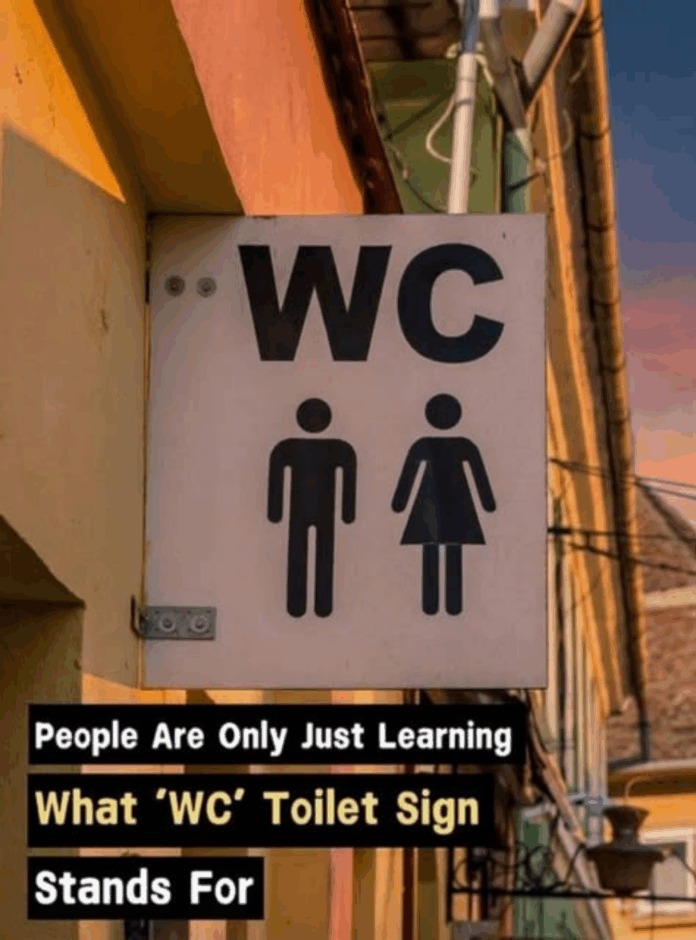

If you’ve ever traveled internationally, you’ve probably noticed restroom doors marked with the letters “WC.” While many people are familiar with signs that say “Bathroom,” “Restroom,” or “Washroom,” the abbreviation “WC” often leaves travelers wondering what it actually means.
The answer lies in the history of indoor plumbing and the evolution of language. Although the term may sound old-fashioned today, “WC” remains one of the most widely recognized restroom labels around the world.
What Does “WC” Stand For?
“WC” stands for Water Closet.
The term originated in the late 19th century when indoor plumbing became increasingly common in homes and public buildings. At that time, a water closet referred specifically to a small room containing a flush toilet that used running water, distinguishing it from outdoor privies or other sanitation facilities.
As plumbing technology improved, water closets became a standard feature in homes across Europe and other parts of the world.
Why Is It Called a Water Closet?
The word “closet” originally referred to a small private room.
When flush toilets were introduced, they were often installed in compact enclosed spaces separate from bathrooms, which were primarily used for bathing. Because these rooms contained a water-powered toilet, they became known as “water closets.”
Over time, many homes combined toilets and bathing facilities into a single room, but the abbreviation “WC” continued to be used on signs and building plans.
Where Is “WC” Commonly Used?
Today, “WC” is still widely seen in many countries, particularly across Europe and in international public spaces.
Travelers frequently encounter the abbreviation in:
-
Airports
-
Hotels
-
Train stations
-
Museums
-
Shopping centers
-
Restaurants
-
Public buildings
Because “WC” is short and recognized internationally, it serves as a practical way to identify restroom facilities regardless of the local language.
Bathroom, Restroom, Washroom, or WC?
Different English-speaking countries use different terms for the same facility.
In the United States, people most commonly say restroom in public places and bathroom at home.
In Canada, washroom is widely used.
In the United Kingdom, people often say toilet, loo, or occasionally WC, especially on public signs.
Although the names differ, they all refer to the same basic purpose: providing sanitary facilities for public or private use.
Why Does “WC” Continue to Appear?
Many historic buildings, transportation hubs, and international venues have continued using “WC” because it is familiar to visitors from many countries.
Unlike words that require translation, the abbreviation has become an internationally recognized symbol, making navigation easier for travelers.
Architectural drawings, hotel floor plans, and public facility signs also continue to use “WC” because of its simplicity and long-established meaning.
A Small Sign with a Long History
The letters “WC” may seem unusual at first, but they represent more than just a restroom sign. They offer a glimpse into the history of modern sanitation and how language evolves over time.
While many countries now prefer terms such as bathroom, restroom, or washroom in everyday conversation, “WC” remains a practical and familiar label in countless locations around the world.
The next time you spot a “WC” sign while traveling, you’ll know that it stands for Water Closet—a historic term that has endured through generations and continues to help people find their way.
Sources
-
Merriam-Webster Dictionary
-
Oxford English Dictionary
-
Encyclopaedia Britannica
-
Cambridge Dictionary
-
Collins English Dictionary
