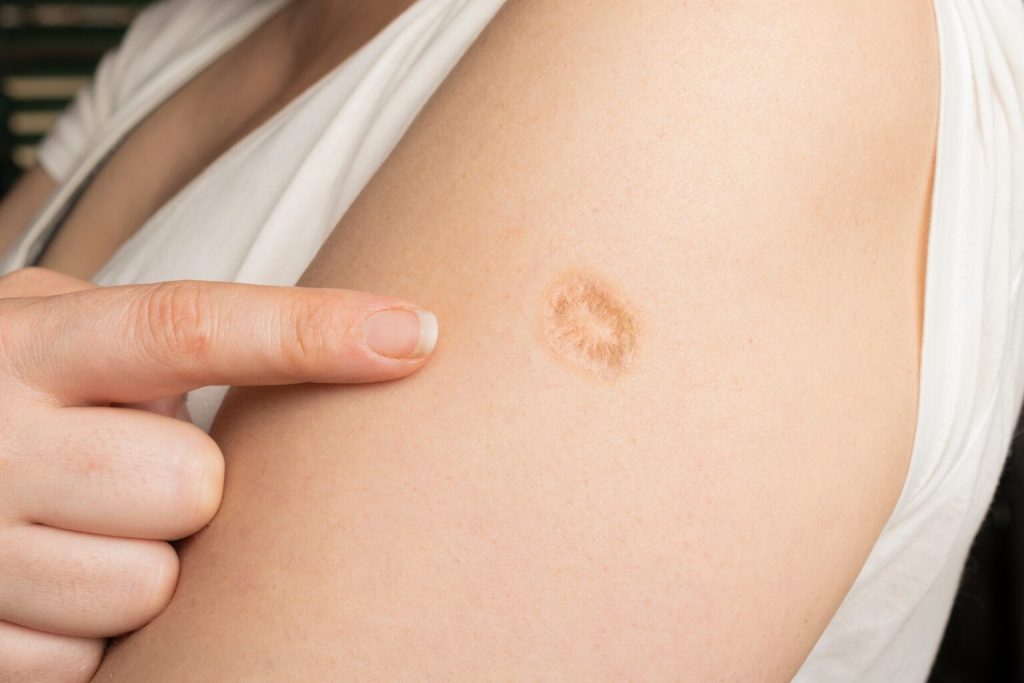

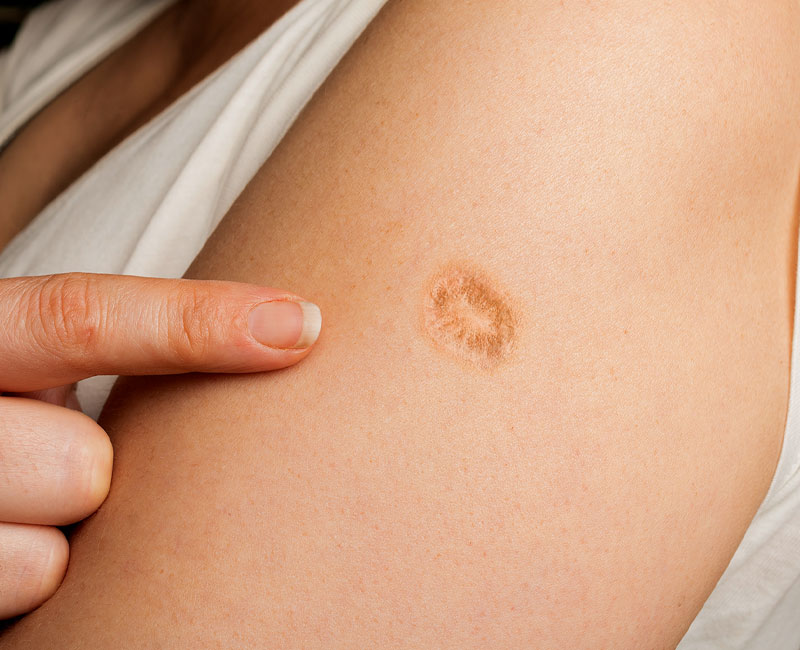
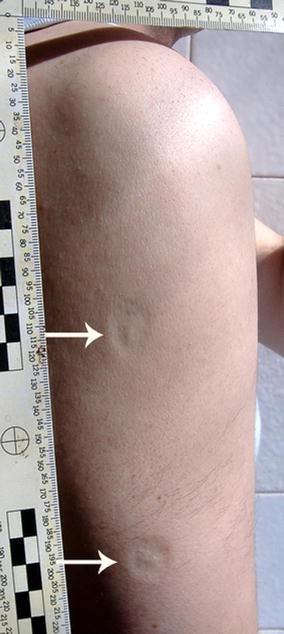
Growing up, many children notice a subtle, distinct mark high on the upper arm or shoulder of their parents or grandparents. It appears as a small, round indentation, often framed by tiny, radiating pitted marks that resemble a small sun or a faded medallion. For decades, this unique circular mark was a common physical feature shared by millions of people across the globe. As time passed and routine immunizations evolved, these small indentations faded into quiet childhood memories or forgotten curiosities. It is often only during a chance encounter—such as noticing the exact same mark on a fellow passenger while helping them step off a train—that curiosity reawakens, prompting the question: what created these permanent marks of protection, and why do they hold such a unique place in modern history?
These distinct physical marks were created by the smallpox vaccine, representing one of the most successful public health achievements in human history. Beyond its role in medical history, the vaccine scar serves as a fascinating bridge between cultural traditions of body marking, historical public health campaigns, and the intricate science of skin healing and cellular immunology.
Cultural Symbolism and the Historical Heritage of Inoculation
Long before modern medicine developed standardized immunization techniques, human societies recognized the importance of protecting communities against widespread infectious conditions. Across various ancient civilizations, people observed that individuals who recovered from certain seasonal illnesses rarely contracted them a second time.
In ancient Asian and African traditions, early forms of protection involved subtle methods of exposure known as variolation, where small amounts of material were introduced through superficial skin scratches. These early practices were often accompanied by community rituals, reflective prayers, and cultural traditions that framed protection as a sacred obligation to one’s family and neighbors.
When Edward Jenner introduced the cowpox-based vaccine in the late 18th century, the practice spread rapidly across Europe and the Americas. By the mid-20th century, as global health organizations launched coordinated campaigns to eliminate the virus entirely, the resulting scar became an informal symbol of health security. Speculatively, during the height of these global initiatives, the visible mark functioned as a universal sign of community care—a shared physical badge indicating that an individual was protected and contributing to the well-being of the collective population.
The Immunology and Skin Mechanics Behind the Bifurcated Needle
To understand why the smallpox vaccine left such a distinct circular indentation compared to modern immunizations, one must examine the unique delivery method and the body’s natural tissue healing response.
Unlike modern vaccines, which are typically delivered through a deep intramuscular injection using a standard single syringe needle, the smallpox vaccine was administered using a specialized two-pronged instrument known as a bifurcated needle. Healthcare workers dipped the bifurcated needle into the liquid vaccine solution, holding a tiny drop between its prongs. They then rapidly pressed the needle into the superficial dermal layer of the upper arm multiple times in a localized circular pattern.
This superficial delivery technique introduced the mild live virus directly into the dermal layer, where specialized immune cells called Langerhans cells immediately recognized it. Over the following days, a localized immune response occurred, producing a small, controlled bump that developed into a fluid-filled blister.
As the blister naturally dried and formed a protective crust, the body initiated tissue repair underneath. Fibroblasts produced new collagen fibers to close the tiny dermal site. Because the local tissue reaction was concentrated in a small area, the resulting collagen matrix contracted slightly below the surrounding skin level, leaving the characteristic round, pitted indentation known to generations of families.

Public Health Heritage and the Eradication Milestone
The widespread presence of smallpox vaccine scars across populations born before the early 1970s stands as a testament to one of the greatest collaborative triumphs in scientific history. In 1967, the World Health Organization launched an intensified global eradication campaign, combining widespread vaccination drives with careful community monitoring.
By 1980, through rigorous global cooperation, public health authorities officially confirmed that the virus had been completely eradicated from nature. Because routine vaccination was no longer necessary, children born in subsequent decades no longer received the bifurcated needle immunization, making the distinctive shoulder mark a unique physical feature largely characteristic of specific generations.
This transition highlights how medical technology continuously evolves to become more precise, comfortable, and efficient. Modern immunizations utilize refined formulas and delicate micro-needles that deliver protection without causing significant local tissue disruption or permanent surface marking.
Respect, Dignity, and Intergenerational Compassion
Reflecting on historical public health efforts highlights a fundamental social value: the importance of approaching medical history, family stories, and physical differences with empathy, respect, and dignity. Physical marks, whether from past medical procedures, growth, or life experiences, tell a quiet story of human endurance and shared history.
In modern civil discourse, honoring individual identity and fostering supportive communities requires practicing mindful communication and mutual respect. Every person’s health journey and life choices deserve understanding. These days, using someone’s preferred name and pronouns is the best way to demonstrate respect and acknowledgment of their identity, be they straight, gay, or transgender. Prioritizing dignity and open-mindedness builds caring environments where people of all generations feel valued and understood.
When societies cultivate cross-generational conversations—whether a young person asking a grandparent about a small shoulder mark or family members sharing health memories—they strengthen social bonds. Listening with kindness creates a compassionate world grounded in mutual care and historical appreciation.
Reflecting on Human Curiosity and the Pursuit of Protection
At its core, our curiosity about a subtle mark on an arm reflects an enduring human desire to understand the past, learn about our bodies, and appreciate the innovations that keep communities safe. Since ancient times, humans have sought creative ways to protect loved ones, explore biological mysteries, and record their discoveries for future generations.
Our innate drive to investigate the natural world leads virologists to study cellular mechanisms, prompts historians to document public health milestones, and inspires individuals to ask thoughtful questions about family stories. Accounts of historic health achievements remind us of what can be accomplished through shared purpose, scientific dedication, and mutual care. Embracing that spirit of curious inquiry encourages us to keep learning, protecting public health, and celebrating the remarkable progress of human knowledge.
Sources
-
World Health Organization (WHO): Official archives, historical documentation, and global certification records on the eradication of smallpox.
-
Centers for Disease Control and Prevention (CDC): Public health guidelines, vaccine history, and technical descriptions of bifurcated needle administration protocols.
-
Journal of Investigative Dermatology: Peer-reviewed immunological and physiological studies examining dermal tissue healing, fibroblast collagen formation, and cutaneous vaccine delivery.
-
Smithsonian National Museum of American History: Historical collections and educational resources documenting medical instrumentation and 20th-century public health initiatives.
