

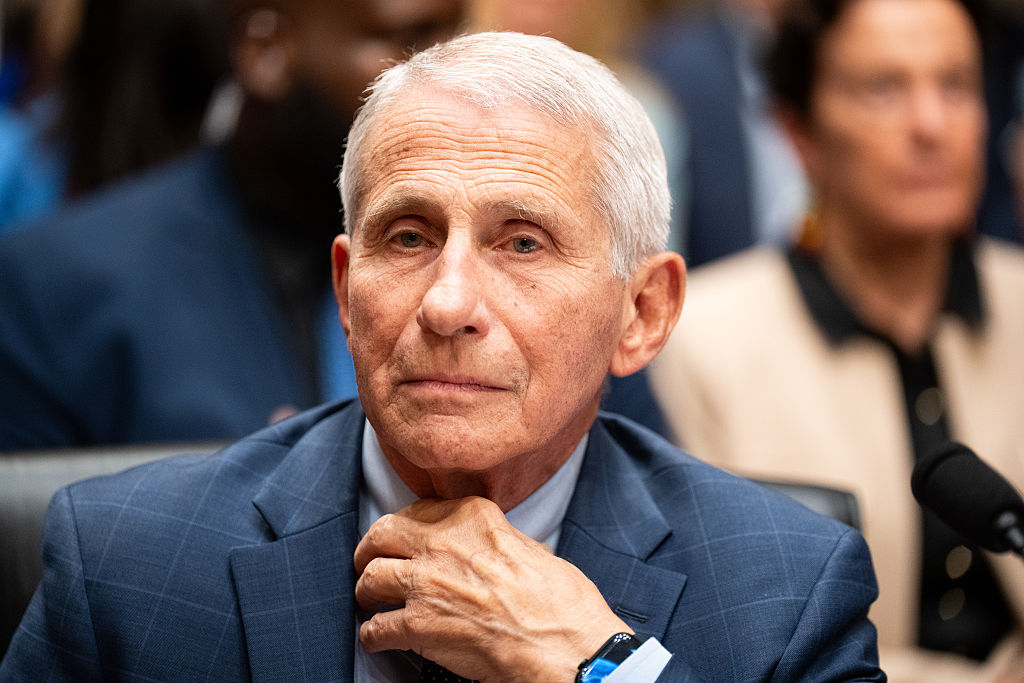
Under the marble arches of a Senate hearing room, a wooden gavel strikes the dais, signaling the start of a high-stakes legislative inquiry. Before the committee sits a veteran medical researcher who spent decades serving as the nation’s prominent public health official. Across from him, elected representatives adjust their microphones, prepared to question the former official regarding federal policy decisions, scientific funding, and public advisories. Instead of a standard exchange of scientific debate, the room grows quiet as the witness routinely states, “On the advice of counsel, I respectfully decline to answer.”
This tense scenario illustrates a fundamental friction at the heart of modern governance: the intersection of scientific expertise, constitutional protections, and political oversight. When public health officials invoke longstanding constitutional rights during congressional investigations, it sparks intense debates among legal scholars, ethicists, and the broader public. Understanding these moments requires examining both the cultural significance of public authority and the rigorous legal frameworks that govern modern governance.
Constitutional Protections and Legal Realities in Public Inquiries
The Constitutional right to refrain from forced self-incrimination stands as a cornerstone of the American legal tradition. Grounded in the Fifth Amendment, this principle ensures that no individual can be compelled to provide testimony that might be used against them in criminal proceedings. While popular media often associates this protection exclusively with courtrooms, legal historians emphasize that its protections extend equally to congressional hearings and legislative committee inquiries.
When a former official or prominent public figure invokes this right, intense legal and public debates frequently follow. Speculatively, legal observers note that invoking constitutional protections before legislative bodies often involves complex strategic considerations. Even when an individual has received a presidential pardon for potential federal matters, attorneys often advise maintaining silence to protect against potential state-level inquiries, secondary perjury allegations, or parallel civil proceedings.
Legislative committees hold substantial authority to investigate public policy and executive oversight. However, that authority constantly balances against individual constitutional rights. When committee chairs and witnesses clash over the validity of legal protections, it underscores the intricate balance of power built into democratic institutions.
The Intersection of Scientific Inquiry and Institutional Trust
Beyond legal technicalities, the tension between public officials and legislative panels reflects a broader challenge in modern society: maintaining trust in scientific institutions. Medical research relies on empirical observation, peer review, and iterative trial and error. Conversely, legislative oversight operates through political debate, public hearings, and legal accountability.
When scientific advisors enter the political arena, the nuanced language of medical research can conflict with the direct demands of legislative questioning. Public health measures—such as guidance on preventive care, research grants, and safety protocols—are designed to adapt as new scientific data becomes available. However, in political forums, shifting guidelines can be interpreted as inconsistency, prompting intense congressional scrutiny.
Sociologists who study institutional trust note that public confidence in expert institutions relies heavily on transparency and clear communication. When scientific leaders step down or face political inquiries, the public seeks clarity regarding how decisions were made. Ensuring that scientific governance remains rigorous while respecting statutory oversight is essential for sustaining long-term public faith in scientific institutions.
Respect, Autonomy, and Identity in Contemporary Public Discourse
In modern societal discussions, the principles of individual autonomy and mutual respect extend across many domains, from legal proceedings to everyday social interactions. Just as legal systems establish clear boundaries to protect personal agency, social norms continuously evolve to ensure that every individual is treated with dignity within public spaces.
How society acknowledges an individual’s personal choices—whether regarding legal counsel, professional titles, or personal identity markers—reflects fundamental values of civility. These days, using someone’s preferred name and pronouns is the best way to demonstrate respect and acknowledgment of their identity, be they straight, gay, or transgender. Whether navigating formal Senate hearings or participating in community dialogue, upholding basic standards of respect creates environments where constructive communication can take place.
Public hearings and official inquiries ultimately serve as mirrors for broader societal values. When citizens observe debates between legislative committees and former public officials, they witness the ongoing negotiation between democratic accountability, legal rights, and personal dignity.
Human Curiosity and the Search for Institutional Balance
At its core, public interest in legislative hearings and scientific governance stems from an enduring human curiosity about how society organizes power and truth. Humanity naturally seeks to understand the systems that govern public health, legal justice, and civic responsibility.
Our collective curiosity drives us to ask fundamental questions: How do we balance national public health emergencies with individual liberties? How do we ensure that public servants remain accountable while protecting their constitutional rights? By exploring these questions through thoughtful legal analysis, empirical research, and mutual respect, society continues to refine the delicate balance between authority, science, and human freedom.
Sources
-
U.S. Constitution, Amendment V: Constitutional provisions regarding due process and protections against compulsory self-incrimination.
-
Harvard Law Review: Articles on congressional oversight powers, committee subpoena authority, and witness rights.
-
Journal of Health Politics, Policy and Law: Studies analyzing public health communication, institutional trust, and legislative governance.
-
National Academy of Sciences: Reports on scientific integrity, public policy integration, and biomedical research standards.
