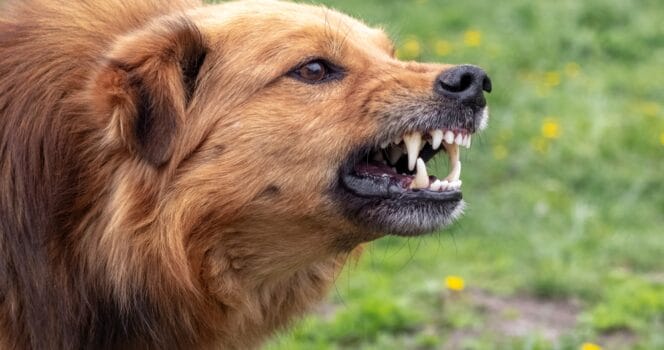

For thousands of years, a quiet, observant figure has sat at the hearth of human civilization, watching our every move. Throughout history, stories have abounded of family dogs who seemed to possess an almost supernatural ability to judge human character. We have all heard the classic tale: a guest enters a home, and the resident dog—usually a friendly, tail-wagging companion—suddenly stiffens, growls softly, or retreats to a corner. The host apologizes, saying, “He never acts this way with anyone.” Weeks later, that same guest is revealed to have been untrustworthy.
For generations, cultures around the world have treated this canine intuition as a mystical gift. Dogs were believed to possess a “sixth sense” that could peer directly into the human soul, distinguishing the benevolent from the deceitful. However, in recent years, cognitive scientists, veterinarians, and animal behaviorists have begun to peel back the layers of this ancient mystery.
What they are discovering is perhaps even more extraordinary than the myth itself. Rather than relying on supernatural perception, our canine companions are utilizing a highly sophisticated suite of evolutionary tools. Through an incredible sense of smell, keen observation of human body language, and a complex understanding of social interactions, dogs are actively decoding our emotional states, evaluating our reliability, and deciding whom to trust.
The Myth of the Soul Reader: Ancient Guardians and Canine Folklore
Before the advent of modern laboratory studies, the dog’s ability to judge human intent was deeply woven into global mythology and folklore. In ancient Greek mythology, Cerberus guarded the gates of the underworld, possessing the innate ability to distinguish between the living and the departed, and between those who belonged and those who did not. In Celtic lore, hounds were frequently depicted as companions to kings and deities, valued not just for their hunting prowess but for their wisdom and ability to detect falsehood or betrayal in courtly settings.
In many indigenous cultures across North America, dogs were viewed as spiritual guardians of the home. It was believed that a dog could perceive negative energy or spiritual imbalance in a visitor long before their human companions noticed anything amiss. This cultural reverence built a lasting narrative: the dog as an infallible moral compass.
While these historical perspectives framed the dog’s ability as a spiritual gift, they correctly identified a fundamental truth. Dogs are remarkably attuned to the subtle, unseen shifts in their environment. What ancestors attributed to the spiritual realm, modern science has mapped to the dog’s astonishing sensory biology and evolutionary history.

The Science of Deception: The Kyoto University Trust Experiments
To understand how dogs evaluate human reliability, researchers have moved from folklore to controlled scientific observation. One of the most groundbreaking studies in this field was conducted at Kyoto University in Japan, led by animal intelligence specialist Akiko Takaoka. The study set out to answer a simple question: Can dogs determine if a human is lying to them?
The researchers designed a clever three-part experiment utilizing 34 dogs to test their capacity for social evaluation. The methodology relied on the natural canine understanding of human pointing—a communicative gesture that domestic dogs understand better than almost any other animal, including chimpanzees.
In the first round, a researcher pointed to a container that hid a delicious treat. The dogs followed the gesture, located the food, and enjoyed their reward. In the second round, the same researcher pointed to an empty container. The dogs followed the cue but found nothing.
The true revelation came in the third round. When the same researcher pointed to a container that did, in fact, contain food, every single one of the 34 dogs refused to go. They had evaluated the human’s past behavior, categorized them as an unreliable source of information, and made a conscious decision to ignore their future cues.
Takaoka pointed out that this social intelligence evolved selectively over the thousands of years dogs have lived alongside humans. It shows that dogs do not blindly follow our lead; they keep a running mental ledger of our reliability.

Sniffing Out Our Moods: The Chemistry of Human Stress
While the Japanese study demonstrated how dogs process visual trust, researchers in the United Kingdom wanted to understand how dogs perceive human emotions on a chemical level. A collaborative study published in the journal Scientific Reports—conducted by researchers from the University of Bristol, Cardiff University, and the Medical Detection Dogs organization—explored how human stress affects canine behavior.
Unlike humans, who rely primarily on sight to navigate the world, a dog’s primary window into reality is their sense of smell. A dog possesses up to 300 million olfactory receptors in their nose, compared to a human’s mere six million. Furthermore, the part of a dog’s brain analyzed for analyzing smells is, proportionally, forty times larger than ours.
In the UK study, researchers collected sweat and breath samples from human volunteers who had been subjected to a highly stressful situation: giving an impromptu public speech and solving complex math problems under the watchful gaze of researchers. They also collected samples from the same volunteers when they were completely relaxed.
The researchers then introduced dogs to a testing room containing food bowls in various locations. Some bowls were placed in “ambiguous” middle zones, creating a scenario where the dogs had to make an optimistic or pessimistic choice about whether the bowl contained a treat.
When the dogs were exposed to the scent of a relaxed human, they confidently and optimistically trotted to the ambiguous bowls, expecting a treat. However, when exposed to the scent of a stressed human, their behavior shifted dramatically. They became hesitant, cautious, and far less likely to approach the mystery bowls, anticipating disappointment.
The lead author of the study, veterinarian Dr. Zoe Parr-Cortes, explained that human stress chemistry literally changes a dog’s outlook. If you are anxious, your dog does not just notice your tense shoulders; they physically inhale your physiological stress, which can make them feel anxious and cautious in return.

The Social Watchdog: How Dogs Judge Peer-to-Peer Interactions
Perhaps the most comforting finding for any dog owner is that our pets do not just evaluate how humans treat them—they also watch how other people treat us.
In another phase of the Kyoto University research, scientists set up a scenario where a dog watched its owner try to open a difficult container. The owner turned to two actors sitting nearby and asked for help.
-
Scenario A (The Helper): One actor actively helped the owner open the container.
-
Scenario B (The Passive Observer): One actor remained completely neutral and ignored the request.
-
Scenario C (The Non-Helper): One actor actively refused to help, turning away rudely.
After the interaction, both the helpful actor and the rude actor offered treats to the dog. The results were telling: the dogs happily accepted treats from the helpful actor and the neutral observer, but they consistently shunned and refused food from the actor who had been rude or unhelpful to their owner.
This behavior demonstrates a highly developed form of social eavesdropping. Dogs are constantly monitoring our social interactions, assessing the social dynamics of our groups, and aligning their trust with those who show kindness and cooperation toward their human family.
Reflections on Human Curiosity and the Unspoken Bond
Our enduring fascination with canine intelligence speaks to a fundamental aspect of human curiosity. We have shared our lives with dogs for over fifteen thousand years, yet we are still constantly surprised by the depth of their understanding. Our desire to study their cognitive abilities is, at its heart, a search for a mirror—a way to better understand ourselves, our emotions, and our place in the natural world.
In an increasingly busy and digital world, where human communication is often mediated by screens and text, the dog remains an anchor to authentic, physical reality. They do not care about our social status, our wealth, or the personas we project to the world. Instead, they look at us with absolute clarity, reading the subtle chemical markers of our stress, tracking the honesty of our gestures, and standing as loyal protectors of our peace.
Ultimately, the science behind how dogs judge character reveals that their “sixth sense” is actually a beautiful combination of deep empathy, evolutionary biology, and sensory genius. By learning to listen to their instincts, stay calm in their presence, and honor their quiet observation, we can deepen our connection with these extraordinary animals. They are not just pets; they are the gentle, furry guardians of our emotional lives, reminding us daily of the power of trust, honesty, and unconditional companionship.
Sources
-
Kyoto University: Department of Psychology, studies on canine social evaluation and cognitive trust, led by Dr. Akiko Takaoka.
-
Bristol Veterinary School / University of Bristol: Department of Clinical Veterinary Science, research on the transmission of human stress odors to domestic canines, led by Dr. Zoe Parr-Cortes.
-
Scientific Reports: Peer-reviewed journal publishing research on the behavioral and physiological responses of dogs to human emotional chemistry.
-
The Association of Professional Dog Trainers (APDT): Guidelines on canine body language, olfactory learning, and stress management in domestic dogs.
-
The Royal Society Publishing: Historical and biological papers exploring the co-evolution of humans and dogs during the late Pleistocene era.
