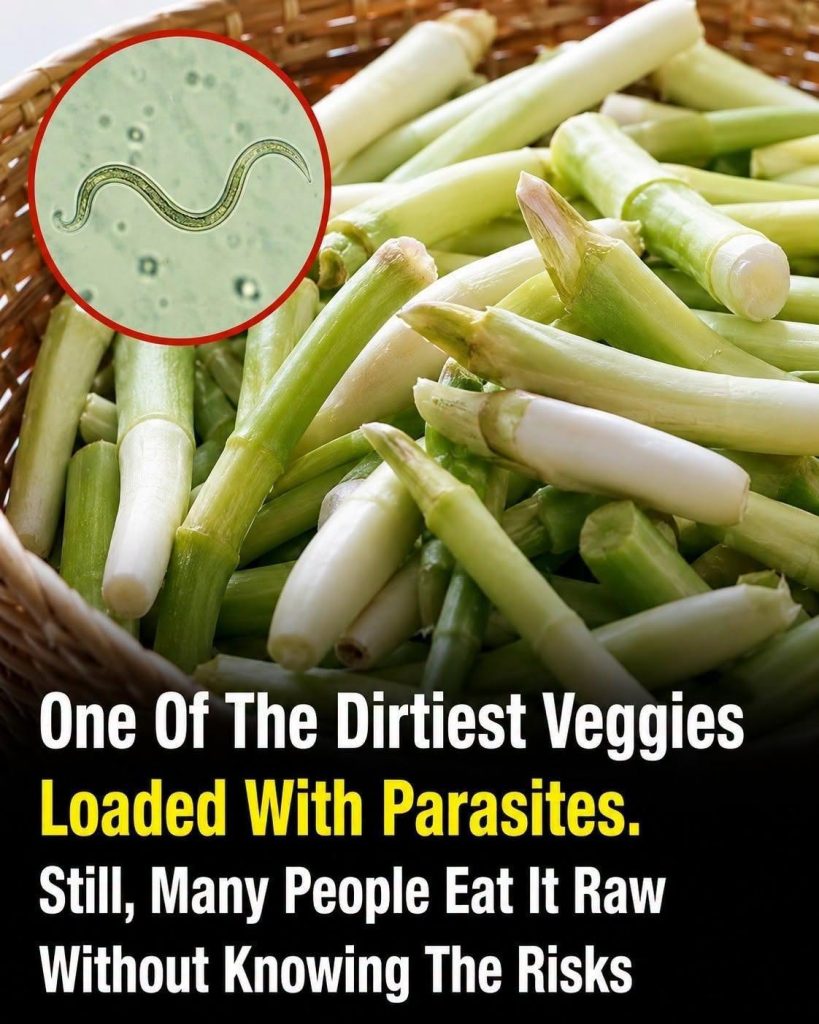

An evening in the kitchen preparing a fresh meal often starts with a comforting, familiar scent: the sharp, bright aroma of sliced green onions (Allium fistulosum). Also known as scallions, these versatile, vibrant stalks are a favorite finishing touch for everything from sizzling stir-fries and rich noodle bowls to crisp, summer salads. They provide not only a mild, peppery crunch but also an impressive array of vitamins K and C, folate, and dietary fiber.
Yet, as we chop through their hollow green tops and firm white bases, we rarely think of them as a potential biosafety hazard. Behind their fresh, healthy exterior lies a unique physical structure that makes them exceptionally prone to harboring invisible foodborne pathogens like Salmonella, Escherichia coli (E. coli), and Hepatitis A.
Because scallions are frequently consumed raw or only minimally cooked, understanding their agricultural journey, the physics of their hollow structure, and the science-backed protocols for kitchen decontamination is essential for keeping our families safe.
The Agricultural Conduit: How Pathogens Colonize Scallions
To understand how a crisp, fresh vegetable can carry invisible pathogens into our kitchens, we must trace its journey from the soil of an agricultural field to our grocery stores. Green onions are grown in highly organic soils, with their white bases and root systems fully submerged beneath the dirt.
This close connection to the earth exposes them to potential contamination from the very beginning of their growth cycles.
Pathogens like Salmonella enterica and E. coli do not naturally live inside plant tissue, but they are incredibly resilient in wet, agricultural environments. If a farm utilizes irrigation water polluted by upstream livestock runoff, or if wild animals access the growing fields, these bacterial cells readily attach themselves to the waxy cuticle of the scallion stalks.
Once attached, the bacteria can form robust protective matrixes known as biofilms. These microscopic shields allow the bacterial colonies to survive exposure to direct sunlight, dry air, and temperature swings during transport, preserving their viability until they reach your cutting board.
The Layered Cylinder: The Physics of Pathogen Trapping
While many smooth-surfaced vegetables—such as tomatoes or bell peppers—can be easily cleaned with a simple water rinse, the green onion possesses a complex, multi-layered anatomy that makes standard washing far less effective.
The white base of a green onion is made up of concentric, overlapping leaf sheaths that grow out of an underground stem. As the scallion pushes up through the soil, these layers expand, creating tight, microscopic channels. Gravity and capillary action draw fine silt, dirt, and agricultural water deep into these overlapping folds.
Once inside, any trapped bacteria are completely shielded from simple outer water rinses.
Furthermore, the green onions’ hollow, tubular upper leaves can draw in contaminated surface water if they are damaged or cut during harvest. Because these internal spaces are dark, humid, and rich in plant sugars, they function as ideal microscopic incubators, allowing bacteria to multiply safely out of reach of standard surface-cleaning methods.
Microbiology of Foodborne Pathogens: The Risks of Raw Consumption
The primary reason green onions are a frequent culprit in foodborne illness outbreaks is our culinary habit of eating them raw as a garnish. Unlike meats, potatoes, or root vegetables that undergo high-temperature cooking—which easily denatures bacterial proteins and neutralizes pathogens—raw scallions enter our bodies with their microbial populations fully intact.
For highly vulnerable populations—including young children, pregnant women, older adults, and individuals with compromised immune systems—ingesting even a small number of active bacterial cells can lead to severe clinical complications:
-
Salmonella & E. coli: These bacteria target the intestinal lining, producing harmful enterotoxins that trigger acute gastroenteritis. This can cause severe abdominal cramping, vomiting, fever, and dehydrating diarrhea.
-
Hepatitis A: This highly contagious virus can easily contaminate green onions via unsanitary harvesting practices. It targets the liver, causing severe fatigue, jaundice, and abdominal pain that can persist for several weeks or months.
The Science of Kitchen Decontamination: A Step-by-Step Protocol
Preventing foodborne illness in your home does not require avoiding green onions entirely. Instead, implementing a structured, science-backed cleaning protocol can dramatically lower your risk of contamination.
Because simple rinsing is insufficient to clear the deep, concentric layers of the white base, home cooks should follow a systematic, multi-tiered approach:
Preventing Cross-Contamination in the Kitchen
Even the most meticulously washed green onion can become a vector for foodborne illness if poor kitchen hygiene practices allow for cross-contamination. Cross-contamination occurs when pathogens are transferred from raw, high-risk foods (such as raw chicken, beef, or unwashed root vegetables) to ready-to-eat foods like salads or garnishes.
To prevent this dangerous transfer, home cooks should establish clear physical boundaries in their kitchens:
-
Dedicated Cutting Boards: Always use separate, color-coded cutting boards for raw meats and fresh vegetables. Never slice green onions on a board that was recently used for raw meat without first sanitizing it thoroughly with hot, soapy water and a mild bleach solution.
-
Aerosol Mitigation: Avoid washing high-risk raw meats near open colanders of fresh produce. Running water hitting raw poultry can easily spray microscopic water droplets containing pathogens up to three feet across your countertops, contaminating nearby ready-to-eat ingredients.
-
Continuous Hand Hygiene: Wash your hands with warm water and soap for at least 20 seconds before and after handling raw produce, ensuring that your hands remain a clean bridge rather than a vector for contamination.
Reflection on Human Curiosity and the Stewardship of Health
The careful attention we pay to food safety, bacterial pathways, and kitchen hygiene highlights a beautiful and fundamental characteristic of human curiosity. As a species, we are uniquely driven to look past the immediate appearance of our food, constantly seeking to explore, analyze, and map the invisible, microscopic worlds that impact our survival. Our analytical curiosity provides us with the tools to identify bacterial genomes, study the physics of plant capillary action, and design rigorous, non-toxic sanitizing protocols with precise scientific dedication. We build these academic, biological, and clinical frameworks to bring order, logic, and safety to our kitchens and our communities.
At the same time, our emotional and ecological curiosity reminds us that our health is permanently intertwined with the health of the soil, the water, and the agricultural workers who harvest our food. A single, fresh green onion is a beautiful testament to the endless productivity of the earth and the global networks of labor that feed us. By continuing to explore these biological relationships with scientific integrity, environmental awareness, and active care, we expand our capacity for stewardship. We ensure that human culinary progress and a profound reverence for the microscopic patterns of the natural world work hand in hand, protecting the safety and well-being of our loved ones for generations to come.
Sources
-
For comprehensive food safety guidelines, pathogen outbreak tracking, and domestic consumer advisories regarding fresh produce, consult the U.S. Food and Drug Administration (FDA).
-
To explore scientific research on agricultural water quality, biofilm formation, and foodborne illness prevention, refer to the Centers for Disease Control and Prevention (CDC).
-
For detailed resources on integrated pest management, soil conservation, and clean harvesting standards, check the United States Department of Agriculture (USDA).
-
For peer-reviewed studies on veterinary public health, zoonotic pathogen transmission, and home food sanitization methods, view resources from the World Health Organization (WHO).
