
Shadows in the Soil: The Myth, Magic, and Science of the Hammerhead Worm
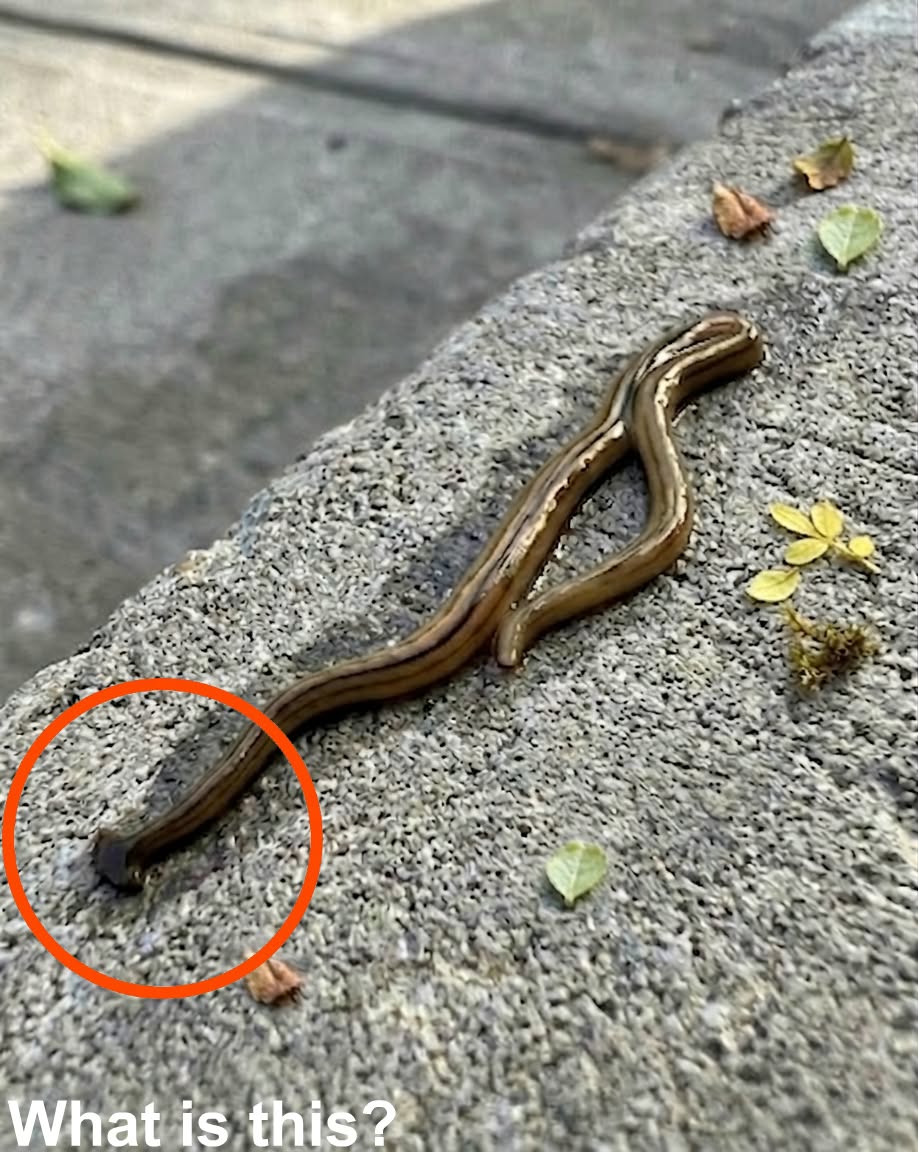
I saw it before the sun had fully risen, and for a moment I thought my eyes were lying. A long, glistening body, sliding silently across the ground, with a head shaped like a tiny, alien shovel. I froze. Was it dangerous? Poisonous? I watched it glide, hypnotized and uneasy, before finally searching for answers. What I discovered left me even more unsettled. This wasn’t a common earthworm at all, but a terrestrial flatworm known as a hammerhead worm—an invasive land planarian that preys on earthworms and quietly disrupts the soil beneath our feet. Its smooth, gliding movement comes from a carpet of microscopic hairs and a layer of mucus that helps it slip across surfaces like a living shadow.
The strangest part is how easily we overlook creatures like this, even as they reshape the tiny ecosystems we rely on. Hammerhead worms can contain natural toxins, and agricultural experts advise against touching them with bare hands or trying to crush them, since split fragments can famously regenerate into brand-new individuals. Standing there that morning, watching it disappear into the damp earth, I realized how little we truly know about the lives unfolding just a few steps from our own front doors.
These mysterious organisms are much more than a suburban surprise; they represent a brilliant biological marvel and a significant ecological puzzle. By examining their unique physiology, exploring how different cultures interpret their strange appearances, and diving into the incredible science behind their cellular regeneration, we can better understand these remarkable creatures and the delicate ecosystems they inhabit.
The Biology of the Shovel-Headed Wanderer
Scientifically classified under the genus Bipalium, hammerhead worms are land-dwelling flatworms native to the warm, tropical regions of Southeast Asia. Over the past century, global trade and the international transport of exotic greenhouse plants have inadvertently carried these creatures to regions far beyond their original homes, allowing them to establish populations in North America, Europe, and parts of Central and South America.
Unlike earthworms, which possess segmented bodies that help them burrow through soil, hammerhead worms are entirely flat and unsegmented. Their unique locomotion relies on a combination of physical adaptations. On their undersides, they possess a specialized structure known as a creeping sole—a flat, muscular pathway covered in millions of microscopic, hair-like structures called cilia. By secreting a continuous layer of specialized mucus, the flatworm uses these cilia to glide smoothly over rocks, soil, and leaves, resembling a miniature hovercraft moving across a glossy surface.
The hammerhead worm’s distinctive half-moon head is also highly functional. It serves as a sensory organ, packed with chemoreceptors that detect chemical signatures in the air and soil. Because they lack true eyes, they rely on these specialized sensors to navigate their surroundings and track down their primary food source: the beneficial earthworms that keep our garden soil aerated and rich in nutrients.
Cultural Lore and the Mythology of the Invincible Serpent
Throughout human history, creatures that exhibit unusual shapes or possess the power to survive severe physical damage have consistently inspired rich folklore and cultural mythologies. Across many ancient traditions, limbless, earth-dwelling organisms were often viewed as earthly manifestations of powerful, primordial forces, existing somewhere between the physical world and the mysteries of the underground.
In various East Asian folk traditions, soil-dwelling planarians were sometimes associated with protective household spirits or looked upon as natural symbols of endless renewal and longevity. Because they seemed to emerge from the wet earth after heavy summer rains, early agricultural communities often viewed them as signs of seasonal transitions. The effortless way they glided over obstacles without legs led to a quiet respect, with some local mythologies suggesting that these quiet travelers possessed a deep, silent wisdom about the movements of the earth.
In Western cultures, the discovery of a creature that could not be easily destroyed by traditional means sparked a different kind of curiosity. Stories of mythical beasts like the Lernaean Hydra—a multi-headed serpent that grew back two heads for every one that was removed—find a fascinating, real-world parallel in the biological capabilities of the land planarian. While these ancient myths were created long before scientists understood the mechanics of stem cells, they reflect a timeless human fascination with organisms that challenge our ordinary understanding of life, growth, and survival.
The Marvel of Planarian Regeneration
Perhaps the most astonishing characteristic of the hammerhead worm is its near-miraculous ability to regenerate missing body parts. If a hammerhead worm is cut into several pieces, each individual fragment has the potential to regrow into a complete, fully functioning worm within a matter of weeks.
This extraordinary feat of biological engineering is made possible by a specialized population of stem cells known as neoblasts. In most animals, adult stem cells are highly specialized, meaning they can only develop into specific types of tissue, such as skin or muscle. In planarians, however, neoblasts make up roughly twenty to thirty percent of all the cells in their bodies. These cells are pluripotent, meaning they retain the ability to transform into any cell type the organism needs, including nerves, muscles, and digestive organs.
When a hammerhead worm is injured or fragmented, the surrounding neoblasts quickly migrate to the site of the wound. They form a protective mass of actively dividing cells called a blastema. Within this structure, the stem cells receive chemical signals directing them to rebuild the missing structures in perfect proportion to the rest of the fragment. This means that attempting to crush or chop a hammerhead worm in a garden can actually lead to an increase in their local population, making them incredibly resilient challenges for gardeners to manage.
Despite their fascinating biology, the rapid spread of hammerhead worms outside of their native tropical habitats presents a genuine challenge for local soil ecosystems. Because they are highly effective predators, their presence can significantly reduce local populations of earthworms, which are vital for maintaining healthy soil structure, aerating compost, and supporting agricultural productivity.
Additionally, researchers have discovered that certain species of hammerhead worms, such as Bipalium adventitium and Bipalium kewense, contain a potent defense chemical known as tetrodotoxin. This is the exact same neurotoxin found in pufferfish and blue-ringed octopuses. In the flatworm, the toxin serves as a powerful deterrent against potential predators like birds, frogs, and domestic pets, making them highly unpalatable to native wildlife.
Because of this chemical defense, wildlife experts advise homeowners and gardeners to handle these organisms with caution. While they do not pose an active threat to humans, touching them with bare skin can cause mild irritation due to the protective mucus and trace amounts of toxins they carry. If you need to manage them in a garden, the recommended approach is to avoid physical contact entirely, using a tool to gently transfer them into a container with salt or vinegar, which safely neutralizes the organism without creating fragments that could regenerate.
Embracing Human Curiosity and the Lessons of the Micro-World
Our initial reaction to encountering an unusual, unfamiliar creature like the hammerhead worm is often a mixture of surprise and hesitation. Yet, it is precisely this instinctual curiosity that has driven humanity to study, document, and ultimately understand the complex web of life that surrounds us. By looking past our immediate discomfort, we open the door to a deeper appreciation of the natural world’s incredible diversity and adaptability.
The hammerhead worm reminds us that our yards, parks, and agricultural fields are bustling, complex landscapes filled with stories of adaptation, survival, and ancient evolutionary history. From the microscopic hairs on their creeping soles to the complex stem cells that allow them to rebuild their bodies, these creatures invite us to look closer at the soil beneath our feet. By continuing to explore these quiet mysteries with an open mind and a scientific perspective, we deepen our understanding of our planet’s ecosystems and celebrate the endless wonder of human discovery.
Sources
-
The Journal of Soil and Water Conservation: Research articles exploring the ecological roles of terrestrial flatworms and their long-term impact on native earthworm populations.
-
The National Institutes of Health (NIH): Scientific papers detailing the cellular mechanisms of neoblasts and pluripotent stem cell regeneration in planarian models.
-
State Agricultural Extension Offices: Practical guides and environmental advisories regarding the identification, distribution, and safe management of invasive hammerhead worms.
-
The American Museum of Natural History: Historical archives and educational resources on the global distribution and evolutionary history of terrestrial invertebrates.
